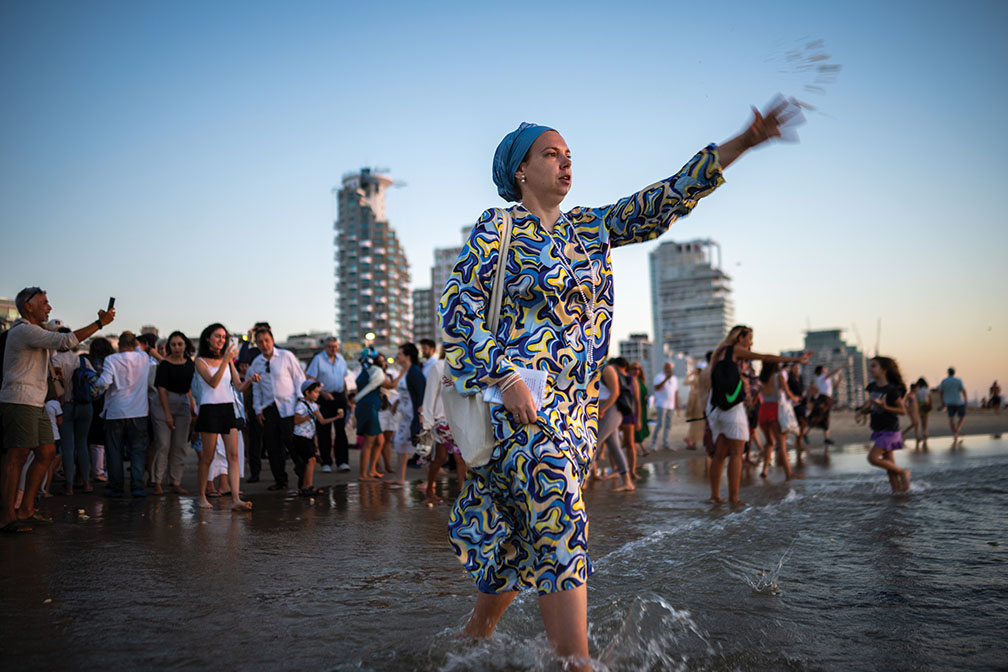
The origins of a beloved Rosh Hashanah ritual are as murky as a fish-filled pond.
Tashlich, from the Hebrew word for “tossing away,” is the centuries-old practice of gathering at a local body of water on Rosh Hashanah afternoon to recite a short prayer articulating our spiritual desire to cast our sins into the deep.
How the now-popular practice emerged remains a mystery.
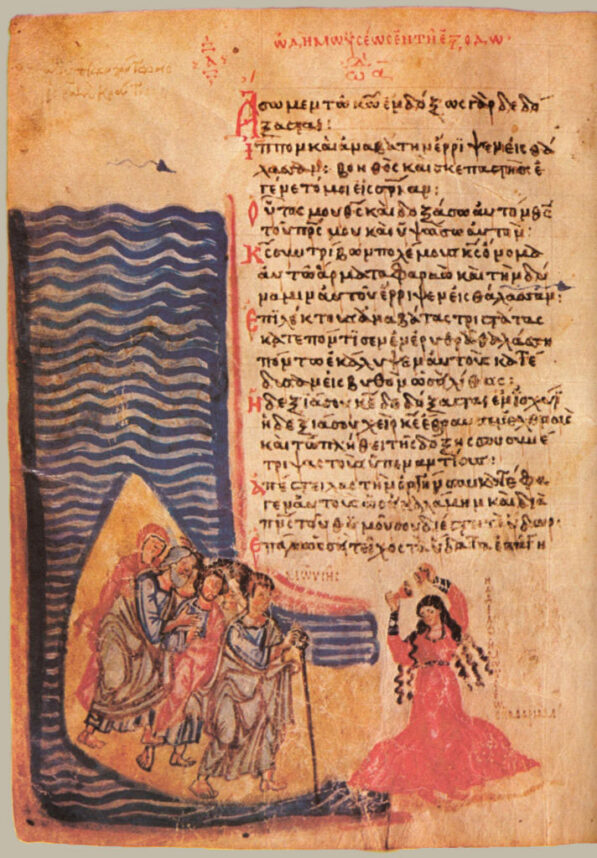
The penultimate verse in the biblical book of the eighth century BCE prophet Micah describes a time when God “will take us back in love; He will cover up our iniquities. You will cast all their sins into the depths of the sea.” But it wasn’t until over a millennium and a half later, during the time of the medieval German rabbi known as the Maharil, Rabbi Yaakov Moelin (1365–1427), that there are written accounts of Jews physically acting out the metaphor of this verse – by shaking out crumbs from their clothes in order to feed the fish in the local river.
The Maharil objected to that crumby part. After all, giving food to creatures that aren’t your pets on Shabbat and holidays is muktzah, forbidden labor. But the purpose of the practice? He posited that it is meant to recall the Binding of Isaac, whose central role in Rosh Hashanah is reflected in the blowing of the shofar, the ram’s horn that recalls the animal sacrificed in lieu of Abraham’s beloved son.
How so?
Rabbinic legend has it that Satan placed a lake to block Abraham’s path on the way to the fateful near-sacrifice of Isaac on Mount Moriah, and the water rose up to the patriarch’s neck. Abraham prayed successfully to God to dry up the river so he and his son could continue on their way toward the mountain. So too, goes the theory, Jews demonstrate their unyielding commitment to the divine commandments, come Hell or high water.
The 16th century Polish sage Rabbi Moshe Isserles, known as the Rema, added no less than three additional explanations. Gazing into the local stream is meant to evoke Jacob’s blessing to his son Joseph that his family should multiply like fish in the sea, a hope for a fruitful year ahead for the Jewish nation/family. Secondly, just as fish, the rabbis taught, are impervious to the cynical glare of the “evil eye,” so too should we communally be free from its ill effects. Rabbi Isserles’s last suggestion was that in gazing at the grandiosity of a large body of water, one can’t help but be awed by God and repent from disappointing Him.
The Rema’s student Rabbi Mordechai Jaffe wasn’t satisfied with his teacher’s suggestions and added his own. He mused that perhaps the meditation is a warning, meant to remind us that just as fish can get ensnared by fisherman’s netting, so too we can all be entrapped by iniquity.
Subsequent scholars have offered sundry theories, from the monarchical to the messianic.
Just as kings were anointed next to bodies of water in ancient times, so too we, on this holiday marking God as our Ultimate Monarch, assemble in homage next to water.
Perhaps it is meant to reflect our aspiration for the Temple in Jerusalem to be rebuilt. After all, as the Second Temple was being joyously dedicated by the community of exiles who had returned to the Holy Land, the Book of Nehemiah tells us “the entire people assembled as one man in the square before the Water Gate, and they asked Ezra the scribe to bring the scroll of the Teaching of Moses with which the Lord had charged Israel.” We stand next to water now to recall the Water Gate then.
Then again, still others proposed ritual-by-the-lake is a lesson in humility. Just as water stays low to the ground, we too must keep our egos from rising.
Whatever Tashlich’s true origin, perhaps it was inevitable that we mark Rosh Hashanah by assembling next to water. As the third Lubavitcher Rebbe, known as the Tzemach Tzedek, noted, the Hebrew word for year “shanah” means both “repetition” and “change.” Like a constantly flowing river, we aspire, both individually and collectively, for steadfast forward progress and refreshing self-transformation.
Rabbi Dr. Stuart Halpern is Senior Adviser to the Provost of Yeshiva University and Deputy Director of Y.U.’s Straus Center for Torah and Western Thought. His books include the newly released “Jewish Roots of American Liberty,” “The Promise of Liberty: A Passover Haggada,” “Esther in America,” “Gleanings: Reflections on Ruth” and “Proclaim Liberty Throughout the Land: The Hebrew Bible in the United States.”