

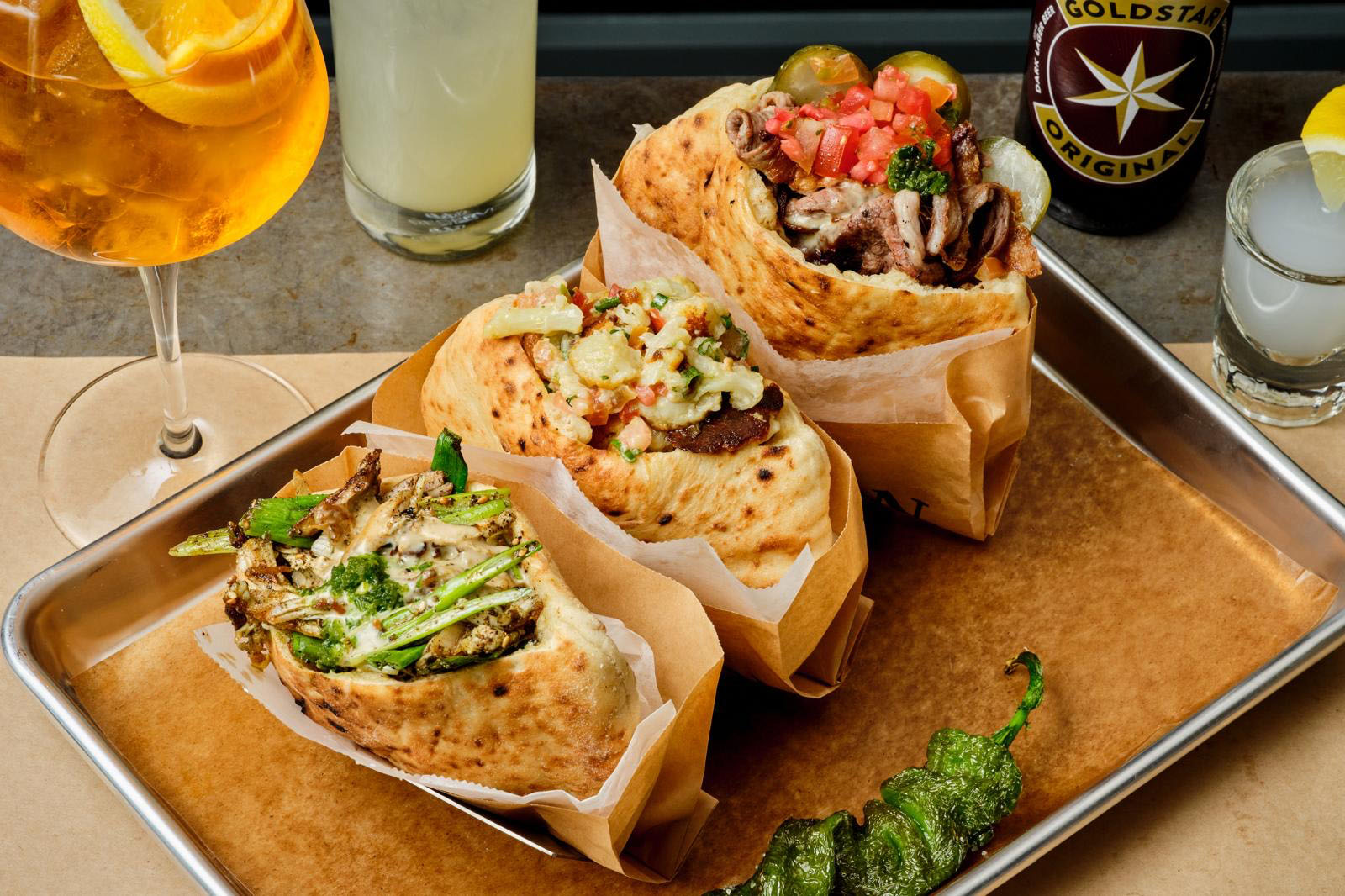
On West Third Street, where restaurants come and go with the rhythm of Los Angeles trends, Miznon didn’t just open, it landed with a kind of immediacy that’s hard to manufacture. Even before the official opening day, the restaurant was packed with diners, filling every seat indoors and outdoors.
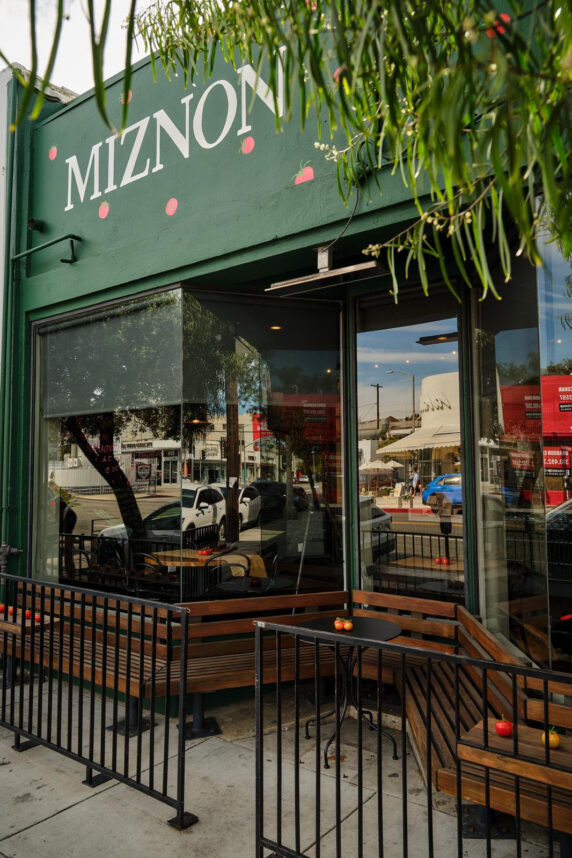
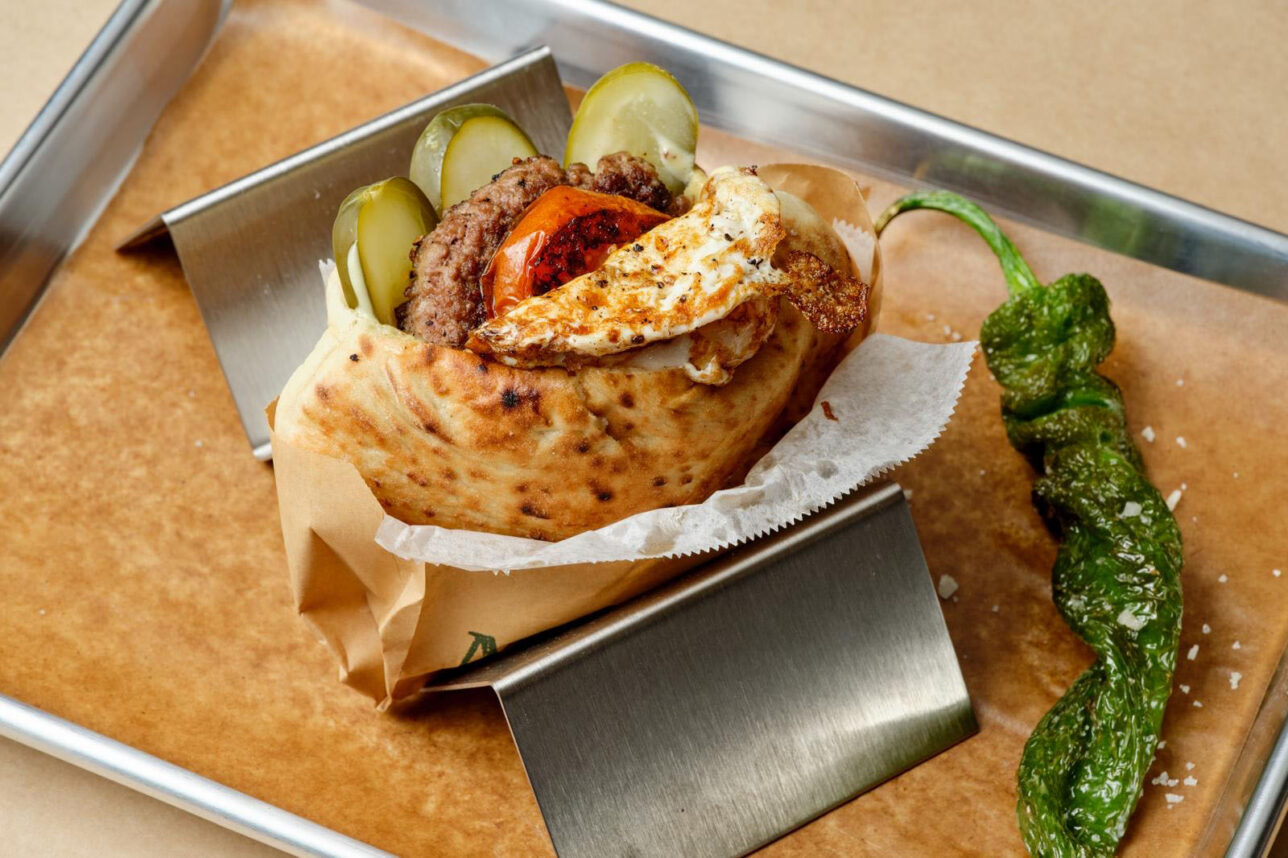
The concept, brought to life by Israeli chef Eyal Shani, is deceptively simple: pita as a canvas, filled with everything from lamb kebab and rib-eye minute steak to schnitzel and their signature candy steak, overnight seared brisket, aioli, mustard, pickles, tomato, and red onion. But Miznon’s appeal goes beyond what’s stuffed inside the bread. A whole roasted cauliflower arrives layered with tahini, bronzed and dramatic, a paper bag of blistered green beans with lemon garlic vinaigrette — totally addictive — has quietly become one of the most talked-about dishes on the menu.
Vegetarian? Vegan? No problem. The menu leans just as confidently into plant-based dishes, from a falafel burger and sweet potato caramelized in its own honey to wild savory mushrooms stuffed in pita.
Everything is served on trays, stripped of formality. The message is clear: eat with your hands, lean in and don’t overthink it. In a city that often polishes its dining experiences to a shine, Miznon thrives on something looser, louder and more instinctive — an energy that has turned a humble pita into one of LA’s most compelling bites.
Shani is not your typical Michelin-starred chef. Self-taught and guided more by instinct than formal technique, the Israeli-born culinary force has built a global empire of nearly 50 restaurants, with locations spanning Tel Aviv, Paris, New York, Vienna and beyond. Widely credited with helping define modern Israeli cuisine, Shani is known for a style that borders on poetic — both on the plate and in his words — favoring minimal intervention, pristine seasonal ingredients and bold, elemental flavors.
His approach to food was shaped early on, influenced by his grandfather, an agronomist, during long walks through markets, fields and vineyards. That connection to the land still anchors his cooking today. Beyond the kitchen, Shani is also a prominent television personality, serving as a longtime judge on “MasterChef Israel” and appearing on several food-focused programs. Whether through a perfectly charred cauliflower or a pita filled with just a handful of ingredients, his work continues to redefine how Israeli cuisine is experienced around the world.
Behind Miznon’s Los Angeles expansion are two partners who see the city not just as a market, but as a natural extension of the brand’s spirit. Restaurateur Giancarlo Pagani, founder of Pagani Projects and a managing partner in the Mother Wolf Group, brings deep experience in building and scaling restaurant concepts. Alongside him is Steve Anavim, a longtime commercial real estate broker with more than two decades in Los Angeles, whose connection to the project is as personal as it is professional.
For Anavim, who is married to an Israeli and has family in Israel, the story began years earlier, during a visit to Tel Aviv. Drawn in by Miznon’s energy and simplicity, he found himself returning again and again, captivated by the food, the atmosphere and the idea that something so unpretentious could feel so complete. “I must have gone every chance I had,” he recalled. “I knew back then, I wanted to bring this restaurant to Los Angeles.”
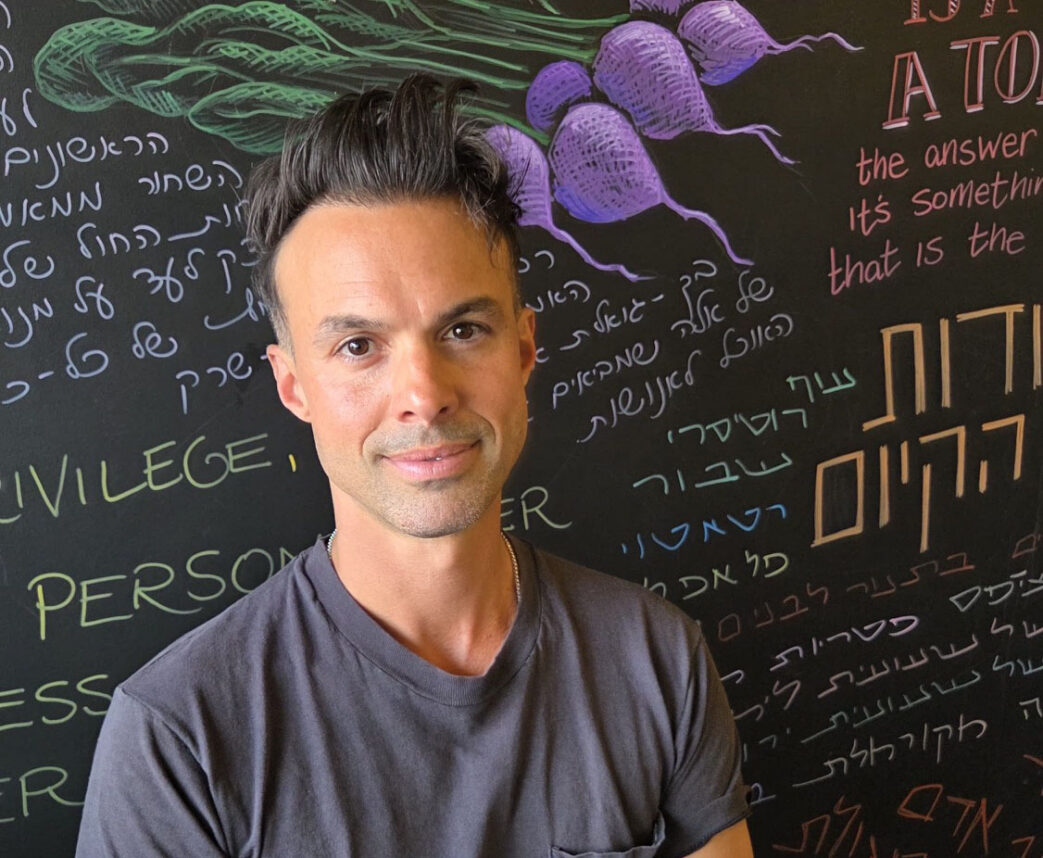
That vision eventually led him to partner with Pagani — his friend since middle school — to make it happen. Their first step was a modest pop-up inside Grand Central Market in Downtown L.A., which opened in May 2025 and quickly proved the concept’s appeal. “It was successful from the very first week,” Anavim says. “We always planned to grow from there.”
The new West Third Street location opened on March 14 and marks a significant evolution: not just a pita counter, but a full restaurant with a broader menu and a dedicated cocktail program featuring playful, exclusive creations like the Pink Lemon Drop, Miznon Margarita and other inventive blends.
The partners approached Los Angeles as a city of neighborhoods, each with its own rhythm. Their goal, they say, is not to replicate Miznon, but to adapt it — while preserving its defining elements: simplicity, seasonality and the vibrant, open-kitchen energy that invites diners to engage with the food directly.
For Anavim, the confidence was always there. Given Miznon’s global success — from Israel to New York and beyond — he believed Los Angeles would embrace it just as enthusiastically. “At the end of the day, if you bring good food and a good vibe, people will come,” he says. “People here really connect to the flavors.”
The expansion of Miznon in Los Angeles is only part of a larger vision. Next comes Malka — Shani’s full-service, kosher-certified restaurant, set to open in a few months in Culver City.
If Miznon is built on speed, spontaneity and street-level energy, Malka – which means Queen in Hebrew – moves in a more deliberate rhythm. The concept already operates in Tel Aviv, New York, Brooklyn and West Palm Beach. Unlike Miznon’s fast-casual pita-driven format, Malka is a more expansive dining experience rooted in seasonal, ingredient-led cooking and plated dishes that reflect Shani’s signature style of minimal intervention and bold flavor. The menu, which changes regularly based on available produce, features a mix of Israeli and Mediterranean-inspired dishes like whole roasted fish, lamb shoulder cooked until tender, schnitzel stuffed with mashed potatoes, beet carpaccio, hummus-based plates, fresh salads and deeply vegetal dishes such as charred asparagus, freekeh with herbs and lemon and roasted root vegetables. The kitchen is known for its dramatic simplicity — ingredients often arriving touched with little more than olive oil, salt and fire.
For Shani, opening a kosher restaurant is not a departure from his cooking philosophy but a natural extension of it. He has described kosher cuisine as a framework that still allows for creativity and precision, particularly for diners who have long been unable to fully access his food. Rather than viewing dietary laws as a limitation, his approach treats them as a structure that can sharpen focus on ingredients and technique, reinforcing his long-standing emphasis on seasonal produce, simplicity and flavor-driven cooking.
8370 W 3rd St Los Angeles, CA 90048 miznonla.com

































