Habits die hard.
In the fight against antisemitism, we’ve always assumed that it’s bad enough to label something or someone “antisemitic.” After all, just as racism is taboo, so is antisemitism.
The problem is that an emotion is not an action.
Hating Jews is an emotion. And just like any emotion or any label, it can be denied.
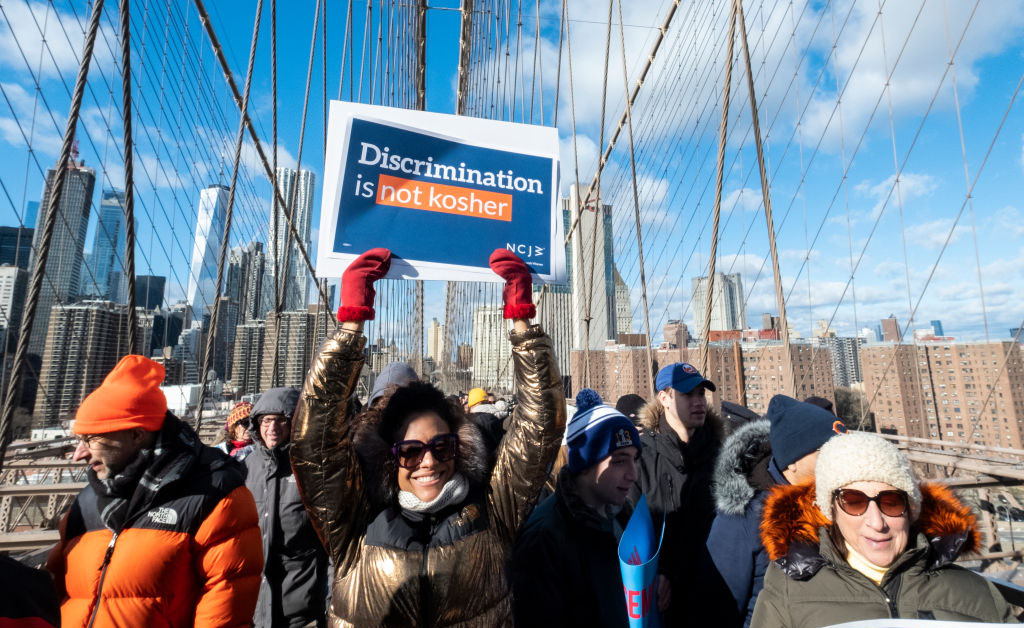
What is much harder to deny is discrimination: one set of rules for the world and another for the Jews.
This is not an emotion. It’s an action. It’s evidence.
Look at the most glaring example: The United Nations has condemned the Jewish state more than all other nations combined— yes, including genocidal regimes where millions are being murdered.
The UN can claim that it’s not antisemitic, but it can’t credibly claim it doesn’t apply double standards.
The examples are endless.
On college campuses, the tiniest microaggression is unacceptable if directed at a student from a minority group. But if a Jew is accused of being a Zionist baby-killer? Suddenly it becomes a major debate.
The college can claim that it’s not antisemitic, but it can’t credibly claim it doesn’t apply double standards.
The latest example comes from those free speech champions at PEN America.
Hours after the group’s website published interviews with Israeli and Jewish writers who described facing hostility in the publishing industry, the president was forced to resign.
Evidently, having anyone connected to Israel complain about a lack of free expression was a bridge too far, even for a group that “stands at the intersection of literature and human rights to protect free expression.”
Would the president have resigned had it been African or Asian or European writers?
Of course not. That treatment is reserved only if you’re connected to Israel.
PEN America can claim that it’s not antisemitic, but it can’t credibly claim it doesn’t apply double standards.
As Gal Beckerman wrote in The Atlantic, “PEN America currently sits on a widening fault line, one that divides old-school liberalism, which treats the right to speak as more important than any particular ideology, from a surging and fiercely ideological left that sees Israel and Zionism as its enemy.”
Notice it’s only “Israel and Zionism” that are the enemy.
Indeed, it’s a common tactic to deny antisemitism by claiming “we’re only against Israel.” As far as calling someone an anti-Zionist, with the word Zionist being so toxic these days, well, you might as well give them a compliment.
That’s why calling out double standards is more effective: it’s harder to dispute.
What can the UN say? It’s not true that we’ve issued more condemnations against Israel than all other nations combined?
What can PEN say? It’s not true that we reserve this treatment only in the case of Israel?
Antisemites must love when we throw emotions and labels at them. They know there’s wiggle room.
They must also know there’s not much wiggle room with discrimination: You’re either applying double standards or you’re not.
Of course, it goes without saying that there are no silver bullets in the long, ancient and complicated fight against antisemitism.
But there are words and ideas that work better than others.
The simple truth is that when we confront antisemitism with the charge of discrimination rather than with labels and emotions, we’re on more solid ground.
And that’s not an emotion.