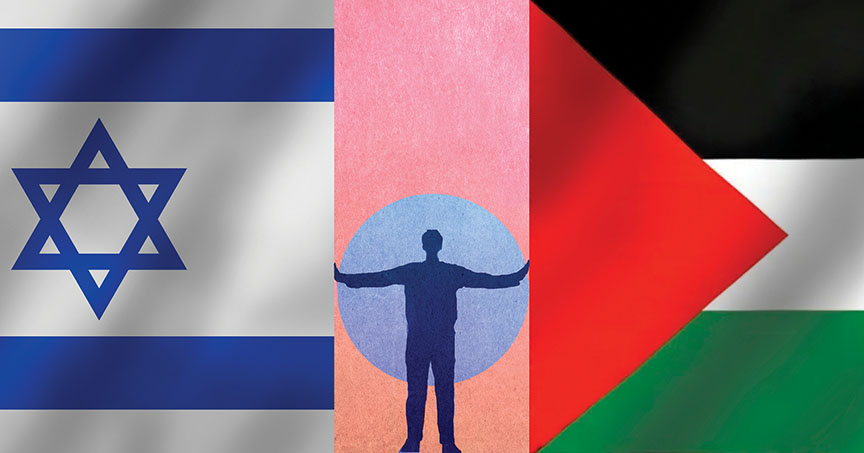
Anyone trying to understand the meaning of the agreement on the “complete disarmament of Hamas” — to quote President Donald Trump’s announcement — came back with more questions than answers. When will this disarmament happen? Which step precedes the next? What does “disarmament” mean, and where will the weapons be kept? What does the word “weapons” even encompass? The list goes on. Israel has reservations. It conveyed some of them to Tony Blair, who handles the international effort to resolve the Gaza crisis.
What Hamas wants isn’t hard to guess: to keep as many weapons as possible while simultaneously gaining control over the Strip, which will naturally expand as the IDF shrinks its footprint. If Hamas only needs to deposit its rockets in a place where they can be retrieved when needed, and in return gets an IDF withdrawal to a rear line, along with the opening of supply and reconstruction channels, that’s not a bad deal. True, a non-Hamas force is supposed to enter concurrently to manage the territory. It seems Hamas leaders aren’t worried about this. Such forces tend to bend to the will of the local bully or flee. In other words, Hamas will determine, or at least believes it will determine, when these forces enter, when they leave and what they will be able to execute.
What Israel wants is also not hard to guess. Exactly a year ago, the prime minister’s office issued a statement detailing five principles: the dismantling of Hamas’ military capabilities, the return of all hostages, the demilitarization of the Strip, Israeli security control over the Strip and the establishment of an alternative administration that is neither Hamas nor the Palestinian Authority.
How many of these principles are being met now? The hostages have returned. Dismantling weapons — President Trump says yes, but what constitutes a “weapon” still needs clarifying. An alternative administration is indeed supposed to be established. Israeli security control — it’s not entirely clear what this includes or where it applies. Demilitarization of the Strip — again, unclear what this entails.
It is possible that all we have here is a war over narrative. Hamas will say: “We are willing to disarm but Israel refuses to withdraw.” Israel will say: “First Hamas disarms, then we withdraw” (which will not happen). Who will decide what comes first? In Israel, there is a palpable fear of a scenario where Trump is the decider, because his decision might be uncomfortable.
Suppose he says: “Leave, and I will make sure there are no weapons” — will Israel agree or push back? Suppose he says: “You are dealing with trivial details” — will Israel watch Hamas deposit its weapons in warehouses for which it holds a spare key?
This war over narrative won’t just be between Israel and Hamas. It will also be an internal war over the narrative as Israel’s election is getting closer. Obviously, the opposition will have a vested interest in proving that the agreement does not fulfill what Netanyahu promised. They will say: Here is another “total victory” that never materialized.
What is less clear is what the coalition will do, and whether it will maintain a unified message. Will Bezalel Smotrich welcome the agreement and try to convince his skeptical supporters that this is the victory they prayed for? Will Likud ministers align themselves with it on the eve of primaries? Will disgruntled Knesset members, trampling over each other for a spot on a crowded list, tell voters that yes, this is what Israel had hoped for? Israelis have thought for a while now that Hamas isn’t going anywhere. Between summer 2025 and summer 2026, the percentage of Israelis who think Hamas will be toppled was cut in half. The percentage of Israelis who believe Hamas will remain in Gaza — as is, or under some guise — rose from two out of four to three out of four: 72%.
The dilemma belongs primarily to Netanyahu. He has to figure out whether, and to what extent, he stands behind the agreement, and frames it as a success — or recognize that backing this agreement will make it even harder for him to win the elections. Right-wing voters will turn to more hardline parties that tell the grim truth about this dubious achievement, and centrist voters will turn to parties that at least don’t try to sell illusions. That leaves Netanyahu looking a bit pathetic, doing the bidding of a capricious president who decided to settle for less than a victory, not just in Iran, but in Gaza too.
The initial response from Jerusalem pointed to the second option as more likely. It is uncomfortable for Netanyahu to accept the agreement. Therefore, he is loading it with reservations, notes, requests, and clarifications.
You might say: If Trump really wants the agreement to materialize, maybe he should slow down a bit and wait until after the elections, when an Israeli leader without the fear of his voters is sitting in the chair.
He could counter: After the elections, Netanyahu won’t be able to implement such an agreement because of his coalition. And if it isn’t Netanyahu, then why wait? Why don’t we just help make such outcome more likely?
Something I wrote in Hebrew
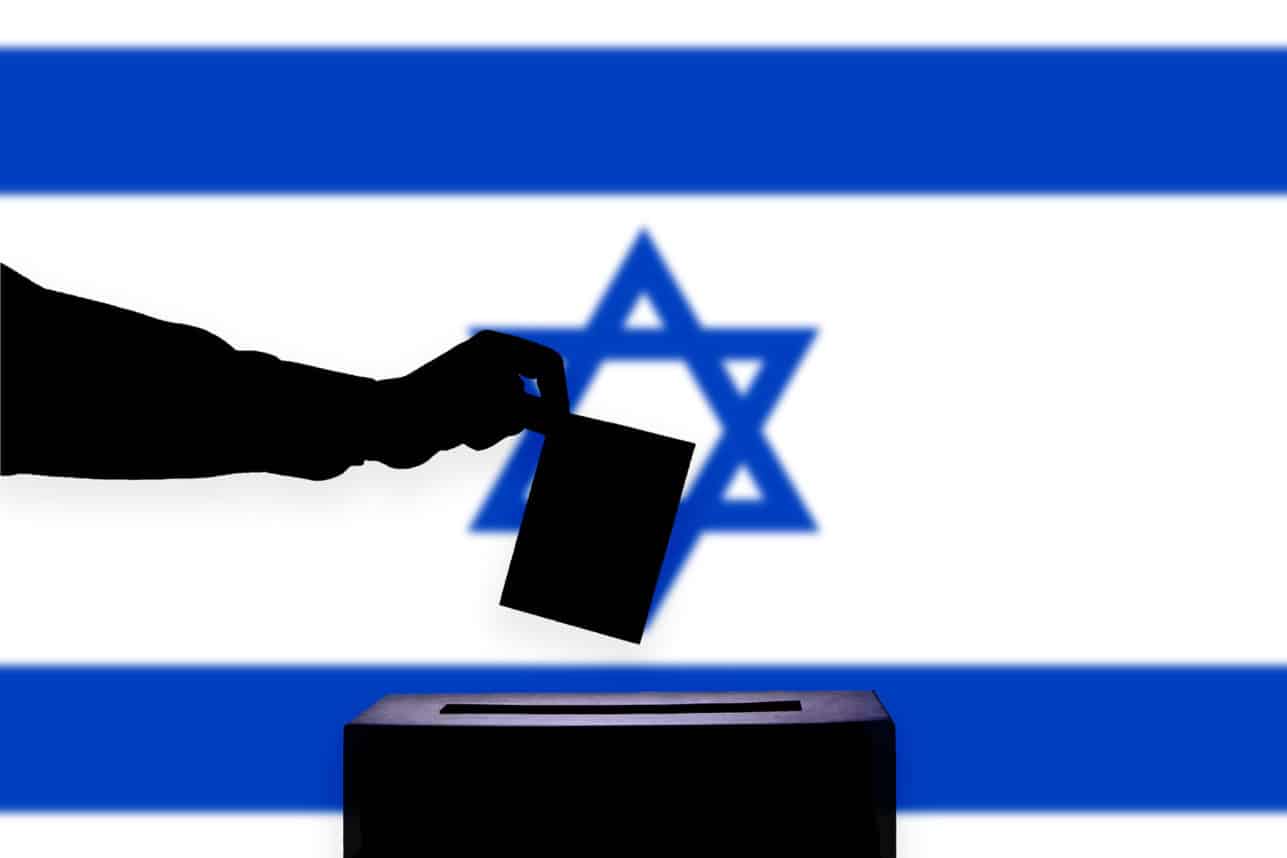
Less than three months to election day, how many voters are still undecided?
We are talking about roughly 15% of all Israelis. Have you done the math? … we are still looking at a massive block of seats circulating in the undecided market. Maybe 10 seats, maybe between 10 and 15. That is a lot … The signal these voters are sending reminds us that almost everything else we hear is just noise. If Benjamin Netanyahu’s Likud party goes up or down by a seat or two in the polls, that is noise — because hovering in the background are 10 crucial seats waiting to land. If Israel’s newly merged center-left Democrats gain or lose a seat because of their recent primaries, that is also noise … We have quite a few noisy days ahead of us. Look for the signal.
A week’s numbers
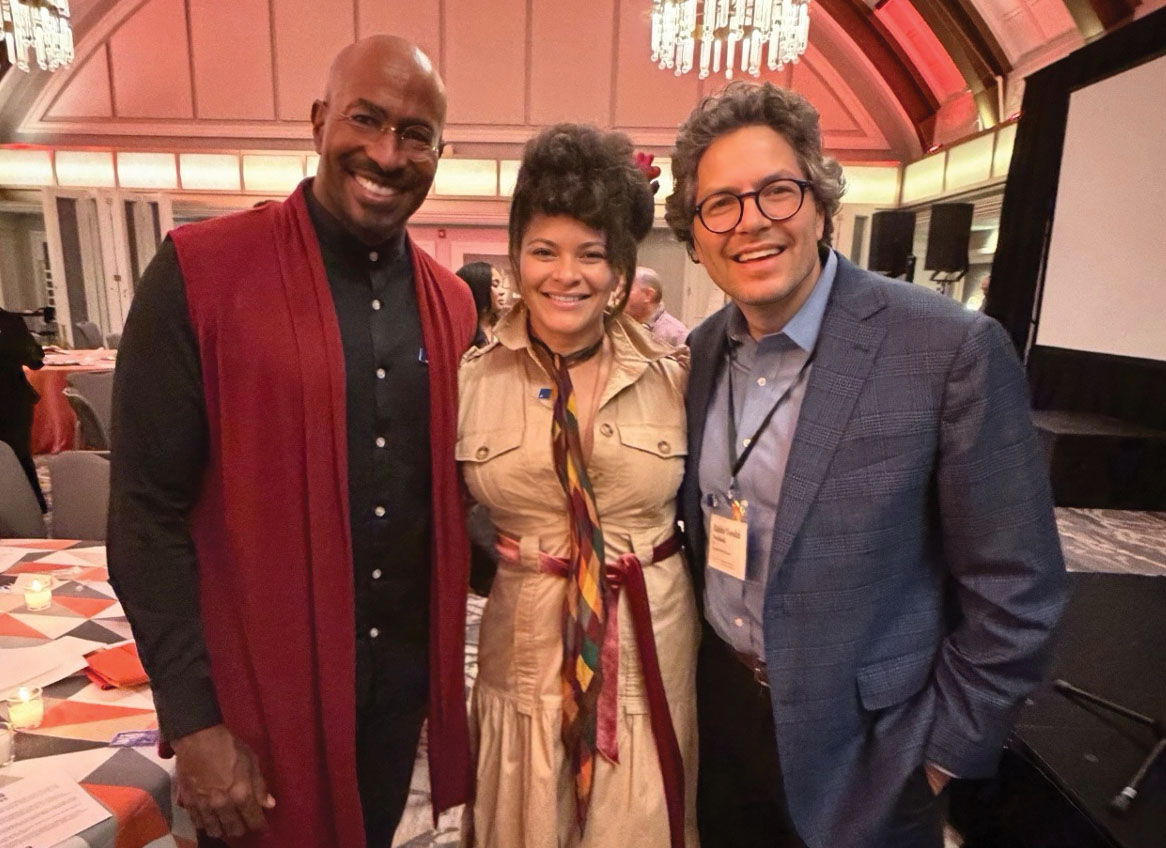
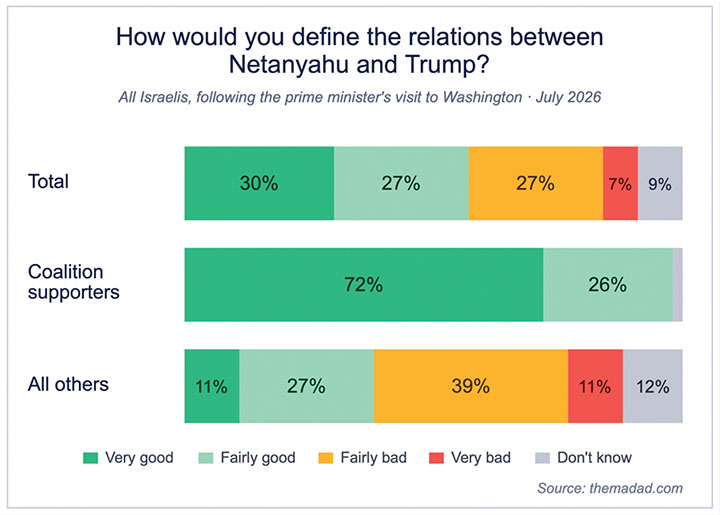
Remember their visit? Just a week ago, and it feels like a year, if not more.
A reader’s response
Bob Roosth: “Our President CLEARLY has no consistent goal other than self-enrichment and self-glorification. No stated position can be taken as final (at least in foreign policy). The ballroom and arch are different.” My response: Maybe he does have a goal – what he seems to lack is a viable plan.
Shmuel Rosner is senior political editor. For more analysis of Israeli and international politics, visit Rosner’s Domain at jewishjournal.com/rosnersdomain.