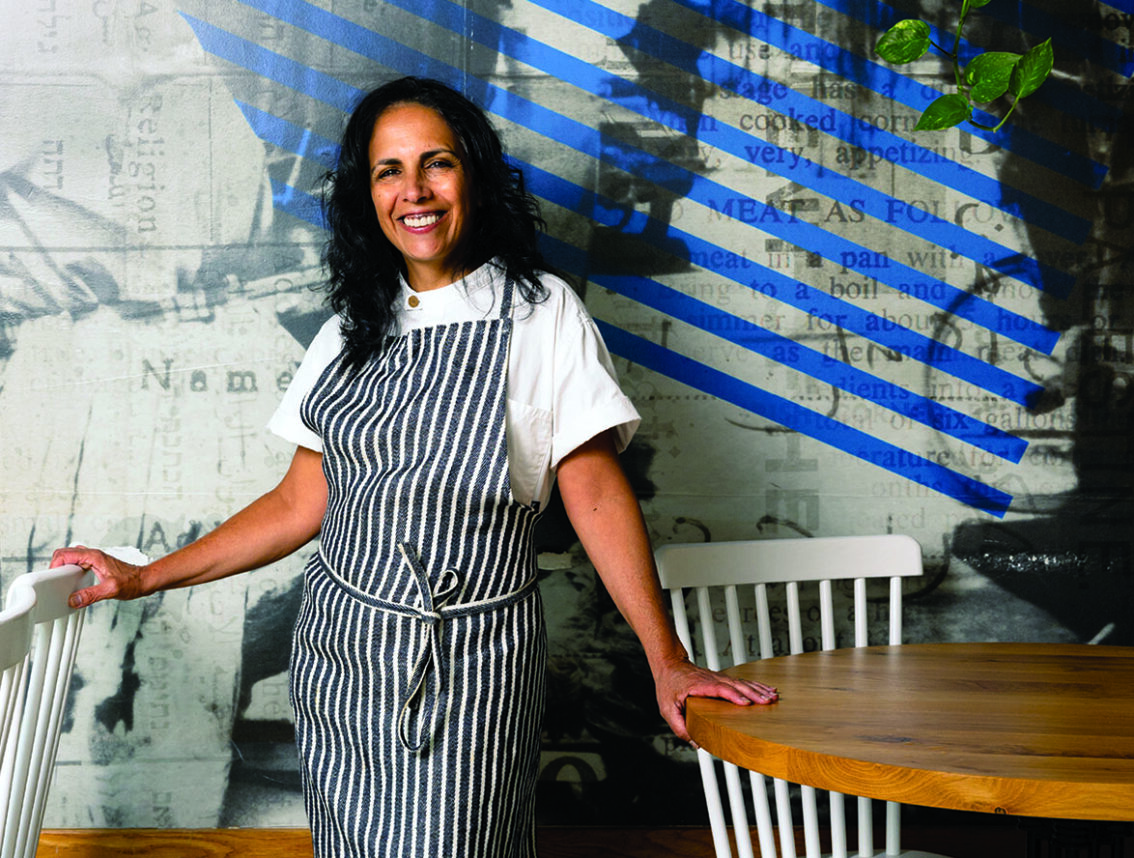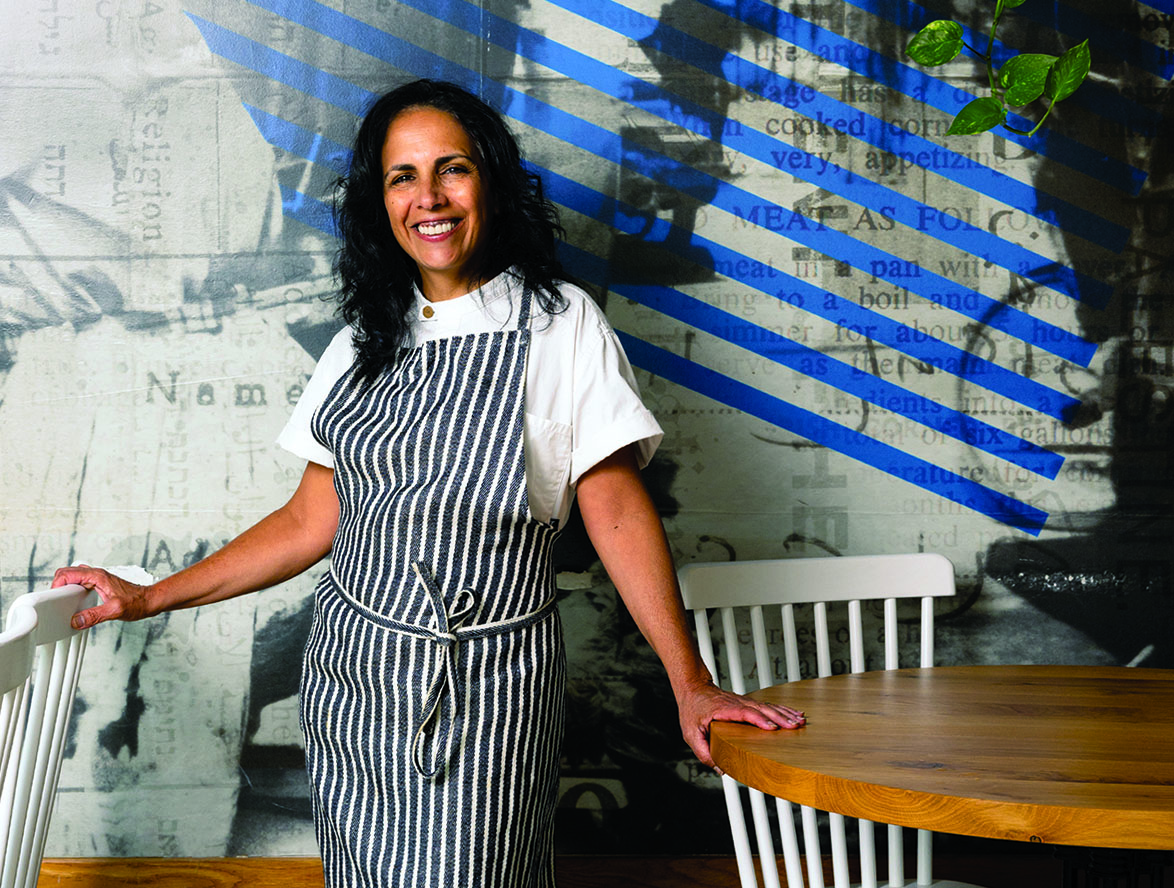
For the past two decades, Chef Einat Admony has helped shape the way New Yorkers eat Israeli food. Long before shakshuka became a brunch staple and Israeli restaurants multiplied across the city, Admony was introducing New Yorkers to the flavors she had grown up with in Israel.
In 2005, Admony and her husband and business partner, Stefan Nafziger, opened Taim, a tiny falafel shop with five chairs in Manhattan’s West Village. “Back then, there was no real good falafel in New York,” Admony recalled in a Zoom interview with the Jewish Journal. “There were these tough, cardboard-like pitas and watery sauces.”
Coming from fine-dining kitchens, the couple paid close attention to ingredients. “I brought in the best peppers, made the greenest falafel possible, falafel with roasted peppers and harissa,” she said.
Taim quickly became a hit and grew into a multi-location business. In 2010, Admony opened Balaboosta, her more ambitious modern Israeli restaurant, which helped expand New York’s understanding of Israeli cuisine beyond hummus and falafel. The restaurant later moved to the East Village and earned strong reviews from leading critics, including New York Magazine, which gave it two stars and named it one of the city’s best new restaurants.
The name Balaboosta comes from Yiddish and refers to a woman who is an accomplished homemaker, someone who knows how to run a household, feed people well and make everyone feel welcome.
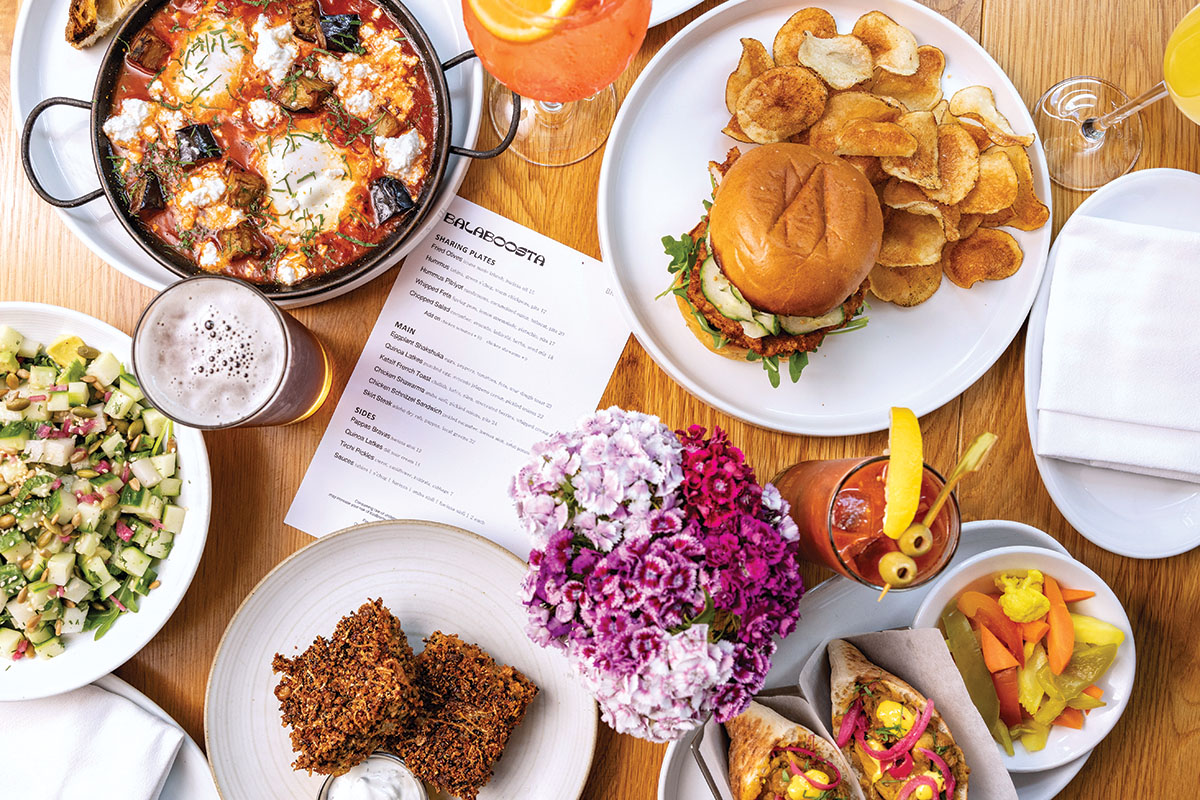
Today, the restaurant’s menu ranges from hummus with green schug and warm chickpeas and fried olives with labneh and harissa oil to Yemenite soup dumplings filled with beef and served with hilbeh, brick chicken with walnut muhammara, branzino and saffron-pistachio tahdig.
Admony became a familiar figure in New York’s culinary scene, appearing on billboards, cooking competitions and Food Network programs. Celebrities including Sarah Jessica Parker, the Clintons and Robin Williams dined at her restaurants. Williams, she recalled, would even play with her baby while waiting for a table.
It came as a surprise to her, then, when earlier this month New York Magazine presented her in a very different context. In its 31-page “Habibi City” package about Arab and Muslim life in New York, the magazine’s Grub Street article, “When Eating Out Is Political,” criticized Admony and other Israeli chefs, arguing that they had benefited from marketing food with Arab, Palestinian, Mizrahi and North African influences as sophisticated Israeli cuisine, while Arab and other Middle Eastern restaurants had historically been treated as cheaper and less prestigious.
The article also repeatedly invoked the term “genocide” in discussing Israel.
Against the backdrop of New York’s increasingly polarized political climate and growing anti-Israel sentiment since Oct. 7, the article reflected the increasingly hostile discourse surrounding Israel and Israelis.
“Many Israeli chefs landed somewhere in between: hosting fundraisers, making content, writing op-eds,” the article stated. “Admony took to wearing the yellow-ribbon pin symbolizing the Israeli hostages and continued to collaborate on videos with Zionist influencer…”
Admony, however, doesn’t let it bother her. Her restaurants, like other Israeli restaurants in New York, continue to draw customers. And her career has moved well beyond the traditional restaurant model.
For the past six years, Admony’s food has also been available in cities across the country through CookUnity, a chef-driven meal-delivery company. Customers, including those in Los Angeles, can order her dishes and have them delivered to their homes each week.
It isn’t Balaboosta, with its bustling dining room and freshly prepared food, but it offers a different kind of perk: a little piece of an acclaimed New York chef’s cooking arriving at your door, ready to heat.
For Admony, CookUnity is more than an additional outlet for her food. It has also changed the economics of her business. The company supplies the ingredients and raw materials, Admony provides the cooking, and CookUnity handles pickup and delivery.
Her menu includes chicken shawarma with pearl couscous and amba aioli, chicken cutlet with za’atar potatoes, braised lamb shawarma with tahini and vegan harissa chili with green sabzi rice.
“This delivery business changed my perspective on restaurants,” she said.
“Working with them is a gift that has put my life on solid financial footing,” she added.
Admony’s cooking is rooted in the Jewish traditions she grew up with in Israel. She was raised in Bnei Brak, the daughter of a Persian mother and a Yemenite father. Her mother was born in Iran and came to Israel with her parents and seven siblings as a child.
“She was perhaps 11 years old, and her parents, who had just made aliyah, decided to send her to live with an Iraqi foster family, where she spent eight years,” Admony said. “She didn’t speak Arabic and they didn’t speak Farsi, but she learned the language quickly and also how to cook amazing Iraqi food. We always had amba in the refrigerator.”
Sabich, the Iraqi-Jewish sandwich of fried eggplant, egg and amba, was a family favorite and eventually appeared on the Taim menu.
“A lot of famous chefs told me, ‘The first time I ever ate sabich was at your restaurant, or the first time I ate harissa or understood what really good falafel was — it was at your restaurant,’” she said. “I heard that over and over again throughout the years. People really got to know Israeli and Middle Eastern cuisine through me.”
But Taim’s success eventually came with a price. Admony brought outside partners into the business, a decision she now regrets. She sold most of her shares four years ago and says the new partners gradually pushed her out.
“They took the company and ran it into the ground,” she said.
This summer, Taim’s New York locations were shuttered after New York State seized them over unpaid taxes.
Admony had once dreamed of taking Taim across the country. She also remembers people sitting in her tiny West Village restaurant, taking notes and later opening their own concepts.
“I wanted Taim to be everywhere in the U.S. because the food was really good,” she said. “But if I could go back, I wouldn’t do it. There’s something very human about always wanting more. It never ends. Now I never want to open another restaurant. It’s an extremely difficult industry with no money in it,” she said.
The Taim name was also copied and used by other restaurants in cities across the U.S., as well as in Barcelona, Japan and elsewhere.
“When I was younger, it bothered me,” she said. “It doesn’t anymore. I’ve always preferred that people copy me rather than that I have to copy anyone else. I have a talent for reinventing myself.”
Although Admony is not religious, she has always made a point of keeping Fridays free from work, reserving the day for her husband and their two children, a 17-year-old daughter and 20-year-old son.
“They have an amazing palate. It’s wonderful to see,” she said. “They really understand food, and they’ve traveled to so many places and ate at restaurants all around the world.”
She never pushed them to follow her into the restaurant business. “It’s a very difficult world,” she said. “I know how hard it was for me to raise two children while building my career. I didn’t want them to go through that or have to choose between work and home.”