I arrived in Israel for a gap year in August 1982. Looking back, I can hardly imagine a more consequential moment to begin my journey. Just two months earlier, Israel had launched Operation Peace for Galilee, the First Lebanon War. The war was still unfolding. Casualty lists were appearing in newspapers. Families were waiting for their sons to return home. The entire country seemed suspended between determination and grief.
One battle in particular cast a long shadow over the nation. In June 1982, an IDF armored force entered a narrow valley near Sultan Yaacoub in Southern Lebanon and was caught in a deadly Syrian ambush. Twenty-one Israeli soldiers were killed. Dozens more were wounded. Three soldiers were listed as missing in action: Zachary Baumel, Zvi Feldman, and Yehuda Katz.
At the time, I knew little about any of them. Yet one name quickly became familiar. Yehuda Katz had studied at Yeshivat Kerem B’Yavneh, the yeshiva where I was spending my gap year. I never met him. But I encountered his presence every day. Everyone who had known Yehuda spoke about him in the same terms. He was the best and the brightest. Brilliant without arrogance. Accomplished without pretension. Kind, humble, and deeply loved. When people described him, they did not sound like they were reciting a eulogy. They sounded like they were talking about a friend who had just stepped out for a moment and would be back soon.
His room in the dormitory remained untouched.
It stayed that way throughout the two years I studied there. Perhaps it remained unchanged for years afterward. No one wanted to be the person who packed away his books, emptied his closet, or erased the traces of his life. Officially, he was missing. Unofficially, everyone knew that the chances of his return were virtually non-existent.
And yet the room remained. Maybe it was hope. Maybe it was denial. Maybe it was faith.
To me, there was something holy about that room. It stood as a quiet declaration that a Jewish life cannot simply be written off. Even when logic says otherwise. Even when decades pass. Even when all evidence points in one direction.
The years rolled by. In 2019, the remains of Zachary Baumel were recovered and brought home to Israel. Last year, Zvi Feldman was finally returned as well. But Yehuda Katz remained missing. Then, last week, came the announcement. After forty-four years, Israeli intelligence and security services had succeeded in locating Katz’s remains and bringing him home. The details, unsurprisingly, remain largely classified. The operation reportedly relied on years of intelligence gathering and extraordinary persistence. What matters is that the mission succeeded. After more than four decades, Yehuda Katz returned to Israel. He was laid to rest on Friday on the Mount of Olives in Jerusalem. More than a thousand people attended his funeral.
The remarkable thing is that none of us were surprised. Not because we expected success after so many years. We did not. We were unsurprised because, in a deeper sense, it was always understood that Yehuda would someday come home.
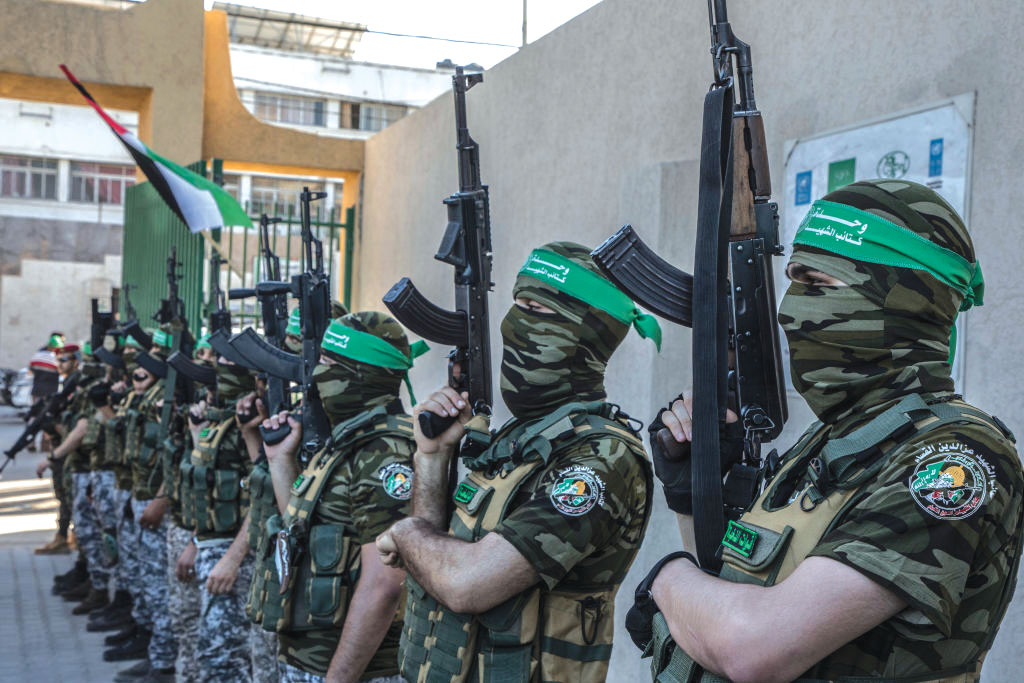
Israel is a country that reveres life. We fight for the living. We rescue the wounded. We search for the missing. We bring home the hostages. And we do not abandon the dead. Our enemies often misunderstand this. They see it as vulnerability, and they imagine that our determination to recover every hostage and every soldier—dead or alive—can be exploited. Hamas certainly drew that conclusion when it turned human lives into bargaining chips.
Israel is a country that reveres life. We fight for the living. We rescue the wounded. We search for the missing. We bring home the hostages. And we do not abandon the dead.
They are wrong. This is not a weakness. It is one of Israel’s greatest strengths.
Most nations honor their fallen, but Israel does something more. We make a covenant with them. We promise that if you stand in defense of the Jewish people, the Jewish people will never forget you. Not after a year. Not after a decade. Not after forty-four years.
That promise is incredibly expensive. It requires patience, resources, and extraordinary effort. It sometimes defies military logic and political logic. But it is the reason Israeli parents like myself continue sending their children to defend this country. It is the reason Israeli soldiers continue charging forward under fire. They know that the nation stands behind them, in life and beyond life.
For forty-four years, Yehuda Katz’s room stood as a testimony to that promise. Last week, the promise was fulfilled.
Ari Sacher is a senior policy advisor at the U.S.-Israel Education Association and a veteran Israeli rocket scientist who worked on the development of the Iron Dome missile defense system.