When from enigmas we make variations
we wrap them into mysteries
unsolved by exegetic explanations
based on the various histories
of those who by enigmas have been wired,
because our variations change
enigmas into mysteries inspired
by sounds of the familiar made strange.
A dog’s bark hardly loses its enigma
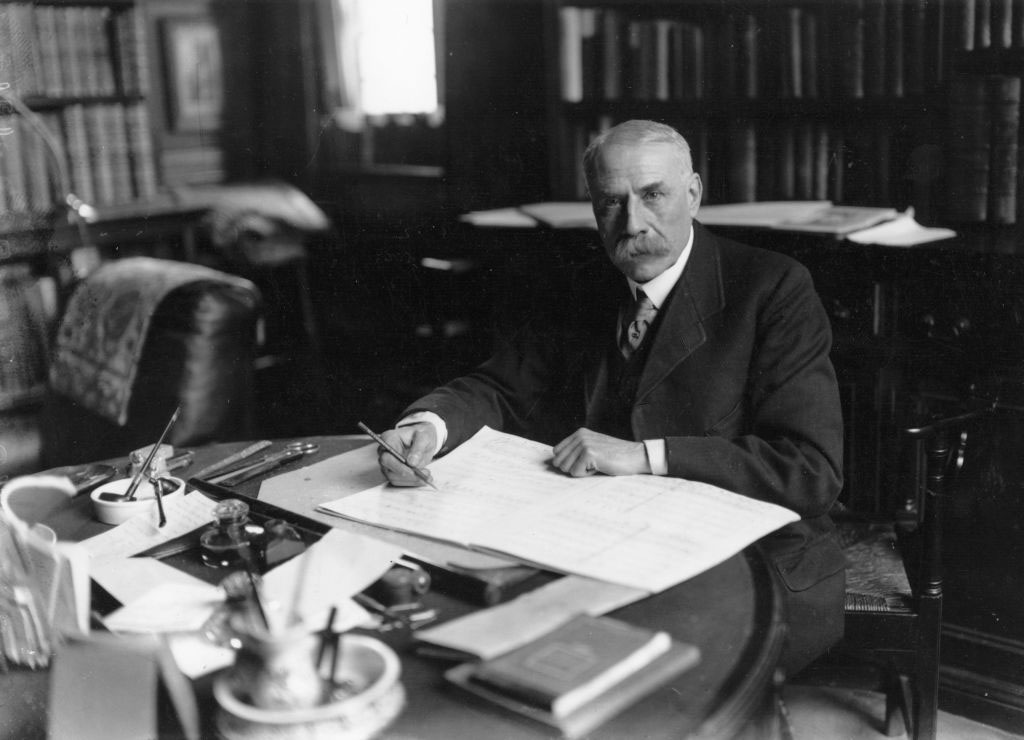
when Elgar proves he can embellish
the noise, but does not turn into kerygma
by sounding musical, not hellish,
but Israel is described poetically in a Deuteronomic verse
as a nation whose spilt blood will be by God atoned
by His inheritance, this land, avenging, in a line obscure and terse,
blood shed by Israel’s foes who for ages have their right to live in peace disowned.
In “Haazinu: The Song’s Enigmatic Climax,” thetorah.com, Zev Farber discusses the puzzling last line of Haazinu, the penultimate poem in Deuteronomy:
The final phrase of Haazinu (Deut 32:43) in the MT, וכפר אדמתו עמו, “and he will atone for his land, his people,” is difficult to parse. The textual variants from Qumran, the Samaritan Pentateuch, and the Septuagint offer a clearer, if more dismal, understanding of the phrase. Before Moses goes up the mountain to die, he is told to teach the people a song, Haazinu (Deut 32:1-43), presented as a record of YHWH predicting what would happen to Israel in the future. As a poem written in archaic Hebrew, Haazinu is very difficult. Its difficulty is reflected in the many textual variants of Haazinu found between the Masoretic Text (MT), the Samaritan Pentateuch (SP), the Septuagint (LXX), and several Qumran fragments that preserve additional textual variants not found in any of the three standard versions.
Deut. 32:43 states:
הַרְנִינוּ גוֹיִם עַמּוֹ, {ס} כִּי דַם-עֲבָדָיו יִקּוֹם; {ר} וְנָקָם יָשִׁיב לְצָרָיו, {ס} וְכִפֶּר אַדְמָתוֹ עַמּוֹ. 32;43 Sing aloud, O ye nations, of His people; for He doth avenge the blood of His servants, and doth render vengeance to His adversaries, vekhiper admato amo, and doth make expiation for the land of His people.
I suggest that the last three Hebrew words of this poem identify the people of Israel as God’s chosen land that He bestowed to them. This suggestion is supported by my interpretation of Deut. 32:9:
כִּ֛י חֵ֥לֶק יְהֹוָ֖ה עַמּ֑וֹ יַעֲקֹ֖ב חֶ֥בֶל נַחֲלָתֽוֹ׃
For the ETERNAL’s portion is his people; Jacob, God’s own hevel, Jacob the lot of His inheritance.
I interpret this verse as a declaration that the people of Israel who dwelt in the land but shed their blood in its defense should be regarded as the land that YHWH has chosen to bestow on Israel, as their inheritance. The words hevel nahalato identify the nation of Israel as the victim of destruction, — a meaning of the word haval in Mic. 2:10 — and applied to the territory of death in the Psalms, Ps. 116:3, and the territory of sheol in Ps.18:6.
Midrashically, I add here that the word hevel can be read as “alas,” anachronistically synonymous with the meaning of the modern Hebrew word haval, “alas.”
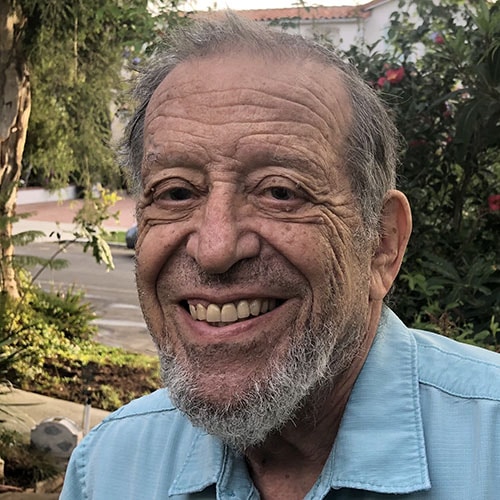
Gershon Hepner is a poet who has written over 25,000 poems on subjects ranging from music to literature, politics to Torah. He grew up in England and moved to Los Angeles in 1976. Using his varied interests and experiences, he has authored dozens of papers in medical and academic journals, and authored “Legal Friction: Law, Narrative, and Identity Politics in Biblical Israel.” He can be reached at gershonhepner@gmail.com.