There is a story about the Duke of Mannheim asking Rabbi Tzvi of Berlin about the differences between Sukkot and Passover. He asked, “What is the reason we ask four questions on Passover and not on Sukkot? On Sukkot, you have more customs than on Passover, especially since you leave your permanent homes and live in temporary booths.”
Rabbi Tzvi explained that on Passover, the notion of being free people is a question within itself. To sit comfortably, eat well, and feel relaxed are areas of life to which Jews are unaccustomed. Asking questions on Passover prompts the Jew to understand how rare and holy freedom is. On Sukkot, he taught, Jews live outside without a full roof over their heads. This kind of lifestyle is what a Jew already understands—being used to fragility, understanding our existence is constantly attacked and finding daily courage to live openly as a Jewish people.
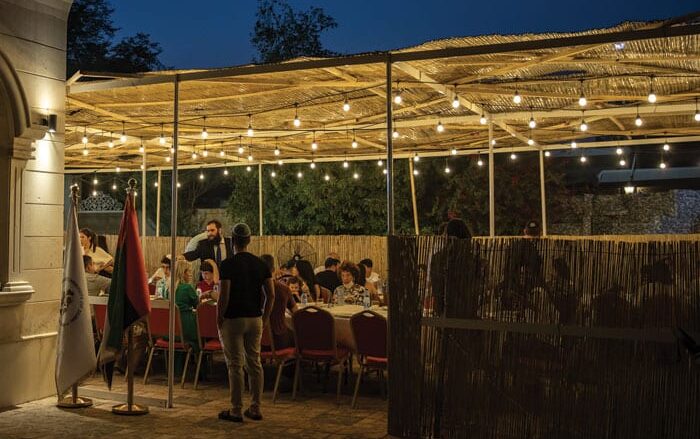
Sukkot emphasizes that which we intrinsically know. We go outside and show the world that no matter the environment, we will express our Judaism with pride and joy. Zman simchateinu, this season of joy, doesn’t diminish the fear we might feel or trepidation we hold during time periods that feel unfavorable to the Jewish people. However, we dig into our deep reservoirs of courage, bravery, and resilience and fortify our Jewish spirit in the same ways our ancestors have for thousands of years. The outside world may be a fickle place, but this isn’t something new. Each time we step outside our doors, we choose to stand tall, filled with the determination to publicly practice and display our faith.
The sukkah may be fragile, but our spirit grows stronger. And there is no question about that.
Chag Sameach and Shabbat Shalom
Rabbi Nicole Guzik is senior rabbi at Sinai Temple. She can be reached at her Facebook page at Rabbi Nicole Guzik or on Instagram @rabbiguzik. For more writings, visit Rabbi Guzik’s blog section from Sinai Temple’s website.