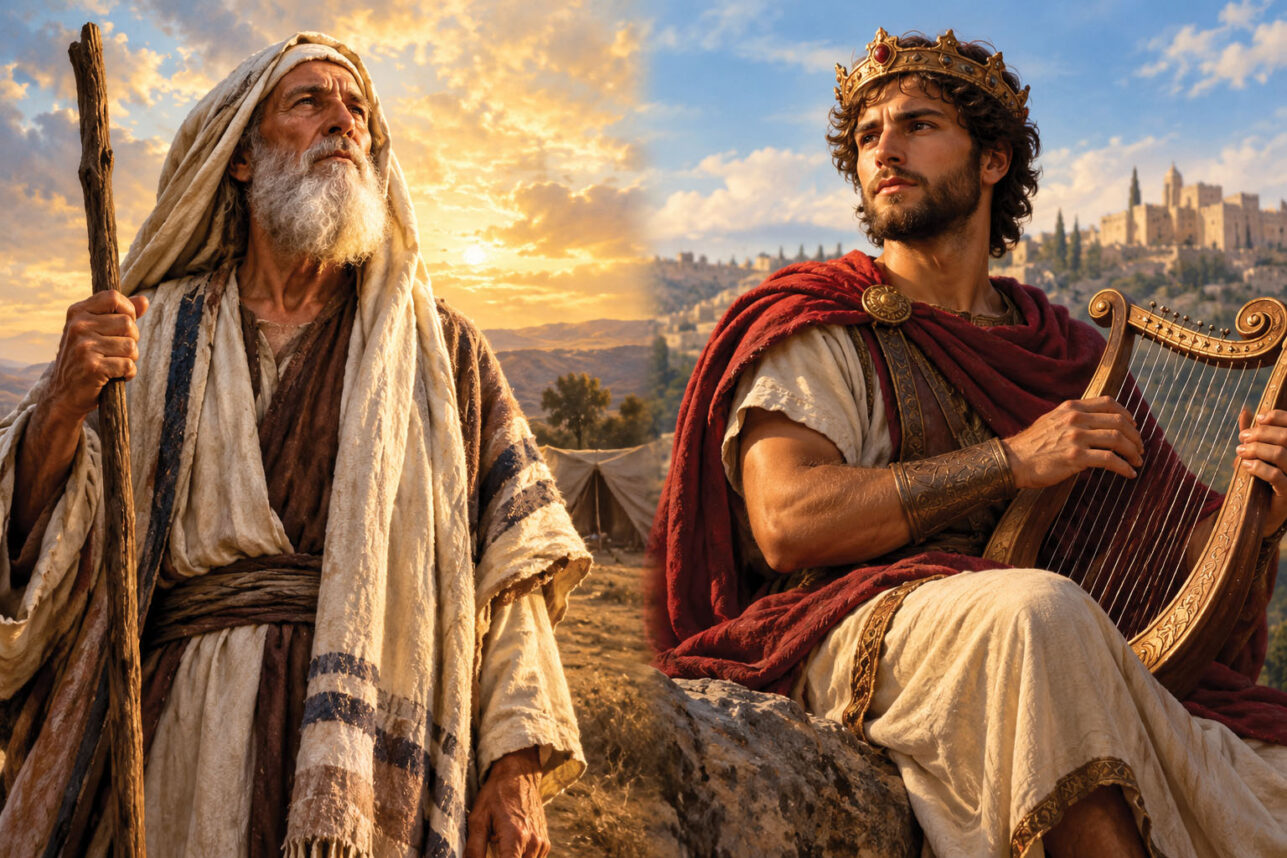
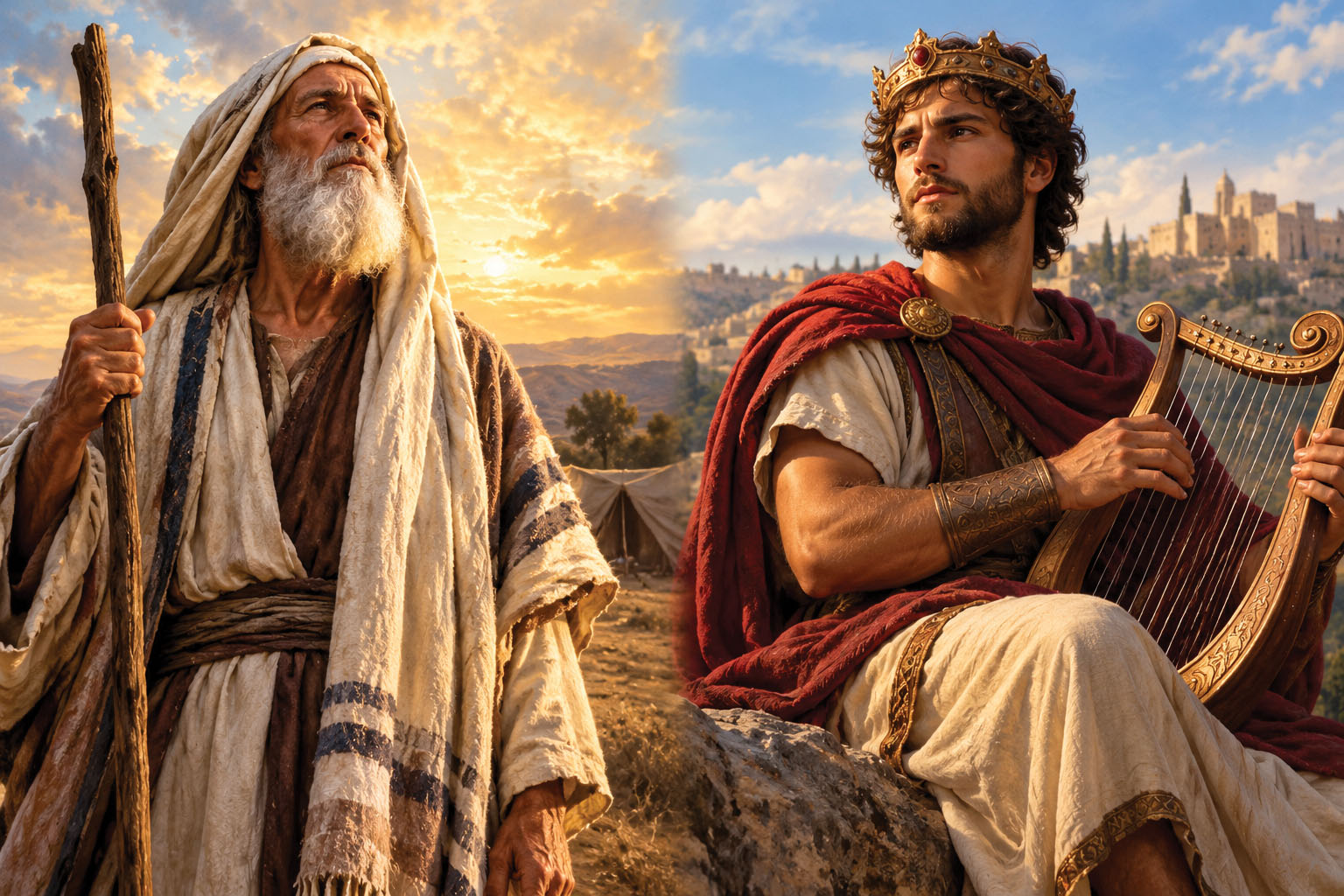
As we begin reading the story of Abraham in the weekly Torah portion, and as Israelis head toward the polls on Oct. 27, it is worth pairing the Jewish founding father with another foundational Jewish leader, David. As Rabbi David Silber argues in his recently published “Human Kingship: Studies in the Book of Samuel,” much can be gleaned by considering the two great heroes side-by-side.
Among the similarities he notes between Abraham and David’s tales are how they approach war. Abraham pursues the four kings who captured Lot and the people of Sodom (Genesis 14). David pursues the Amalekites who took the women and children of Ziklag (1 Samuel 30). The stories not only share a common theme: the syntax is similar in both as well. Each leader musters his men and gives chase, and each returns with everything that was taken. Abraham’s allies Aner, Eshkol and Mamre guarded the baggage while Abraham’s own servants went into battle. Yet Abraham insists they receive their share of the spoils. David, too, returns to find that 200 men had been too exhausted to cross the Wadi Besor, and the “worthless” among his fighters want to deny them a portion. David refuses, ruling that the share of those who stay with the baggage equals the share of those who go down to battle. The text then says he made this “a statute and an ordinance” in Israel.
Reading the two accounts together, Rashi suggests that David learned this lesson from Abraham. Rabbi Silber adds that the names and word choices in the stories seem to point to the purposeful echoes. Abraham is greeted by Melchizedek, whose name evokes tzedek, justice. He is met in the Valley of Shaveh, a place of equity. David’s decree is referred to as chok umishpat, law and judgment. For both figures, those who support the fighters in practical ways, even if they don’t fight themselves, have their roles to play in the success of the nation and should be fairly recognized for their contributions.
Rabbi Silber’s second observation stretches beyond the battlefield to inhabiting the land itself. Abraham defeats kings whose territory includes the Rephaim, the Emim, the Horites and the Amalekites, the ancient and giant peoples of Canaan. David, centuries later, fights these same nations under new names, and Goliath, famously slain by the young David, is described as one of these giants. In this sense, he suggests, the founder of the Jewish family, Abraham, begins the conquest of the land and David, who founded its eternal monarchical dynasty, completes it. Abraham captures Salem (Jerusalem) in symbolic anticipation of David’s later conquest.
Leadership, in other words, is a civic and societal relay. It is the role of those in charge to steward the national project toward its next stage of development.
Thirdly, both Abraham and David experience a crucial personal turning point that sanctifies what becomes a sacred place. In the binding of Isaac on Mt. Moriah, Abraham looks up and sees the ram that he sacrifices instead of his son. During the plague unintentionally sparked by his ill-intentioned census-taking, David looks up and sees the angel of vengeance with his sword drawn over Jerusalem. Shortly after the Akedah, Abraham refuses Ephron’s offer of a free cave and pays full price for what becomes known as the Cave of the Patriarchs. David tells Aravnah, at whose threshing floor the plague was paused, “I will buy it from you at a price,” setting the stage for the Temple to be built on the same mountain upon which Abraham and Isaac had ascended centuries earlier. As Silber summarizes: “both Abraham in the story of the binding of Isaac and David in the story of the census understood that they are mortal, finite human beings. They demonstrate their subservience before God and their awareness that ultimately it is God who decides. Abraham unquestioningly accedes to God’s commandment to sacrifice his son, and David accepts God’s punishment and recognizes that the people are not his own. This acknowledgment of human limitation is what allows for the revelation of divine mercy.”
Anyone who votes, or leads, then, would be wise to study the story of Abraham and David. Together they remind us of three key lessons: that a society only succeeds when all sectors see themselves as part of the national endeavor, that a strongly held sense of mission powers forward progress and that sacrifices are often necessary to fully appreciate both God’s grace and the sacredness of the land on which we dwell.
Rabbi Dr. Stuart Halpern is Associate Provost for Strategic Initiatives at Yeshiva University and Deputy Director of Y.U.’s Straus Center for Torah and Western Thought. His books include the newly released “Jewish Roots of American Liberty,” “The Promise of Liberty: A Passover Haggada,” “Esther in America,” “Gleanings: Reflections on Ruth” and “Proclaim Liberty Throughout the Land: The Hebrew Bible in the United States.”