
I’m not a huge fan of puns. They often seem forced, and sometimes they just make me groan.
But last week’s Torah portion, Noach, contained one in Hebrew that’s worth exploring.
After the story of Noah and his massive ark, we read about his descendants—a few genealogies, as is biblical custom.
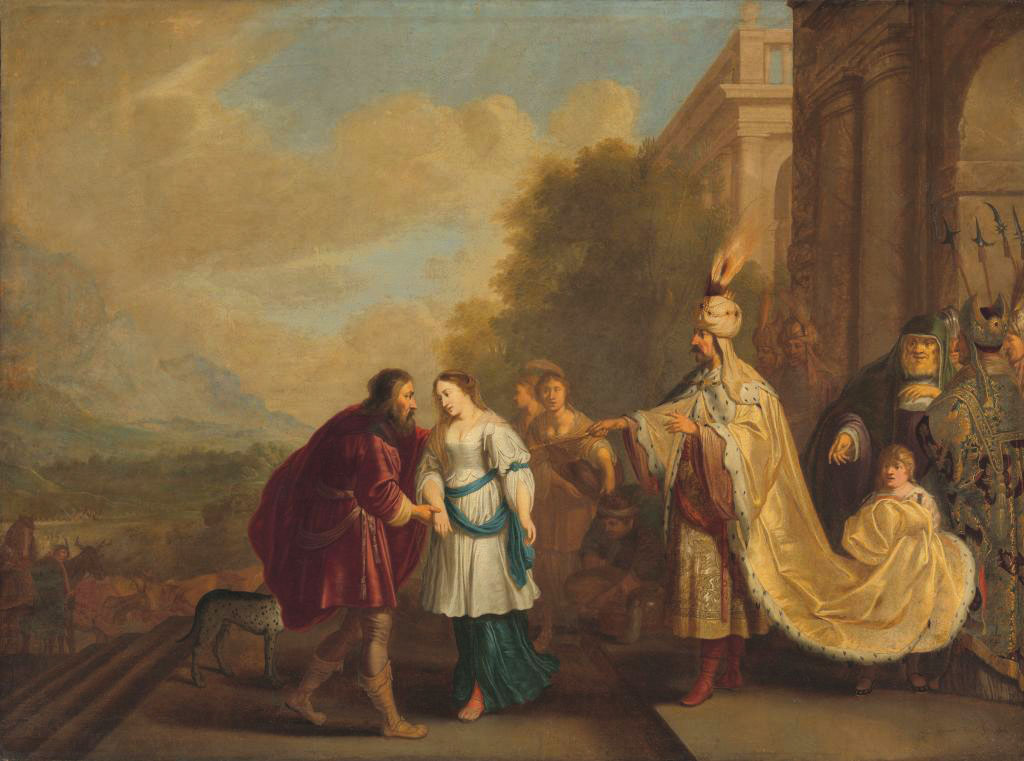
And then we come to the story of the Tower of Babel. It’s only nine verses long, so it’s worth sharing the whole thing:
Everyone on earth had the same language and the same words. And as they migrated from the east, they came upon a valley in the land of Shinar and settled there. They said to one another, “Come, let us make bricks and burn them hard.”—Brick served them as stone, and bitumen served them as mortar.— And they said, “Come, let us build us a city, and a tower with its top in the sky, to make a name for ourselves; else we shall be scattered all over the world.” GOD came down to look at the city and tower that the mortals had built, and GOD said, “If, as one people with one language for all, this is how they have begun to act, then nothing that they may propose to do will be out of their reach. Let us, then, go down and confound their speech there, so that they shall not understand one another’s speech.” Thus GOD scattered them from there over the face of the whole earth; and they stopped building the city. That is why it was called Babel, because there GOD confounded the speech of the whole earth; and from there GOD scattered them over the face of the whole earth. (Genesis 11:1–9, JPS translation)
The pun appears in the final verse. The place where they built the tower is called Babel because there God confounded (balal) the speech of the whole earth.
Once, humanity spoke the same language. Everyone could understand everyone else. And somehow, it all changed. Not only do we now speak different languages, but we often struggle to understand one another even when we’re speaking the same language.
I don’t read this story literally. I don’t believe humanity once worked together to build a tower to heaven, only to have God intervene and cause people to speak different languages. Rather, I see this as an attempt by the biblical authors to explain an existing phenomenon: different peoples speak different languages. If we are all descendants of the same human family, how on earth did that come to be?
Our wise ancestors told a story to explain the world as they knew it, often with a wink. Why do we have such a hard time understanding one another? Because of our own overreach! We got a little too ambitious, decided to build a tower all the way to heaven, and God showed us what was what—mixing up our speech so that each language would sound like (forgive the pun) babble to everyone else.
I’ve been thinking about this ancient story, told by our ancestors thousands of years ago, in the context of an extraordinary conference I attended earlier this month: the National Convening of the Black-Jewish Alliance in Chicago.
The gathering was sponsored by the Exodus Leadership Forum, a nonprofit organization dedicated to forging a renewed Black-Jewish covenant to help make our world a better place for all.
In August, I participated in a Black-Jewish clergy summit in Atlanta that helped lay the groundwork for this larger gathering. The convening in Chicago brought together more than 200 clergy members, nonprofit leaders, student activists, facilitators, and trainers from across the country.
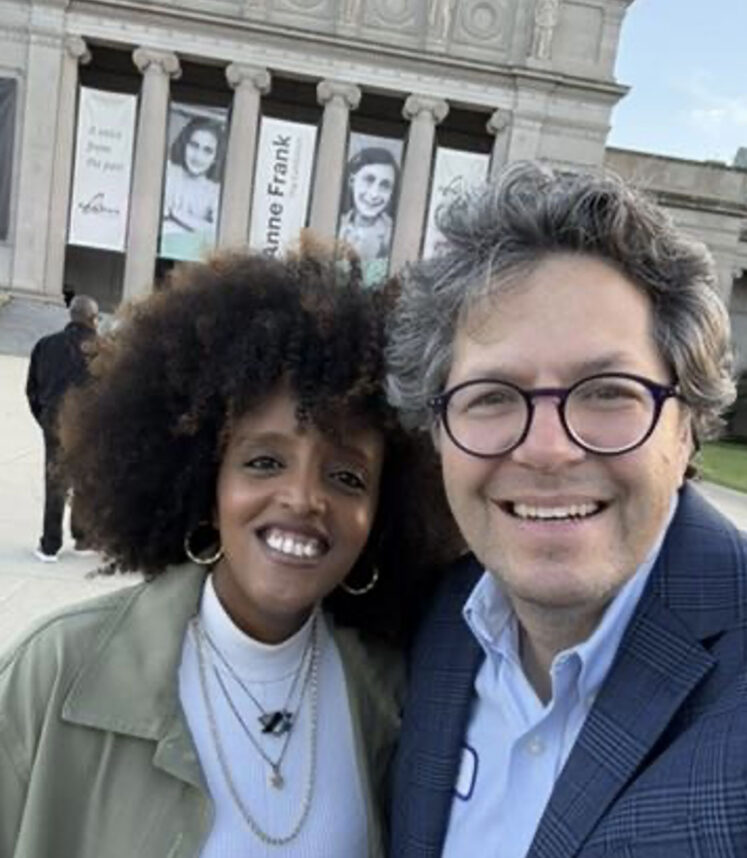
I had the honor of leading the spiritual opening of our full day of work alongside my colleagues Rabbi Sandra Lawson (Durham, NC) and Pastor Aramis Hinds (Detroit). Later, I participated in a panel with Pastor Carl Day (Philadelphia), Rabbi Matthew Gewirtz (Short Hills, NJ), and the Rev. Dr. David Jefferson, Sr. (Newark).
This is truly a national movement.
So what does the Tower of Babel have to do with the Black-Jewish Alliance?
In one of our sessions, Exodus Leadership Forum founder Van Jones spoke about the importance of the language we use when we talk to and about one another—as Black people, as Jews, and as Black Jews.
Language matters. The words we choose matter. How we speak to one another—and about one another—can either strengthen relationships or tear them apart.
Van challenged us to think carefully about words that cause pain. Words like “genocide,” “apartheid,” and “colonization.” Words like “thug,” “welfare queen,” and “Black-on-Black crime.” (As Van pointed out, “Nobody ever talks about ‘white-on-white crime,’ do they?”)
Each of our communities has words that land on the other as wounds, often without the speaker ever realizing it.
This doesn’t mean we can’t criticize or challenge one another. It doesn’t mean avoiding difficult conversations or pretending our disagreements don’t exist. Quite the opposite. We need to be curious, willing to listen, and prepared to engage honestly. But we also need to recognize that words carry histories, associations, and wounds that may be different from our own.
Even when we speak the same language, there is so much room for misunderstanding and hurt.
And that’s where the ancient story of Babel feels especially relevant.
In the Torah, humanity builds a tower to make a name for itself. The project ends in confusion, division, and scattering.
The midrash finds an even deeper darkness in this story—not simply in the builders’ ambition, but in how they treated one another. So consumed were they by their desire to build a tower that would make a name for themselves that when a brick fell, the builders wept. But when a worker fell from the tower, no one even noticed. (Pirkei DeRabbi Eliezer 24)
But what if we could build a different kind of tower?
Not one built by people who all speak alike, but by people who speak differently and commit to understanding one another anyway. Not one built out of fear—though both our communities know what it means to feel threatened—but one built out of trust.
I left Chicago more convinced than ever that our communities can build something important and urgently needed together. Not a tower reaching toward heaven to glorify ourselves, but a tower grounded in justice and understanding, partnership and mutual support.
A tower built not to make a name for ourselves, but to make a difference in the world.
Of course, building something meaningful takes more than good intentions. It requires showing up for one another.
This Thanksgiving, I’ll be going to Compton to support Greater Zion Church Family’s annual turkey giveaway. Greater Zion, led by Bishop Michael Fisher, has been a close partner of Stephen Wise Temple for years. Our relationship has grown through shared worship, community service, difficult conversations, and even journeys to Israel together.
We’ll also be organizing more pulpit exchanges and opportunities for members of our communities to spend time together. These relationships cannot be sustained by clergy and organizational leaders alone. We need people to show up, get to know one another, and invest in the hard work of building trust.
But we don’t need to wait for a special event to begin building.
Every day, we can strengthen this partnership by remembering the extraordinary history we share: the Black-Jewish alliance that stretches back to the founding of the NAACP; the Civil Rights Movement; Black churches standing with Soviet Jews in their struggle for freedom; and, more recently, the strong support of members of the Congressional Black Caucus for efforts to combat antisemitism and support Israel’s security.
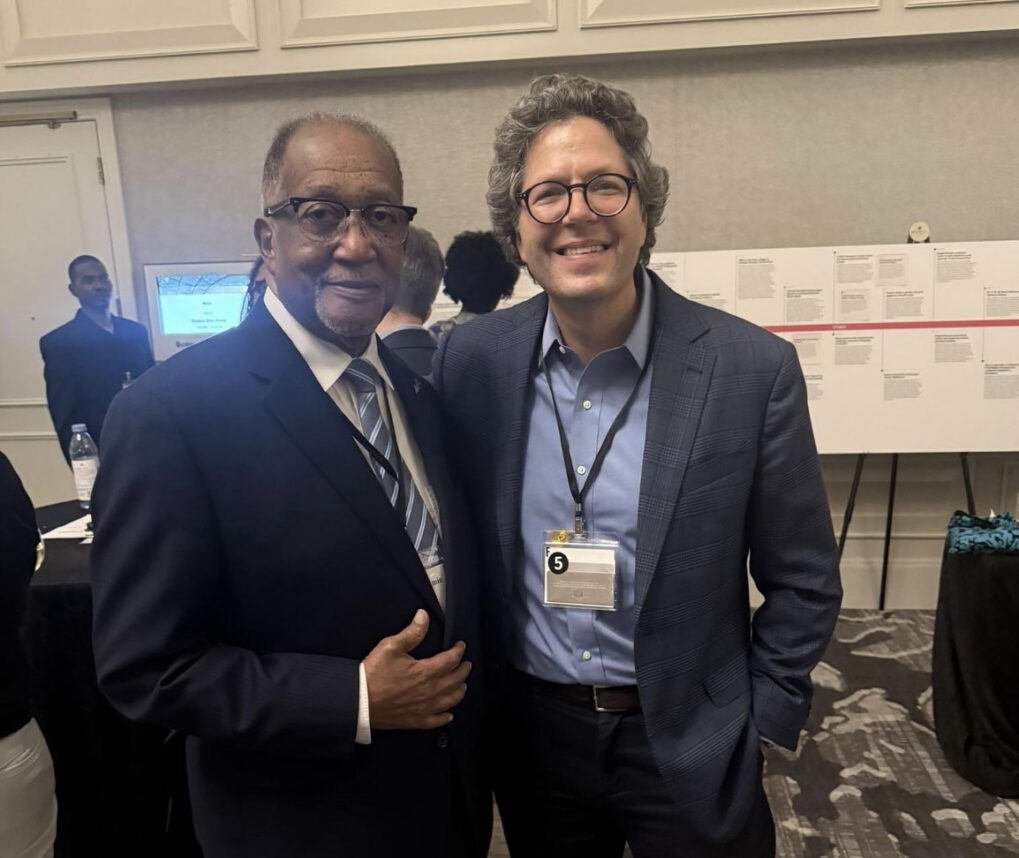
These are not trivial matters. They are chapters of a shared history worth celebrating and retelling. Too often, we focus on the moments when our communities have disappointed or misunderstood one another. Those moments are real, and we shouldn’t ignore them. But they are not the whole story.
We also have a remarkable legacy of standing together, taking risks for one another, and making this country better for our communities and for everyone else as well.
The Tower of Babel reminds us how easily language can divide us. Our shared history reminds us of what becomes possible when we find ways to understand one another.
There’s work to be done. Together.
Let’s listen. Let’s learn. Let’s dream. Let’s create. Let’s march together.
Let’s build a better world.
Rabbi Yoshi Zweiback is the Senior Rabbi of Stephen Wise Temple in Los Angeles and host of the podcast Search for Meaning with Rabbi Yoshi.