With notable exceptions like Jimmy Carter, Herbert Hoover and William Howard Taft (and Donald Trump), former U.S. presidents tend to stay away from controversy. They make policy pronouncements that largely track with their work in office without overtly criticizing their successors, they campaign for their own party’s most conventional candidates and they engage in bipartisan philanthropic efforts for disaster relief and other similarly unobjectionable projects.
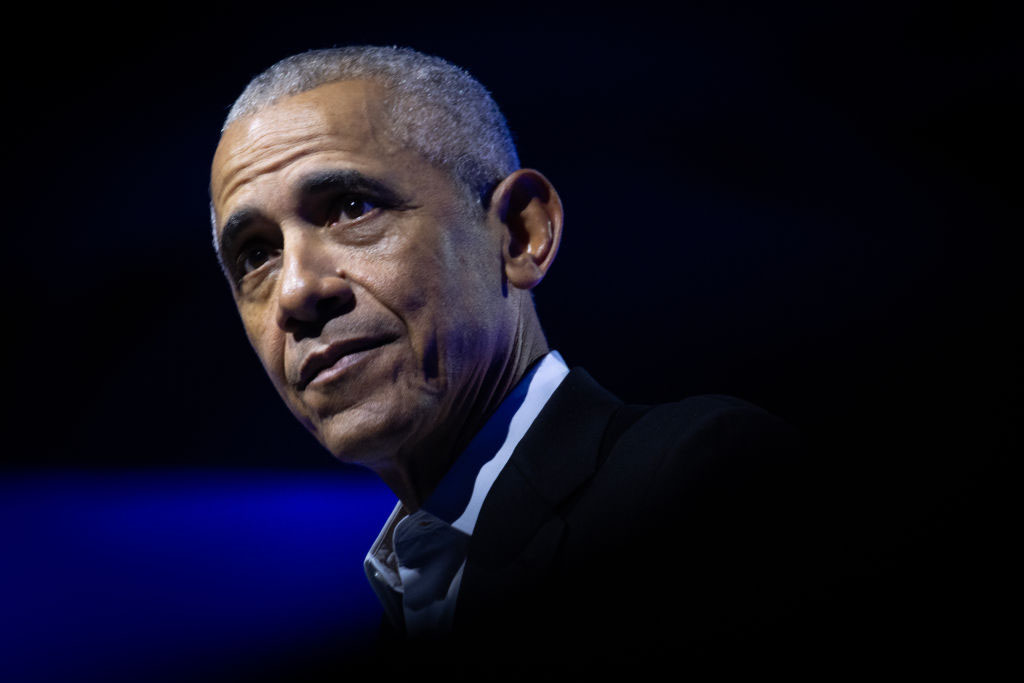
So why is Barack Obama revising almost eight decades of U.S. policy toward Israel in a way that libels Israelis as intruders on a Palestinian homeland? In a dismaying interview in Northern Ireland last week, the former U.S. president, who had been largely though not perpetually supportive of Israel during his time in office, fundamentally questioned the core premise of a Jewish state, suggesting that the territory on which Israel exists rightfully belongs to the Palestinian people.
“The fact is that the Jewish people for millennia were oppressed, discriminated against, killed. Europe was responsible for much of that. They understandably sought a refuge in a place where they had historic ties. That is undeniable,” Obama began, oddly limiting his criticism of the historic mistreatment of Jews only to Europeans. By overlooking the long history of Arab violence against the Jewish people, Obama implicitly absolved Israel’s longtime antagonists of any responsibility for the ongoing turmoil in the Middle East. This lay the groundwork for his most objectionable remarks.
“What is also undeniable is that they took the land of people and they were expelled,” Obama continued, using the ‘land of the people’ formulation to unilaterally award ownership of the territory that became the state of Israel to the Palestinians. “And those people, understandably, said, ‘This is an injustice, and I want my land back.’”
“I want my land back.” Let’s deconstruct that deceptively simple sentence. The former president of the United States accepted without question the most controversial assertion in modern Middle Eastern history, conceding rights to the contested territory over which Israel has fought 22 wars in its 78 years of existence. He also ignored decades of Israeli proposals – and Arab refusals – to share the land over which both peoples have credible historical claims.
Accepting the Palestinians’ demand for “my land” dismisses Israelis as interlopers and invaders, and despite his offhand reference to the Jewish people’s age-old home in Israel as “a place where they had historic ties,” Obama blithely cast aside any legitimacy for Jews’ right to our homeland.
Obama went on to criticize Israel’s current Gaza strategy, offering a more familiar but equally objectionable assessment that the Jewish state had “ceded moral ground” by defending its people against terrorist attack. He then directed some disapproval toward Hamas but framed his evaluation in an unsettlingly practical and strategic context.
“You could not have designed something that was less likely to produce meaningful change. In fact, it created the opposite,” Obama said, seemingly suggesting that his problem with the mass kidnappings, rapes and murders was tactical rather than moral.
Finally, the former president chided the Jewish state and its people for not being more creative in defending their homeland and their population from this violence. Israel must “rethink, reimagine” how to “live in this region — are you just going to be behind walls and wipe out everybody around here, or are you going to find some just way of defending yourself while still acting in an ethical, moral way?”
But Obama neglected to explain how to protect a civilian population against this type of terrorism that would meet his unexplained standard of ethics and morality. Nor did he indicate whether “reimagining” a nation’s survival meant doing so without the use of military weaponry to defend against its invaders.
Obama’s career has been marked by a cautious respect for political convention, combined with a well-honed political radar as to what voters will tolerate at any given moment. The fact that he thinks such a once-radical message will be accepted by the American people speaks volumes as to the challenges that the winner of next week’s Israeli elections will face in the court of American public opinion.
Dan Schnur is the U.S. Politics Editor for the Jewish Journal. He teaches courses in politics, communications, and leadership at UC Berkeley, USC and Pepperdine. He hosts the monthly webinar “The Dan Schnur Political Report” for the Los Angeles World Affairs Council & Town Hall. Follow Dan’s work at www.danschnurpolitics.com