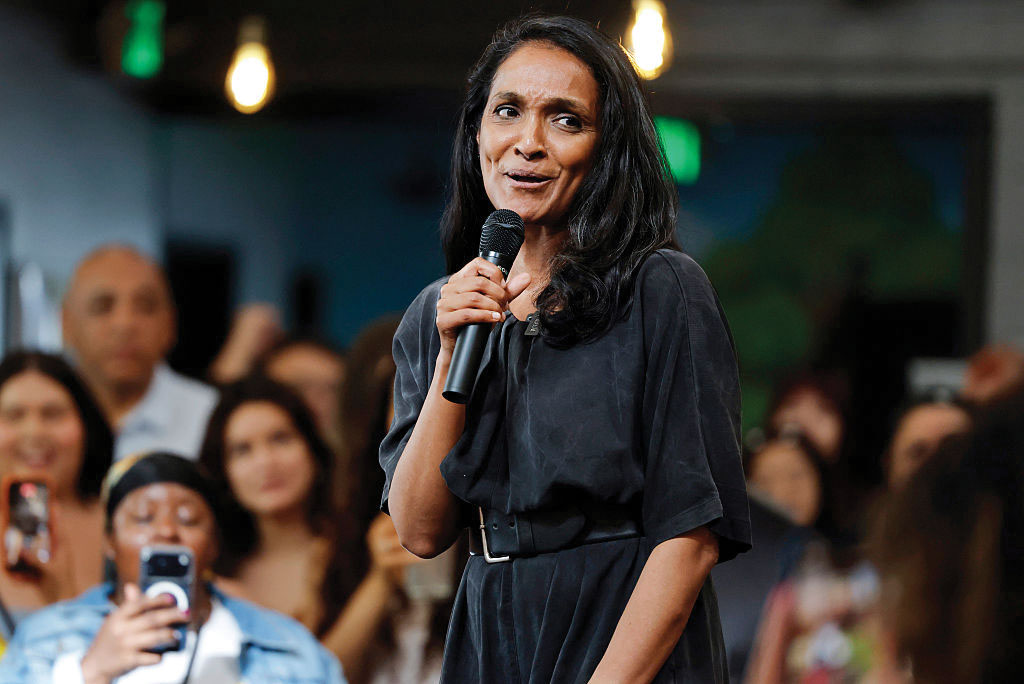

Years ago, I asked a very traditional Conservative rabbi why many rabbis seemed reluctant to discuss belief in God from the pulpit. He replied: “because discussing faith is very difficult.” But Rabbi Noa Kushner has risen to the challenge by encouraging Jews to “pretend” they believe because she thinks this path can lead to not only more robust Jewish practice, but also genuine faith.
Kushner, who was ordained by Hebrew Union College-Jewish Institute of Religion in 1998, is the daughter of Lawrence Kushner, a prominent Reform rabbi and author. Growing up in an environment suffused with Jewish practice and thought, Kusher writes that her childhood memories are of “grown-ups joking around mixing the serious with the light-hearted,” providing the atmosphere in which she “learned how to try to be holy from being around these warm people.”
Following her ordination, Kushner served as a college Hillel rabbi at both Sarah Lawrence and Stanford, but today she is most known for her founding of The Kitchen in 2011. Although I have not personally experienced The Kitchen, from what I can tell it appears to be a unique, thriving community of Jewish seekers who learn, pray and celebrate Jewish tradition together. A couple years after The Kitchen was established, Newsweek hailed Kushner as a “rabbi to watch.”
Kushner writes that her book’s intended audience is embodied in the Biblical figure Yitro, the father-in-law of Moses, who is not “an Israelite in any way.” She explains her choice of Yitro largely in terms of his willingness to “show up” and help the Israelites in the wilderness. This idea of “just doing it” embodies a main theme of Kushner’s book. Hence the title: “Pretend You Believe.”
From a literary perspective, Kushner’s primary strength is storytelling and there is no doubt how masterfully she uses this technique. Her book mines narratives from the entirety of Jewish tradition and then some, ranging from numerous Biblical and Talmudic narratives, midrash (stories of rabbinic interpretation) and even Jewish folktales. She also selectively incorporates other narratives, including personal stories. This approach allows her to draw in readers from a variety of backgrounds and levels of Jewish knowledge. Through these narratives, she amply highlights the commonality of the human condition and experience.
Yet, as even her book’s title suggests, Kushner is especially trying to reach people who do not think they believe. Consider the opening line of her first chapter: “I want to begin with the assumption that you already believe in God, even knowing you likely do not.” Further into the book, Kushner observes: “I don’t think the right question is if you believe in God. I think a better question is whether you want to be close to God, and if so, what you are willing to do to try to bring that closeness about.” She equates belief to love in that both rush “in and out in waves” and so, if you require belief “as a precursor for religious life, you may come up short. But once you experience these waves, then the need for an airtight argument starts to loosen its grip.” Kushner elaborates: “The way to gain religious faith, comfort, belonging and love of God is to do religious things, to participate in the religious vocabulary of rituals, words and actions with sincerity. This means postponing knowing in advance, actively choosing a kind of naivete.”
In secular terms, her concept calls to mind the “Just Do It” slogan Nike coined in the 1980s. Building on a powerful analogy she attributes to Rabbi Lawrence Hoffman, the idea is to change the culture of Jewish prayer from one in which people act like visitors (or tourists) to one in which people are more like pilgrims who plan to stay and invest. Still, Kushner is keenly aware that many Jews, particularly those who are religiously liberal, define their Jewishness primarily through tikkun olam, a traditional Jewish concept that in modern times often is equated to “repairing the world” through wide-ranging, and often even secular, means.
But Kushner wants more from her audience. In what I think is her strongest chapter, titled “Responsible, In Awe,” she skillfully showcases how both responsibility and awe taken together can simultaneously furnish a pathway to greater involvement with Jewish ritual and heighten the human appreciation for “command.” Kushner writes that “we start with the view of religious tradition, which translates our yearning for repair into direct actions that we’re commanded to fulfill.” I love her emphasis on “command” because this is a concept that is discussed far too infrequently in non-Orthodox circles.
For Kushner, “to be religious is to be part of a living, breathing effort, inextricable from God and also indivisible from ethics.” In other words, “everything we do is under heaven and with each other, both.” This framework leads to her emphasis on “having awe” of God, a concept she prefers to the expression of “being religious,” and on taking “responsibility.” She emphasizes how these two qualities interact: “too much awe and we may become fixed in place, afraid to act” and “too much responsibility can give rise to hyper-responsibility and an overabundance of “self-appointed prophets.” But better to pair “responsibility with awe” so that we can take our place “among generations past and future, and under heaven.”
Kushner’s book showcases her rabbinic chops through her appreciation for command and ritual, and her unabashed willingness to emphasize these topics even in a work that is seemingly written for people who are not overwhelmingly characterized by faith in God. The narrative I found most poignant, and which brought tears to my eyes, was a personal one that combined her artistry as a storyteller with my perception of her rabbinic strength. Toward the book’s end, she recounts how she was summoned to sit with a young, dying man and his family right before he passed. His family included a range of religious and nonreligious backgrounds and they wanted a rabbi.
In her own words, she described the experience as “excruciating.” She started to sing because that was “the only thing” she knew “how to do in those moments.” She writes: “As I was singing and holding on to the hand of this man, I was silently giving his soul steady permission to return to God … I felt his soul slip out of his body.” Kushner concludes this narrative by saying that “with all the religious authority” she could muster, she facilitated “the transfer of a soul from one realm to another” as she looked “the family in the eyes and let them know we helped seal his life with a good seal.” Even as I write this, I still tear up.
Notwithstanding Kushner’s title, “Pretend You Believe” is a book that will resonate with Jews (and others) spanning the religious spectrum. As a religious Jew with a strong sense of faith, I found it both compelling and refreshing. Rabbi Kushner provides a path for elevating our humanity, appreciating the wisdom of Jewish tradition and practice, and experiencing the divinity residing within all humans, even those who do not yet acknowledge God’s presence.
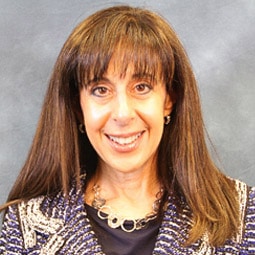
Roberta Rosenthal Kwall, is law professor, author and Jewish educator with a focus on American Judaism. Her latest book is “Polarized: Why American Jews are Divided and What to do About It” (Bloomsbury Press, 2026).