
When George Washington was elected our nation’s first president, the various religious denominations each wrote him a letter of congratulations. There were roughly 2,000 Jews in the U.S. at the time. They, unable to agree on a unified text and representative, sent him three separate letters.
As long as there has been an America, in other words, there have been American Jews disagreeing with each other.
Fast-forward to today. American Jews disagree about Israel and disagree about the nature of, and how to combat, antisemitism. We disagree about American politics, Jewish education, Zionism, and of course religious practice. And because we live in an age in which disagreement is not merely expressed but performed, our arguments often seem more important than the relationships they are supposed to serve.
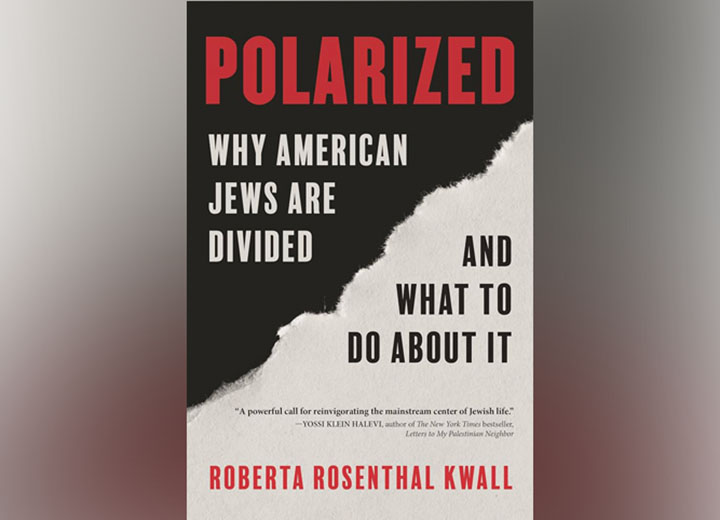
Along comes Roberta Kwall’s “Polarized: Why American Jews are Divided and What to Do About It,” offering a path toward a unified center for the American Jewish community. In it, Kwall, the Raymond P. Niro Law Professor at DePaul University College of Law, argues for a center defined by enough common commitments to make communal life possible.
“American Jews must understand that for Judaism to remain healthy, influential and relevant,” she writes, “it must be anchored by such a center where Jews can meet, both figuratively and physically.” Citing the Talmudic tradition of civil debate while acknowledging that sometimes even a big tent needs to leave some people on the outside, Kwall identifies a series of propositions around which a broad Jewish consensus might be constructed.
Those include: 1) Israel has the right to exist as a Jewish, democratic state; 2) American Jews were shocked and unprepared for the intensity of anti-Jewish and anti-Israel sentiment that emerged after Oct. 7, 2023; 3) American universities have, by and large, disappointed Jews in confronting antisemitism; 4) Antisemitism from every source must be confronted; 5) Hamas and other forms of Islamic terrorism must be condemned, as must terrorism committed by extremist Jewish Israelis; 6) Innocent Palestinians deserve Jewish sympathy and support; 7) Criticism of the Israeli government is legitimate; and 8) Aspirationally, a two-state solution remains a desirable long-term goal.
The author, a seasoned legal scholar, understands that all readers might not agree with her formulations and proposals. So much so that her book includes a blurb from “Call Me Back” podcast host and “Start-Up Nation” co-author Dan Senor stating, “Whether or not you agree with her solutions, ‘Polarized’ is an important contribution to a centuries-old debate about — Jewish debate.”
Nonetheless, in her passionately argued volume, she astutely identifies the need to rise to meet the challenges of our moment. Lamenting the rising tide of Jew-hatred, she notes the “world’s increased tolerance for, and even embrace of, antisemitism both generally and specifically in the context of Israel,” the “single-minded obsession with Israel’s conduct rather than with radical Islamic terrorism in way too many professions, the media and other sectors, including entertainment and the arts,” the “double standards that foster hatred toward Jews but seek to eradicate any whiff of prejudice directed toward any other group, including radical Islamic terrorists” and “the antisemitic indoctrination that has been given a free pass in so many educational settings from elementary schools up to the most prestigious universities.”
To stay unified amid such antagonism, Kwall contends that “the American Jewish communal world must harness its creativity toward building a larger middle ground that can work together to craft a new narrative about Israel, and about our rich Jewish tradition. This narrative must be thoughtfully designed to educate Jewish youth, as well as adults, on a broad, albeit diverse, basis.” After all, “unchecked polarization among the American Jewish community,” she warns, “is catastrophic for Jewish peoplehood and the continuity of Judaism.”
No doubt debates will continue to rage about who represents the Jews, what Jewish values are, and what the nature of the relationship should be between the American Jewish community and the State of Israel. But, as Kwall’s moving manifesto encourages, those debates can and should be had with a sense of shared peoplehood and pride in the millennia-old Jewish textual tradition. That is to say that the answer to the questions of our era is not to win every argument. It is to sustain a Jewish community worth arguing within.
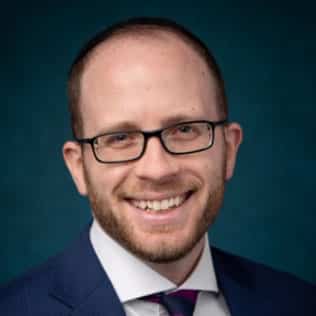
Rabbi Dr. Stuart Halpern is Associate Provost for Strategic Initiatives at Yeshiva University and Deputy Director of Y.U.’s Straus Center for Torah and Western Thought. His books include the newly released “Jewish Roots of American Liberty,” “The Promise of Liberty: A Passover Haggada,” “Esther in America,” “Gleanings: Reflections on Ruth” and “Proclaim Liberty Throughout the Land: The Hebrew Bible in the United States.”

































