
The debate over turnout in democratic elections leads to something of a paradox. On one hand, high turnout is considered desirable. It signals civic engagement. It signals a functioning, healthy democracy. On the other hand, high turnout signals distress: a sense of emergency, deep polarization, high anxiety.
Two fresh examples: the election in Israel produced the highest turnout of this century. In fact, they were the first elections to bring turnout back to roughly the levels that were the norm in Israel before the failed electoral reform of the mid-1990s. Why did so many Israelis turn out to vote this year, of all years? It is fairly obvious. A deep societal rift, a prolonged war, a sense of emergency, a conviction that these elections are fateful – a matter of life and death.
As in Israel, so in America. Last week’s midterm election drew the second-highest turnout in more than a century. And which midterms hold the American record? The ones held eight years ago – the midterms of Donald Trump’s first term. In other words: twice Trump is president, and twice the midterms bring a record share of voters to the polls. As we said: a deep societal rift, a prolonged war, a sense of emergency, a conviction that the elections are fateful – a matter of life and death.
In both cases, it is probably a good thing that so many came out to vote. And it is also worrying that so many came out to vote.
For an Israeli observer of the American elections, there is a double cause for concern. Not only is America polarized in a way that drives record numbers to the polls; America also manages to be un-polarized on only a handful of issues – and at least one of them (the desire to end the war in Iran) touches directly on Israel’s interests. Hidden here may be a hint of an interesting – and, naturally, troubling – reversal worth noting.
For many years, for decades, Israel offered Americans the following narrative: You disagree about a great many matters of foreign and domestic policy, and you compete over who holds power. But one thing stands above political dispute. Above partisan polarization. That thing is support for Israel. Democrats and Republicans support Israel. Liberals and conservatives support Israel.
This narrative served Israel well, and to some extent it served Americans too. They also understand that in an age of many disputes it is good to have a few things that remain above the fray. That is why they bought it. That is why they promoted it. Here is Barack Obama, addressing the AIPAC policy conference in 2012, an election year, on his way to a second term: “America’s commitment to Israel has endured under Democratic and Republican presidents and congressional leaders of both parties. In the United States, our support for Israel is bipartisan, and that is how it should stay.”
The narrative was, of course, somewhat simplistic. It was the slogan of Israel’s supporters, and the data did not always back it up. In any event, it has steadily lost its validity, eroding over recent decades. In 1978 there was almost no partisan gap in support for Israel: 49% of Republicans and 44% of Democrats sided with Israel over the Palestinians – a gap of just 5 points. And it remained fairly stable for the next two decades. Bipartisan support. Until the early 2000s. The two decades that followed were the years in which Israel and its supporters clung by force to the story of bipartisan support, while the data insisted the story was not quite accurate. Republican support for Israel ranged from around 60% to nearly 90% (in 2018, 87%). Democratic support for Israel was much lower – between 40% and 60% – and eroding.
By the end of the last decade, the story of bipartisan support was beginning to sound ridiculous. On Gallup’s recurring question about sympathy for Israel versus the Palestinians (a somewhat irritating question, but the only one asked continuously for so many decades), Democrats flipped, and independents followed. In 2023, Democrats’ sympathy for the Israelis fell to 38%. In 2026 it is already 17%. And among independents: Forty-one percent sympathize with the Palestinians, against 30% with Israel. That too is a reversal. Among Republicans there is still a large majority for Israel, but not as large as it once was. Seventy percent is a lot less than 87%.
And here the story begins to show suspicious signs of coming full circle: a story of bipartisan support that gradually became a story of one-party support, until it flips entirely and becomes once again a story of consensus – this time, of bipartisan opposition. From a consensus in favor of Israel, to a political dispute over Israel, to a consensus against Israel. If the reversal materializes, Israel will once again supply Americans with the comforting narrative of agreement, on at least one issue. Only this time, instead of agreement in favor of supporting Israel, it will be agreement against it.
And here the story begins to show suspicious signs of coming full circle: A story of bipartisan support that gradually became a story of one-party support, until it flips entirely and becomes once again a story of consensus – this time, of bipartisan opposition.
This is, of course, an exaggerated description of the present state of affairs. It is not the situation now. One can hope it never will be. On the other hand, it is not an exaggerated description of a possible future, if the current trend continues.
The Matter with Kansas
What’s the matter with Kansas? The question became a political catchphrase more than 20 years ago, with the publication of Thomas Frank’s book of that title. How is it that this state is held so tightly by the Republican Party in its current incarnation? Kansas is a state with a rich history of radical ideas, going back to the days before the Civil War, when a small but bloody war was fought there between supporters of slavery (mostly newcomers from outside) and its opponents (the earlier residents of Kansas).
“What’s the Matter with Kansas?” was one of the most influential American political books of recent decades. Hillary Clinton said she read it after losing the 2016 election to Donald Trump. She probably should have read it earlier. It is a book that seeks to decode – and there is, of course, debate over how well it succeeds – the dominance of Christian-conservative politics in the heartland states. Frank’s verdict was that the Democratic Party’s upper ranks had abandoned the masses in favor of the elites. Instead of offering an economic model that benefits the lower classes, the party chose to wage a culture war over issues like LGBT rights and abortion. This year’s midterms showed that things could be done differently.
Kansas’ outgoing senator, Roger Marshall, supported the war in Iran and supported aid to Israel. The incoming senator wants to end the war and to cut aid to Israel. Not every weapon Israel asks for needs to be supplied by the United States, he said. Israel must be secure, but it is not right to give it license to destroy Gaza.
About half of Kansas’ midterm voters said on election day that the United States helps Israel too much (50%). The great majority of them (83%) voted for the winner, Adam Hamilton – but 15% of them voted for Marshall. In other words: voters for the Republican senator who believe that aid to Israel is excessive.
They are not countered by Americans who believe aid to Israel is too little. Only a small fraction of Kansas voters (12%) think Israel should receive more aid than it gets today. The opposing position to “too much aid” is not “too little aid” but “about the right amount.” No more is needed, and no less. Thirty-nine percent of Kansas voters think so, and three-in-four of them voted for the loser, Marshall (76%).
In other words, the losing candidate in Kansas is also the candidate of the losing position in Kansas – that aid to Israel is about right. The winning candidate in Kansas is also the candidate of the winning position in Kansas: Israel gets too much. Here is an explanation for President Donald Trump’s surprising statement about an immediate halt to aid. Here is an explanation for Vice President JD Vance’s troubling statement about the need to change the relationship with Israel.
The Matter with Florida
Florida’s 19th congressional district is deep red. Its residents voted for John McCain for president in 2008, Mitt Romney in 2012, Trump in all three of his campaigns, Marco Rubio for the Senate and Ron DeSantis for governor. In recent cycles they sent Byron Donalds to the House of Representatives. He is a Republican who advocates standing “100% with Israel.” This week he was elected governor of Florida. Perhaps partly thanks to that support for Israel.
Florida, the third most populous state in the country, remained a relatively stable Republican fortress that the tsunami skipped over – at least on the surface. Ashley Moody managed to hold her Senate seat against the Democrat Angie Nixon. Donalds, as noted, will be governor. But he won by a margin of just one percentage point – roughly 100,000 votes out of more than 8 million cast. This, in a state where the outgoing governor, DeSantis, won four years ago by 20 points, and Trump won the presidential race by 13. A win is a win, of course, but appearances can deceive.
Here is what Florida’s voters said about aid to Israel – in the Republican fortress, remember. Fourteen percent said the aid is not enough. Forty percent said it is “about right.” Forty-six percent – the largest group – said it is “too much.” About a quarter of the Florida voters who said the aid is too much voted for Governor Donalds. That is, they chose the Republican governor but believe aid to Israel should be cut.
Florida has a large Jewish community, though it is worth remembering that “large” is relative to other states, not large on a statewide scale. In all, 3% of the state’s voters identified as Jews; 5% of voters in the governor’s race did. Of those, six-in-10 backed the Democrat, David Jolly, over Donalds.
One can go state by state on the question of aid to Israel. In Georgia, 47% said “too much.” The Democrats won a historic victory. In Michigan, 51% said too much. The openly anti-Israel candidate, Abdul El-Sayed, won the Senate race. Half of voters said U.S. support for Israel was not an important consideration when they went to the polls – which explains why four-in-10 Michiganders who believe U.S. support for Israel is insufficient (38%) also voted for El-Sayed. The support may be insufficient – but if the issue is not important to them, their vote will not rise or fall on it.
In Ohio, Sherrod Brown, a former senator, returned to office, unseating the incumbent Republican, Jon Husted. Forty-eight percent of Ohio voters said support for Israel is too much. In Iowa, the Democrat Josh Turek won. Forty-eight percent of voters said support for Israel is too much; eight-in-10 of them voted for Turek. But so did three-in-10 of those who said support for Israel is insufficient. Turek has previously backed conditioning military aid to Israel in various ways. Louisiana: here is a state where the Democrats nearly made history, and in the end did not. Four-in-10 Louisiana voters think aid to Israel is too much; five-in-10 think it is about right. North Carolina: Forty-eight percent too much. South Carolina: Forty-one percent too much. Wisconsin (a Democratic governor, the state’s first Black governor): Fifty-five percent too much. Perhaps one can take comfort in the fact that the new governor, David Crowley, is far more sympathetic to Israel than Francesca Hong, who ran against him in the primary.
What shows up in the state’s exit polls shows up in national surveys too. In 2012, 45% of Americans said military aid to Israel should continue at a similar level, 15% wanted to increase it, 19% to reduce it, and 19% to end it. In 2026, the share wanting to increase aid has dropped to 8%, the share wanting to keep it as is has dropped to 35%, and above all, the share who think it should be stopped has jumped to a third (35%). In the early 1970s, an American airlift supplied Israel with military equipment it desperately needed in the Yom Kippur War.
Since then, American military aid has grown – through the 1970s, through the decades that followed, and into the 21st century. A 2020 Congressional Research Service report found that Israel is the largest cumulative recipient of U.S. military aid since the end of World War II. In fact, from the late 1970s on, the annual question was no longer whether Israel would receive military aid, but how much. Israel grew accustomed to it, and also became adept at convincing itself that the aid is desirable not only for Israel but for the Americans as well. Israel, the former Air Force commander Eitan Ben Eliyahu wrote this week, “is the forward line of the United States in the Middle East. It defends America’s security and its public and global interests without Washington having to send a single soldier into battle.” Here is an elegant way to ask for charity without feeling like a beggar. The claim is not ridiculous, of course. One can produce evidence of the benefit Israel delivers to the United States in return for the generous aid. But the beggar is not the one who needs convincing – the benefactor must recognize that reality too. And right now the benefactor seems to recognize a different reality. At least as far as the American public is concerned – and, increasingly, as a consequence, its elected representatives as well.
The Matter with Jerusalem
At the top of the Israeli system one can find four main approaches to dealing with these groups and with the new situation in the American arena.
The first approach: If and when Netanyahu goes, the situation will improve considerably. The alienation from Israel stems mainly from fatigue with Netanyahu’s exhausting presence in American discourse – from overreliance on Republicans and evangelicals and neglect of liberals and Democrats. A new government and new faces will allow a return to normal.
The second approach: The main challenge is hasbara – public diplomacy, messaging, selling an attractive and up-to-date narrative. If Israel can explain why it is right (say, in its decision to sow massive destruction in Gaza) and how important it is (see Ben Eliyahu’s article), things will go back to the way they were.
The third approach: Israeli policy must change. Israel will have to give up aid, accept dictates on diplomatic and security matters, and get onto a path that American administrations – this one and those to come – can live with. In this view there is no substitute for America, and no way for Israel to exist securely without American support. It is approaching a dangerous loss of that support, and it will have to sacrifice other interests, more or less important, to protect it.
The fourth approach: America is changing, and Israel will have to change too. America is changing in the direction of less support, so Israel will have to develop the capacity to survive and thrive without it. To become a super-Sparta. This too is, in essence, a policy-change approach. But where the third approach advocates changing policy to protect American support, the fourth advocates changing policy in light of the expected loss – partial or total – of American support.
All of these approaches should be treated as a teachable moment. The United States is an important friend to Israel. A unique friend. It deserves thanks and appreciation for its friendship. At the same time, it is unwise to overestimate the depth of the American commitment. The U.S. military does not exist to defend Israel, and the American interest does not always overlap with Israel’s. American administrations support Israel, like any other cause, for as long as their calculation finds that the interest in supporting it outweighs the interest in not supporting it. Ronald Reagan promised to keep the Marines in Lebanon and did not. George H.W. Bush abandoned the Kurds after the first Iraq war. The Russians claim, rightly, that the United States broke its promise not to expand NATO after the fall of the Soviet Union. American presidents break promises to foreigners and to Americans alike. Woodrow Wilson promised not to drag America into the First World War. That was the promise. Lyndon Johnson promised not to “send American boys” to do what “Asian boys ought to be doing for themselves” – and then sent more American troops to Vietnam.
What will Israel actually do? The broad approaches outlined here are partly complementary and partly competing. A debate over them, explicit and implicit, is under way.
What will Israel actually do? The broad approaches outlined here are partly complementary and partly competing. A debate over them, explicit and implicit, is under way. For now there is no decision. A great many political considerations get in the way of deciding on the merits. A great many questions about the essence of the Israeli interest on various issues make a decision hard to reach. A simple example: for some, giving up outposts in Judea and Samaria to earn a few points of credit in Washington is very easy. For others it is very hard, and the outposts matter more to them than the credit. The former will say it is all because the latter do not understand how much the credit matters. The latter will say it is all because the former do not understand how much the outposts matter.
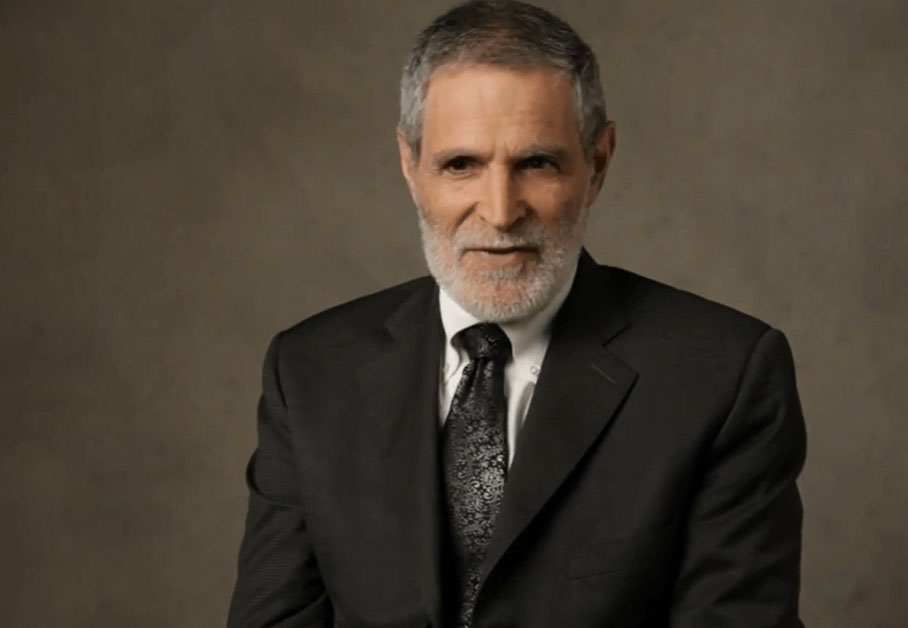
Shmuel Rosner is senior political editor. For more analysis of Israeli and international politics, visit Rosner’s Domain at jewishjournal.com/rosnersdomain.