When Eli Beer was a child, his hero was Eli Cohen, the legendary Israeli spy who infiltrated the highest levels of the Syrian government in the 1960s. Recruited by the Mossad, Cohen was sent to Damascus under the assumed identity of Kamel Amin Thaabet, a wealthy Syrian businessman who had supposedly returned to his homeland after years in Argentina. Fluent in Arabic, he managed to gain the trust of senior Syrian officials and obtain valuable military intelligence for Israel. But his cover was eventually exposed, and on May 18, 1965, he was publicly hanged in Damascus. He was only 40 years old.
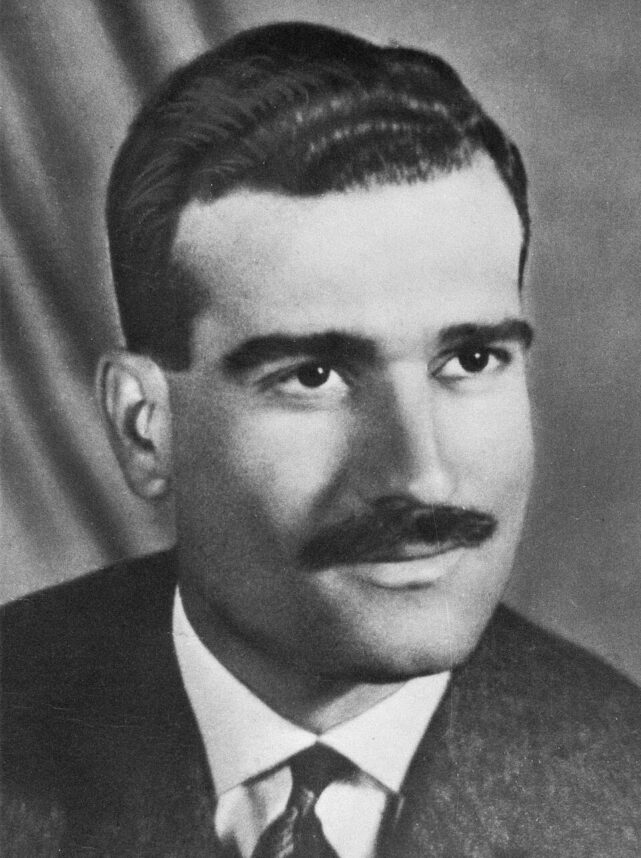
Cohen’s extraordinary courage and sacrifice made him a national legend in Israel and left a deep impression on Beer. Cohen became his childhood role model, teaching him his first lesson about bravery. Beer wanted to grow up to be just like him.
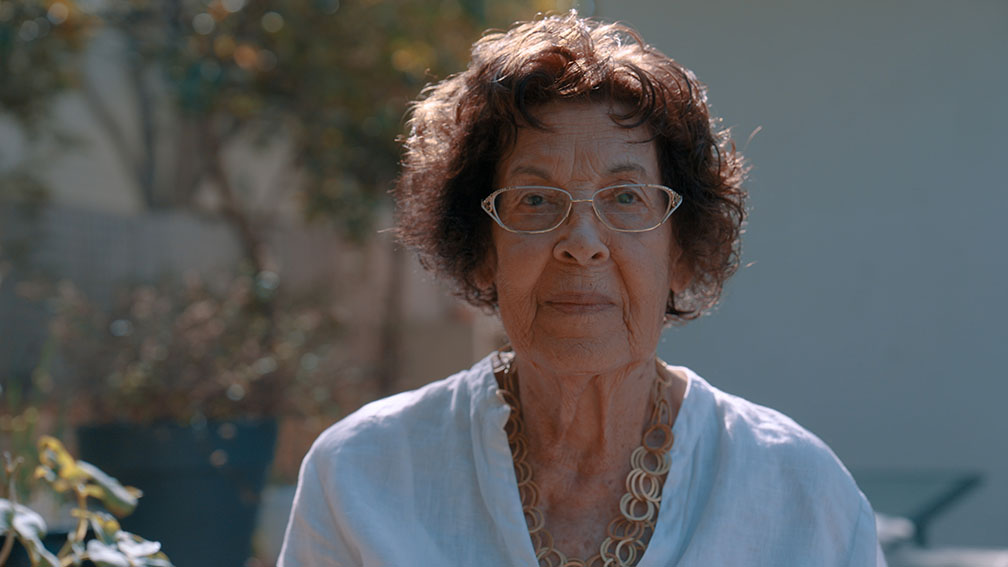
So when Beer, 53, recently learned that Cohen’s widow, Nadia, was still alive at 91, he knew he wanted her to be the guest of honor at United Hatzalah’s annual gala in Los Angeles on Nov. 19. But Nadia wasn’t so easily persuaded.
“I’m not a hero,” she told him. “My husband is the hero.”
“Yes, you are,” Beer insisted. “Your husband wouldn’t have been a hero if it wasn’t for you. When he left Israel for the last time, you both knew he wasn’t coming back alive. He suffered, but his suffering ended when he was executed. You continued suffering for years.”
Beer even reminded her that the previous year’s gala had honored Israeli actress Gal Gadot. While he admired Gadot and her advocacy for Israel, he told Nadia that she deserved no less recognition.
“If she was honored, you have to definitely be honored. You are a much bigger hero,” he told her. It took considerable persuasion, but Nadia eventually agreed to travel to Los Angeles with her son and two grandchildren.
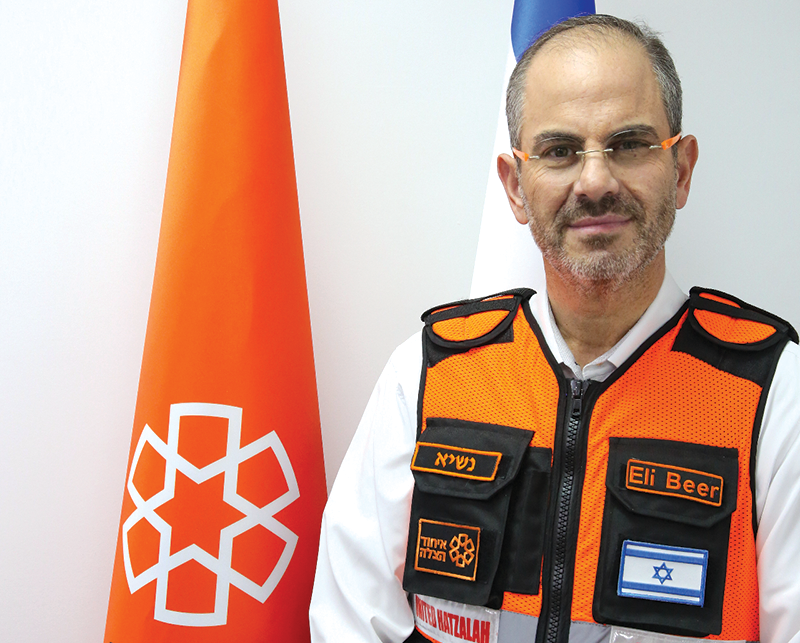
Speaking with Beer by phone shortly before he was set to travel to Los Angeles for United Hatzalah’s Gala. He couldn’t hide his excitement about this year’s honoree. It’s like coming full circle for him, from a young boy admiring a national legend to showing his respect and admiration to the person who knew him the best and stood by him.
“I fell in love with this woman, with who she is and how simple she is,” Beer said. “People know Eli Cohen, but no one really knows about her enough. Her story was forgotten. This is not a regular gala,” he said. “Usually, I have actors. You know L.A., they like famous people, but she is someone I really want people to know and honor.”
Beer sees a connection between Eli Cohen’s mission in Syria and what he and his volunteers faced on Oct. 7, 2023. Both involved going into danger because they believed there was no other choice and were willing to risk their lives.
On Oct. 7, United Hatzalah volunteers entered communities under attack with a mission to rescue as many people as they could. Three United Hatzalah volunteers were killed that day. Yet the danger did not stop others from joining. Since Oct. 7, 2023, another 4,000 volunteers have signed up.
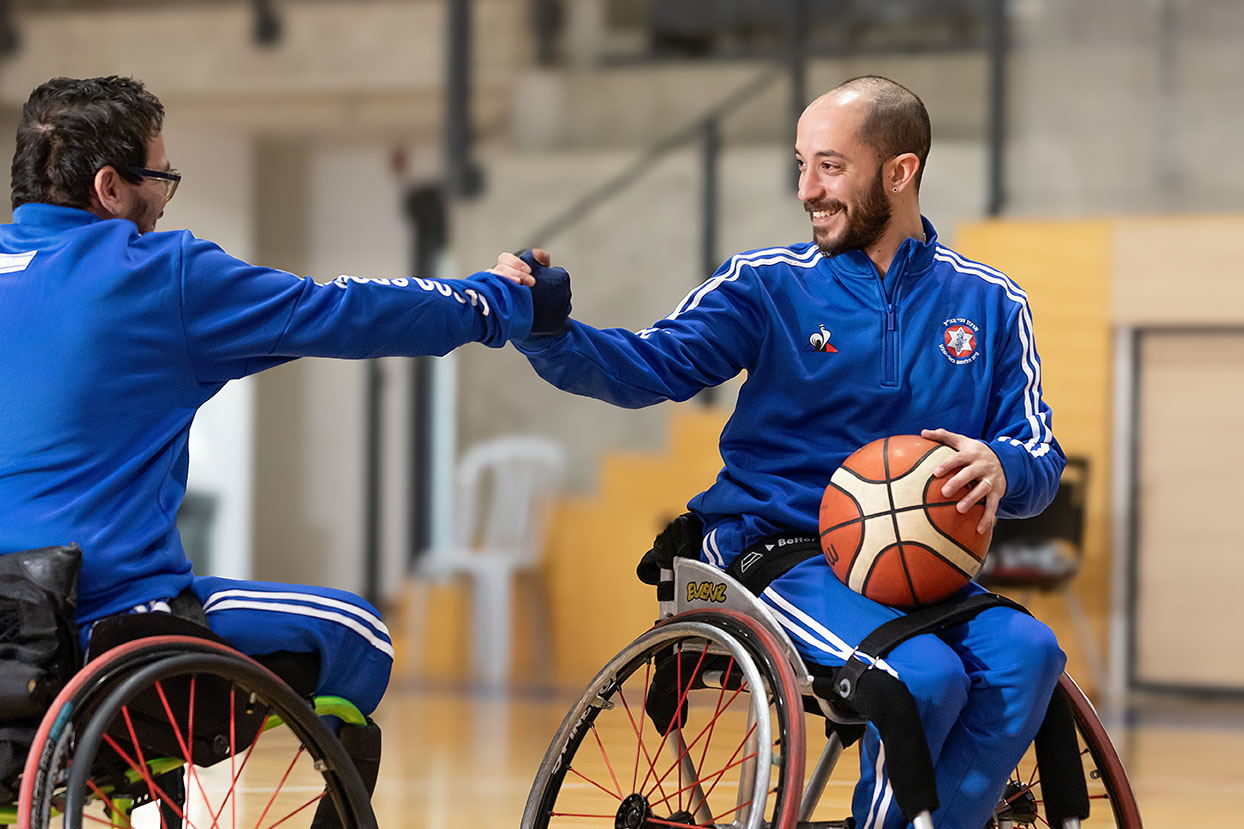
What makes the organization particularly remarkable is the diversity of its volunteers. They include Jews, Muslims, Christians and Druze, as well as women from different backgrounds, including ultra-Orthodox and Arab women. “They take courses and do drills together,” Beer said. “Normally, they wouldn’t have anything to do with each other. The hatred is so big, you know? But when we bring them together, they become best friends. It’s amazing to see.”
In 1989, Beer, then a boy with a troubled school record and little patience for sitting in a classroom, came up with an idea that would eventually grow into one of Israel’s largest emergency response organizations. Beer had found something he was passionate about: saving lives.
“I had ADD, I was very loud and a very bad student. I was thrown out of school many times,” said Beer. “My parents were having a hard time with me, but then I became an EMT and all of a sudden, it all changed. Every time I went to save someone, it felt so good. It was incredible.” His parents, who had worried about his struggles at school, were thrilled that he had finally found something he loved.
This dream of saving lives started years earlier when he was only six years old and had witnessed the bombing of Egged bus No. 12 in the Bayit Vegan neighborhood. Seeing people trapped, injured and dying in front of him left a deep impression on the young boy.
Growing up next to Yad Vashem, which he visited frequently as a child, further shaped his determination. “I always said, ‘one day when I grow up, I’ll save six million people.’ Not only Jews, but just people.”
At 16, Beer gathered 15 friends to start a volunteer emergency response group in their Jerusalem neighborhood. All of them were much older than he but shared his enthusiasm for helping others. The idea was inspired by Hatzalah, a volunteer emergency medical service that was already operating in Brooklyn.
“We were very young, and very eager to save people,” he recalled. “We thought, why don’t we do it? Why don’t we start it in our neighborhood, so volunteers who are nearby can respond to emergencies?”
Getting the idea off the ground wasn’t easy. The ambulance services were reluctant to share emergency calls with the young volunteers, apparently not wanting them to arrive before the ambulances. So Beer and his friends came up with an ingenious workaround. “We had to buy police scanners at RadioShack and listen to the ambulance services. That’s how we knew when there was an emergency,” he said.
“We had chutzpah,” Beer said. “Some of those friends are still volunteering with United Hatzalah today.”
He could hardly have imagined back then how far their small initiative would go, or that one day the organization they had started would save his own father’s life. His father owned a cemetery and wanted his son to join the family business, but Beer was much more interested in saving lives than burying bodies.
“I remember one time my father told me, jokingly, ‘You’re going to kill my business,’” he recalled with a laugh. “Many years later, my father had a heart attack, and three volunteers came to save him. One of them performed CPR, and they managed to bring him back.”
Beer was by his father’s side when it happened, but recalled feeling almost paralyzed, unable to help. “My father was such an incredible person, and I loved him. When he went to the hospital, the doctors told him, ‘Your son saved your life.’ I had never seen my father so proud.”
Over the 37 years since Beer began his volunteer emergency response initiative, he has witnessed countless dramatic rescues and heard stories that have stayed with him. But along with those moments have come tragedies, loss and trauma. What keeps him going, he said, are the stories of people who survived against all odds.
“There is no better feeling than seeing someone who wasn’t supposed to be alive, alive,” he said. “I have thousands of stories like that.”
One of the stories that has stayed with him is that of Michael, nine, and his six-year-old sister, Amalia, who were hiding in a closet in their home in Kibbutz Kfar Aza on Oct. 7. Their parents had been murdered, and their three-year-old sister, Abigail, had been taken hostage by Hamas.
The children called the police, ambulance services and anyone they could think of, but no one was able to reach them. Eventually, they called United Hatzalah. Beer was in the organization’s dispatch center when the call came in.
“They told us their parents had been murdered, that they were hiding in a closet and that their little sister was missing. They asked if someone could come and help them,” Beer recalled.
But sending a team into Kfar Aza was too dangerous. The area was swarming with terrorists. Instead, the dispatchers connected the children with Dr. Tamar Schlesinger, a social worker and volunteer with United Hatzalah’s Psychotrauma and Crisis Response Unit.
“She stayed on the phone with them for 12 hours straight. She didn’t leave them for a second,” Beer said. “She helped them get through what they were experiencing.”
Schlesinger also helped coordinate with the army, providing the children’s exact location and guiding them on how to stay safe. At one point, she warned them not to open the door to anyone claiming to be an Israeli soldier or speaking Hebrew.
“Only if they mention my name, you will know it’s real,” she told them.
Israeli forces eventually reached the children and rescued them. United Hatzalah volunteers were waiting nearby with an ambulance and took them to the hospital. Abigail was later released from captivity in the November 2023 hostage deal.
Bravery also runs in Beer’s family. His wife, Gitty, is a paramedic and a longtime United Hatzalah volunteer who played an instrumental role in establishing the organization’s women’s unit. The couple have five children, several of whom, along with their spouses, are also active volunteers.
Bravery also runs in Beer’s family. His wife, Gitty, is a paramedic and a longtime United Hatzalah volunteer who played an instrumental role in establishing the organization’s women’s unit. The couple have five children, several of whom, along with their spouses, are also active volunteers.
On Oct. 7, Gitty was among those who rushed to southern Israel. She left Jerusalem at 7:30 that morning and remained in the area for two days, treating wounded soldiers and civilians. She returned home only briefly to wash up, having become covered in blood.
Beer later asked her how she could put herself in such danger, knowing she might not make it back. Her answer was rooted in her family’s history. Gitty’s mother was a Holocaust survivor who had been just three years old when she was orphaned. She was eventually adopted by an American family, but no one had come to save her family. “She told me, ‘I cannot sit in Jerusalem in my house while people are getting slaughtered and killed in the south of Israel,’” Beer recalled.
Gitty was among approximately 1,700 United Hatzalah volunteers who entered the dangerous areas that day to save lives.
“These people were so brave. They went into the most dangerous places and did whatever they needed to do to save lives,” Beer said. “They didn’t know what’s waiting for them around the corner, but they still went there.”
Being a United Hatzalah volunteer means being ready at any moment. Volunteers never know when the next emergency call will come, whether in the middle of the night, on Shabbat or even on Yom Kippur. “You might be going to sleep, and suddenly there’s an emergency right next to you,” said Beer. “You have to be ready to go out and save someone, whatever time it is.”
Some volunteers have a particularly personal connection to the organization. Among them is Bar Kupershtein, who was held hostage in Gaza for 738 days after being abducted from the Nova Music Festival. While in captivity, he made a decision: once he was free, he wanted to follow in his father’s footsteps and become a United Hatzalah volunteer.
His father, Tal, had been a volunteer who rode one of the organization’s ambucycles – a specially equipped motorcycle carrying medical equipment. One day, while rushing to save a baby who had stopped breathing, he was involved in an accident that left him paralyzed. Bar grew up watching the sacrifices his father had made to help others, and the experience left a deep impression on him.
After his release, United Hatzalah welcomed Bar as a volunteer and gave him his father’s volunteer identification number. His mother also joined the organization.
“We have many people who go through tragedies and terrible experiences, and afterward they want to become volunteers,” Beer said. “Many people we’ve saved, after they recovered, also came back and joined us.”
For someone who has devoted his life to saving others, Beer knows what it means to be on the other side of that equation. In early 2020, shortly after contracting COVID-19, he found himself fighting for his own life. It began after United Hatzalah’s gala in Los Angeles, where Dr. Miriam and Sheldon Adelson were honored for their philanthropy and longstanding support of Jewish causes and Israel. From Los Angeles, Beer traveled to Washington, D.C., for the AIPAC Policy Conference, and then to Miami, where he attended a Chabad Purim celebration. It was at the start of the pandemic, and he soon became seriously ill.
“The doctors told me I had a 5% to 10% chance of survival. They put me in a coma and on a ventilator. That was the hardest moment of my life. I had to say goodbye to my children. I fought for my life for 30 days. During that time, Miriam was on the phone with my wife every day. She called the doctors to make sure I was getting the best treatment. She was trying to help save my life.” Eventually, he woke up; Dr. Adelson arranged for him to fly back to Israel on a private plane. He couldn’t return on a regular flight because all flights had been canceled. “I never forgot what she did for me. She’s one of our biggest supporters.”
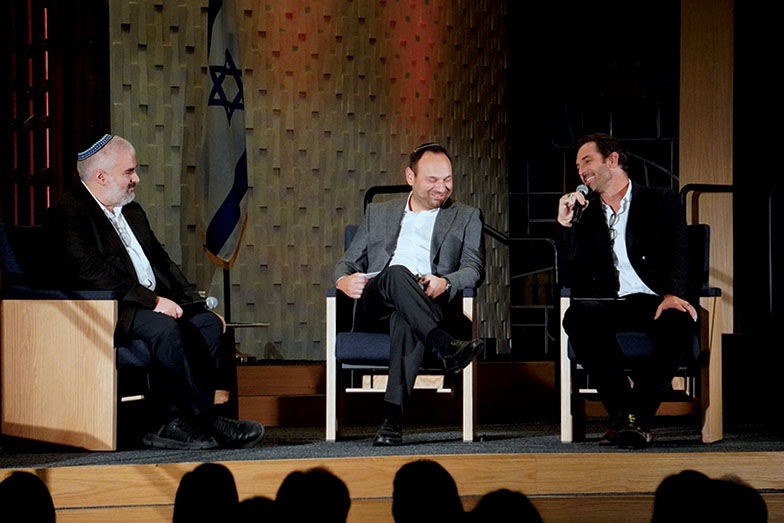
At this year’s gala, Adelson will present the award to Nadia Cohen.
The event, which will take place at the Fairmont Century Plaza in Los Angeles, will also honor Fred J. Bernstein, a member of United Hatzalah’s board and a longtime supporter of the organization. He will receive the Am Yisrael Award. Bernstein is married to Bari Milken Bernstein, daughter of philanthropist Michael Milken.