Shades of Belonging, an organization that addresses the needs of JoC adoptees, received a grant from the Jews of Color Initiative to build on its research and developed data-informed programming to expand its offerings. Through focus groups and a pilot Jewish Adoptee of Color Circle, the project will bring JoC adoptees together to shape the work, build belonging and connection, and explore new ways to encourage community building.
“The Jews of Color Initiative is proud to support Shades of Belonging and its vital work exploring the intersections of adoption, Jewish identity, race, and culture,” said Gabi Kuhn, managing director of the Jews of Color Initiative. “Our support of their groundbreaking initial research helped shine a light on the often-overlooked experiences and needs of Jewish adoptees of color. Now, we are excited to help turn those findings into action, creating meaningful opportunities for connection, community, and a deeper sense of belonging.”
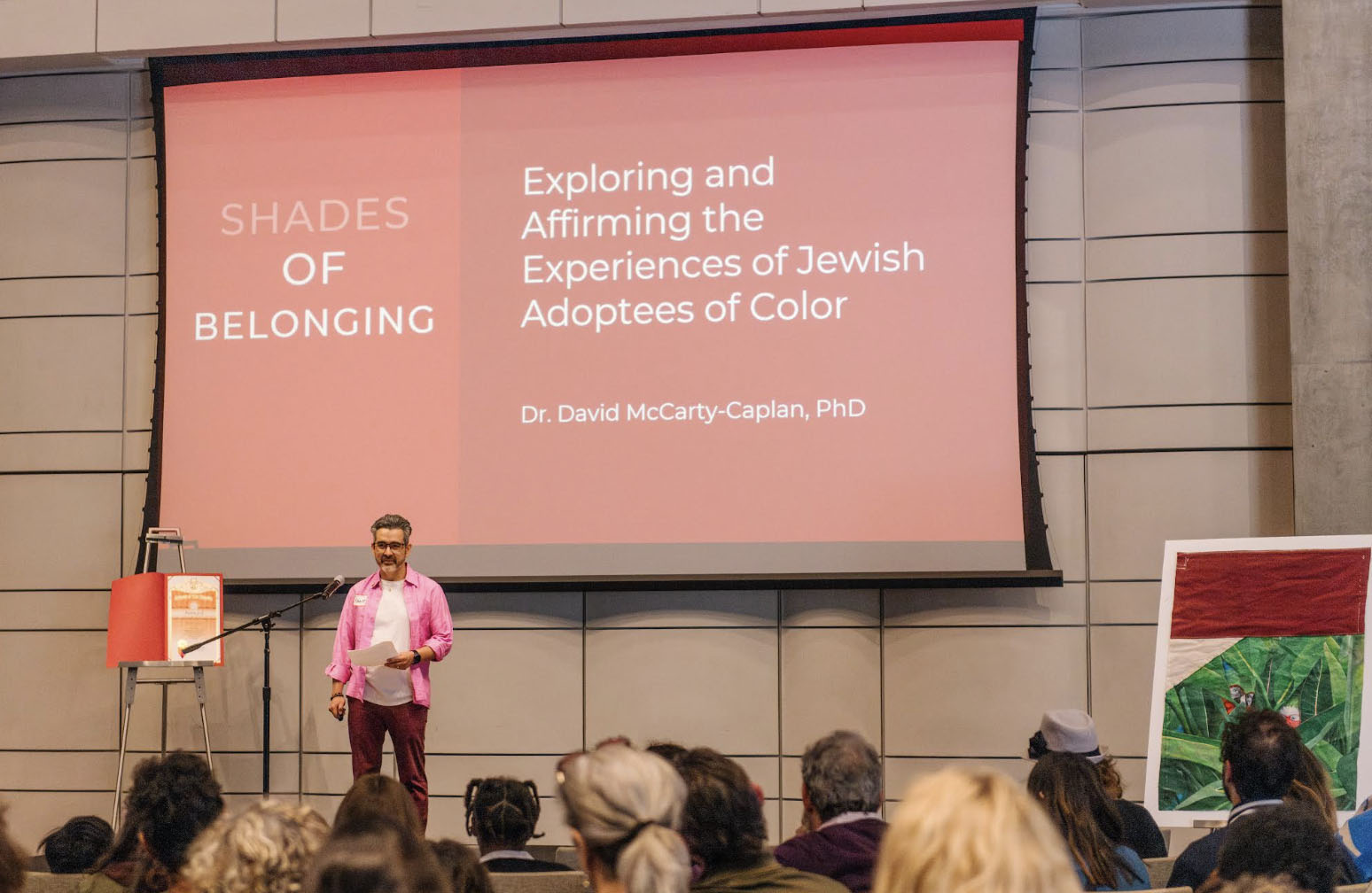
According to Dr. David McCarty-Caplan, founder of Shades of Belonging – which is based in Calabasas – the organization will be bringing together eight Jewish adoptees of color to be in community over a seven-month period, meeting once a month for approximately 90 minutes.
“The concepts we talk about relate to Jewish identity,” he said. “The project is designed to explore whether coming together in spaces with people who share a Jewish identity helps participants feel more grounded in their adopted identity or their Jewish identity. Conversations will also focus on what we want to envision for the future of Jewish adoptees of color and brainstorm what we might build after this project.”
Original research from Shades of Belonging revealed that Jewish adoptees tend to struggle with belonging in Jewish spaces; 75% said they do not have a strong sense of belonging there.
“We want to know: How can we have Jewish spaces that ground people in Jewish cultures and traditions, and allow adoptees to feel connections to countries or communities of origin?” said McCarty-Caplan.
“We want to know: How can we have Jewish spaces that ground people in Jewish cultures and traditions, and allow adoptees to feel connections to countries or communities of origin?” – David McCarty-Caplan
For Kuhn, the opportunity to support Shades of Belonging’s work hit home.
“As a transracial adoptee myself, this work is deeply personal,” she said. “I know how important it is to bring these conversations to the forefront and create spaces where adoptees can show up as their full selves, with all the nuance and complexity, to find belonging across their many identities.”
Like Kuhn, McCarty-Caplan is also an adoptee JoC. Born in Colombia, adopted by Jewish parents, and raised in Michigan, Maryland, and Oakland, he has lived these experiences.
“I wish when I was younger that there were people out there having these conversations,” he said. “I did not have an opportunity to explore these questions of my adoptee, Latino, and Jewish identity and how they might be mixed until I was in my 30s. There is so much more that needs to be done, and can be done, to support adoptees. Now that I am older and have a particular skillset as a PhD with a background in social work and research, I see this as part of my duty. I see it as grounding in Jewish traditions that I hold very close to my heart.”
Jennifer Leshnower, a participant, said that Shades of Belonging has given her the gift of “familial ties via shared experiences… stories we’ve told that are similar because of our shared identities. [There are also the] shared moments of connection we’ve made by being together in this community circle. Both have made me feel like I have refound ‘lost siblings.’ As an only child and an adoptee, I have truly felt like my circle of care has grown. It’s a space to be yourself, to show up and to be whatever you want or feel ready to reveal to others with the double bonus of not being judged.”
Initially, when the organization received its prior grant, it held the Shades of Belonging Community Festival at the Skirball Cultural Center in collaboration with Jewtina y Co. It also did a study involving 30 interviews with adoptee JoCs and found something surprising: not a single person had ever been asked about the experience of being both Jewish and adopted.
“That’s heartbreaking to me,” McCarty-Caplan said.
However, it motivated him to continue his important mission.
“This is the only space where I can be fully Jewish and fully adopted,” he said. “I hope adoptees don’t feel a sense of isolation. If anything, I hope they know I am out here, and others are out here, doing this work. We need each other. I hope they know we are trying to find ways to connect. I hope I can find ways to support them on their path.”