

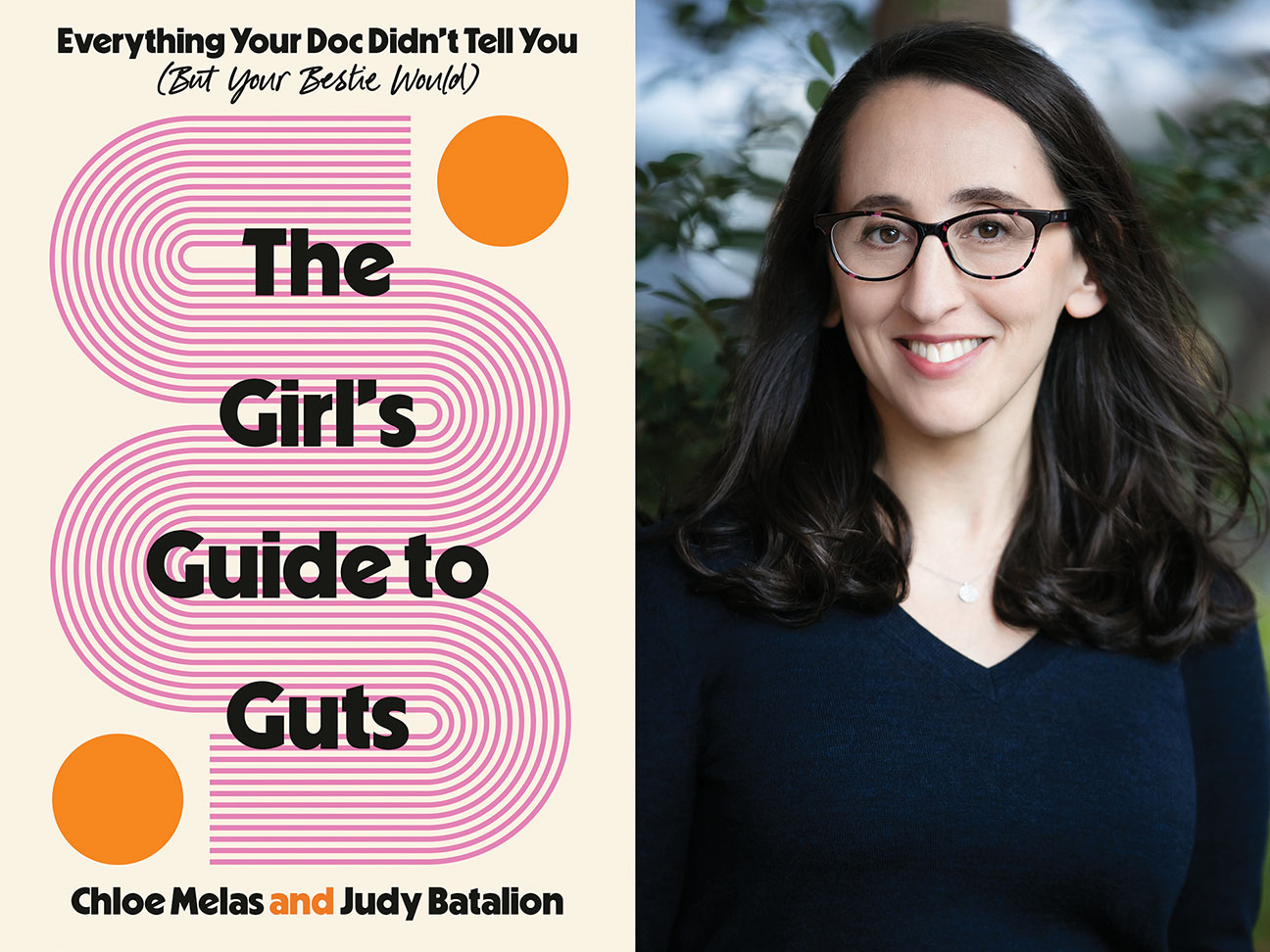
For years, Judy Batalion kept a deeply personal part of her life to herself. A New York Times bestselling author, best known for “The Light of Days: The Untold Story of Women Resistance Fighters in Hitler’s Ghettos,” she had been living with ulcerative colitis since childhood. She first became ill at six, but wasn’t diagnosed until 13, and the diagnosis was confirmed only after she underwent major surgery at 15. Although the operation dramatically improved her health, the condition continued to affect her everyday life, from her eating habits to her anxiety about traveling and being far from a bathroom.
That changed when she came across an article in Women’s Health in which journalist Chloe Melas, whom she already knew professionally, spoke openly about her own struggle with ulcerative colitis.
“I had never seen anyone speak so openly about this in 35 years,” Batalion recalled in a Zoom interview with the Journal. “I reached out to her, and we got together and decided we’ve got to do something. It’s so important to start talking about this.”
Their first meeting eventually led to a writing partnership and the publication of “The Girl’s Guide to Guts: Everything Your Doc Didn’t Tell You (But Your Bestie Would),” a candid and often humorous guide to navigating digestive diseases and subjects many people are reluctant to discuss.
In the book, published in November, Melas and Batalion draw on their combined decades of experience living with ulcerative colitis to address everything from bleeding and bloating to sex and fertility. They offer advice on navigating a diagnosis, coping with the anxiety of chronic illness and what to pack in your carry-on when traveling with digestive issues.
Anyone who deals with any gut problem would recognize immediately themselves in the stories they tell about the countless lattes purchased simply to use a café’s restroom. The authors supplement their personal experiences with interviews with medical experts, offering readers insight into what their doctors may not always explain.
Soon after Batalion began promoting the book on Instagram, she was surprised by the number of people who contacted her to share their own experiences with digestive diseases. People she had known for years, including friends and professional acquaintances, suddenly opened up about conditions they had never mentioned before.
“I was just recording a podcast about the Holocaust, and when we finished, the producers said, ‘We saw you have this new book. We have Crohn’s disease,'” she recalled. “Once I opened up about it myself, it was like people were coming out of the woodwork. Many told me they had celiac disease, Crohn’s or colitis. I also discovered that friends of mine had children suffering from these conditions, and I had no idea.”
The response was reassuring, but it also made Batalion think about how much a book like this could have helped her as a child. Back then, she said, there was no such resource, and she kept her illness to herself. “I wrote this book for my 12-year-old self,” she said. “Every time I felt, ‘This is so hard, why am I doing this?’ I reminded myself, I’m writing this book for little Judy.”
The disease affected her social life and isolated her from other children. She recalled how, as a teen, she was often too sick or in too much pain to participate in activities. One summer, she stayed home instead of going to camp because she needed to remain close to a bathroom. She missed out on many of the experiences other teenagers her age took for granted. At times she had to run to the bathroom 10 times a day, which made it impossible to be spontaneous and just go out with friends.
At 15, after years of severe illness, Batalion underwent a major operation to remove her colon, a procedure known as a colectomy. Surgeons constructed what is called a J-pouch, an internal reservoir made from the end of her small intestine. Following a second operation, the pouch allowed her to pass waste through the anus rather than requiring a permanent external ostomy bag. The surgery dramatically improved her health, but it did not mean a complete return to a normal digestive system.
“Even though I’m very healthy now and have had this pouch, I still think about my bowels every day,” said Batalion. “Flights are still difficult. Personally, I don’t eat before flights. I drink warm water or have very liquid-y things to eat.”
The growing number of people experiencing digestive problems raises another question: Why are these conditions becoming so common? Batalion said that although researchers are investigating several possible explanations, there is no definitive answer. Among the factors they’re examining are genetics, immune system dysfunction and environmental influences, including food, drink and other exposures. Batalion also discussed two areas receiving considerable scientific attention: the gut microbiome and the connection between the brain and the digestive system.
“The microbiome is the idea that we have billions of bacteria in us, both good and bad, and that when they get out of balance, they can contribute to a lot of bowel issues and problems,” she explained. “There is also the brain-gut connection. The gut and the nervous system are deeply interconnected. Our moods affect our bowels, but our bowels also affect our moods.”
Scientists are continuing to investigate how these systems interact and what role they may play in digestive diseases. Better awareness and improved diagnostic tools may also help explain why more people are being diagnosed.
Batalion, who has three children, noted that research has found a significantly higher prevalence of Crohn’s disease among Ashkenazi Jews, pointing to a genetic component. The link between genetics and ulcerative colitis is less clear, and studies have produced different findings.
The uncertainty does little to ease her worries as a mother. “Am I nervous? Of course,” she said. “This morning my son had a stomachache, and I was like, ‘Oh my God, could this be it?’ It’s very stressful. And then stress itself can cause gut problems, so you have to be careful.”
Yet Batalion hopes that by speaking openly about something she once kept hidden, she and Melas can make that experience less isolating for others. For young people facing a diagnosis, for parents worried about their children and for adults who have spent years managing their symptoms in silence, the book offers something Batalion herself did not have growing up: the reassurance that they are not alone, and that a chronic illness does not have to define the limits of their lives.
































