
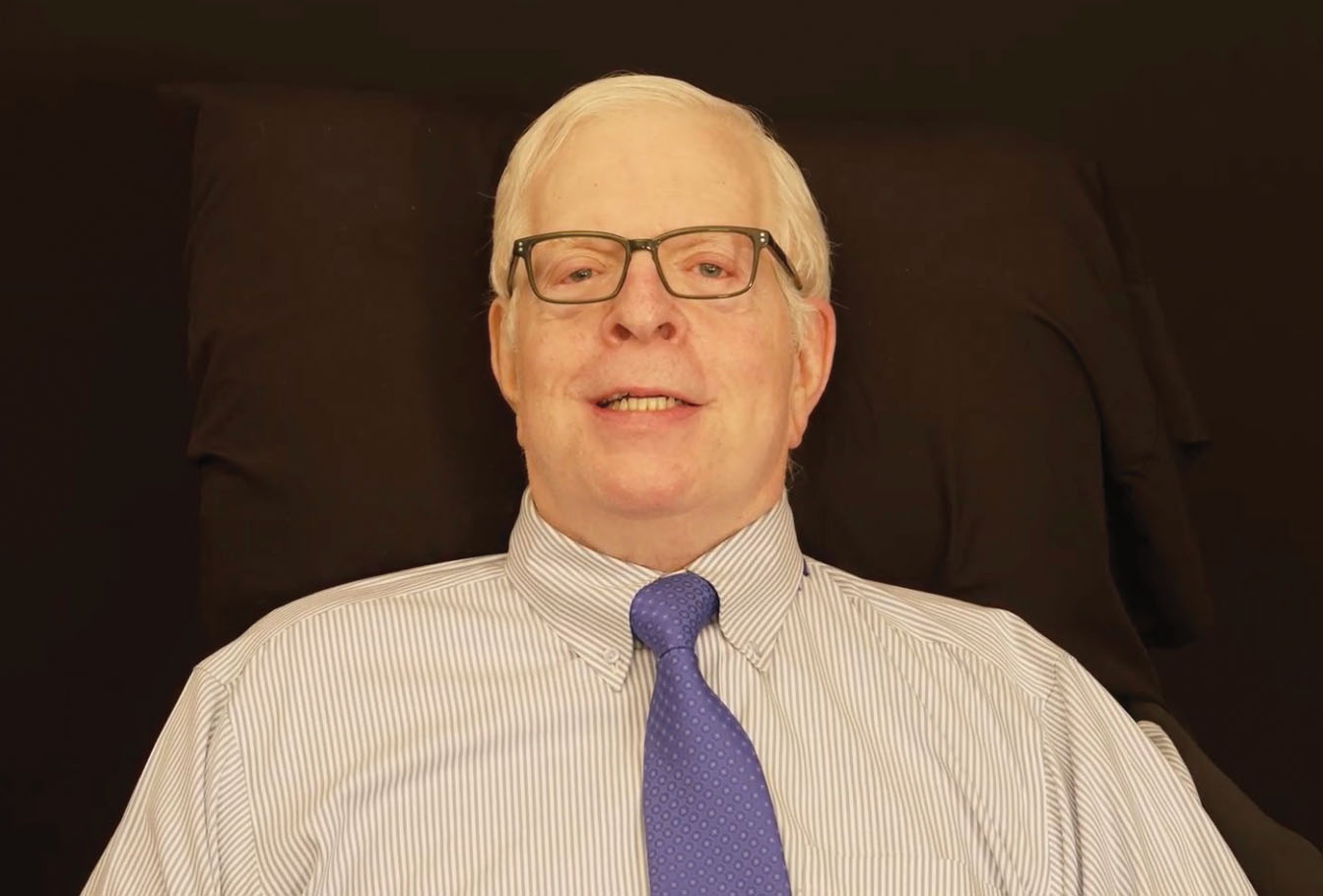
“By all logic, I should be depressed,” is how Dennis Prager began his keynote address at the Jewish Journal “Night of Gratitude” gala Sunday night at the Beverly Hills Hotel.
“On Nov. 12, 2024, I fell stepping out of my shower, banged my head so hard, I injured my spine and ended up paralyzed from my shoulders down, which means quadriplegic.”
Dennis had prerecorded his address, but as far as the packed crowd was concerned, he was as live as ever. His words were riveting because he managed to find gratitude in a catastrophe.
“I have my brain,” he continued. “I have the ability to breathe without a ventilator, which every doctor has said is a miracle, and none of them were religious. And I can speak. It’s not the exact same mellifluous voice I’ve had all my life, but nevertheless, you can hear me clearly. Isn’t there room for gratitude in that?”
A sense of quiet awe was palpable in the room, as Dennis got more specific.
“Gratitude that I’m alive, gratitude that I can speak, gratitude that I could give lectures, gratitude that I do podcasts, gratitude that I could write books, gratitude that my brain is intact. It’s my salvation, gratitude, and it has always been.”
His address would have been powerful enough had he just stayed with his personal story. But he wove in a dissection of an essential virtue.
His first target was victimhood.
“A lot of people spend much more time thinking of themselves as victims rather than being aware of how much they should be grateful for. As I wrote in my book, if you think of yourself as a victim, even if you are a victim, you cannot be happy.
“I am a victim, but I have no sense of victimhood. I do not lie around thinking that I am a victim.”
With the clarity and logic that he’s known for, he delineated the micro from the macro.
On the macro level, he bemoaned the lack of gratitude for America.
“We have raised generations of Americans, because of the ideology of teachers, schools, media, we have raised generations now not to be grateful that they have lived in the best country ever created. I don’t say that because I’m an American. I say it because it’s true.”
Like so many societal ills, this failure is rooted in education.
“Kids have been lied to about America in our own country. Somebody told me recently that they asked a high school kid, ‘What do you know about Abraham Lincoln?’ And the high school student said, ‘That he owned slaves.’ Well, he didn’t own slaves. And even if he did, that’s all you know about the man who liberated slaves, the author of the Emancipation Proclamation? It’s unbelievable.”
His point was that we usually see gratitude on the personal level, but “gratitude on the macro level is as important as on the micro level. People grateful for the country they live in are devoted to the country, and of course, they’re happier human beings.”
Happiness is one of Dennis’s favorite subjects. He wrote a book on happiness. For years he hosted a weekly “Happiness Hour” on his radio show.
He surprised the audience with the first path to gratitude and happiness: have no expectations:
“Believe it or not, I learned that from Buddhism. I had a Buddhist professor in England where I did some of my undergraduate work, and I adopted that lesson from the day he said it. From that day until today, I guess, I have had no expectations. And again, you can see it in print in my book on happiness. Have no expectations.”
He brought the idea home when he brought up health:
“Don’t expect to be healthy tomorrow just because you were healthy today. And when you’re healthy tomorrow, be incredibly grateful, because one day you will not wake up healthy. It happened to me Nov. 12, 2024. It will happen to everybody someday. That’s the way it is.”
Dennis had plenty more to say. You can watch the full address below.
When we spoke on Facetime the morning after the gala, I mentioned that we went with his spirit of gratitude and I invited everyone on the dance floor after his talk.
“We felt that your talk gave us permission to celebrate gratitude,” I said.
“It did,” he replied with a gentle smile.































