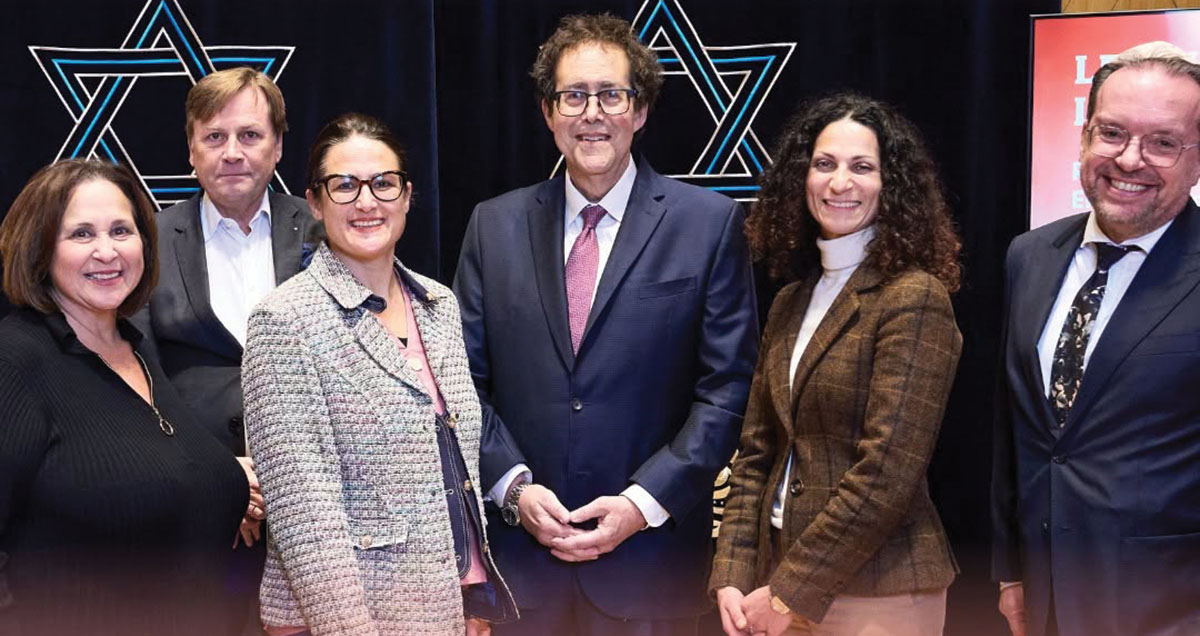
When most American Jews think of the Jewish National Fund (JNF-USA), what comes to mind are the familiar blue and white “pushkes” many of us know from Hebrew schools and other Jewish establishments, and of course, the organization’s signature mission of planting trees in Israel. But as I learned last weekend at the annual JNF-USA conference that drew nearly 3,000 attendees to a beautiful resort in San Diego, this organization is so much more.
Based on everything I saw and heard, the defining features of this organization—its “secret sauce”—can best be described with three words: optimism, youth, and family. And while there may be benefits to having a secret sauce, I came away feeling that more American Jews need to better understand what JNF-USA is all about and why its work is so critical, especially in our current environment.
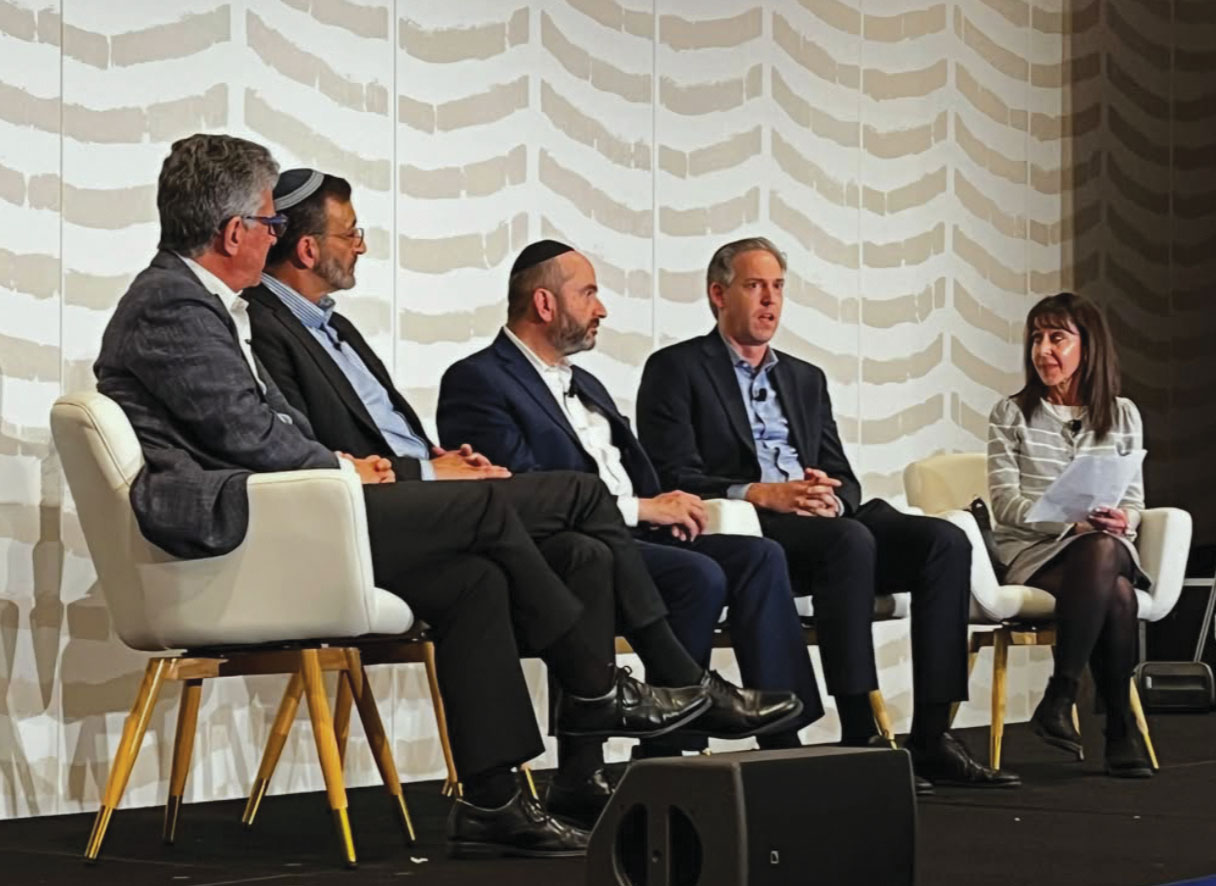
Although I was a first-timer at the conference, I had high expectations. A friend who is active in their under-40 group, JNFuture, told me that his first conference experience the prior year was “simply magical.” When I was asked to moderate the panel of rabbis on the first day of the conference, I jumped at the opportunity to attend.
The optimism that radiated throughout virtually every conversation I had, and every session I attended, is a natural consequence of JNF-USA’s mission to secure a flourishing future for the land and people of Israel. For example, Gadi Ezra, an Israeli human rights attorney, special forces veteran, and author, is currently using his talents to support JNF-USA’s World Zionist Village project, a multi-million-dollar global campus that will spearhead the next 100 years of the Zionist Movement and the Jewish people through various initiatives and multi-faceted global collaborations.
I had previously met Gadi on Zoom, but this was our first in-person connection. A charismatic Israeli of Mizrachi descent, Gadi shared with me that the goal of his work is to secure his grandchildren’s future. His plan is “more than survival,” but rather “flourishing.” Optimism underscores a strongly-held belief in Israel’s future as the Jewish State.
Although this long-term focus is reflected in the organization’s DNA given its initial focus on planting trees, today JNF-USA is doing a whole lot more. Ellen Spira Hattenbach, the National Campaign Director for the Midwest, explained to me the concept of “circles of impact” that defines the organization’s methodology that is particularly relevant to growing Israel’s population in the north and south. The concept embodies the idea of “if you build it people will come.”
As an example, the Galilee Culinary Institute by JNF, a culinary, agricultural and hospitality campus in Kibbutz Gonen, will attract not only students and consumers, but is intentionally designed to draw all kinds of professionals, workers, residents, and infrastructure needed for thriving communities. The Institute thus serves as the hub of an ever-expanding wheel supported by multiplying spokes. Once again, optimism is embedded in the core philosophy of this approach.
This long-distance perspective is also related to a focus on youth, the second noticeably prominent feature of JNF-USA. Russell F. Robinson, a man of seemingly boundless energy who has been the CEO of the organization for about 30 years, told me that “we believe in young people and invest in them.” A key element of this investment is JNF-USA’s current ownership and operation of Muss High School in Israel, where American Jewish students can take a semester abroad to further enrich their knowledge and understanding of Israel.
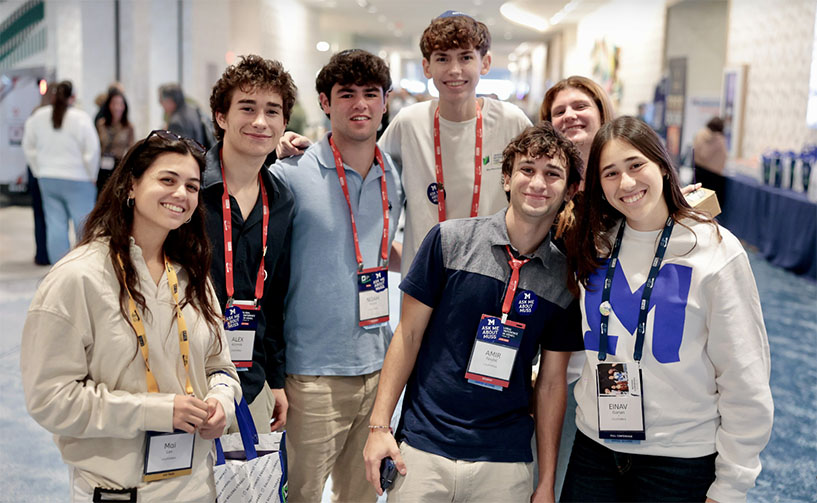
I was pleasantly surprised to see so many young people at this conference. Rather than just showing up at the post-Shabbat concert and their own special after-party, I noticed that even the teens and college students actively participated in the conference’s multi-dimensional substantive content. And, as is true of the more mature attendees, they represented the spectrum of Jewish observance. I was hugely impressed, and again surprised, when Russell also told me that the 20-40 age range represents the fastest growing part of the organization’s donor demographic.
The topic of youth connects to the concept of family, the third descriptive feature of JNF-USA’s ethos. A love of Israel is the glue that holds all who support JNF-USA together, and this creates a special type of bond between all those who are affiliated with the organization. Steven Shalowitz is the host of IsraelCast, JNF’s premier podcast about Israel. Shalowitz explained to me that because the organization is largely lay-led, there is significant collaboration among the leaders across both the United States and Israel. As a result of this frequent contact, when the volunteers do get together in person, the atmosphere is more like a reunion or even a b’nai mitzvah party. Shalowitz also stressed that the organization is not political and therefore people from both sides of the aisle interact without the way-too-often rancor that characterizes today’s political discourse. As someone who has spent the last few years writing about American Jewish polarization, I found this aspect of the gathering particularly impressive.
On a somewhat related note, I was also impressed by the number of Orthodox Jews who participated in the conference. Russell also shared with me that even though many attendees do not necessarily observe the Jewish dietary laws, he insists that all the conference food be strictly kosher so that everyone can share meals and feel welcome. As a Jew who does keep kosher, I can attest that the food was superb and it was wonderful being able to eat anything that was served to me! This concern for inclusivity also was reflected in the choice of services throughout Shabbat with both traditional and egalitarian options.
I was thrilled to see so many Orthodox people from different backgrounds mingling with less religious Jews throughout the conference. I have frequently written about the need for this type of synergy between American Jews and that it is unfortunately lacking in most Jewish spaces. But not here. During Shabbat, less religious Jews felt completely comfortable openly using computers and cell phones. More religious Jews took the stairs to their rooms and avoided the elevators. But these distinctions did not hinder conversations largely because of the overriding commonality of wanting the best for Israel.
The JNF-USA family extends beyond its employees and volunteers. Russell also mentioned to me that 22 mayors of Israeli cities attended the conference. Plus, the organizational structure extends to what JNF-USA calls their affiliates—the Israelis on the ground who are doing the work to make the circles of impact a reality. I spoke with a good number of these affiliates during the conference and I was very impressed with their observations about their experience working with the organization. As an example, one affiliate told me that in her experience, it is not unusual for JNF to put the affiliate’s interest above its own, which she then indicated was a sign of the strong trust that exists between these partnerships.
By this point, it is fair for readers to wonder if there was anything during my time at the conference that gave me cause for concern. Truthfully, I was concerned, but not surprised, by part of the conversation during the rabbinic panel I moderated that was titled: “Beyond the ‘But’—A Bold Rabbinic Conversation on Israel.” The four rabbis on the panel, representing religious and geographic diversity, had much to say on this score and all expressed deep concerns regarding the state of American Jewry religiously and in terms of Israel.
Despite these concerns, and our inability to control what happens on the world stage and on our domestic front, we can still make choices that nurture our souls. Speaking personally, spending three days in an environment filled with optimism, youth and family truly hit the spot.
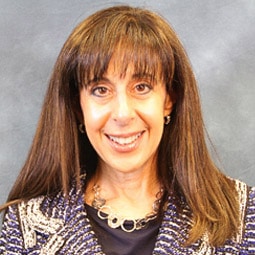
Roberta Rosenthal Kwall is a law professor, author and Jewish educator with a focus on American Judaism. Her latest book is “Polarized: Why American Jews are Divided and What to do About It” (Bloomsbury Press, 2026).