
I wasn’t going to buy the book. I once owned a copy, but gave it away. Then there was a display of the book on sale at a stand in Hostage Square, just outside the Tel Aviv Museum of Art. I walked towards it and the lady behind the counter said “these are in the merit of my son Yosef who has been a hostage in Gaza for 326 days.” I bought a copy.
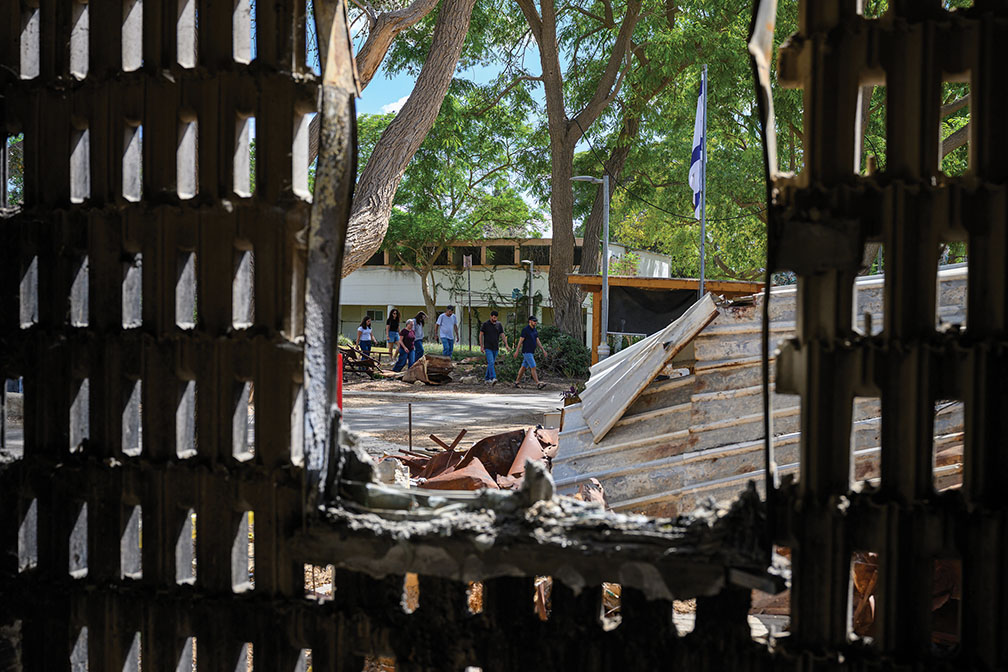
Miriam Ben Ami stood next to a photograph of her son Yosef Haim Ohana who had been captured by Hamas on Oct. 7, 2023. It was now Aug. 28, 2024, and she didn’t know if he was dead or alive. Meanwhile, somewhere in the tunnels beneath Gaza, Ohana had no idea if his friends from the Nova festival were dead or alive.
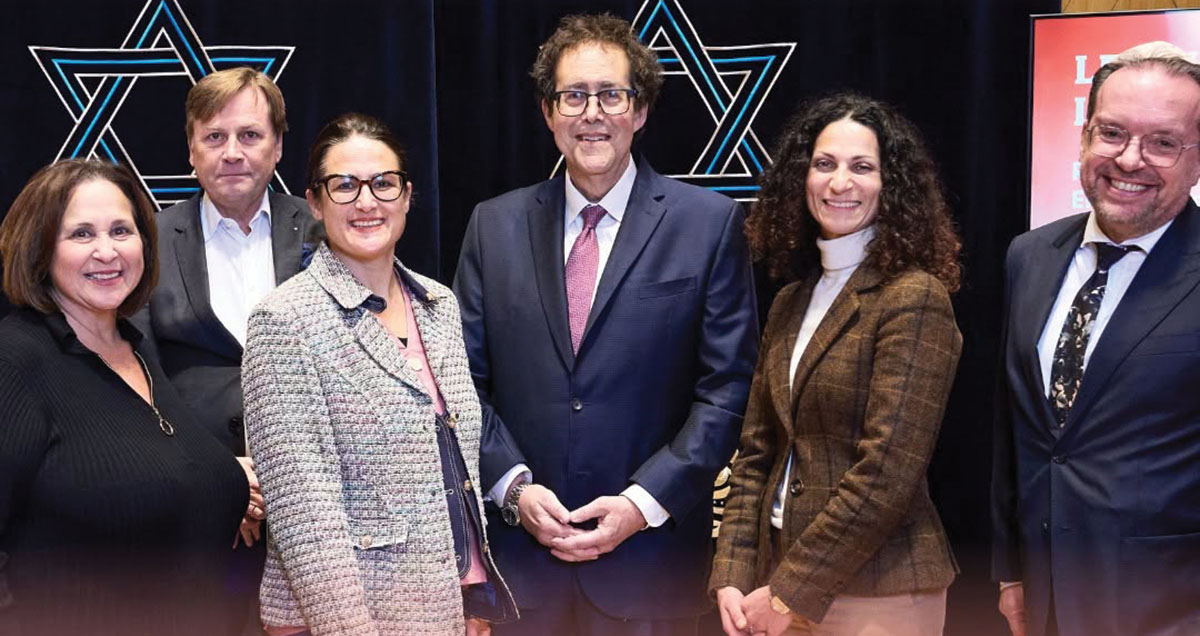
Two years later I got to shake hands with him in Beverly Hills. He was on stage at the Wallis Annenberg Center after the screening of L.A. filmmaker Sepi Makabi’s excellent documentary “A Hero’s Burden,” about the heroics of the Sharabi brothers who saved the lives of hundreds of Nova music festivalgoers on October 7. Ohana was on stage as part of a panel with Daniel and Neriya Sharabi, the subjects of the film.
Yosef Haim had been a hostage in Gaza for 738 days. When I showed him the photo on my phone from Hostage Square, he smiled and said, “That’s my Mom!”
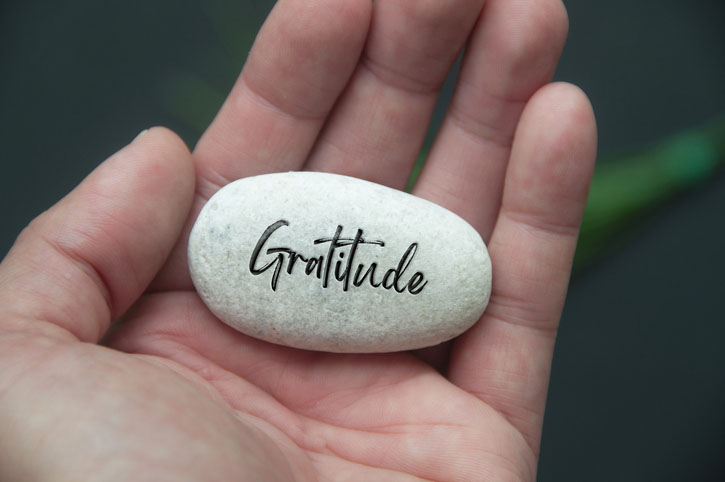
The book that Miriam sold in the Hostage Square fundraiser was “The Garden of Emuna” (Faith), a companion text to “The Garden of Gratitude” books. Written by Rabbi Shalom Arush, it is based on the teachings of Rav Nachman of Breslov, and centers on a principle that is either very simple or profoundly complex.
The idea is to say thank you for everything you are experiencing because it is all from God. We may not know why it is happening, and may never know why, but we can choose to have faith (emunah) and trust (bitachon) in God, because everything is for our spiritual development.
That is the entire concept, and it is simple or complex depending on whether you accept it. “What about the Holocaust?” you might ask, or “What about Oct. 7?” Yosef Haim’s mother Miriam had copies of the book which had her son’s photograph on the inside cover, so that every time we read it we were simultaneously sending prayers for his safe return.
How can a mother say “Thank you God for my 23-year-old son who has been taken hostage in Gaza by terrorists, whilst I have no idea if he is alive”?
That is the exact point.
Real gratitude is a messy business. It goes beyond the “things I’m grateful for” list — which has its place and is a great daily practice — and dives head-first into the ocean of “things I absolutely detest, struggle with, don’t understand, would rather I don’t have to deal with … but I’m still grateful for.”
The Kabbalists go deeply into the spiritual purposes for suffering, why we face suffering (yissurim), how it might cleanse our soul, rectify wrongs in a previous incarnation (gilgul), or how it might serve the world, but none of this is our concern. The innovation of the Baal Shem Tov’s teachings is that our goal is faith and trust. His great-grandson Rav Nachman of Breslov deepened the teachings on gratitude, which has mystical and practical benefits.
Back in Los Angeles, people get angry in the face of real challenges. There is unbridled ferocity on losing their parking spot outside Whole Foods, sheer fury at being stuck in traffic on the way to a heart-opening yoga class, and pure rage when stalled behind a Waymo that can’t navigate its way around a stationary garbage truck.
Getting stuck behind a robocar can be annoying, but doesn’t compare to being held as a hostage in Gaza for 738 days, not knowing if your friends are dead or alive.
We can give thanks for the small things, the big things, and the things we don’t understand. Every day above ground is a bonus.
Marcus J Freed. Instagram @marcusjfreed. www.marcusisalive.com