
When I was a little boy growing up in Omaha, Nebraska, my Sunday School teacher came up with a Mother’s Day project that I assure you I’m not making up. She brought in bagels — not to eat, but to glue onto pieces of wood that we would decorate with messages to our mothers and then shellac so they could be hung on the wall.
I drew a big heart around my bagel, wrote “I love you Mom” beneath it, and signed my name. My mother hung that shellacked bagel on our kitchen wall, where it remained for the next two decades.
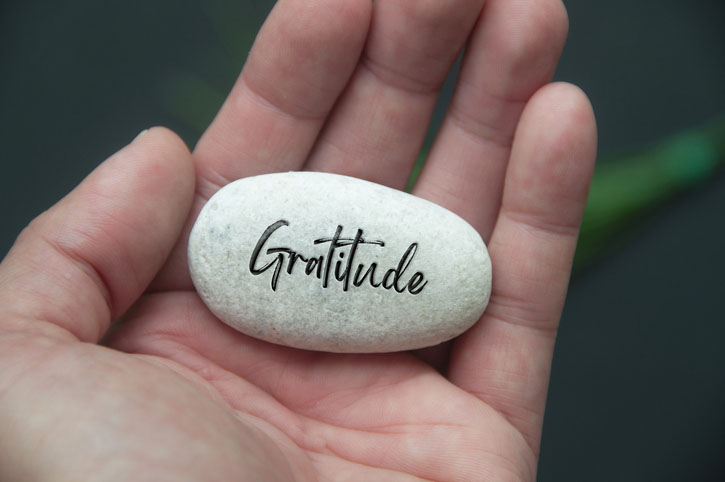
I think about that bagel and what it teaches about gratitude.
Mom died more than 27 years ago. There are still so many things I wish I could tell her, so many more letters I wish I had written, thanking her for the extraordinary love she poured into me from the day I was born until she left this world. And though she is gone, her love continues to shape the person I am and the person I wish to be.
When I think of that bagel, I’m struck by the absurd imbalance of it all.
She gave me life. She raised me, cared for me, taught me, encouraged me and loved me unconditionally.
And I gave her a shellacked bagel.
The poet Billy Collins captures this beautifully in his poem “The Lanyard.” He remembers making a lanyard for his mother at summer camp, weaving together strands of plastic and presenting his creation as though it were adequate compensation for everything she had given him.
It’s a wonderful poem, funny and poignant at the same time. Especially moving is Collins’ recollection of how certain he was, as a little boy, that his modest gift had somehow made them even.
As children, we imagine our little gifts and words of thanks are enough. Only later do we understand how much we’ve received and how impossible it would be to repay it all.
And sometimes, that realization brings a measure of regret.
Did we say thank you often enough? Did we appreciate the sacrifices made on our behalf? Did we understand, while there was still time, just how fortunate we were?
But perhaps we’ve been thinking about gratitude the wrong way. My grandfather, Joe Zweiback, taught me something about this that has stayed with me throughout my life.
Whenever he took me out to lunch or bought me a gift, I would say, as my parents had taught me, “Thanks, Grandpa.”
And he would always respond, “Don’t thank Grandpa.”
This puzzled me. My grandfather was a gracious, well-mannered man, quick to say “please” and “thank you” himself.
Once, I asked him why.
“Because giving you things and being with you gives me pleasure,” he explained. “You’ll thank me when you do the same thing for your children and, someday, for your grandchildren.”
It took me years to appreciate the wisdom of his words.
My grandfather wasn’t rejecting gratitude. He was teaching me something about its purpose.
The deepest expression of gratitude isn’t simply saying thank you for what we’ve received. It’s allowing what we’ve received to shape who we are, who we become and how we treat others throughout our lives.
In Jewish tradition, gratitude is often described as hakarat hatov, recognizing the good. Gratitude begins with awareness, noticing the blessings in our lives, especially those we’ve come to take for granted.
The psalmist teaches us, Tov l’hodot l’Adonai — “It is good to give thanks to God” (Psalm 92:2). The Hebrew word l’hodot means not only to give thanks, but also to acknowledge. To give thanks is to recognize how much of what we have comes from the love, generosity, and sacrifices of others.
But recognition is only the beginning.
We give thanks for the love we’ve received by allowing that love to flourish in the lives of others.
For those blessed with children or grandchildren, that means offering them the generosity, patience and unconditional love we received — or should have received. For others, it means helping to create communities where children can thrive, strangers are welcomed, and those who struggle find compassion and support.
For all of us, it means understanding that the blessings in our lives are not ours alone to enjoy. They are gifts to be shared.
This Thanksgiving, many of us will gather around tables with family and friends. Along with all the food, the catching up and perhaps the football games on television, let’s make time to share our gratitude and love.
And as we celebrate, some of us will feel the absence of those who once sat at our tables, whose love helped make us who we are.
We cannot repay them. Nor, I suspect, would they want us to. That was never the point.
But we can honor them.
Not by making lanyards or shellacking bagels.
But by going out into the world with grateful hearts and giving generously of the love we’ve been given.
That’s the very best way to say thanks.
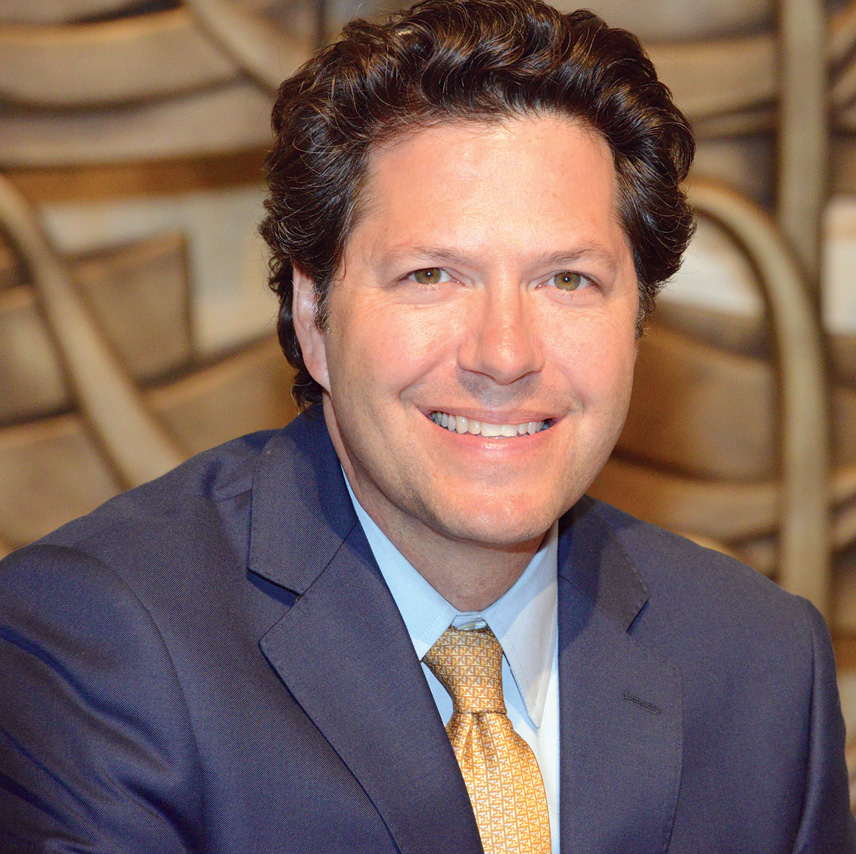
Rabbi Yoshi Zweiback is the Senior Rabbi of Stephen Wise Temple in Los Angeles and host of the podcast “Search for Meaning with Rabbi Yoshi.”