
Saturday, Nov. 14, will mark a day few if any Americans will take note of but all should appreciate. On that date in 1832, Charles Carroll, the last signer of the Declaration of Independence, passed away.
Carroll was born in Annapolis in 1737, the son of a wealthy tobacco planter. Maryland had been founded in 1634 as a haven for Catholics, but after 1689, when William and Mary took the throne from King James II in Britain’s Glorious Revolution, Maryland’s government was overthrown. The Church of England became the established church, and Catholics lost power. By Carroll’s birth, they could not vote, hold office, teach, or practice law.
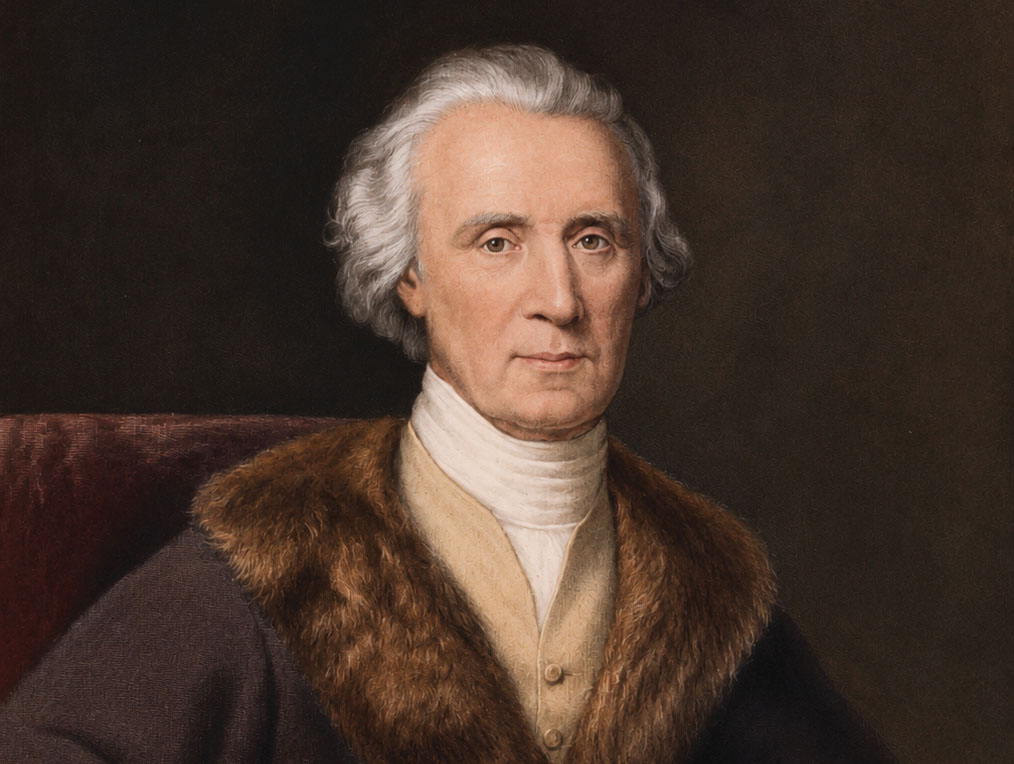
Young Charles attended a clandestine Jesuit school, was sent to France to finish his studies, and then studied law in England, though he could not practice back at home. He returned in 1765, fluent in French, trained as a fencer and was heir to roughly 10,000 acres. In 1768 he married his cousin, Mary Darnall.
Expanding his business interests and properties, among them Doughoregan Manor and Carrollton Manor, Carroll began appending the latter estate to his signature, signing as “Charles Carroll of Carrollton,” to distinguish himself from others by that name, including his father.
Barred from the courtroom, Carroll took up the pen. When Maryland’s British-appointed governor tried to raise fees to pad official salaries in the wake of the Stamp Act, a man named Daniel Dulany defended the move in the Maryland Gazette through a dialogue between “First Citizen” and “Second Citizen.” Carroll wrote in to respond in the voice of “First Citizen,” arguing for the Patriot cause. When his identity leaked, his popularity soared.
With the wind to his back, Charles supported the boycott of British goods, was invited to represent his state at the Continental Congress (he declined, perhaps worried his faith would be a distraction), helped steer Maryland’s revolutionary convention, and in 1776 joined Benjamin Franklin and Samuel Chase on a mission to win over Catholic, French-speaking Canada, alongside his cousin John, the future first Catholic bishop in the United States. The mission failed, but John Adams explained why the undeterred Carroll had been chosen: his faith and language were assets, and he was risking the largest fortune in America.
Carroll, having helped swing Maryland toward independence, was elected to Congress on July 4, and signed the Declaration in August, the only Catholic among the signers and the only one to add his estate to his name. As he returned to his seat, a colleague reportedly quipped, “There go a few millions.”
Not one to slow down, Carroll went on to help draft Maryland’s constitution, serve on the board of war, visit Washington at Valley Forge, later serve a term as one of Maryland’s first two United States Senators, and, at 91, lay the cornerstone of the Baltimore and Ohio Railroad.
In 1789, Carroll introduced a bill for gradual abolition to the state senate, which ignored it. Late in life he freed some of the slaves he held, while keeping others.
Maryland’s religious liberty, meanwhile, continued to develop over his years of service. Baltimore’s Jews, led by the merchant Solomon Etting, first petitioned the legislature for equal standing in 1797. Two decades later, a freshman delegate from Hagerstown, Thomas Kennedy, a Scottish-born Christian who by several accounts had never met a Jew, took up the cause. It cost him his seat in 1823.
Baltimore’s Jewish leaders wrote to editors, however, and newspapers began to editorialize in favor of social equality. Kennedy returned to office in 1825 as an independent and led the charge once more. On Jan. 5, 1826, the law, “An Act for the Relief of the Jews of Maryland” took hold, substituting belief in “a future state of rewards and punishments” for what had been a Christian oath. Etting and another Jew, Jacob I. Cohen Jr., were soon elected to the Baltimore City Council.
That year turned out to be a momentous one in American history. As Denise Kiernan and Joseph D’Agnese put it in “Signing Their Lives Away: The Fame and Misfortune of the Men Who Signed the Declaration of Independence”: “By 1826, only three of the legendary 56 signers were still alive: Thomas Jefferson, John Adams and Charles Carroll. Jefferson and Adams died on July 4, 1826, the 50th anniversary of the adoption of the Declaration. Adams’s last words — not knowing his old friend and rival had already kicked it a few hours earlier — were ‘Thomas Jefferson survives.’ What he should have said was, ‘Charles Carroll survives.’ And for six more years, Carroll did just that, serving as a kind of a living monument to the American Revolution. People would stop by to see him, pay him homage, and perhaps check his pulse. He wintered his last several years with his daughter in Baltimore, which is where he died at the age of 95. And then there were none.”
Rabbi Dr. Stuart Halpern is Associate Provost for Strategic Initiatives at Yeshiva University and Deputy Director of Y.U.’s Straus Center for Torah and Western Thought. His books include the newly released “Jewish Roots of American Liberty,” “The Promise of Liberty: A Passover Haggada,” “Esther in America,” “Gleanings: Reflections on Ruth” and “Proclaim Liberty Throughout the Land: The Hebrew Bible in the United States.”