
In the span of just a few weeks, we’ve experienced national elections in Israel and here in the United States. And whatever your politics, wherever you find yourself on the political spectrum, there were likely moments that gave you hope and others that left you feeling anxious or concerned.
That’s the nature of elections. And, more broadly, the nature of life itself.
Every day, we encounter stories that remind us of the goodness and generosity of people, stories that make us optimistic about the future. And, of course, every day we encounter stories that do precisely the opposite.
It often feels as though we’re living in both realities at the same time. The best of times. The worst of times.
We live in an age of profound uncertainty. Climate change, artificial intelligence and political and social upheaval all raise difficult questions about the future. And for Jews, there is the additional anxiety of rising antisemitism and growing hostility toward Israel.
How do we manage the tension between hope and anxiety?
We find a powerful lesson in this week’s Torah portion, Toledot.
Isaac and Rebecca marry, but Rebecca has difficulty conceiving. Isaac prays to God on her behalf, and God responds to his plea. Rebecca becomes pregnant, but the children struggle within her womb, and she cries out:
Im kein, lamah zeh anochi?
“If so, why do I exist?”
It’s a remarkable question. More literally, the Hebrew reads something like, “If so, why this, I?” It’s almost a broken sentence, capturing the depth of her confusion. How is she supposed to feel? Excitement? Trepidation? Anxiety? Hope?
Our commentators offer different interpretations. Rashi understands Rebecca to be asking why she ever prayed to become pregnant if this was what she would have to endure. Nachmanides reads the question as something more existential: What is the point of living? Why do I even exist?
Each of us has surely asked some version of that question, particularly when the world seems unpredictable and the future uncertain.
And the way we consume information today can make that uncertainty even harder to navigate.
The algorithms that determine so much of what we see and read aren’t designed to give us a balanced picture of the world. They’re built to keep us engaged, often by provoking anger, fear or outrage. The more time we spend scrolling, the easier it becomes to believe that the world is defined primarily by its problems.
But that’s hardly the whole story.
There is so much goodness in the world. So much kindness and generosity. So many people working every day to make life better for others.
We just have to make sure we’re paying attention to those stories, too.
Of course, there are legitimate reasons to be anxious. We shouldn’t ignore them or pretend they don’t exist. We need to be clear-eyed about the challenges we face and thoughtful about how we might respond. But when we allow our fears to dominate our thinking, we risk becoming overwhelmed, throwing up our hands and wondering: What’s the point of it all?
So here’s my suggestion: Less time on social media. Less news delivered by algorithms. Instead, more time in conversation with actual people, especially those whose backgrounds, experiences and perspectives are different from our own.
Ask what gives them hope. Find out what inspires them. Learn about the people they admire and the good they see happening in the world.
I feel fortunate to do this regularly with the people I interview on my podcast, “Search for Meaning.”
(Shameless plug: If you’re in need of a little hope, I encourage you to listen to my recent conversation with Yossi Segelman, the founder of Our Big Kitchen Los Angeles. What began as a simple effort to help others has become an extraordinary community of volunteers preparing meals for people in need, bringing together people from different backgrounds in acts of kindness and service. If Yossi’s story doesn’t restore some of your faith in humanity, I’m not sure what will!)
And now, back to Rebecca.
What’s most important isn’t simply the question she asks. It’s what she does next:
Vatelech lidrosh et Adonai.
She goes to seek God.
She doesn’t have all the answers. She doesn’t know what the future holds. But instead of allowing uncertainty to paralyze her, she goes searching for meaning. She doesn’t give up. She doesn’t give in.
And perhaps that’s what we’re called to do as well.
When we’re tempted to ask, Lamah zeh anochi? — Why am I here? What’s the point? — we can remind ourselves of the extraordinary goodness that exists in the world. And, even more importantly, we can become part of it.
We can show up. Participate. Volunteer. Be part of the story of goodness, compassion, kindness and hope.
We cannot control every election result, every headline or every troubling event that unfolds around us.
But we can decide where to direct our attention, with whom to spend our time and how to use our lives to bring more goodness into the world.
And maybe that’s the best answer to Rebecca’s question.
Why are we here?
To do good. To make the world a little better. To bring hope — for ourselves and for others as well.
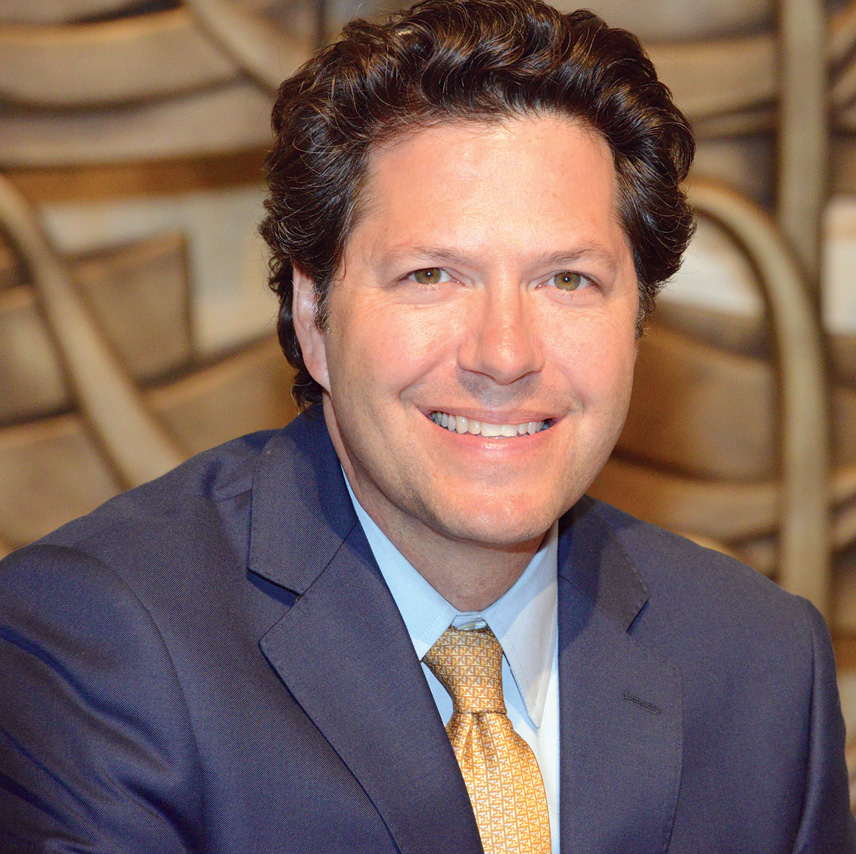
Rabbi Yoshi Zweiback is the Senior Rabbi of Stephen Wise Temple in Los Angeles and host of the podcast “Search for Meaning with Rabbi Yoshi.”