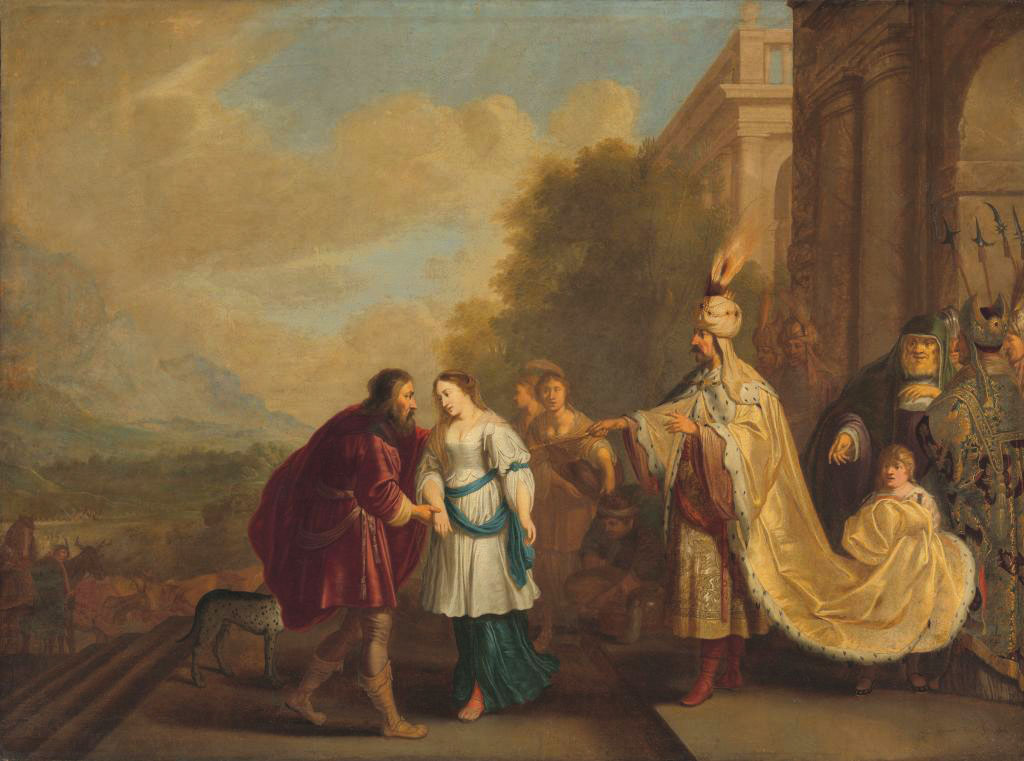

The story of Abraham begins with two extraordinary words: Lech Lecha — “Go forth.” God commands Abraham to leave his country, birthplace and father’s home, and journey toward a land He will show him. There is no map, detailed itinerary or certainty about what awaits him. Abraham is asked to leave the familiar and step into the unknown.
Yet Lech Lecha suggests more than a change of geography. It can also mean “Go to yourself.” The journey is not merely from one place to another, but from who we are to who we might become. Abraham is invited to discover a deeper version of himself, one that could never fully emerge within the assumptions and conventions of the world in which he was raised.
But Abraham’s story is more than the biography of one extraordinary individual. It is a microcosm of Jewish history and a reflection of every human life. Within his experiences we encounter the recurring themes of Jewish history: the journey toward Israel and the centrality of Zion, exile and return, danger and deliverance, war and peace, human error and correction.
Abraham leaves his homeland for the Promised Land, is driven by famine into Egypt and eventually returns. He confronts conflict, rescues his nephew in battle and experiences uncertainty, yet continues forward guided by divine promise. His journey anticipates that of his descendants, who would likewise experience exile and redemption, triumph and tragedy, displacement and homecoming. Jewish history is, in a profound sense, the continuing story of Lech Lecha — a people called to move forward, learn from its mistakes, renew its commitments and find its way home.
This is also one of Judaism’s most powerful insights into the human condition. We are not finished products, but works in progress, endowed with possibilities that may remain undiscovered unless we venture beyond the comfortable boundaries of our lives.
Each of us encounters moments when life presents its own Lech Lecha. We may need to relinquish a resentment, question an assumption, overcome a fear, repair a relationship or exchange the security of habit for the uncertainty of growth. The greatest journeys often require no physical movement at all. They take place within us.
The Comfort of Standing Still
Human beings are creatures of inertia. We seek stability, predictability and the comfort of what we know. These instincts serve an important purpose, but can become barriers to growth. We may remain attached to patterns of thinking and behaving long after they cease to serve us, simply because they are familiar.
Abraham’s greatness lay not merely in his willingness to travel, but in his courage to challenge the assumptions of his age. Raised in a world of idolatry, he refused to accept that what everyone believed must be true. He possessed the independence to question, the courage to disagree and the imagination to envision a different world.
A life governed entirely by habit may be comfortable, but comfort alone rarely produces meaning. We become more fully alive when we discover that we are capable of more than we imagined.
As Rabbi Jonathan Sacks observed, “Sometimes we have to give up our past in order to acquire a future.” The challenge is not to reject everything familiar. Judaism values continuity, tradition and the wisdom of generations. Rather, it asks us to distinguish between commitments that anchor us and habits that imprison us. We must know when to stand firm and when to move forward.
Becoming a Blessing
The Torah then adds an extraordinary declaration: Veheyeh Berachah — “And you shall be a blessing.”
These words transform the meaning of Abraham’s journey. His destination is not simply personal achievement, security or spiritual enlightenment. He is called to become a source of blessing to others.
This is central to the Jewish understanding of a meaningful life. We do not discover our highest purpose by concentrating exclusively on our own fulfillment. Paradoxically, we find ourselves most fully when we move beyond ourselves.
Abraham becomes the embodiment of chesed, loving-kindness. His home becomes a place of hospitality, his life a model of generosity and his concern extends even to strangers and those with whom he disagrees. The man commanded to leave his father’s home ultimately creates a spiritual home for humanity.
A life devoted exclusively to possessions, recognition or pleasure may provide happiness, but cannot satisfy our deeper hunger for meaning. That hunger is nourished when we become necessary to someone beyond ourselves, when our presence makes another person’s world brighter.
The Journey Without a Final Destination
There is another remarkable feature of God’s command. Abraham is told to travel el ha’aretz asher areka — “to the land that I will show you.” The destination is not revealed at the outset.
Perhaps this is because life’s most important journeys cannot be understood entirely before they begin. We discover possibilities through moving forward. Growth changes not only where we are going, but also the person making the journey.
Judaism does not envision human development as a single dramatic transformation. It is a lifelong process shaped by countless decisions, small acts of courage and repeated opportunities to choose a better path. Each day invites us to move beyond yesterday’s limitations.
Abraham reminds us that purpose is not certainty. We need not know where every decision will lead before taking the first step. Sometimes acting upon our deepest convictions is itself the beginning of wisdom.
In a world that measures success by what we accumulate, Abraham offers a different measure: not how much we possess, but how much we contribute; not how securely we preserve the familiar, but how courageously we pursue what is right; not simply what we achieve, but whom we become.
The Torah’s first words to Abraham are therefore not merely an ancient command addressed to one man. They are an enduring invitation to every generation and individual.
Lech Lecha. Go beyond the familiar. Discover the possibilities within you. Find the courage to grow. Above all, become a blessing.
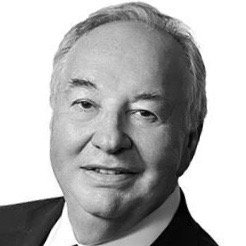
Selwyn Gerber is Founder and Chief Strategist of RVW Wealth LLC.