
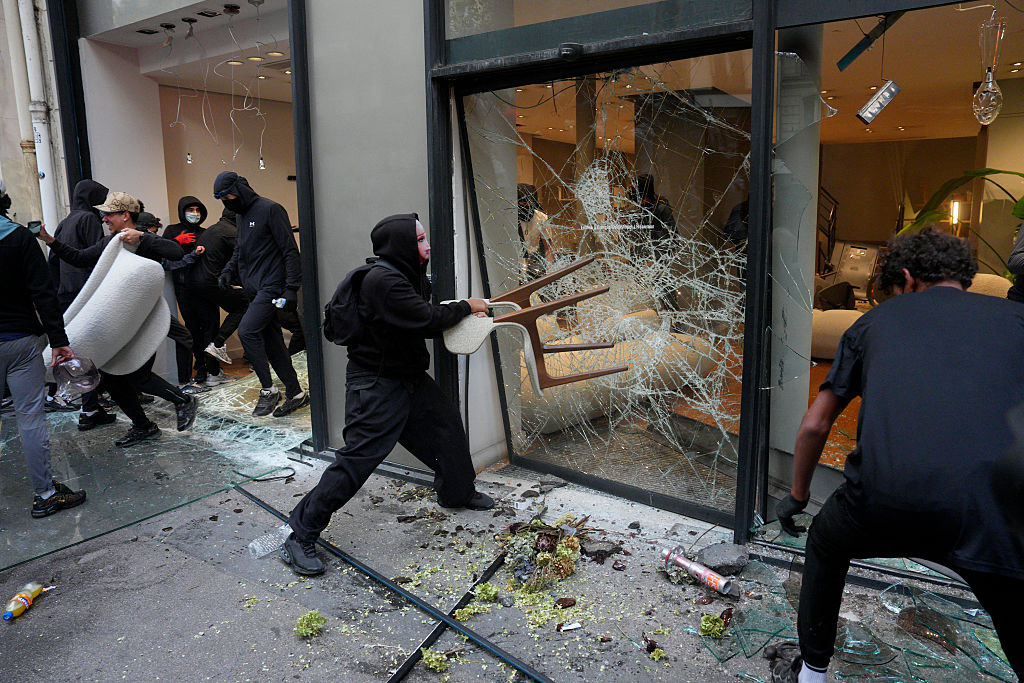
Joshua’s ban of looting Jericho was flauted by an Israelite who refused to be controlled;
“We can,” said Achan, leading to his death, as havoc forced the fate of Israel to unfold.
A.I. is for perpetual improvement a false ideal
which most of us abandon only once we die,
a process in which obviously we’ve failed to heal,
the crime of false ideals turned by our death into a corpus delicti.
Recursive self-improvement is not the main motive for A.I.;
mankind is motivated to create it because it can,
though it will create disasters, a prediction on which we should all rely,
“we cannot” is the reason why we can’t control it with a ban.
Just like the ban on property in Jericho which Joshua imposed,
such a ban would be like the walls of Jericho decomposed.
In “History Raises Its Eyebrows at the Week in AI,” WSJ, 10/15/26, Peggy Noonan writes:
What was artificial intelligence created to do? It can find cures and solve math problems. It may cause catastrophe and widespread loss of life. But what was it invented to do? What was its originating purpose?
The question is always met by silence. It’s “the next step.” It’s been the dream of science fiction for a century.
Here is part of the answer. I was in Kansas on an early summer morning 20 years ago. A soft breeze, a gathering warmth. I got into my host’s car. He jacked up the air conditioning and hit the gas. Outside, balmy and natural, inside things turned freezing. I asked, “Why do Americans do this, blast up the AC when a summer day feels good?” He thought. “Because we can.”
So with AI: Because we can. We’ll dream up the benefits (which are real) and later concede the risk (AI agents may hack into the electric grid serving Chicago in an operation so deep, broad and confounding it won’t be fully up and back for months).
Our society, our country, never decided to “do” AI. History will be perplexed by this. Something so big, so epochal, and people had no say? There was no vote, no debate. Some people started to do it and raise capital, and we shrugged. “It’s the next step.” As Sam Altman said early on, electricity, computers, the internet—now this. Americans always take the next step.
Bans of what mankind can do rarely succeed, except in generating punishment for their violation. The account of Achan ignoring the ban on property in Jericho is recorded in chapter 7 of the book of Joshua. When the Israelites conquered the fortified city of Jericho, God placed a strict decree of ḥērem (a sacred ban) over the city. Everything was “devoted to destruction”—all citizens were to be eliminated, and all silver, gold, bronze, and iron were strictly consecrated to the Lord’s treasury. Personal plundering was absolutely banned, to avoid bringing disaster upon the camp of Israel. Driven by covetousness, Achan (from the tribe of Judah) willfully ignored this divine command and secretly stole several valuable items. The only significant result of the ban which he violated was the death sentence on him which was the collateral damage caused by it.
Gershon Hepner is a poet who has written over 25,000 poems on subjects ranging from music to literature, politics to Torah. He grew up in England and moved to Los Angeles in 1976. Using his varied interests and experiences, he has authored dozens of papers in medical and academic journals, and authored “Legal Friction: Law, Narrative, and Identity Politics in Biblical Israel.” He can be reached at gershonhepner@gmail.com.

































