fbpx

September 17, 2026

Expanding the Soul

In my Rosh HaShanah column last week, I taught that suffering often compels us to change. If you have a conscience, you want to change because you cause suffering in others. If you have a soul, you will want to reduce the suffering others cause you and also reduce your own self-inflicted inner suffering. Many people have both conscience and a soul.

No spiritual tradition addresses suffering as directly as Buddhism. My paraphrase of Buddhism’s Four Noble Truths is: Life involves suffering. We suffer because we want some intractable reality to change. There is a way out of suffering. Here is the path (the Eightfold Path)

The key word is “want.”

We know that some difficult realities will not change. But when the difficult reality is a person who matters to us, there usually remains at least an ember of hope that they might change. We often feel qualified to effect that change in others. 

Let us assume that your desire for this person to change has some validity — that an impartial observer would agree that change is necessary. Often people refuse to change because they do not want to endure the painful path of transformation, or even the discomfort of apologizing. They are avoiding suffering. They will let you suffer so that they will not have to.  

A key feature of the Jewish Eightfold Path is the Days of Awe. Rosh Hashanah tells us to stop the suffering you cause others. The journey though the Days of Awe is a major guilt trip. Words such as “sin” abound. This is a guilt trip in a good sense. We might call the Days of Awe a journey of accountability. If we take these days seriously, especially as reflected in the liturgy, we must at least face ourselves.

Have I been unable to change? Stubborn? Thoughtless? Perhaps even mean?

The liturgy tells us that God knows and that we will not get away with it. I have my doubts about that last part, but who knows?

Who by fire, and who by water?

We are at Shabbat Shuva, the fulcrum between Rosh HaShanah and Yom Kippur, the movement from morality to spirituality. 

I do not think the desire for reality to be different is the sole cause of inner suffering. The desire to suffer less is certainly present, but it is not necessarily the root of the pain.

I once compiled a list of 20 ego states associated with inner suffering: anger, resentment, guilt, shame, victimhood, fear, lack of meaning, lack of fulfillment, the compulsion to accommodate others and the desperate need to be understood.

Some of these states are forms of defense. Sometimes they are ways of defending our hearts.

This suffering should not be understood merely as something that happens to us, like a painful tooth that sends us to the dentist. At a certain point, suffering can begin to organize our character. It becomes symbolic of something deeper taking place within us.

Often, that deeper reality is grief.

We can learn adaptive skills that help us cope, and those skills have real value. Yet beneath them, the suffering may continue to simmer.

Here is an image that has been useful to me: the expansion of the soul.

An unhealed wound can produce pain that spreads throughout the entire system of our inner life. We may not be able to remove the wound. We may not even fully understand it. But we can enlarge the life surrounding it.

When we expand the soul, the size of the wound is proportionately diminished.

Insight alone rarely produces change, at least not quickly. Understanding the source of our suffering is important, but understanding is not transformation. More durable change requires growth of character — the gradual expansion of the soul around the wound.

You have heard me say, perhaps many times, that personality is roughly what we were born with. Character is what we do with it.

How, then, do we expand the soul?

Here is a starting place:  Clown around. Have a good time. Look forward to something every day. Don’t take yourself and your suffering too seriously. Give your own needs a rightful place, at least for part of the day.

If you cannot be a comic, watch comedy. Memorize jokes.

In a phrase: lighten up.

Do this in spite of suffering — or, more pointedly, to spite the suffering.

Clowning does not deny the wound. It refuses to let the wound become the entire soul.

There is a struggle within us between constriction and expansion, between despair and vitality. Good humor can be a powerful ally against the constriction that suffering creates.

When I look back upon my life from the vantage point of my casket, I do not think I will regret the time I spent clowning around.

The things I regret, I am working on. Perhaps more intensely than usual, because I must admit that I really do not know, who by fire, and who by water?

Poetry, liturgy, holy texts are the flip side of humor. As we move toward Yom Kippur, with our souls sufficient lightened, we will study poetry and texts that sear our expanded soul and propels us toward transformation. 


Rabbi Mordecai Finley is Rabbi of Ohr HaTorah Synagogue.

Expanding the Soul Read More »
Making Torah More Accessible

When someone says they’ve spent the past four years writing a book on Torah, it’s unlikely that an 85-year-old former math teacher, Dr. Judy Freier, would come to mind. But Judy, also known as “The Torah Lady” by her chavurah, lives to subvert expectations.

“Growing up, I had no idea what Judaism was all about,” she admitted. Though she attended a majority-Jewish school in New York City and felt connected to her Jewish identity, she received a primarily secular education. Even when Judy married her first husband — a Holocaust survivor with an Orthodox background — she was content to let him handle the religious aspect of their daughters’ schooling.

“I felt teaching [about religion] was not for me, it was for the person who has a religious background,” she said. But that changed when she moved to California 20 years ago and joined the now-defunct Ohr Ha Torah, where she joined her first lay-led Torah study group. When she moved synagogues to Valley Beth Shalom five years later, she asked Rabbi Edward Feinstein if they would include a similar lay-led study group after services.

When he suggested she lead it herself, her first instinct was shock.

“Me? Secular me? But by that point, I had begun to build a little bit of a library, a little bit of knowledge and I was just captivated by Torah. It spoke to me.”

“A little bit of a library” is an understatement. Over the years, Judy has amassed thousands of articles and dozens of books on Jewish thought and commentaries, which she spent 10 to 12 hours a week researching in preparation for facilitating her Torah study group. And over the nine years she facilitated it, it became a huge hit. Every week, anywhere between 15 to 30 people would attend — many of whom did not even belong to Valley Beth Shalom but had heard of Judy’s group through word of mouth.

“They were hungry for learning,” Judy recalled. “They were looking for some connection to something bigger than themselves, and they didn’t know where to reach for it. My group evidently satisfied that.”

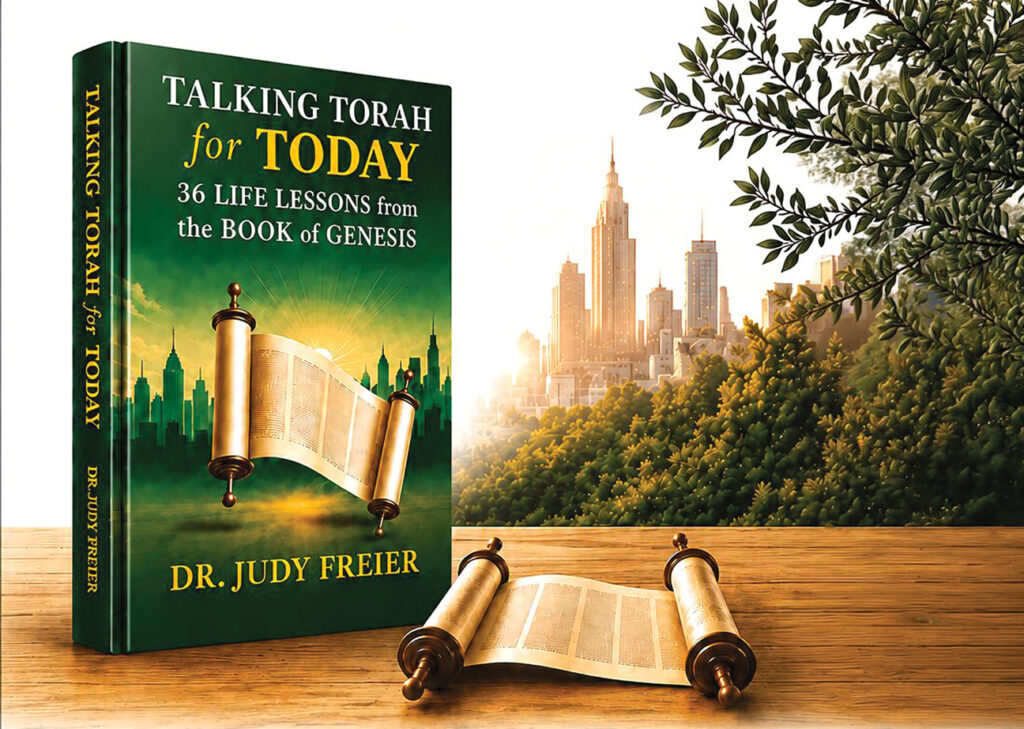
But when Judy first got the impulse to write “Talking for Torah,” she stopped facilitating the study group to dedicate herself to the task. The 402-page book is organized around 36 life lessons related to the Book of Genesis, with thoughtful study questions and dozens of responses from respected sources in Jewish thought. Each Parsha in Genesis is accompanied by three life lessons, ranging in theme from “Be Aware That Jews Live as Both Citizens and Strangers” to “Practice Loving-Kindness as God Does.”

Often there would be nights when Judy didn’t sleep a wink, poring over sources from contemporary to ancient rabbis, Pirkei Avot, the Talmud and much more. But why this sudden burst of energy, at a time when most of her peers have long settled into retirement?

It’s twofold, according to Judy. She imagines that “Talking for Torah” will resonate with anyone, from Christians to secular Jews like her former self.

“I know what that’s like, when you feel like an outsider, and so my mission is to make everyone understand that they’re not an outsider. They’re an insider, and they’re an insider to something beautiful,” she said.

But not only does she want to make Judaic thought accessible — she wants people to connect with one another.

“I see my book as a source for people meeting each other,” she said. “I see it as a singles thing. I propose that we have a session for different ages where people come together in groups of four and discuss my Torah questions. And they get to know how somebody really thinks.”

After losing her first husband to a heart attack at an early age, Judy found love again five years ago. It is to both her late husband and her partner that she dedicates “Talking for Torah”: the man who first helped sow the seed of faith and identity, and the man who helped sustain it.

In Judy’s eyes, connection, and feeling a part of something bigger than oneself—especially in a time of great divisiveness and grief — is vital. “So many people are seeking meaning and not getting it,” she said. “But we need to give meaning. It goes back to Viktor Frankl. How did people survive the Holocaust? Because they had something that was meaningful to keep them going. And I’m hopeful that my book can give them that. I’m 85 —my legacy is to get this message out and see more people fall in love with Torah the way I have.”

Making Torah More Accessible Read More »

Avi Nesher Fights the Boycott with a Human Story

Years of making films and giving interviews have helped director Avi Nesher become something of an expert at dodging annoying questions. During an interview prior to the opening of his film “Our Loves” at the Toronto International Film Festival (TIFF) on Sept. 13, a reporter started asking him about politics. 

“And as I took apart every question he asked patiently, I was just amazed at how he could ask such illogical questions. How can he talk about the boycott of art?” 

Nesher, who is considered to be one of Israel’s most respected directors, didn’t lose his cool. He told the reporter that when he lived in New York with his parents in the 1960s, he witnessed many protests against the government and the military because of the Vietnam War, but nobody boycotted Hollywood films or American literature. “That would have been ridiculous.”

He pointed to Iran, where he said tens of thousands of protesters had been killed within days, yet Iranian cinema was not being boycotted. “How can you boycott artists?” Nesher asked. “You can be angry at a government or a military, but the people? Half the population in Israel is against this government and wants to replace it. You should support that half.”

The reporter kept quiet, maybe rethinking his question, and Nesher continued: “It makes Israelis think that maybe there is something medieval behind it — the old accusations that Jews kill Christian babies and use their blood to make matzah.”

Nesher just said what many Israeli filmmakers probably wanted to tell the world: What does art have to do with politics? And why are Israeli and Palestinian films treated so differently? Palestinian films are welcomed to festivals with open arms and often praised, while Israeli films seem to be welcomed only when they criticize Israel, as was the case with “No Other Land,” which was made by both Israeli and Palestinian filmmakers.

Of course, being accepted to TIFF with a film centered on Oct. 7, 2023 is a welcome change. “It’s wonderful that they broke the boycott. I’m sure it wasn’t easy,” said Nesher. “I’m filled with respect and appreciation for them for doing it.”

Nesher received dozens of interview requests following the announcement, and was relieved to discover that most of them focused not on politics but on the film itself. “Our Loves” follows five ordinary Israelis whose personal problems and troubled relationships on Oct. 6, 2023 suddenly become secondary when the Oct. 7 attack begins. You don’t have to be Israeli to understand the anguish and pain of the characters or what they are going through. Their stories are universal: a divorced father trying to repair his relationship with his teenage daughter, who is angry at him for leaving the family; a police officer who has to tell her conservative mother that she is in a relationship with a woman; and a religious woman who decides to attend the Nova festival, among others.

“They need to understand how they had reached that point in their lives and what they would do if they survived the day,” said Nesher. “It’s about change and hope. I thought it would be interesting to make a film that could offer some kind of healing to a country that is so divided and wounded and has gone through such terrible trauma.”

Nesher was, like the rest of the country, devastated when the Hamas attack happened. As a bereaved father whose 17-year-old son died in an accident five years earlier, he understood very well the pain and suffering of the many parents in Israel who lost their children that day. “I felt frightened and angry and hurt, also because of the specific experience we had as bereaved parents. I felt a great deal of empathy for people who had lost the people closest to them,” Nesher said.

When he was approached by some people who suggested he make a film about that tragic day, he rejected the idea at first. “I said there was no point in making a film about Oct. 7 itself. That is something that should be dealt with in a documentary. I don’t want to analyze that day. I’m telling stories of people, that’s what interests me.”

Then one day, he received a phone call from a man from Kibbutz Be’eri, which suffered heavy losses during the attack. He invited Nesher to visit members of the kibbutz who, along with residents of other communities in the area, had been evacuated to a hotel in Ein Gedi.

He asked the director to screen his latest film, “Gan Kofim” (“The Monkey House”), which was released in September 2023 and received excellent reviews from both critics and audiences. But shortly after its release, the entire country went into lockdown and not many people saw it.

Nesher hesitated. He felt uncomfortable talking about his films to people who had just experienced such devastating trauma, but the man was persistent. “So I went, and it was such an insane experience. There were 500 people there. They loved the film and were nothing like you expected them to be. You think of them as victims, but they are human, and still have a sense of humor,” Nesher said.

The experience also changed the way he thought about telling the story of Oct. 7. Rather than focusing on the atrocities themselves, he wanted to tell personal stories of people caught in the middle of them. “Benigni did it so well in ‘Life Is Beautiful.’ In the midst of the Holocaust, other things are happening as well. If you allow yourself to tell those stories, you can convey the horror without showing rape and murder,” said Nesher. “You tell a side of the story that people don’t know about, and to a large extent, it intensifies the experience because you can put yourself in their place. It also makes it accessible to anyone in the world who may be anti-Israel, because you simply cannot help but fall in love with these people.”

Nesher has made 22 films, many of them highly regarded. Five of them were also screened at TIFF. But making Israeli films is not easy. Budgets are generally small by American standards, and international financing has become increasingly difficult to secure amid the cultural boycott of Israeli cinema.

To those wondering whether the Israeli government helped finance the film about the deadliest attack in Israel’s history, the answer is no. “One of the biggest mistakes Israel has made was shutting down the department within the Foreign Ministry that helped Israeli cinema be shown around the world,” Nesher said. “For many years, I attended numerous festivals where I spoke not only about my films but also about Israel. Today, that has almost disappeared because of very unwise government cuts.”

Nesher is hopeful about the future of Israeli cinema and the way it is received around the world. He believes the Israeli government shouldn’t be afraid of its filmmakers and what they have to say. “Artists have great power, which unfortunately hasn’t been used in Israel in recent years,” he said. “They are regarded as enemies of the state, and that is a terrible mistake. Even if an artist disagrees with one policy or another, artists represent the country, and that in itself is powerful.”

Avi Nesher Fights the Boycott with a Human Story Read More »

Combating Antisemitism Through Education in Beverly Hills

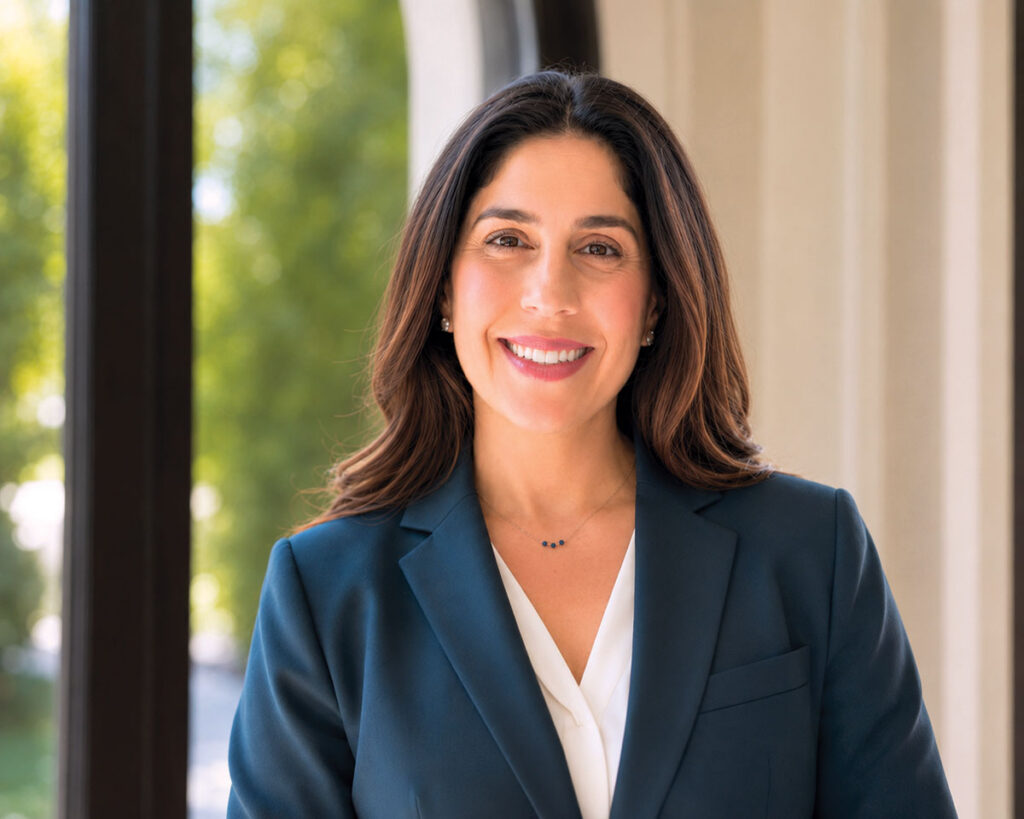
When Judith (Judy) Manouchehri  was two years old, her family fled Iran in the middle of the night.

Her father had been arrested by Iran’s new Islamic regime after serving alcohol – which had been banned – at a gathering in their Tehran home. After his release, the family left the country, traveling by horse-drawn carriage through Pakistan. They spent several weeks in Spain before arriving in the United States as refugees in 1982.

In Los Angeles, they joined relatives and a growing Iranian Jewish community that started taking shape after the 1979 Islamic Revolution. For families who had arrived as refugees, there was probably no better city in the United States than Beverly Hills to be an Iranian Jew. It offered them the chance to rebuild among people who shared a similar history and understood the challenges of starting over. Judith grew up in that environment, where community and mutual support were part of everyday life.

Judith and her brother Jonathan, only a year older than she, attended Horace Mann, where Judith was elected eighth-grade class president and later, Beverly Hills High School, where in her senior year she became the Associated Student Body president.

“That’s my origin and the reason for who I am,” she said. “And I am so grateful to be living in Los Angeles, and very grateful for the opportunities that the United States has provided my family.”

Even after graduating and becoming a real estate attorney, Judith remained involved with the Beverly Hills school system, a way of giving back to the community that had given her so much. Her three children also attend Beverly Hills Unified School District (BHUSD) schools, which was one of the reasons she decided to run for a seat in 2023. Two years after joining the board, her fellow board members selected her as president of the Beverly Hills Unified School District Board of Education.

Although Judith said her own children have never reported experiencing antisemitism at BHUSD, she believes the district should be vigilant to the rise in antisemitism elsewhere in the country. For her, education is an important way to raise awareness among students and help Jewish students feel supported and confident in their schools.

“Following Oct. 7 [2023], it became very clear to me that what had happened was not only concerning and traumatizing, but that it could also be very divisive. The way to deal with that division is to talk about the issue based on facts, and what it means when we say, ‘Never again,’” she said.

In August 2025, Judith supported a BHUSD resolution titled “Combating Antisemitism through Education, Awareness, Remembrance and Support,” which outlined specific steps for the district to take. The resolution calls for May to be recognized as Jewish American Heritage Month, annual Holocaust Remembrance Day programming, and Oct. 7 to be designated as a day of remembrance for victims of antisemitic terrorism.

It also calls for age-appropriate education about Jewish history and culture, professional development for teachers and staff, and instruction to help students recognize and respond to antisemitism and hate. The resolution also adopted the International Holocaust Remembrance Alliance’s working definition of antisemitism for educational and professional-development purposes, while stating that it would be applied consistent with the First Amendment, California Constitution and Education Code.

“Beverly Hills has a strong and vibrant Jewish and Israeli-American community, and I believe our school district has a responsibility to stand with that community, educate our students about antisemitism and its consequences, and ensure that hatred and discrimination have no place in our schools,” she said.

This resolution followed an earlier one adopted by BHUSD in October 2023, shortly after Hamas’ attack on Israel. That resolution condemned the attack, expressed support for Israel’s right to exist and defend itself and acknowledged an increase in antisemitic hate crimes and expressions of antisemitism around the world. It also pledged to protect students from antisemitism and hate and committed the district to educating students to stand against racism, hate and antisemitism.

“The first resolution was stating solidarity and understanding and compassion,” Judith said. “The second one has more depth and substance and more purpose in combating antisemitism.” She hopes the effort will show students and the broader community that standing up for Jewish students is not only acceptable but should be the norm.

“I’m very proud of BHUSD for its part in that,” she said.

For Judith, her family’s experience as refugees from Iran is part of what drives her commitment to speaking out against antisemitism and never staying silent. “We know how fragile life can be and that Jew-hate can be very strong,” she said. “That’s why it’s so important to speak up against it and support those who do.”

Combating Antisemitism Through Education in Beverly Hills Read More »

From Israel’s Farms to Los Angeles: The Etrog with a Purpose

Show someone who isn’t Jewish a picture of an etrog and ask what kind of fruit it is, and chances are they will guess a lemon. The etrog, or citron, is one of the Four Species used by Jews during Sukkot, making it one of the few fruits whose most important purpose is religious.

Yet the citron also grows in Morocco, and Moroccan etrogim are shipped to Los Angeles and sold to the Jewish community before Sukkot.

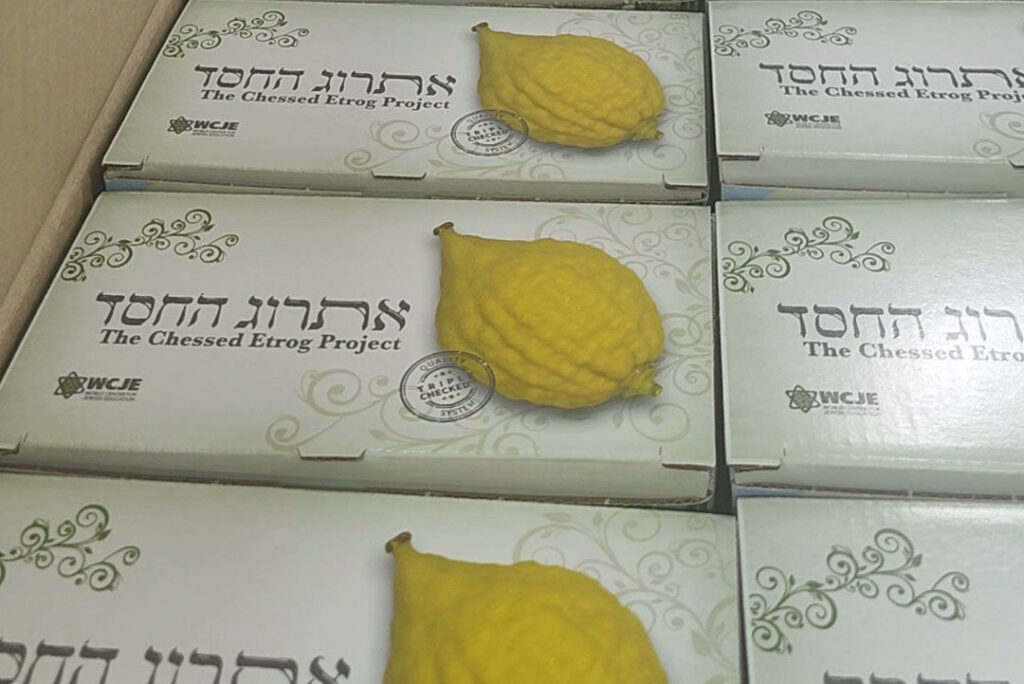
Mickey Katzburg, founder of the World Center for Jewish Education, is trying to give Los Angeles Jews another option: an etrog grown in Israel, while at the same time helping support farmers in the country’s Gaza border region.

“There is nothing wrong with Morocco,” Katzburg said. “But when you are doing a mitzvah, it is worthwhile to strengthen the people in Israel who have gone through such a difficult time. The farmer I buy from, Alon Gottlieb, lost one of his employees on Oct. 7, 2023. So when we specifically purchase from the Gaza border region, we are supporting the people who live there.”

For the past five years, Katzburg has worked with farmers in Israel’s Gaza border communities to bring their etrogim to Los Angeles through a project he calls The Chessed Etrog. Katzburg personally selects and inspects the etrogim before they begin their journey to the United States. They are first shipped to New York before making their way to Los Angeles.

Last year, the project brought approximately 5,000 etrogim from the Gaza border region to Los Angeles, as part of roughly 15,000 etrogim sold through the project in the United States. Families can purchase an individual etrog or a complete set of the Four Species—the etrog, lulav, hadass and aravot — with prices generally ranging from $60 to $200, depending on the quality and level of selection.

The project has also created a direct connection between the annual Sukkot purchase and Kibbutz Nir Oz, which suffered devastating losses in the Oct. 7 attack. Last year, Milken Community School encouraged families to purchase etrogim through the project, with a portion of the proceeds going to Nir Oz. The Chessed Etrog Project ultimately transferred several thousand dollars to the community.

The project’s charitable mission began even before the focus turned to the Gaza border communities. In its first year, the project supported women in Jerusalem who collect surplus produce from the wholesale market, clean it and distribute it to families in need. Another year, the project helped displaced Israeli soldiers staying in hotels, and later supported efforts to help soldiers find employment. In recent years, the project has focused on farmers in the Gaza border region.

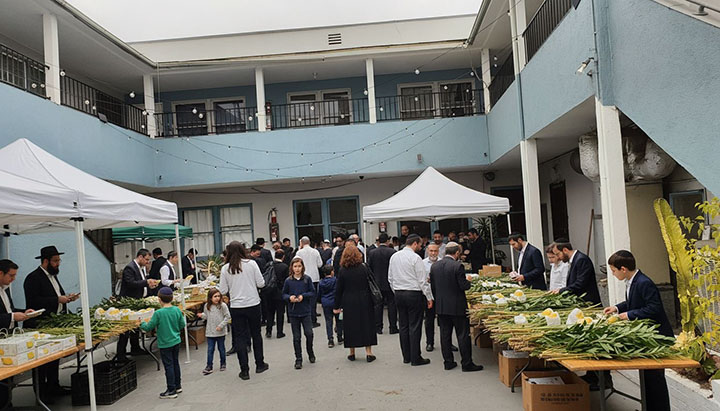
But Katzburg wants the Los Angeles experience to be about more than simply purchasing an etrog. The etrogim and Four Species are sold over four days at a large outdoor location at Pico and Robertson Boulevards, where Israeli music, families and a distinctly Israeli atmosphere turn the annual purchase into a community gathering.

He wants families to bring their children not simply to purchase the Four Species, but to experience something reminiscent of Israel. “It feels like Little Israel,” Katzburg said. “People come every year to wish each other a good year. It’s really a lot of fun.”

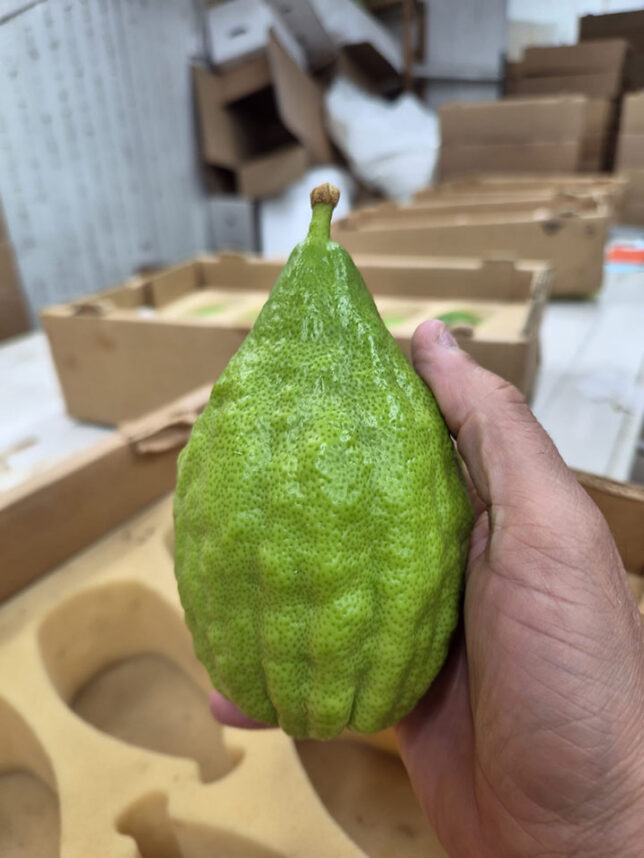
The etrog itself goes on a long journey before reaching Los Angeles. The fruit is harvested while still green and naturally turns yellow as it makes its way across the sea. Traditionally, the process could take a month or more when the fruit was transported by ship. Today, Katzburg said, faster methods are used to accelerate the change in color.

While Israelis are accustomed to using green etrogim, Katzburg said American customers generally prefer yellow ones.

And what happens to the etrog after Sukkot? Some people turn it into jam or preserves. But for Katzburg, what matters more is what the purchase has already accomplished. “It’s a double mitzvah. Even after Sukkot, the mitzvah continues,” he said. “You supported a farmer in Israel, and you supported an educational and experiential activity.”

An etrog grown in the Gaza border region and purchased by a Jewish family in Los Angeles carries with it a story that goes far beyond Sukkot: a farmer rebuilding his life, a community showing its support, and a mitzvah that connects two places and two communities thousands of miles apart.

From Israel’s Farms to Los Angeles: The Etrog with a Purpose Read More »

What’s in a Name: Peanut Butter Date Bark

When I was born, my mother gave my father three choices for my name. Sharon, Yael and Tamar. I was always grateful that he didn’t choose Yael because in Australia and America, Yael is often pronounced Yale. But I always wondered why he didn’t name me after his favorite thing in the whole world — tamar, date in Hebrew.

From my earliest childhood memories, my father always snacked on dates. He stuffed them with almonds or walnuts or he would drizzle dates with tahini poured straight from the jar. He enjoyed stuffing dates and a slice of hard yellow cheese into his pita. He even loved to add pitted dates into his omelets! Don’t get me started about his love for Silan, the date syrup that Iraqi Jews also call ha’lek.

Later in his life, my father enjoyed making date “treats.” He would add dried coconut to mashed dates, form the mixture into a date shape, roll each one in coconut and garnish with a roasted almond. Other times, he would smear peanut butter into the open pitted date. He would lovingly serve these creations to his grandchildren and other visitors.

When I was seven years old, my parents, my brother Rafi and I returned to Israel for Rosh Hashanah, Yom Kippur and Sukkot. It was a long trip, marred by the outbreak of the Yom Kippur war. One of my fondest memories was his happiness with the clusters of fresh dates in the stalls of the Shuk Ha’Carmel in Tel Aviv.

I remember his excitement when he brought home flat cardboard boxes filled with juicy, fresh dark Medjool dates, exported from Israel to Australia.

Over the years, whenever we returned to Israel, we would always go to the Dead Sea. He would always marvel at the fertile date groves of the Arava desert.

When I owned a clothing store on the Third Street Promenade, he made good friends with the date farmer from the Coachella Valley. He especially loved buying the barhi dates that reminded him of his childhood in Baghdad.

My father’s father was a successful food and grain wholesaler, so my father grew up knowing and loving dates. Iraq is home to 627 unique date species, and for millennia, dates were an essential part of the diet. Nowadays, Iraqi farmers cultivate over 50 different kind of dates for commercial agricultural production.

Ironically, while my beloved father’s passion for dates seemed to be a throwback to his Babylonian roots, dates are trending right now. Many Americans have traded in their ultra-processed snacks for fiber-rich, nutrient dense whole foods. Dates are a perfect way to add natural caramelized sweetness to desserts. TikTok and Instagram have popularized treats like “date bark,” peanut butter-stuffed dates, and chocolate-dipped date Twix.

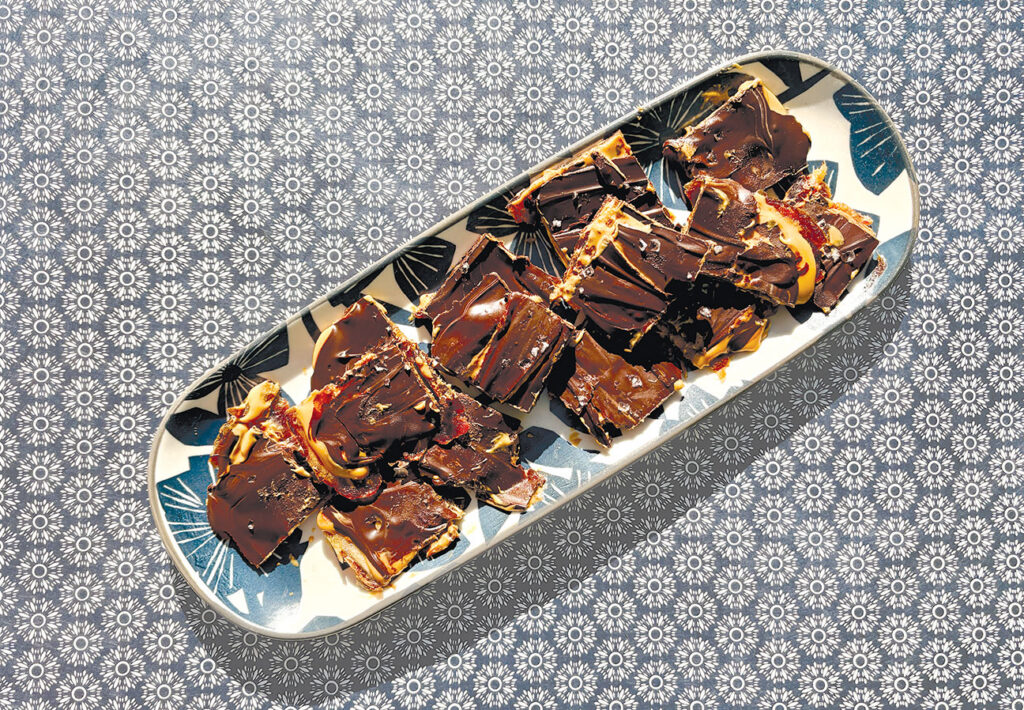
Rachel and I love making healthy desserts that incorporate dates. This peanut butter and chocolate date bark is something my father would have loved.

My father’s Hebrew birthday was Yom Kippur. So this year in tribute to my dad, dessert before the Yom Kippur fast will be a slice of honey cake and a bite of this delicious date bark treat.

P.S. Now I know why my father didn’t name me Tamar. My granddaughter (his first great-grandchild) is named Noa Tamar in his honor. And my brother Rafi’s granddaughter is named Tamar Hannah.

—Sharon


Peanut Butter Date Bark

1 dozen pitted Medjool Dates

Organic peanut butter

10 oz semisweet chocolate chips

2 tsp avocado oil

Maldon sea salt, to sprinkle

Line a small baking sheet with parchment paper. Slit each date and open out. Lay the dates flat on the baking tray to create an even layer of dates in a rectangular shape.

Spoon a generous amount of organic peanut butter on top of the dates, covering them completely.

Melt the chocolate with the avocado oil. Pour the melted chocolate over the peanut butter, then sprinkle with sea salt.

Place the bark in the refrigerator or freezer, until chocolate has hardened.

Cut into small chunks and serve cold.

Store in in a tightly sealed container in the refrigerator.


Sharon Gomperts and Rachel Emquies Sheff have been friends since high school. Their cooking and storytelling project has grown into a devoted following on Instagram @sephardicspicegirls and on Facebook at Sephardic Spice SEC Food. sephardicspicegirls.com/full-recipe.

What’s in a Name: Peanut Butter Date Bark Read More »

Table for Five: Yom Kippur

One verse, five voices. Edited by Nina Litvak and Salvador Litvak, the Accidental Talmudist

It is a Sabbath of rest for you, and you shall afflict yourselves. It is an eternal statute.

– Leviticus 16:31


Sarah Pachter

Author and Speaker

 I’m not exactly counting down the minutes until Yom Kippur. Going a full day without food or water isn’t my idea of fun. Yet, there is something profoundly spiritual about stepping away from the physical. Yom Kippur is a day that is both a Shabbat and a day of affliction. We abstain from the physical: we fast and refrain from bathing, relations, wearing leather shoes or using oils. By stepping away from our physical needs, we become more angel-like and reconnect with our spiritual essence.

Yet the Talmud teaches that Yom Kippurim can be understood as “a day like Purim.” Could Purim, in some ways, be even greater than Yom Kippur?

On Purim, we drink, give gifts, feast and celebrate. What could possibly be more spiritual about indulging in the physical? The answer lies at the heart of Judaism: we don’t reject the physical; we elevate it.

Our bodies are not obstacles to our souls. They are vessels through which our souls express themselves. When we eat with gratitude, celebrate with purpose, give generously and perform mitzvot, we reveal the holiness within. Yom Kippur teaches us to rise above the physical. Purim teaches us something harder: how to bring holiness into it. It’s easy to feel spiritual when distractions are removed. The real challenge is remaining connected to God while living in this world. Holiness isn’t escaping the physical; it’s transforming it. May we be inscribed and sealed for life and given another year to live this lesson.


Baruch C. Cohen

Civil Trial Attorney

 This verse contains a startling contradiction. Yom Kippur is called Shabbat Shabbaton – the Sabbath of Sabbaths, a day of profound rest – yet in the same breath, the Torah commands us to afflict ourselves. What kind of rest is this? Perhaps the deepest exhaustion we carry is not physical. It is the exhausting labor of defending ourselves from the truth.

All year, we explain. We rationalize. We construct closing arguments for our own innocence. We remember what they did first, why we were tired, how badly we were hurt, why anyone in our circumstances might have behaved exactly as we did. We become extraordinarily skilled attorneys for ourselves.

Then comes Yom Kippur. For one sacred day, God invites us to stop litigating. Shabbat Shabbaton – rest. Put down the brief. Stop cross-examining the evidence. Stop impeaching the witnesses. Stop demanding that every failure be understood before it can be admitted. And something extraordinary happens when we finally say, without qualification: I was wrong. I hurt someone. I failed. I want to become better. We discover that confession is not humiliation. It is liberation.

Perhaps that is why affliction and rest occupy the same verse. The truth may hurt when we first encounter it, but maintaining the lie is infinitely more exhausting. Yom Kippur asks us to surrender our defenses – not because God wants us crushed, but because He wants us free.


Elan Javanfard LMFT

Professor & Author, Co-Founder NoseiLA (Noseila.org)

 Yom Kippur contains a striking paradox: we are commanded to both rest and afflict ourselves. We stop working, eating, drinking and engaging in many of our ordinary physical routines. Yet this cessation is not simply about resting. It is about creating space. Psychologically, this points to the power of stopping.

Much of our lives are lived on autopilot. We eat, work, consume, distract ourselves and keep moving without always noticing what we are doing or why. Even behaviors that no longer serve us can become deeply familiar. Change is difficult when we never interrupt the patterns we are trying to change.

The Malbim understands “Shabbaton” as an intensified form of cessation, extending beyond stopping work to stepping away from our ordinary physical preoccupations. Rav Hirsch similarly emphasizes the unusual language that Yom Kippur is “for you.” Its cessation is not merely an act of submission to God; it is something designed for us. The verse immediately before tells us the purpose: “Lifnei Hashem titharu” — “before God, you shall become pure.”

Perhaps teshuvah begins not with doing more, but with stopping long enough to see ourselves clearly. Sometimes, before we can change our lives, we first have to interrupt them. Perhaps that is the invitation of Yom Kippur: to practice stopping, so that we can notice what we usually rush past.


Rabbi Nicholas Losorelli

Jewish Studies Teacher, Milken Community School

Yom Kippur is a “Shabbat Shabbaton,” during which we practice self-denial from food, water, intimacy, bathing and finery such as jewelry and leather. We deny ourselves all these things that are endemic to what it means to be alive, because they alienate us both from body and soul. So long as we are fed, sated and sheltered, we need not feel the physical hunger that can cloud the physical mind’s ideals, nor the spiritual hunger so easily pushed off by the day-to-day.

So, we practice self-denial, to have an effect on our “nefesh.” Nefesh can be translated both as “body” and “soul” and in our pasuk, perhaps it is meant to be translated as both? Why afflict our bodies and souls? Because our temporary bodies are not the entirety of our existence, because our bodies house an eternal soul, which has a greater source and purpose, beyond the body. 

So, when we feel that hunger and that thirst in our bodies on Yom Kippur, and at the same time feel our souls stretched out by prayerful contemplation, we’re reminded that true atonement and purpose are to be found starting precisely at the nexus where body and soul meet, where the ideal and real collide, a place we call nefesh. It’s in this place where we truly encounter ourselves, God and the holy work entrusted to us. So, may we all be both sealed in the Book of Life, and may we encounter God, ourselves and purpose, where soul meets body.


Katia Bolotin

Author of “Making It Relevant”

In my opinion, clarity and understanding have been limited and diminished by the English translation of this verse. Moreover, three integral concepts are distorted and not adequately explained … Although these concepts are deeply expounded upon by numerous Torah commentators, due to limited space, I will briefly touch upon the surface.

“It is a Sabbath of rest for you.” The Hebrew word “Shabbat” does not connote physical rest as we define it. It means to return, taken from the Hebrew word “shav.”

Return is not rest but rather abstaining from creative work as fully explained in Jewish law. In addition, the Hebrew root of the word Shabbat expresses  the return of every individual to his/her essential relationship with G-d, family, and with oneself. Every detail of Shabbat observance is predicated upon creating an elevated spiritual environment that transcends weekday concerns.  Likewise, the word Ve’anitem refers to one who is an “ani,” poor or humbled. Fasting symbolizes this. We can better empathize with those who lack by personally experiencing real hunger. This is truly humbling and underscores G-d’s central role in our sustenance. Finally the words’ eternal statute refers to the Chukim, those commandments that are beyond our comprehension.

Table for Five: Yom Kippur Read More »