Years of making films and giving interviews have helped director Avi Nesher become something of an expert at dodging annoying questions. During an interview prior to the opening of his film “Our Loves” at the Toronto International Film Festival (TIFF) on Sept. 13, a reporter started asking him about politics.
“And as I took apart every question he asked patiently, I was just amazed at how he could ask such illogical questions. How can he talk about the boycott of art?”
Nesher, who is considered to be one of Israel’s most respected directors, didn’t lose his cool. He told the reporter that when he lived in New York with his parents in the 1960s, he witnessed many protests against the government and the military because of the Vietnam War, but nobody boycotted Hollywood films or American literature. “That would have been ridiculous.”
He pointed to Iran, where he said tens of thousands of protesters had been killed within days, yet Iranian cinema was not being boycotted. “How can you boycott artists?” Nesher asked. “You can be angry at a government or a military, but the people? Half the population in Israel is against this government and wants to replace it. You should support that half.”
The reporter kept quiet, maybe rethinking his question, and Nesher continued: “It makes Israelis think that maybe there is something medieval behind it — the old accusations that Jews kill Christian babies and use their blood to make matzah.”
Nesher just said what many Israeli filmmakers probably wanted to tell the world: What does art have to do with politics? And why are Israeli and Palestinian films treated so differently? Palestinian films are welcomed to festivals with open arms and often praised, while Israeli films seem to be welcomed only when they criticize Israel, as was the case with “No Other Land,” which was made by both Israeli and Palestinian filmmakers.
Of course, being accepted to TIFF with a film centered on Oct. 7, 2023 is a welcome change. “It’s wonderful that they broke the boycott. I’m sure it wasn’t easy,” said Nesher. “I’m filled with respect and appreciation for them for doing it.”
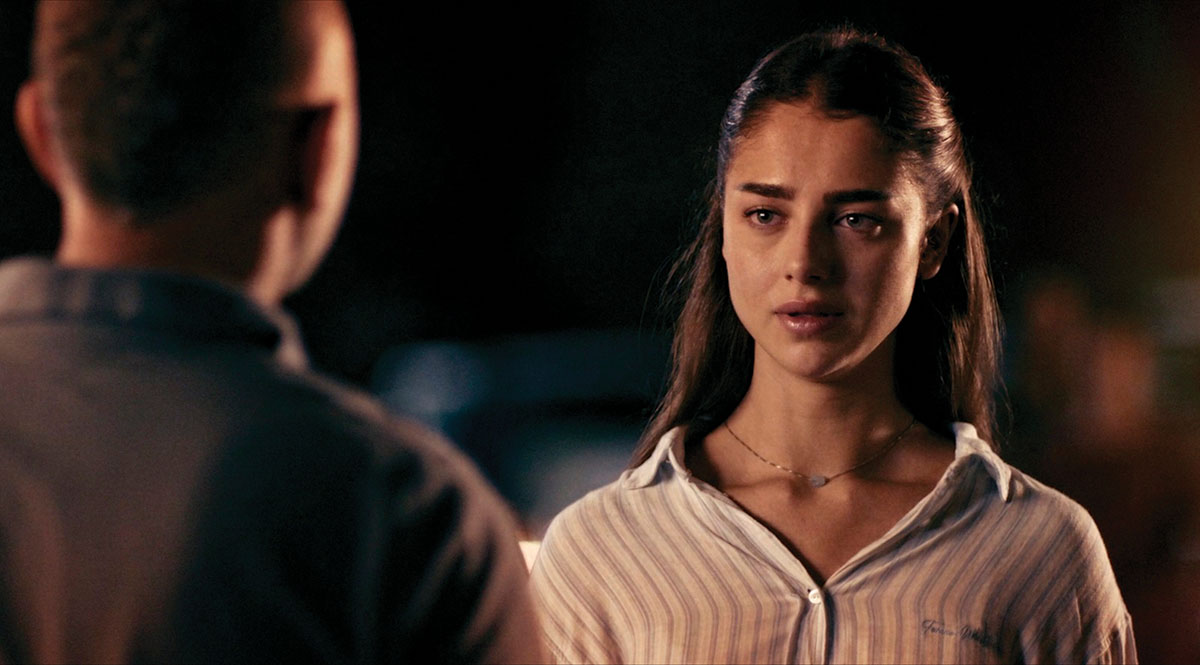
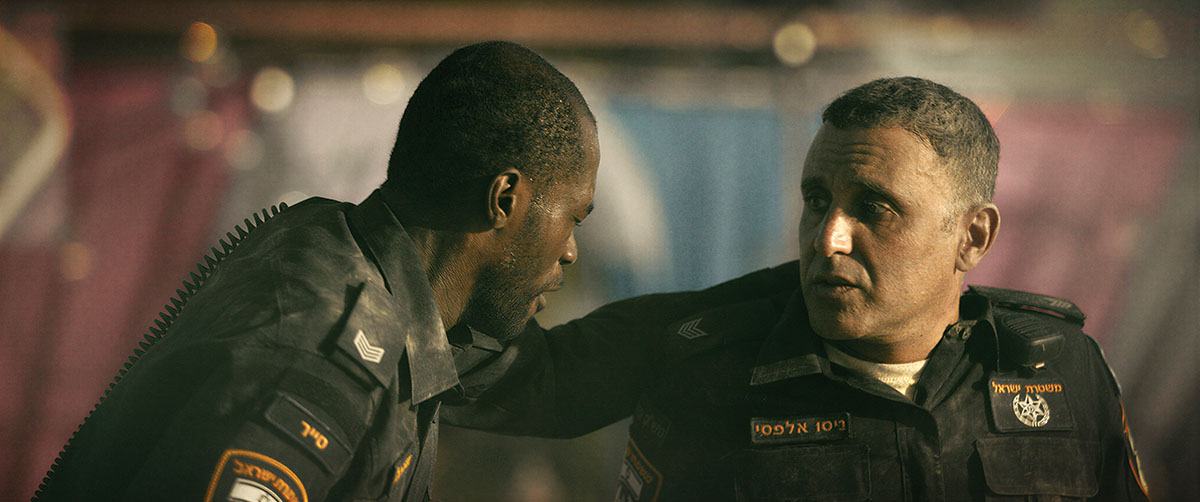
Nesher received dozens of interview requests following the announcement, and was relieved to discover that most of them focused not on politics but on the film itself. “Our Loves” follows five ordinary Israelis whose personal problems and troubled relationships on Oct. 6, 2023 suddenly become secondary when the Oct. 7 attack begins. You don’t have to be Israeli to understand the anguish and pain of the characters or what they are going through. Their stories are universal: a divorced father trying to repair his relationship with his teenage daughter, who is angry at him for leaving the family; a police officer who has to tell her conservative mother that she is in a relationship with a woman; and a religious woman who decides to attend the Nova festival, among others.
“They need to understand how they had reached that point in their lives and what they would do if they survived the day,” said Nesher. “It’s about change and hope. I thought it would be interesting to make a film that could offer some kind of healing to a country that is so divided and wounded and has gone through such terrible trauma.”
Nesher was, like the rest of the country, devastated when the Hamas attack happened. As a bereaved father whose 17-year-old son died in an accident five years earlier, he understood very well the pain and suffering of the many parents in Israel who lost their children that day. “I felt frightened and angry and hurt, also because of the specific experience we had as bereaved parents. I felt a great deal of empathy for people who had lost the people closest to them,” Nesher said.
When he was approached by some people who suggested he make a film about that tragic day, he rejected the idea at first. “I said there was no point in making a film about Oct. 7 itself. That is something that should be dealt with in a documentary. I don’t want to analyze that day. I’m telling stories of people, that’s what interests me.”
Then one day, he received a phone call from a man from Kibbutz Be’eri, which suffered heavy losses during the attack. He invited Nesher to visit members of the kibbutz who, along with residents of other communities in the area, had been evacuated to a hotel in Ein Gedi.
He asked the director to screen his latest film, “Gan Kofim” (“The Monkey House”), which was released in September 2023 and received excellent reviews from both critics and audiences. But shortly after its release, the entire country went into lockdown and not many people saw it.
Nesher hesitated. He felt uncomfortable talking about his films to people who had just experienced such devastating trauma, but the man was persistent. “So I went, and it was such an insane experience. There were 500 people there. They loved the film and were nothing like you expected them to be. You think of them as victims, but they are human, and still have a sense of humor,” Nesher said.
The experience also changed the way he thought about telling the story of Oct. 7. Rather than focusing on the atrocities themselves, he wanted to tell personal stories of people caught in the middle of them. “Benigni did it so well in ‘Life Is Beautiful.’ In the midst of the Holocaust, other things are happening as well. If you allow yourself to tell those stories, you can convey the horror without showing rape and murder,” said Nesher. “You tell a side of the story that people don’t know about, and to a large extent, it intensifies the experience because you can put yourself in their place. It also makes it accessible to anyone in the world who may be anti-Israel, because you simply cannot help but fall in love with these people.”
Nesher has made 22 films, many of them highly regarded. Five of them were also screened at TIFF. But making Israeli films is not easy. Budgets are generally small by American standards, and international financing has become increasingly difficult to secure amid the cultural boycott of Israeli cinema.
To those wondering whether the Israeli government helped finance the film about the deadliest attack in Israel’s history, the answer is no. “One of the biggest mistakes Israel has made was shutting down the department within the Foreign Ministry that helped Israeli cinema be shown around the world,” Nesher said. “For many years, I attended numerous festivals where I spoke not only about my films but also about Israel. Today, that has almost disappeared because of very unwise government cuts.”
Nesher is hopeful about the future of Israeli cinema and the way it is received around the world. He believes the Israeli government shouldn’t be afraid of its filmmakers and what they have to say. “Artists have great power, which unfortunately hasn’t been used in Israel in recent years,” he said. “They are regarded as enemies of the state, and that is a terrible mistake. Even if an artist disagrees with one policy or another, artists represent the country, and that in itself is powerful.”