
About 10,000 miles. Twenty hours door to door. One vote.
That’s how important it was to me and my family to come to Israel to participate in this election.
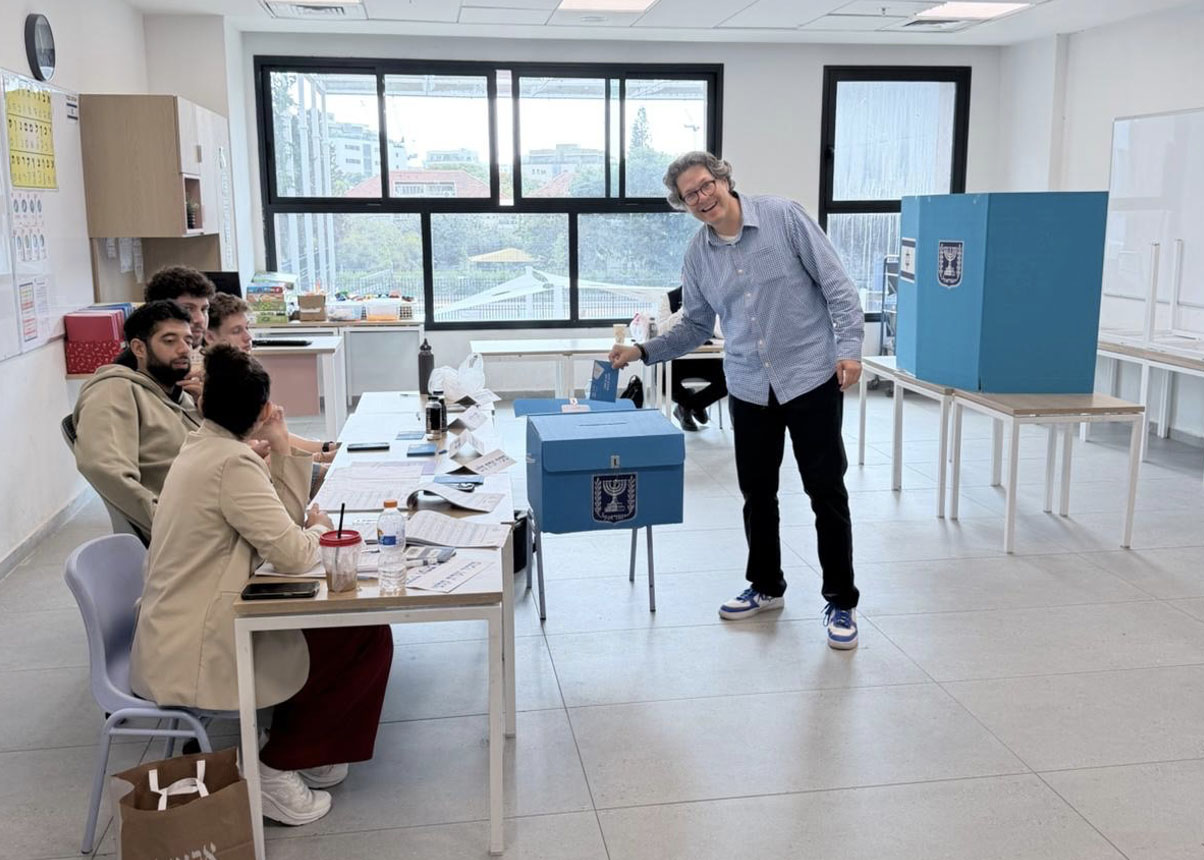
Our polling place in Herzliya turned out to be the same one where Gadi Eisenkot, leader of the Yashar party, cast his ballot.
The process is remarkably simple: show your identification, have your name checked against the voter roll and receive an envelope. Behind a screen, choose a slip of paper identifying your party, place it in the envelope, and drop it in the ballot box. One choice, with enormous consequences.
After voting, I went outside to wait for Eisenkot. There were campaign posters, music and some respectful arguments among supporters of different parties. Mostly, there was excitement and a shared sense that this election mattered.
I spoke to several of Eisenkot’s friends who described the former IDF chief of staff as honest, humble and deeply principled. A person who is, in Hebrew, yashar: straightforward, upright.
But what moved me most was the geography of the polling place.
About 100 meters from HaNadiv Elementary School, where we voted, is the cemetery where Eisenkot’s son, Gal Meir, is buried. Gal fell defending Israel. Before casting his ballot, his father visited his grave.
Eisenkot’s family story, the story of the Jewish people and the story of this place are inseparable.
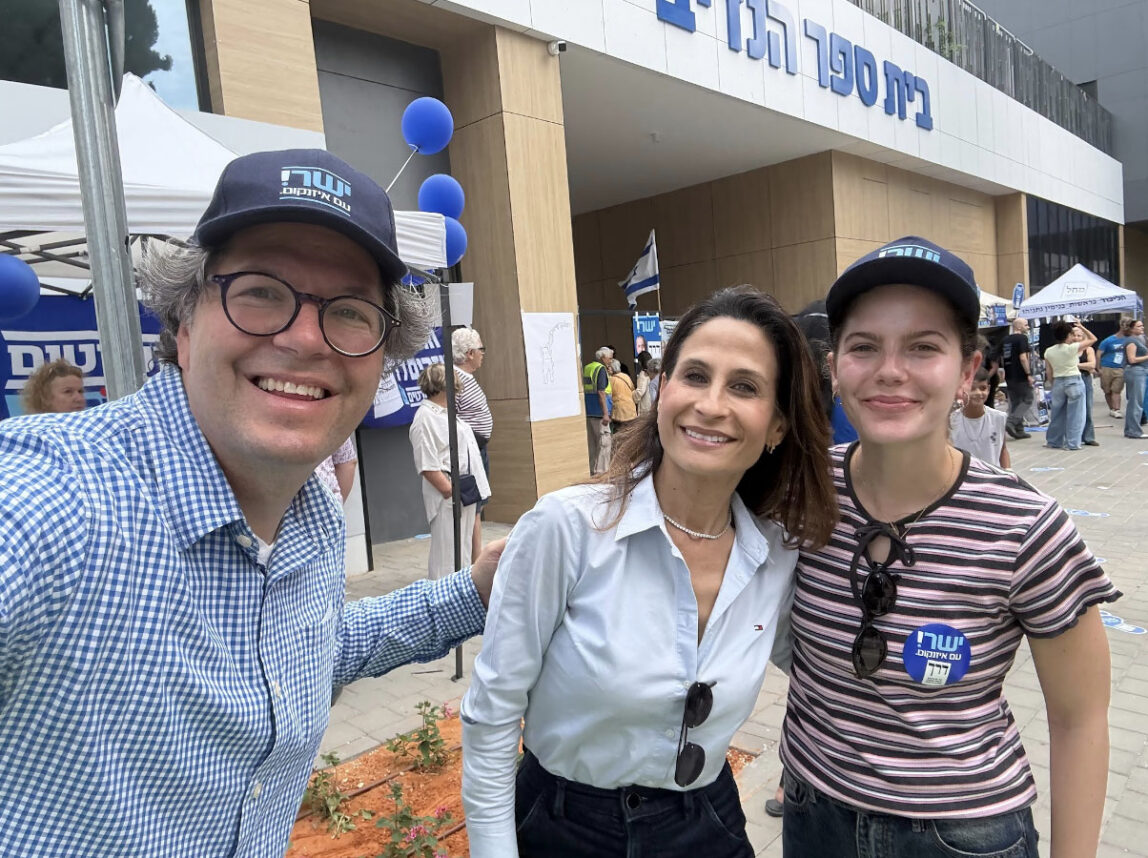
The lines at polling places across the country tell another part of that story: a people accepting responsibility for its future. Those lines and what they represent connect deeply to this week’s Torah portion, Vayera.
Our parasha makes clear that God has a plan for Abraham, our progenitor. I believe it is a plan God has for us as well. Abraham is to teach his children and those who come after him to follow:
Derech Adonai, la’asot tzedakah u-mishpat.
“The way of the Eternal, doing righteousness and justice.” —Genesis 18:19
This is the way that we, Abraham’s descendants, are called to behave.
Powerfully, the letters identifying Eisenkot’s party on the ballot spell derech, “the way” — the same word in that verse. Together with the party’s name, Yashar, they evoke a straight and upright path. Seeing that word reminded me how deeply embedded Jewish values and the Jewish story are in our ancestral homeland.
For more than 3,000 years, our people have carried a vision of a society grounded in righteousness and justice. We all have a part to play in fulfilling that vision, wherever we live, whatever passport we carry. Israel is the national project of the Jewish people, wherever we dwell.
As I write, we are about four hours from the first exit polls. Early reports indicate that voter participation has reached historic highs for this point in the day.
Every Israeli citizen aged 18 or older has the right to vote, including citizens living overseas, like me, who return to vote in person. That right belongs equally to Arab citizens, roughly one-fifth of Israel’s population. Regardless of religion or ethnicity, sexuality or gender, every eligible citizen has a voice.
That means something. And it must be protected.
Israelis are grappling with how to ensure that their country remains both Jewish and democratic. I believe those commitments can strengthen one another. Our Jewish inheritance calls us to uphold human dignity, demand integrity from our leaders, protect the vulnerable and insist that justice apply to everyone. Democracy gives citizens a voice in holding their country accountable to those commitments.
Standing at that polling place, so close to the graves of those who gave their lives defending Israel, I felt the weight of what we have inherited and what we owe generations still to come.
My journey to the ballot box was circuitous. The path I hope Israel will follow is derech Adonai: the way of righteousness and justice.
That is the vision I traveled to affirm. And that is the work that continues long after the ballots are counted.
Rabbi Yoshi Zweiback is the Senior Rabbi of Stephen Wise Temple in Los Angeles.

































