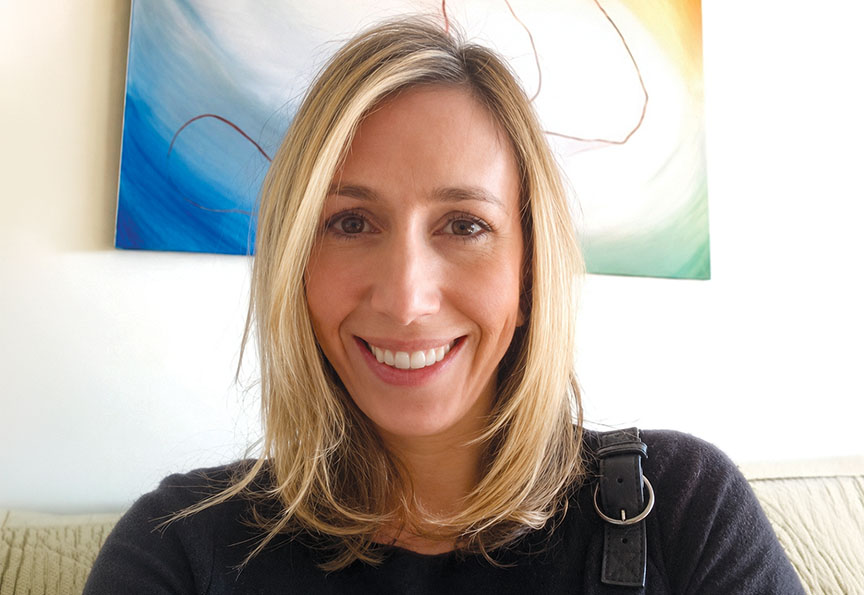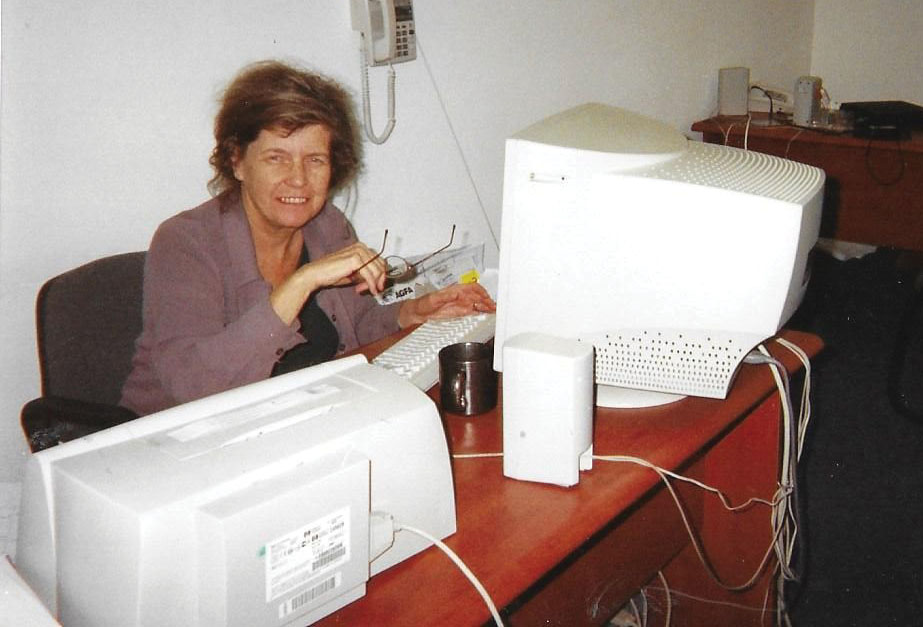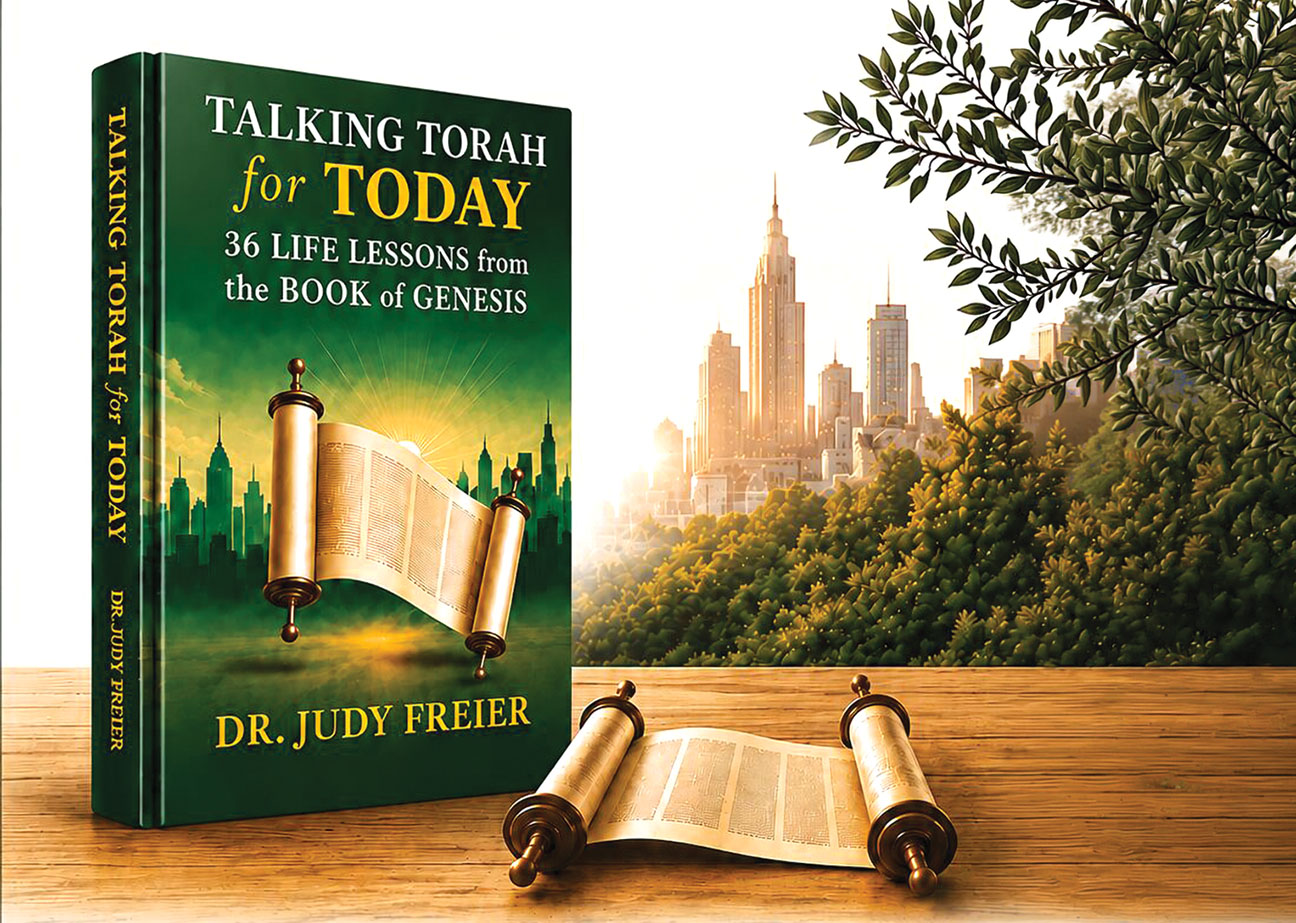
When someone says they’ve spent the past four years writing a book on Torah, it’s unlikely that an 85-year-old former math teacher, Dr. Judy Freier, would come to mind. But Judy, also known as “The Torah Lady” by her chavurah, lives to subvert expectations.
“Growing up, I had no idea what Judaism was all about,” she admitted. Though she attended a majority-Jewish school in New York City and felt connected to her Jewish identity, she received a primarily secular education. Even when Judy married her first husband — a Holocaust survivor with an Orthodox background — she was content to let him handle the religious aspect of their daughters’ schooling.
“I felt teaching [about religion] was not for me, it was for the person who has a religious background,” she said. But that changed when she moved to California 20 years ago and joined the now-defunct Ohr Ha Torah, where she joined her first lay-led Torah study group. When she moved synagogues to Valley Beth Shalom five years later, she asked Rabbi Edward Feinstein if they would include a similar lay-led study group after services.
When he suggested she lead it herself, her first instinct was shock.
“Me? Secular me? But by that point, I had begun to build a little bit of a library, a little bit of knowledge and I was just captivated by Torah. It spoke to me.”
“A little bit of a library” is an understatement. Over the years, Judy has amassed thousands of articles and dozens of books on Jewish thought and commentaries, which she spent 10 to 12 hours a week researching in preparation for facilitating her Torah study group. And over the nine years she facilitated it, it became a huge hit. Every week, anywhere between 15 to 30 people would attend — many of whom did not even belong to Valley Beth Shalom but had heard of Judy’s group through word of mouth.
“They were hungry for learning,” Judy recalled. “They were looking for some connection to something bigger than themselves, and they didn’t know where to reach for it. My group evidently satisfied that.”
But when Judy first got the impulse to write “Talking Torah for Today: 36 Life Lessons from The Book of Genesis,” she stopped facilitating the study group to dedicate herself to the task. The 402-page book is organized around 36 life lessons related to the Book of Genesis, with thoughtful study questions and dozens of responses from respected sources in Jewish thought. Each Parsha in Genesis is accompanied by three life lessons, ranging in theme from “Be Aware That Jews Live as Both Citizens and Strangers” to “Practice Loving-Kindness as God Does.”
Often there would be nights when Judy didn’t sleep a wink, poring over sources from contemporary to ancient rabbis, Pirkei Avot, the Talmud and much more. But why this sudden burst of energy, at a time when most of her peers have long settled into retirement?
It’s twofold, according to Judy. She imagines that “Talking Torah for Today” will resonate with anyone, from Christians to secular Jews like her former self.
“I know what that’s like, when you feel like an outsider, and so my mission is to make everyone understand that they’re not an outsider. They’re an insider, and they’re an insider to something beautiful,” she said.
But not only does she want to make Judaic thought accessible — she wants people to connect with one another.
“I see my book as a source for people meeting each other,” she said. “I see it as a singles thing. I propose that we have a session for different ages where people come together in groups of four and discuss my Torah questions. And they get to know how somebody really thinks.”
After losing her first husband to a heart attack at an early age, Judy found love again five years ago. It is to both her late husband and her partner that she dedicates “Talking Torah for Today”: the man who first helped sow the seed of faith and identity, and the man who helped sustain it.
In Judy’s eyes, connection, and feeling a part of something bigger than oneself—especially in a time of great divisiveness and grief — is vital. “So many people are seeking meaning and not getting it,” she said. “But we need to give meaning. It goes back to Viktor Frankl. How did people survive the Holocaust? Because they had something that was meaningful to keep them going. And I’m hopeful that my book can give them that. I’m 85 —my legacy is to get this message out and see more people fall in love with Torah the way I have.”