
One verse, five voices. Edited by Nina Litvak and Salvador Litvak, the Accidental Talmudist
And he said, “I will surely return to you at this time next year, and behold, your wife Sarah will have a son.” And Sarah heard from the entrance of the tent, and it was behind him.
– Genesis 18:10
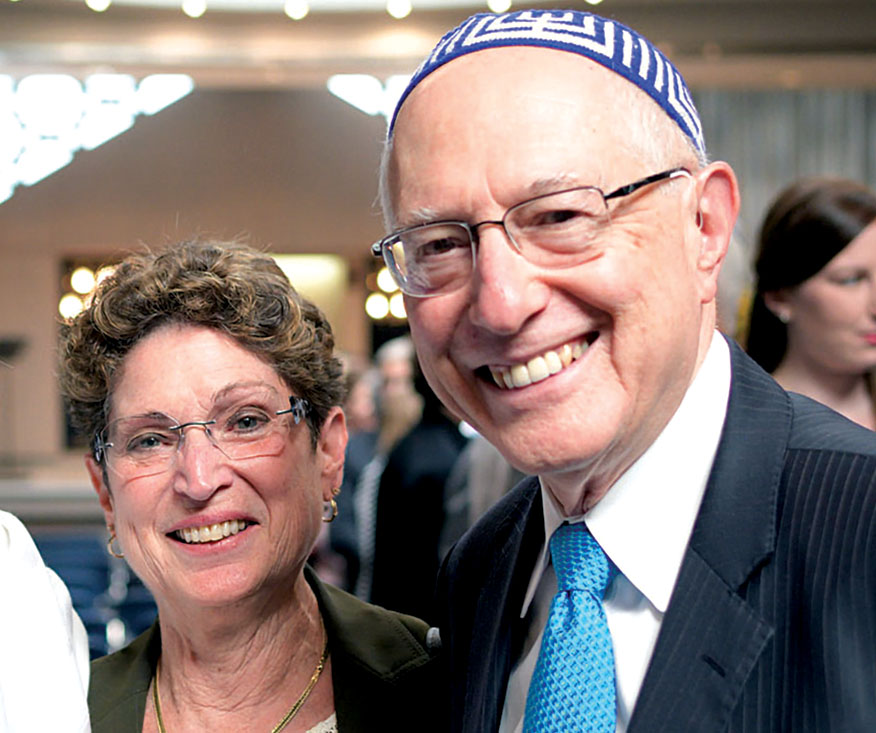
Dr. Rena Selya Cohen
Archivist, Cedars-Sinai; Past President of BDJ
For their entire adult lives, Abraham and Sarah yearned for a child. And for almost their entire adult lives, Hashem made grand but vague promises that they would have children. On four separate occasions, Hashem assures Abraham that he would be a “great nation,” that his children would be “plentiful as the dust of the earth,” and as innumerable as “the stars in the heavens.” Abraham was promised that he would be the father of many nations but was never given any information about when that precious first child would appear, until our verse.
This verse bursts with particular, joyful news. The angel promises that he will return within a year, and Sarah will have a son. The language is specific and emphatic. The double verb of “shov ashuv” is usually translated as “I will surely return,” but the medieval Spanish commentator Rabbeinu Bachye saw a beautiful emotional valence to the repetition. He explained that “shov ashuv” was not just an announcement of a physical return, but evoked “shuva v’nachat,” where the return accompanies a state of quiet and stillness, a state of serenity that Abraham and Sarah had dreamed of but never known. The angel’s message was the beginning of an emotional transition for Avraham and Sarah, and the magnitude of that transformation was such that he could not deliver it directly to Sarah. Rather, he stood away from the entrance of the tent, giving Sarah the privacy to digest this life-changing news on her own.
Rabbi Bentzion Kravitz
Founder and Jerusalem Director of JewsforJudaism.org
When the angel promised Abraham and Sarah a son by this time next year, joy filled their tent. Yet this miraculous birth carried a profound shadow toward Mount Moriah where Abraham would later face the ultimate test of faith. God commanded Abraham to circumcise his son Isaac eight days after his birth. Thirty-seven years later, God tested Abraham by commanding him to offer his son on Mt. Moriah. Contrary to the prevalent pagan custom, God uses this test to demonstrate to Abraham that the Jewish people must reject human sacrifice and embrace life. The prophet Samuel put it this way, “To obey is better than sacrifice” (1 Sam. 15:22).
Today, we are witnessing a battle between evil forces that glorify death, and Judaism, which celebrates life. One of the most profound passages in the Torah states, “I have set before you life and death, blessing and curse. Therefore, choose life, so that you and your descendants may live” (Deuteronomy 30:19). Even in the most challenging moments of sacrifice and testing, the enduring covenant remains anchored in the preservation and sanctification of life.
May we speedily see the day when God will transform the nations of the world and “all of them will call on the name of the Lord and serve Him” (Zephaniah 3:9). Then we will witness the fulfillment of the well-known prayer, “May He who makes peace in his high places, make peace upon us, and on all of Israel – Amen.”
Gavriel Sanders
Spokesman, Be A Mensch Foundation, Jerusalem
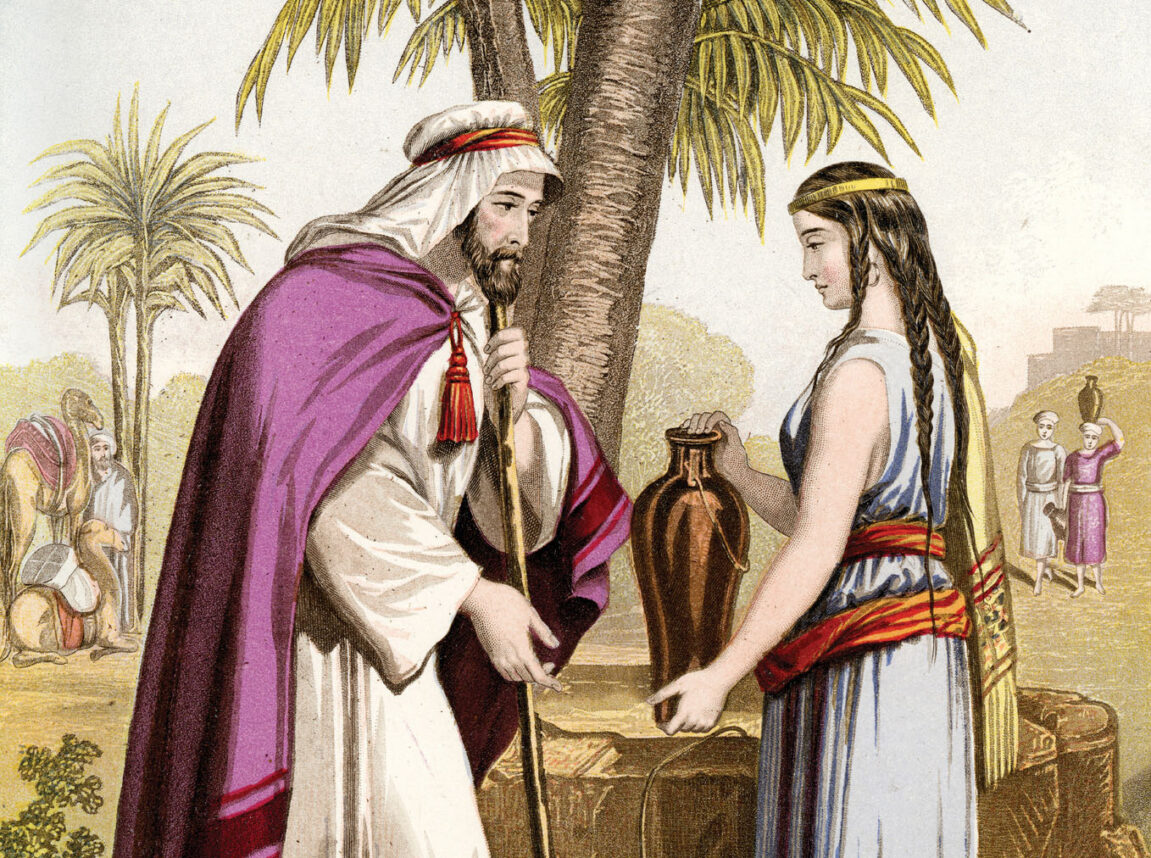
Ironic: The announcement that Sarah will bear a son arrives amid the bustle of hospitality. Abraham runs, Sarah kneads, a meal is prepared and a stranger speaks of an extraordinary future. The setting matters. The promise of Jewish continuity is delivered while Abraham and Sarah are caring for people they do not yet know.
Before Abraham hears that his own future will be secured, he attends to someone else’s present needs. He does not know who these visitors are or what they bring. He sees travelers who could use shade, water and food. That is enough to move him. This is the household from which a covenantal people will emerge: a home where faith becomes something another person can eat, drink, and experience.
Then comes the startling promise: “Sarah your wife will have a son.” After so many years, their future might have seemed settled. Yet Hashem’s announcement opens a possibility that age and experience appeared to have closed. We cannot turn this episode into a formula: offer hospitality and receive a miracle. Abraham’s kindness matters before he knows any blessing is coming. We can, however, learn how to inhabit the space between an unfinished promise and its fulfillment. Keep the tent open. Respond to the person before you. Do the good that is already within reach. We do not know what tomorrow will bring. We remain responsible for what we bring to today. The future of the Jewish people enters the story beside a meal prepared for strangers.
Rabbi Chaim Tureff
Rav Beit Sefer at Pressman Academy and Author of “Recovery in the Torah”
Many times we anticipate things. We can’t wait until that pinnacle moment. We feel we deserve whatever it is. Can we imagine Sarah’s anticipation at 89 years old after desiring to have a child for many years? And on top of that the indignity of her maidservant having a child beforehand. According to many sources and literal text, they had a very contentious relationship. And yet here we are, hearing something that doesn’t seem probable or possible. And this is the mystery of Hashem. Things happening at the exact moment that they’re supposed to happen. We often struggle with the desire to get what we want when we want it. Traditionally, we’re supposed to have faith that Hashem gives us exactly what we’re supposed to have in the moment that we have it. This can trigger many people who are going through difficult things at the moment. Why am I going through this? Why am I in so much pain? If God really loved me, then I wouldn’t be experiencing this. None of us can speak to what other people are experiencing and yet the entire essence of emunah (faith) is that we are exactly where we are supposed to be. This is no easy feat. And yet if we can harness some modicum of emunah and at least try to see the positive in each struggle or challenge and realize that Hashem is in our corner, maybe we will experience life in an entirely new manner.
Rabbi Rebecca Schatz
Associate Rabbi, Temple Beth Am
Two of the same words in our Torah, even in different forms, make the rabbis and readers wonder and question. So, it is not surprising that many of our classic commentators have something to say about “shov ashuv” in this verse. It could mean “surely I will return” or emphasis on the promise of return. However, if we separate the words, imagining the different characters in this verse, could it be that “shov” is for Abraham and “ashuv” is referring to the messenger of God? “And he said, ‘Return! I will return to you next year …” Perhaps the messenger of God is reminding Abraham that for his relationship to succeed with Sarah, and their family to grow, he needs to be with her and not secluded in his own tent welcoming guests and visiting with God.
Turn back to Sarah, and I will return next year, in which time, because you returned to spend time in this relationship, Sarah will have a son. The Torah would not have told us Sarah was listening if it was not intentional for her to hear. The messenger makes sure that Abraham knows to return to her, because they now both have the instruction from the ultimate marriage counselor to spend more time together. Like Abraham was encouraged to lekh lekha, “go for himself,” so too we need to be pushed to remember to: change, spend time with those you love, engage, question, learn, wonder. Return to Sarah and then God will return to your family and push you further.