
In 1913, archaeologist Raymond Weill discovered a 2,100-year-old synagogue in the City of David, just south of the Temple Mount. Among his finds was a dedicatory inscription written by the benefactor who had rebuilt his family’s synagogue. It read:
Theodotus son of Vettenus, priest and synagogue leader, son of a synagogue leader, grandson of a synagogue leader, rebuilt this synagogue for the reading of the Law and the teaching of the commandments, and the hostelry, rooms and baths, for the lodging of those who have need from abroad. It was established by his forefathers, the elders and Simonides.
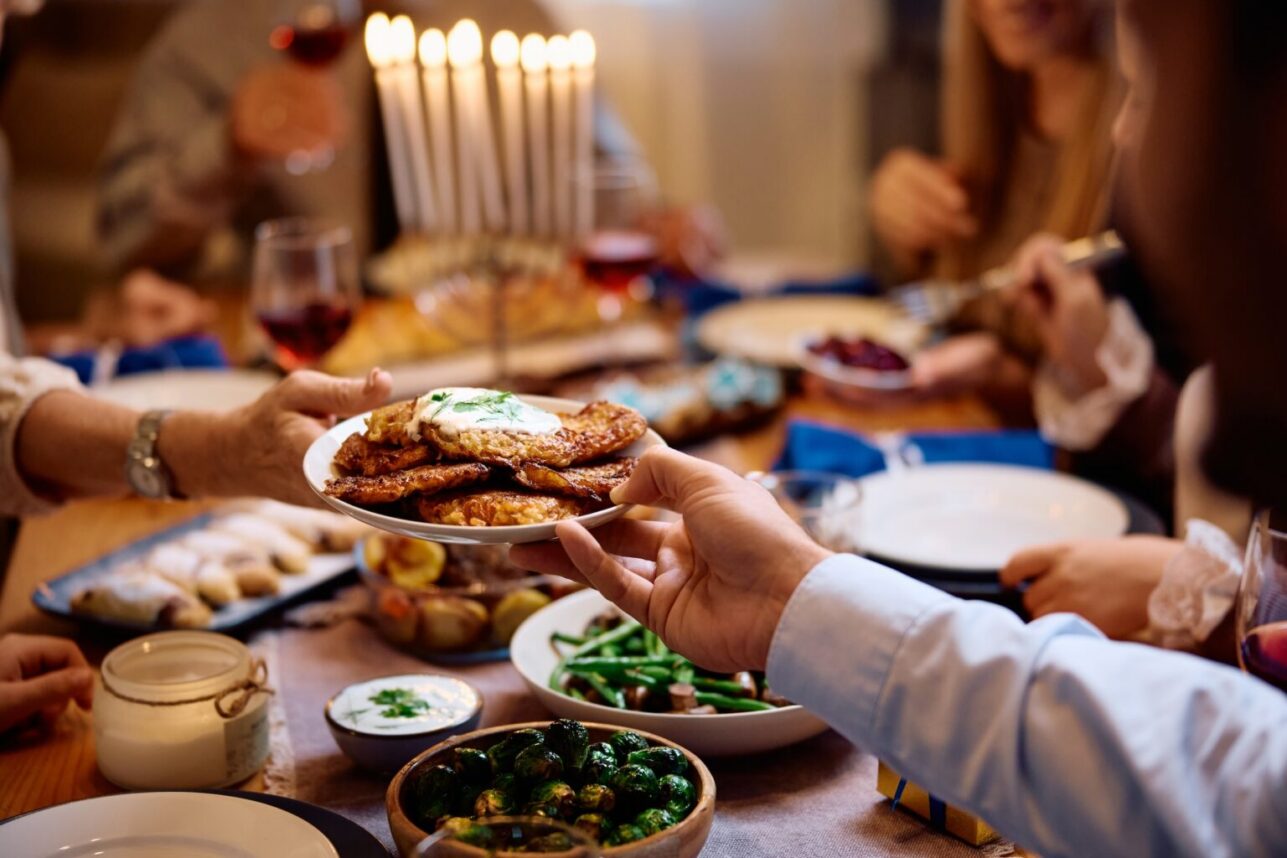
This ancient synagogue included a hostel for travelers, and for generations such hospitality remained part of synagogue life. Indeed, the Talmud explains that we recite Kiddush in the synagogue on Friday night because guests once ate and slept there, much as they did in Theodotus’ synagogue. Throughout the centuries, Jewish communities saw caring for guests as their shared responsibility. As the Chofetz Chaim observes, “It has already become the custom throughout all of Israel to establish a ‘Chevrah Hachnasat Orchim’ (Society for Welcoming Guests).”
Welcoming guests plays a defining role in the book of Genesis, where the rise and fall of peoples is determined by how they treat their guests. Abraham and Sarah are an elderly, childless couple, newly arrived foreigners. Sodom is a wealthy and powerful city. Yet their destinies are reversed, and for both, the turning point comes when a group of guests arrives at the door.
Abraham is an excellent host. He all but begs three strangers to be his guests:
… when he saw them, he ran from the tent door to meet them, and bowed himself to the ground and said, “My Lord, if I have now found favor in Your sight, do not pass on by Your servant. Please let a little water be brought, and wash your feet, and rest yourselves under the tree. And I will bring a morsel of bread, that you may refresh your hearts. After that you may pass by, inasmuch as you have come to your servant.”
Then the Torah gives us a behind-the-scenes look at Abraham’s preparations:
So Abraham hurried into the tent to Sarah and said, “Quickly, make ready three measures of fine meal; knead it and make cakes.” And Abraham ran to the herd, took a tender and good calf, gave it to a young man, and he hastened to prepare it. So he took butter and milk and the calf which he had prepared, and set it before them; and he stood by them under the tree as they ate.
For seven verses, the Torah places a spotlight on every mundane detail of Abraham’s preparations to showcase his exemplary hospitality. But this focus is not merely a lesson about virtue; it shows us why Abraham is worthy of founding a great people. Immediately after this, Abraham and Sarah learn that God will give them a child, Isaac, whose descendants will become a great nation.
The second half of the story reinforces this message. The strangers travel to Sodom, where Abraham’s nephew Lot sees them and invites them to his home.
Lot’s hospitality enrages the people of Sodom. They surround the house and demand that Lot surrender the guests so that they can rape them.
In the end, Sodom, which abuses visitors, is destroyed. Lot, who follows his uncle’s ways of hospitality, is saved, and will become the ancestor of two nations, Ammon and Moab.
One detail makes the story even more striking. When the angels arrive at Abraham’s home, they immediately accept his invitation. Yet when Lot invites them, they refuse; only after Lot “insists very strongly” do the angels relent. Why did the angels refuse Lot?
I believe the angels did not want to visit Lot’s house because their mission included destroying Lot and his family.
The prior section makes clear that the angels were sent to destroy all of Sodom, without exception. So when they arrive in Sodom, they want to ignore Lot; but Lot’s insistent hospitality forces them to change the plan. After lodging in his home, they rescue him from the impending destruction.
Hospitality saved Lot’s life. It also decided the fate of peoples: mighty Sodom vanishes, while two obscure nomads become the founding fathers of nations.
But why is hospitality so important?
A careful reading of the text hints at both the anthropology and the theology of hachnasat orchim, welcoming guests.
When the guests arrive at Lot’s home, he prepares “matzot,” unleavened bread, for them. At Abraham’s house, they are given something very similar called “ugot,” a term the Torah uses interchangeably with matzot.
The unleavened bread that Lot and Abraham serve their guests hints at their cultural roots. Clinton Bailey conducted extensive research on Israeli Bedouin, and in his book Bedouin Culture in the Bible, he shows how many Bedouin customs reflect traditions that go back to the biblical period. He notes:
Another resemblance between Bedouin culture and the Bible is their focus on unleavened bread. Because of both the shaking that beasts of burden cause the objects they bear during migrations and the lack of sufficiently cool spaces for storage, Bedouin have traditionally not cultivated yeast for baking their bread. As a result, Bedouin bread is unleavened.
Bedouins traditionally ate unleavened bread, and to them it represented their culture. Bedouin poets used it as a symbol of how they stood apart from city dwellers. As Bailey points out, this is an ancient theme: “Three thousand years earlier, in the Akkadian Poem of Erra, the urban god Erra was challenged by the seven demons (the Sibitti), who appear as desert dwellers, with the boast: ‘The rich bread of the city cannot compare with bread baked in the embers.'”
A major contrast between city dwellers and pastoral peoples like the Bedouin is their attitude toward hospitality. Bedouins migrated from place to place, and they understood that hospitality was essential to their survival. In the desert, you always need the kindness of strangers. Bailey quotes a Bedouin proverb: “Today’s host is tomorrow’s guest.”
City dwellers are far less likely to invite guests in; the people of Sodom took this selfishness a step further and saw every visitor as a threat.
When Abraham and Lot offer their guests unleavened bread, they are making a cultural statement: they stand apart from urban society. They welcome guests.
This goes to the very center of Jewish identity. Rashi comments that Lot served matzot because “it was Pesach.” The Midrash offers a similar note about Abraham serving ugot, explaining that Abraham hinted that “his descendants would one day make ugot matzot when they left Egypt.”
At first, this seems strange; Pesach doesn’t exist yet. But these Midrashim speak metaphorically, and they are deeply insightful. The matzah we eat at the Seder is not just a reminder of a hasty exit from Egypt. Matzah is also the bread of hospitality, eaten in homes with a welcoming spirit. The Israelites had been horribly mistreated in Egypt; their Egyptian hosts were not much different from the people of Sodom.
On the night of the exodus, God reminds the Israelites to emulate their ancestor Abraham and become a people of unleavened bread, a people of hospitality. Even after they build a prosperous country, they are to eat unleavened bread on Pesach and remember that their ancestors were once wandering Arameans.
They should never allow wealth and success to take them away from their roots.
But Judaism goes further. For the Bedouin, hospitality is a matter of mutual support and solidarity, and that is essential. Judaism sees it as sacred.
Rashi offers a remarkable comment when Abraham greets his guests. Quoting the Talmud, Rashi says Abraham was speaking with God when the guests arrived, and interrupted that conversation to welcome them.
Why would he do that? The Talmud explains: “Welcoming guests is greater than receiving the Divine Presence.”
This only deepens the riddle. Isn’t connecting with God the ultimate religious experience?
The answer is no. We commune with God best when we do God’s work in this world. When we invite in those in need, each created in the image of God, we become God’s partners and truly serve Him. This is why the Talmud says that a dinner table surrounded by guests is like the altar in the Temple.
To invite in a guest is to bring God into your home. This is what Jews have done for generations.
And that has shaped our destiny.
Rabbi Chaim Steinmetz is the Senior Rabbi of Congregation Kehilath Jeshurun in New York.