With the third anniversary
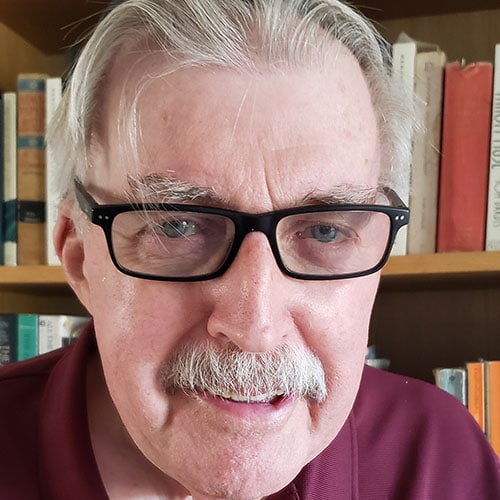
of Oct. 7 at hand, it is a good time to check in with Rabbi Yanky Kahn, one of Los Angeles’ most frequent and most generous visitors to Israel since Hamas’ attack.
A longtime leader at Chabad of the Valley, Tarzana, along with his father-in-law, Rabbi Kahn probably has come closer than just about anyone to relieving the anxiety and needs of war-tortured Israelis. Not only does he bring strongly needed materials to help salve the wounds of victims and their loved ones, he delivers richly needed verbal comfort.
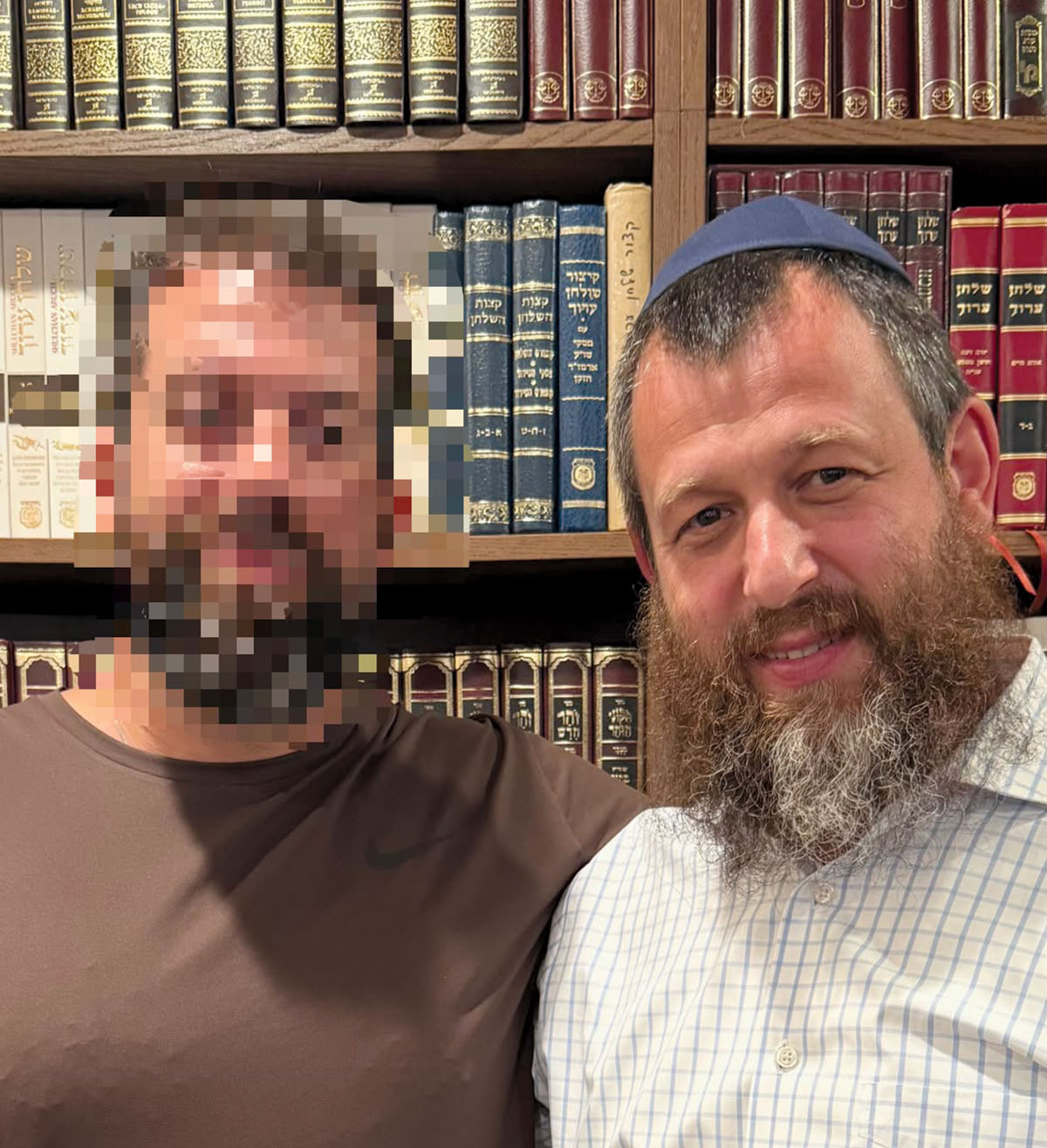
Shortly before Oct. 7, 2024, Rabbi Kahn was introduced to Naor, a 38-year-old commander in the Israel Defense Forces whom the Kahn family recently hosted. Naor has been a hero from the war’s first minutes.
“Like everyone else,” Naor told The Journal, “I woke up from the sound of the sirens. After half an hour, I decided to look at my phone. We thought it was just another round of rockets. After half an hour, I saw that the first video on my phone was of terrorists in a pickup truck in Sderot. I said ‘Eight people are penetrating Israel. There’s going to be war.’”
He called his army commander and told him everyone should get ready. The enemy has entered Israel. The war is about to begin. “Nobody actually knew what was going on,” Naor said. “I started seeing these reports – some in text messages. But I also know we are living in a time of fake news. So you can’t believe the words people are writing on WhatsApp. They are attacking us here, and over there. It doesn’t make sense. Everyone is overreacting. Probably the terrorists I saw on the video already are dead.”
“By now,” he said, “we are after the event. It’s about 8 in the morning. After a couple minutes, I received a message from a friend who was seeking aid. He gave me his location, and he said, ‘Come and help me.’ I can see on my phone that Hamas has put people in a pickup truck and they are headed for Gaza right in front of my eyes.”
The longer he spoke, the striking clarity and detail of Naor’s memory three years on was stunning.
“When I started driving, I was receiving calls from my team,” he said. “They asked what I knew. I said ‘Not anything,’ and they shared information they had. Soon we started to understand that it was a bigger picture than we thought.”
But Naor was an optimist.
“I still believe that by the time I get there, which is half an hour from my house, when I get there, it will be the end. Like no way it’s going to last longer than that.”
He was about to be proven “very wrong.” He arrived at Kibbutz Re’eim where his friend, along with others, were shot. “I said, ‘Let me check.’ I found myself alone in a place where there were dozens of terrorists who were fully equipped. I started to hide – to run from tree to tree, from bush to bush to find a place until my team will come. Nobody will recognize me because one RPG or Kalashnikov, a couple of bullets and I am done.”
Across the living room, Rabbi Kahn was intensely involved in his guest’s remarkable story.
His story turned to his friends-for-life, his IDF teammates. He did not need to explain how much he and his teammates counted on each other. “Everybody is together,” Naor said, “helping each other. If you argue with someone, it is done with respect. Magical things happen in the army, and I wish 1% of this magic will come to the Jewish people worldwide, inside and outside of Israel.
“It is not a slogan,” he asserted. “We really don’t have anyone to trust. We need to be together. Otherwise they come to us. When Oct. 7 came, I think these were our most separate times. The most divided times we ever have had were on Oct. 6. It couldn’t have been worse. The enemy took advantage and attacked us while everything was collapsing – the army and the society. We need to learn from that.
“We need to see everybody as one people. It’s not easy, but we must make an effort. It is hard for me, as someone who rescues people without distinction. If I saw an Arab guy needed help, like an Israeli Arab guy, I would take him [to safety], too.
“I didn’t look about [for survivors]. I just reached out.
“It makes you feel very lonely in the world,” he said, “if you have these intentions in your life, to help, to save, to do what is right. Then people tell you, ‘Free Palestine.’”
Always there is room for hatred.
Fast Takes with Rabbi Kahn
Jewish Journal: What is your favorite meal?
Rabbi Kahn: Shwarma. (He and Naor laugh heartily.) Actually, my favorite shwarma is from the Tel Aviv restaurant here in Encino.
J.J.: What is your favorite book?
Rabbi Kahn: “Rebbe,” the biography of the Lubavitcher Rebbe by Rabbi Joseph Telushkin.
J.J.: What is your favorite holiday?
Rabbi Kahn: Sukkot because we sell etrogim. Also, Sukkot is a time for simcha, to be happy.