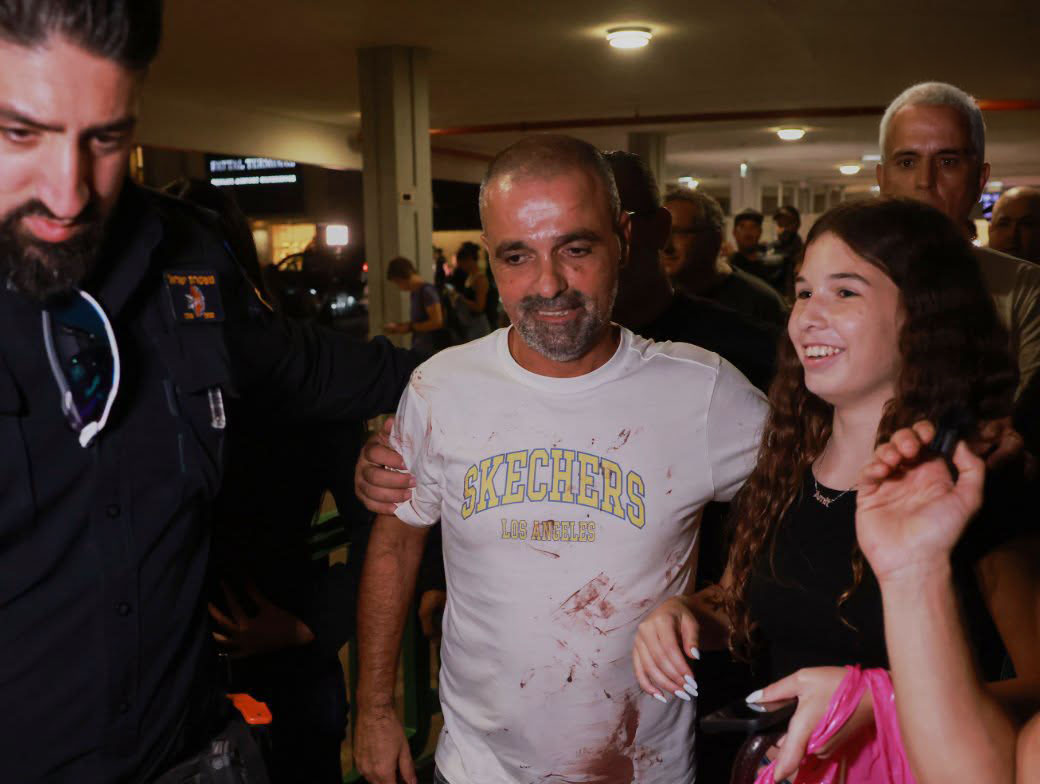
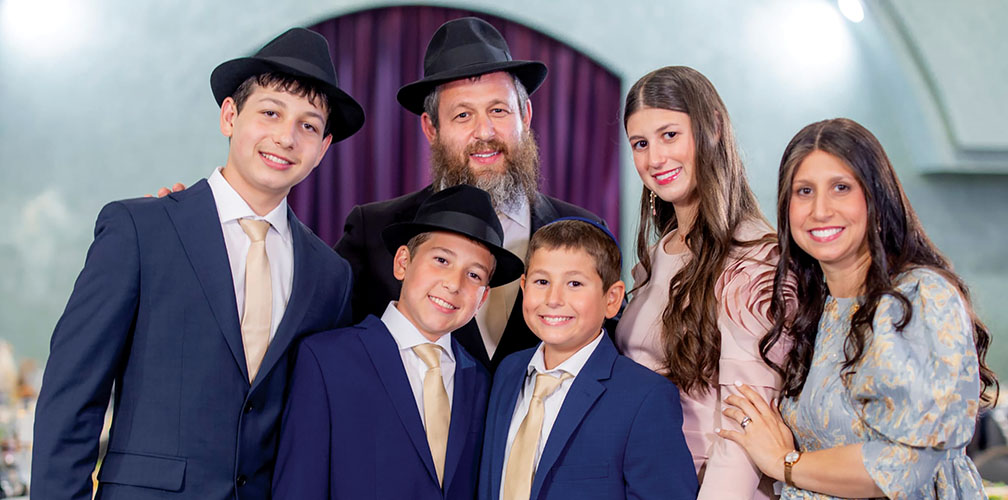
A two-decade veteran of the Israel Defense Forces, and a guest of Rabbi Yanky Kahn, Cmdr Naor was as baffled as any American Jew why, on Oct. 7, 2023, some Israelis were loudly howling, “Free Palestine!” “I don’t know why,” he began. “But it feels like there is a group of people who always get in between the cracks in the Israeli society. They make the gaps bigger and bigger because someone doesn’t like us to be united. I can tell you it is very, very sad. It makes people want to be only with your family.”
After Oct.7,” he said, “everybody was together in the beginning, but now everybody is starting to take care of their families – well, not everybody – but many people.” Rabbi Kahn, his host, spoke up: “Our message before Oct. 7 was you should never forget what Amalek did to us. We say every day ‘Don’t forget what Amalek did to us.’ Our job is not to figure out what Amalek did to us. Right now, by Yom Kippur, we should get together with everyone, make up with whomever it is, be united, be one, really one.”
Naor had an Israeli take. “We need to be worthy for the people who sacrificed everything for us to survive,” he said. “Every person who thinks ‘I am nothing, just one person. I don’t need to change much.’ Every person needs to get up in the morning and share these values with your kids. We need to be worthy. We need to be good to each other for the ones who died or were injured, mentally and physically, for Israel to survive. That is the whole point. From there, direct your life, your actions, everything you do, and aim at being one for each other. That is the whole point. It is not a slogan. It is true.”
The 38-year-old told The Journal, “I have been all over Israel,” Naor said. “I never have seen anything like this (attitude).
“You used to see soldiers get injured. You used to see dead soldiers on the battlefield. But you don’t get used to seeing bodies of people who just went to a party beheaded. Or body parts falling out of cars, hands, legs. Too many of them. A lot of dead bodies all over the place without anything that makes sense that they are dead.”
He remembered asking a colleague at about 2 p.m. on Oct. 7, “what is this? Where are we? Are we in Occupied Territory? Are we still in Israel? What’s going on? Why is everybody dead?’ A lot was happening. My wife wanted to reach out to me, to search for me.
“They tried to call me and I could not answer the phone because I was holding an old M16 that I had picked up from a police officer,” Naor said. “So they went to the last location I had told them. They went inside, and two of them got badly injured. I just waited. I understand everybody was dead. No one survived. My wife accidentally got the message I am dead as well, which is a different story.”
At that point, he thought he was not going to make it. “I became fearless. I never had been fearless like this in my life.” Death was within earshot. “I became fearless because I thought I am going to die. I mean to do everything I can, kill as much as I can from the terrorists before I go away from here. When I became fearless, it was around 3 p.m. We ran to every place we heard shots from the terrorists. Maybe some part of us wanted to get the bullet and finish with it. We were very tense. The people who got injured, they evacuate you to the hospital. If you don’t get injured, it’s difficult for your mind. You think maybe I can go now. Maybe I have done enough. I have rescued enough people. Maybe I have done my part.
“I thought ‘Maybe I can go.’ But you can’t go because it is pulling you back. If you went, where would you go?”
Reaching deep into his memories, he said “what you want to do when you see all this mess, is you want to go to your wife and kids and hug them and stay home and do nothing. If you are looking for a reason, that is me speaking very honestly. I was looking for a reason in my mind to say that I did enough. I am not equipped. I don’t have what I need to fight.
“You think ‘maybe I have rescued enough people. It is time for me to go now, and let others – warriors who come – fight.’ This thought was in my mind after every rescue. But I could not let these thoughts manage me and go away.”
Desperation kept him going.
“I had to go back,” he said. “I knew that the people I just rescued needed help, dozens of them, screaming for help. Badly injured. You can’t go. It’s surrealistic. But you want to fight with terrorists – to kill them or get killed, just to finish this nightmare, to end this day and somehow they don’t hit me. None of the bullets hit my body. Everything went around me. We killed the terrorists. Some of them were raising their hands. If you tell me today that the terrorists on Oct. 7 raised their hands and I had to arrest them even if they are not holding a rifle, – you are taught when to shoot and when not to shoot.”
You can’t shoot someone who is raising his hands, but in the time he remembered, “I was holding this rifle in front of four terrorists who were surrounding me, I arrested them because I was remembering you can’t shoot at someone who is raising his hands. This is unbelievable because a few minutes before they surrendered to me, you know what they did. But I only knew that a couple of days later. It was a big confusion within yourself, with your values, with what they teach you when to shoot, when not to, how to fight.”
Naor’s voice remained calm as he told his story. “It was a day when everything I had learned was mixed up – to a place where you need to get decisions, based on your values, on the things you see, the way you feel. Nobody tells you what to do. No mission, No intelligence. Everybody does whatever they want. When I finished this day, it was around 7 p.m. and getting dark.
“I was telling myself ‘Okay, thousands of soldiers are here. Now we are the monster here. We are controlling the fields. Most of the terrorists have died. At that point I allowed myself to pick up my phone, call to my wife, tell her I am alive and get informed by my friends about everyone I love.”
He lost many friends, including men under his command. “I lost my commander,” he said. “From that point we get to Oct. 8 where there were funerals, all the widows, all the kids. Every day there were memorials, mincha here, mincha there. Crazy days. It’s the beginning of the war. At that point, I became very sad.”