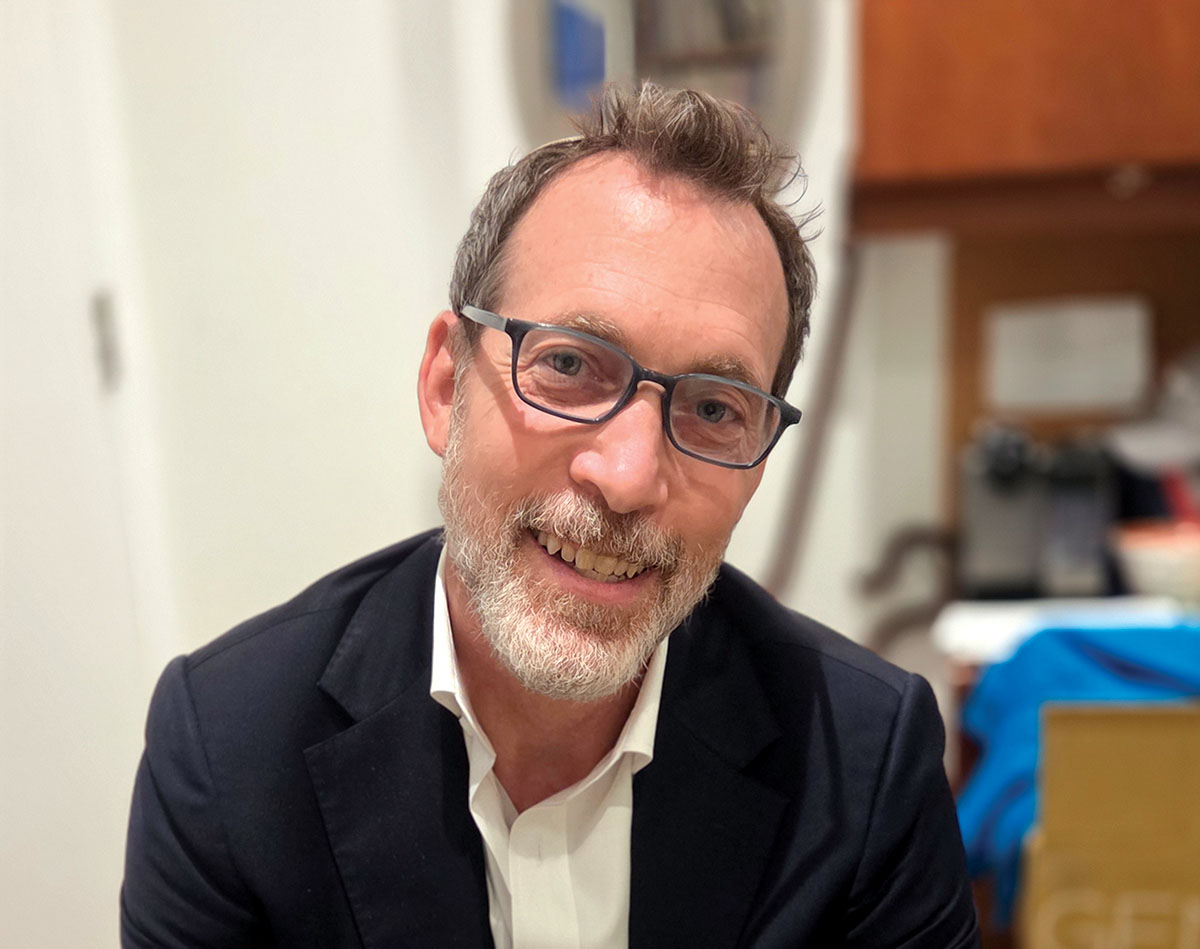
As he started his fifth year as an associate rabbi at Sinai Temple, Rabbi Avi Taff reminisced about his first attempt at aliyah early in the early 2000s. “I was 24, and I had planned to stay,” he said. “I didn’t go into the Israel Defense Forces because I was gung-ho about fighting. I went because I felt it was my obligation both as a Jew and as a new immigrant. I felt it was my responsibility to serve. I had moved for the purpose of living in Israel. Two years in the IDF. It was with many people who didn’t want to be there.”
But the Los Angeles native very much wanted to be there. He wanted to do something meaningful with people who were motivated, who wanted to be there. “The atmosphere was calmer than the current situation,” Rabbi Taff said. “This was during the disengagement from Gaza in 2005. We were kind of the second line. We were on call in case extra support was needed.”
When he left the military six months before the Second Lebanon War in 2006, he emerged a changed person. “Physically,” the rabbi said, “it was one of the most challenging experiences of my life. It made me realize I wanted to fight for the Jewish people in a different way,” tapping his head and heart. “The day I gave my gun back was a day to remember. I was glad not to have to use it anymore. I just believe we have to find another way.
“What we did, what I did was necessary. I really believe it was necessary. “We were protecting the citizens of the state of Israel daily. Sadly, it has been a necessity ever since Israel’s inception. And it continues to be.”
Rabbi Taff reflected on what motivates him. “I work toward – and pray for – a time when we can lay down our weapons and turn our pruning hooks into ploughshares.”
Does the middle-aged rav believe he will live to see time when being armed is unnecessary? Speaking evenly, Rabbi Taff wished he could be optimistic/realistic. “I try to be optimistic in many ways, an idealist,” he said. “Sadly though, since Oct.7, (2023), I have become a little more pessimistic, more of a realist. I have family and friends who have served upwards of 600 days of reserve duty. I don’t know how our brothers and sisters who have been serving since Oct.7 handle leaving their spouses and children. I am in awe.”
Would he ever consider returning? “In a second,” Rabbi Taff said. But “for various reasons, I am here in LA.”
Those reasons have names: Ethan, 21, is a senior at the University of Washington. Noa, his youngest, attends Sinai Akiba Academy. Eliana, 14, is the middle child; during the summer, she was recruited by Maccabi Haifa to be part of their basketball academy and is starting high school.
Eliana is living in a house with two other girls, Israelis who live too far from their homes to be with their families. They are freshmen at Reality High School. “My heart is in the east, I am in the west,” the rabbi said.
When asked if the family has explored aliyah, he had a candid answer “My wife’s family is here.” She has a brother who made aliyah 15 years ago. But her parents are here, so is her sister. “We are very close with them. It would be challenging.”
The genuine love of Israel that his parents impressed into their three children was so strong, the rabbi wanted to make aliyah after turning 18. But his parents urged him to go to college first. “I think they were afraid I would not complete my B.A.,” Rabbi Taff, whose father is a retired Sacramento rabbi, said. He noted that Josh, one of his two younger brothers, “does incredible work” with ETTA, which focuses on special needs adults in Pico-Robertson. “I just taught a class there yesterday,” Rabbi Taff said proudly.
Although aliyah would be “challenging” at the moment, Taff has been “hyper-focused on the connection between our families and Israel.” When he looks back at his sermons over the last few years, almost all of them centered on Israel. “A year ago, I took a dads’ volunteer mission to Israel, visiting wounded soldiers, volunteering in the fields, witnessing in the south, in the Gaza Envelope, one of the most incredible trips I have taken.”
It works the other way, too. A number of IDF veterans have visited Sinai Temple and come into Kohn Chapel with the children. “We sang with them the prayer for the State of Israel and Am Yisroel Chai,” said the rabbi. “We let them know they are loved. So many of them feel the hatred of the world that only has intensified.”
The rabbi firmly declared that “our obligation to make sure they know they are loved, cared for and appreciated for what they do daily.”
The conversation returned to Eliana and her freshman studies. The proud father pointed out she did pretty well playing on the 17U Maccabi USA girls basketball team. “The director of player development for Maccabi Haifa was there and wanted to meet her. When we met, at first we said ‘No. Maybe when she is a sophomore or junior.’ … They felt if we were going to do it, this was the time. We met the entire team of professionals, working with her, taking care of her.” And as the rabbi and his wife were pondering their decision, Eliana told her father: “Abba, I don’t want to live my whole life, regret that I had this opportunity and didn’t give it a shot.”
Fast Takes with Rabbi Taff
Jewish Journal: What is your favorite holiday?
Rabbi Taff: I am a big fan of Simchat Torah because it’s a holiday about Jewish joy.
J.J.: What is your favorite weekly moment?
R.T.: We have a mini-minyan service here everyone should come to if you can get into the building. Every Wednesday morning, for about 20 minutes of Jewish joy, we have our smallest students and their parents, of singing and praying together for our brothers and sisters in Israel = community, song and prayer.
J.J.: Favorite Shabbat moment?
R.T.: Shabbat dinner with my family.