How far will people go to find meaning in their lives?
A Quentin Tarantino film from 2019 helped enlighten me.
The question came to mind after my friend Mitch Julis sent me his essay titled, “When a Canyon Becomes an Abyss.” The essay captured the cultural climate of 1967, which was “thick with a toxic blend of naive utopianism and structural amnesia.”
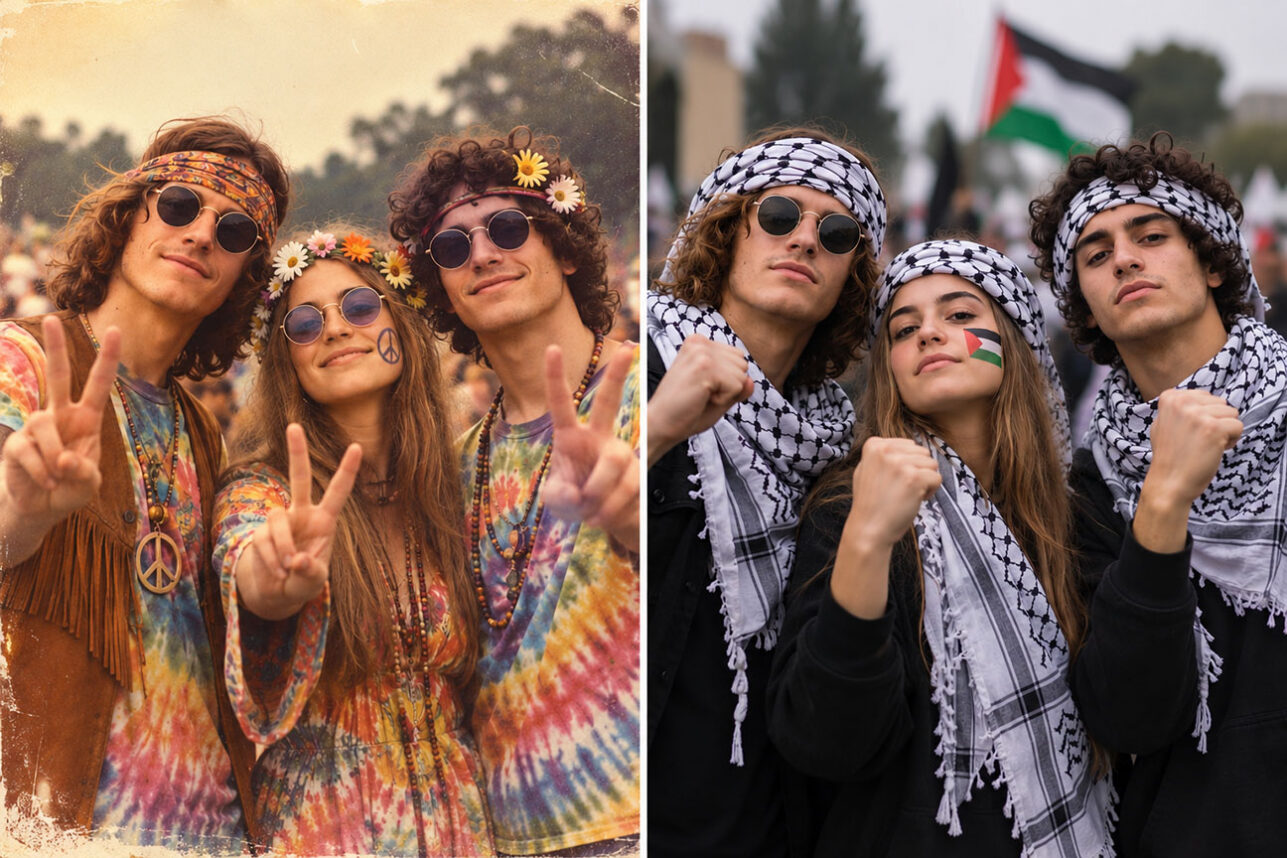
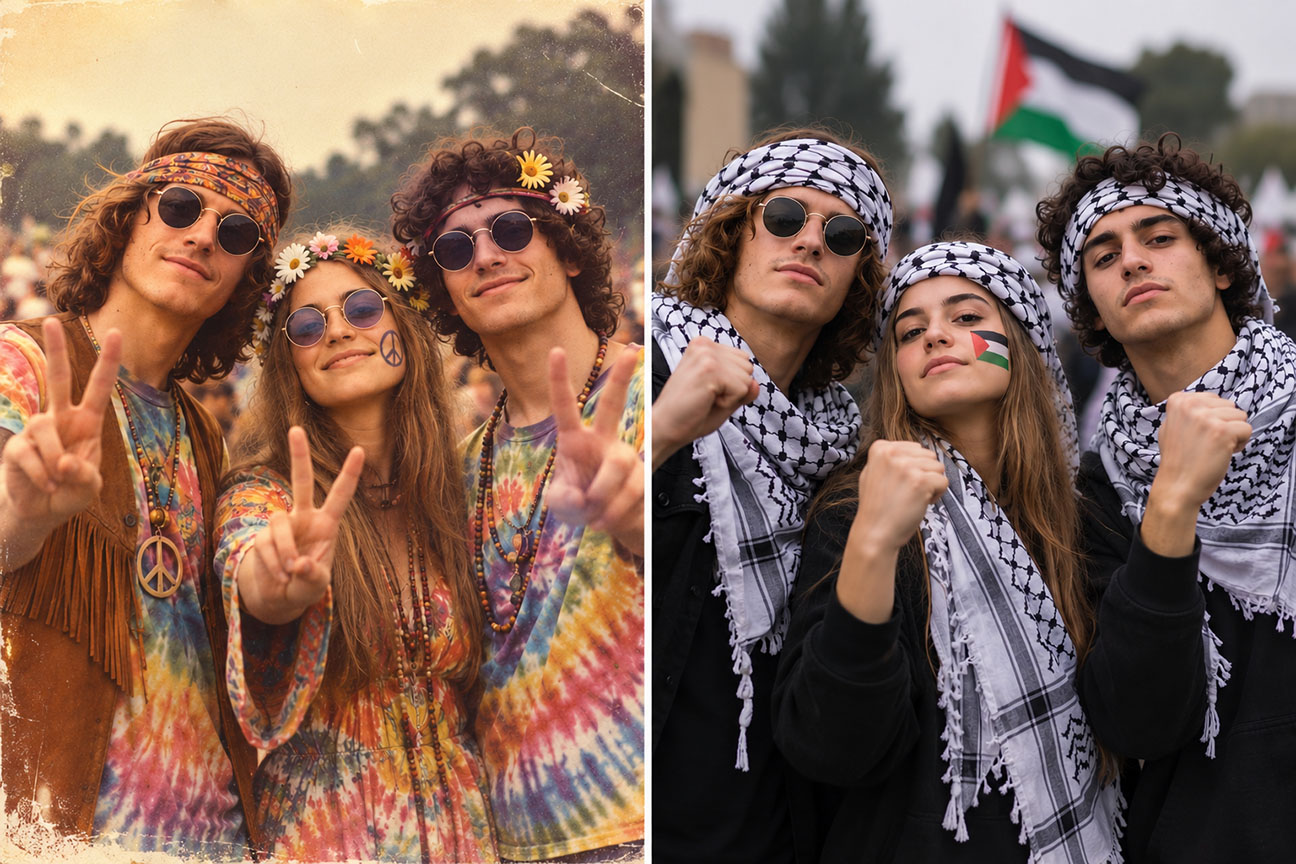
This was the hippie era, when “peace and love” idealism mixed with drugs and music to make a new generation forget the sober realities of creating a meaningful life. The headiness of being part of a liberating movement was enough to make the youth feel their life had meaning.
But did it?
In his essay, Julis notes a striking aspect of Tarantino’s “Once Upon a Time in Hollywood” that sheds light on the notion of counterfeit meaning. A group of peace-loving flower children get so intoxicated by their idealism they become followers of a murderer (Charles Mason) and, eventually, become murderers themselves.
Through his cinematic genius and use of music, Tarantino accentuates the ironic connection. It is that connection that Julis explores in his essay.
There is nothing especially noteworthy, of course, about identifying something immoral like murder; just as there’s nothing noteworthy about identifying the need for a meaningful life.
What is noteworthy, however, is when these two come together– when meaning connects with evil. How can something as beautiful as the search for a meaningful life connect to something as evil as murder?
For starters, it turns out that the human drive for meaning is wired in us.
“Social science reveals a profound truth about human flourishing: we are wired to seek deep purpose, transcendental meaning, and strong community,” Julis writes. “When healthy, constructive institutions—such as family, civic duty, genuine faith, and rigorous intellectual inquiry—fail to satisfy this fundamental hunger, individuals do not simply stop hungering. Instead, they become deeply vulnerable to counterfeit forms of meaning.”
We’re seeing this phenomenon in full bloom these days. A recent survey conducted by Harvard University found that 60% of Generation Z favor the terrorist group Hamas over Israel. Yes, that is the same Hamas that burned, raped and murdered children, families, civilians and hundreds of peace lovers at a music festival on Oct. 7, 2023.
Here we have a new generation searching for meaning and finding it in a terror group. When you hunger for meaning and you don’t have the real thing, you fall prey to counterfeit. For this new generation, there is nothing easier and trendier than joining a self-righteous mob on a college campus that normalizes terror under the guise of justice.
“Just as the sun-drenched flower children of 1967 unwittingly laid the groundwork for the Manson family’s savagery,” Julis writes, “today’s affluent student activists hijack the language of human rights to cheerlead barbaric medieval death cults. Driven by a desperate need for identity in an institutional vacuum, these romantic radical chic elites are playing a dangerous game—flirting with the very forces of religious fascism that would gladly burn their ivory towers to the ground.”
One can’t beat the irony of gay groups marching for terrorists who would hang them in a New York minute if they ever showed up for a visit.
From Che Guevara to Trotsky to Hamas, the youth have always had a weak spot for the romance of revolution, even when it’s attached to a death cult.
“Academic elites romanticize totalitarian death cults,” Julis writes, “mistaking ancient religious fascism for progressive liberation while eroding the norms of open inquiry.”
In the Jewish tradition, we’re taught that the evil inclination (yetzer hara) comes disguised as a best friend, as pure goodness. When the mask is as seductive as social justice, and the instant “meaning” that comes with it, the gullible see only the meaning, not the counterfeit.
Who is least vulnerable to counterfeit meaning?
Those who were raised to value the real thing. The hard reality is that you can’t gain authentic meaning unless you value that authenticity. If you value the easy taste of junk food, you will crave the easy taste of counterfeit meaning.
What exacerbates the problem today is that our cultural pillars are spreading the junk. Social media algorithms that are most profitable seduce users with the junk of manufactured outrage. And when the media, backed by Hollywood and academia, routinely underplays the savagery of a terror group, it shouldn’t shock us that Gen Z has fallen for Hamas.
Finding true purpose in life takes work, contemplation, an appreciation for truth. If you prefer social media and video games to contemplation, you’re more likely to find meaning by wearing a keffiyeh and joining comrades on a street corner while yelling “Free Palestine,” even if you have no idea what that means.
“When modern students adorn themselves in the iconography of terrorist factions,” Julis writes, “they mimic the fatal error of the 1960s counterculture: the belief that destroying an imperfect but functional civilizational order spontaneously produces a paradise.”
The fallout is that “a society defined by a cult of martyrdom and existential hatred is not an alternative form of progressive expression; it is the negation of civilization itself. Just as the hedonistic elite of Los Angeles flirted with Charles Manson at their cocktail parties before he turned on them, today’s academic elite romanticize forces that would fundamentally extinguish the very freedoms that allow their dissent.”
How can a society break this tragic cycle? Among other things, it can start by eschewing the cynicism of politics and embracing the earnestness of inspiration.
“We must look at the problem through the lens of human renewal rather than mere political combat,” Julis writes. “As Arthur Brooks often reminds us, the answer to dark, destructive ideas is not contempt or outrage, but a more compelling, uplifting vision of the good, the true, and the beautiful.”
These positive forces exist. They’re all around us, if we care to look, and they have power. Beauty has power. The search for truth has power. Real meaning has power.
Replacing counterfeit meaning with real meaning will only happen if we learn not to settle for political tribalism and aim instead for spiritual elevation. We must instill in our new generation the wisdom to see through the mask of counterfeit and look for beauty and truth.
What makes the task both immense and urgent is that the spread of counterfeit meaning has accelerated with a crisis in confidence in the values of Western civilization.
“When a society ceases to teach its youth the hard-won principles of its own heritage—reason, individual accountability, and the tragic awareness of human fallibility—it leaves them defenseless against the romantic allure of nihilism,” Julis writes. “The modern embrace of totalitarian death cults under the guise of social justice is the logical endpoint of a decades-long retreat from rigorous historical truth.”
If we hope to reclaim the institutions of Western civilization from the romantic allure of nihilism, Julis calls for three decisive steps:
“First, restore rigorous historical curricula that teach both the triumphs and tragic lessons of Western civilization.
“Second, foster moral courage in academic leadership to reject ideological appeasement and enforce true intellectual accountability.
“Third, offer young people an inspiring alternative—anchored in service, personal responsibility, and gratitude—demonstrating that real purpose is found in building up civilization, not tearing it down.”
The good news, as Julis reminds us, is that humans are wired to seek deep purpose. We just need to channel that search in a moral direction.
For inspiration, we could do worse than recall the most popular commercial of the hippie era: “Coke: It’s the real thing.”
Nothing counterfeit about the real thing.