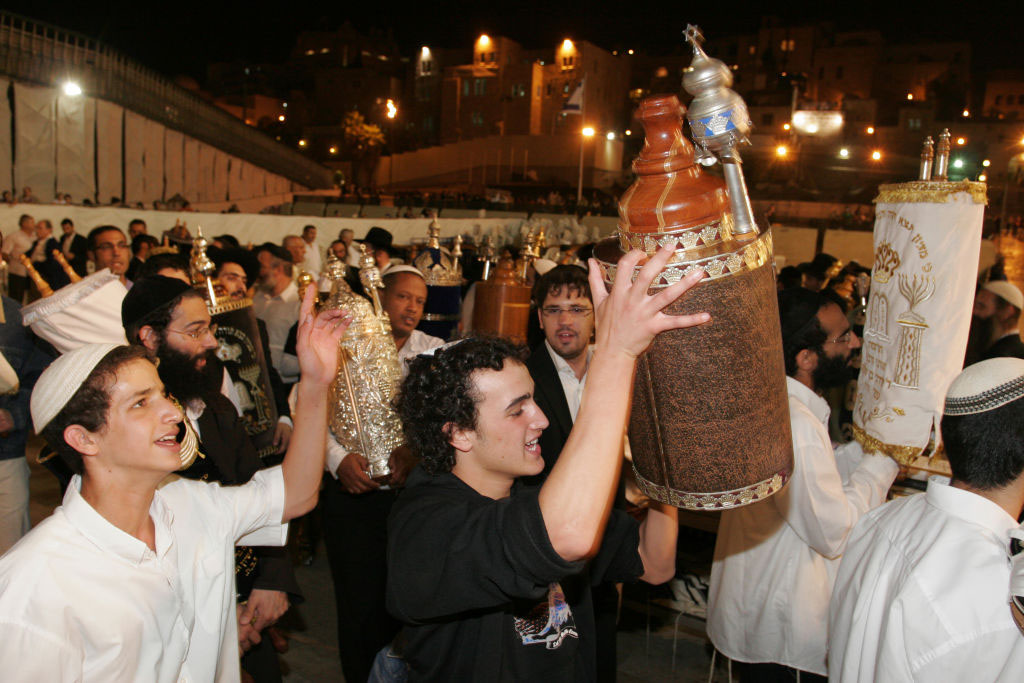
Simchat Torah is the antidote of hevel,
since joy that’s generated by reading
Torah texts
is the greatest of the antidotes
of hevel, vanity caused by fatal
lack of breath,
we celebrate
after reading Kohelet — which discusses this —
the festival of Simchat Torah,
since the Torah
enables anyone
who closely studies Bible texts
to become of hevel an ignorer.
Hevel, lack of breath and cause of
everybody’s death,
is cured by Torah-generated joy,
the solution
of all its causes
which Kohelet quotes.
Simchat Torah is the antidote to the lack of breath that bothered Kohelet so much that he composed a book about “hevel,” which means of course vanity, but also lack of breath. We read this book ecclesiastically on one of the last days of the festival of Sukkot, before we celebrate the festival of Simchat Torah, which means “Joy of the Torah’:
In “Remembrance of Former Things and why Simhat Torah is the response to the perplexity of Qohelet,” Mosaic, Tikvah, 10/2/26 Gary Saul Morson writes:
Anton Chekhov reminds us how biblical stories invest a seemingly chaotic world with order and meaning……
Perhaps no Russian writer had a more profound religious sensibility than Anton Chekhov. Chekhov was that odd figure who was not himself a believer but believed in believing. He respected, perhaps craved, the faith he did not have.
Of Chekhov’s many stories—he wrote over 500—his favorite was a quite short one, “The Student.” First it evokes the sense of life as a meaningless sequence of events that add up to nothing. Then it conveys the sense of life as a meaningful whole where, in some mysterious way, even the most trivial events demonstrate the presence of God. William Blake juxtaposed two views of human experience in his “Songs of Innocence and Experience: Shewing the Two Contrary States of the Human Soul.” Instead of poetic juxtapositions, “The Student” offers a story describing how its hero moves from “vanity and vexation of spirit” to a direct feeling of divine presence.
The idea which inspired this explanation of the juxtaposition of Simhat Torah to Qohelet is confirmed by the Book’s final two verses, Qoh. 11:13-14:
יג סוֹף דָּבָר, הַכֹּל נִשְׁמָע: אֶת-הָאֱלֹהִים יְרָא וְאֶת-מִצְוֺתָיו שְׁמוֹר, כִּי-זֶה כָּל-הָאָדָם. 13 The end of the matter, all having been heard: fear God, and keep His commandments; for this is the whole man.
יד כִּי, אֶת-כָּל-מַעֲשֶׂה, הָאֱלֹהִים יָבִא בְמִשְׁפָּט, עַל כָּל-נֶעְלָם: אִם-טוֹב, וְאִם-רָע. {ש} 14 For God shall bring every work into the judgment concerning every hidden thing, whether it be good or whether it be evil.
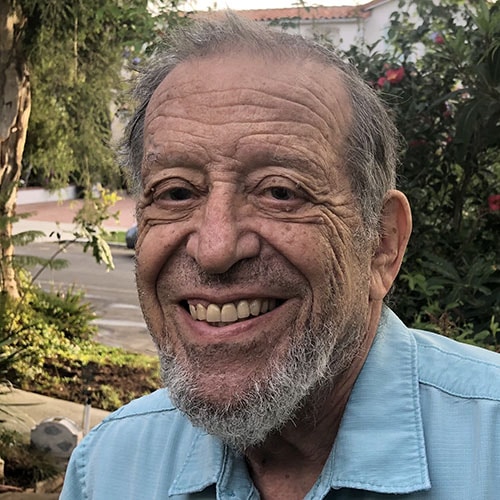
Gershon Hepner is a poet who has written over 25,000 poems on subjects ranging from music to literature, politics to Torah. He grew up in England and moved to Los Angeles in 1976. Using his varied interests and experiences, he has authored dozens of papers in medical and academic journals, and authored “Legal Friction: Law, Narrative, and Identity Politics in Biblical Israel.” He can be reached at gershonhepner@gmail.com.