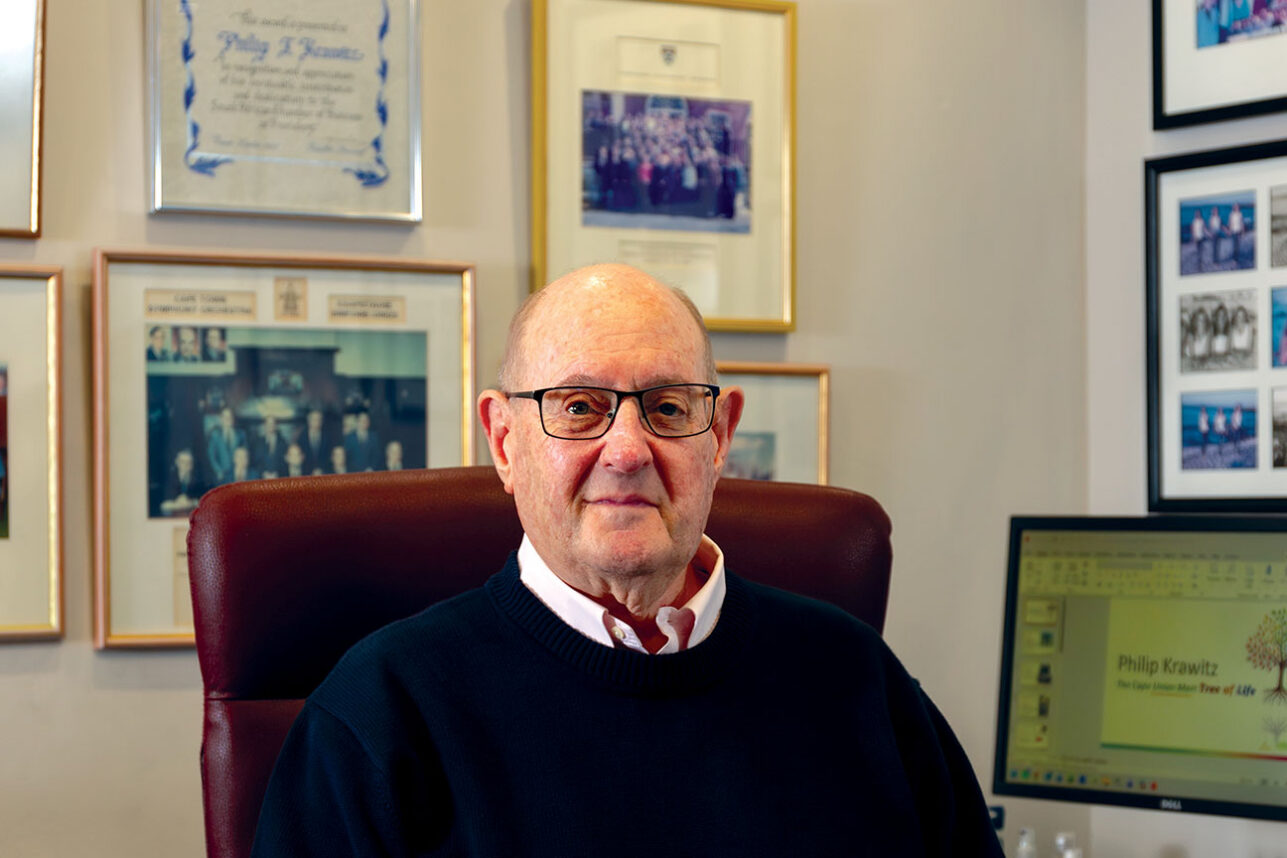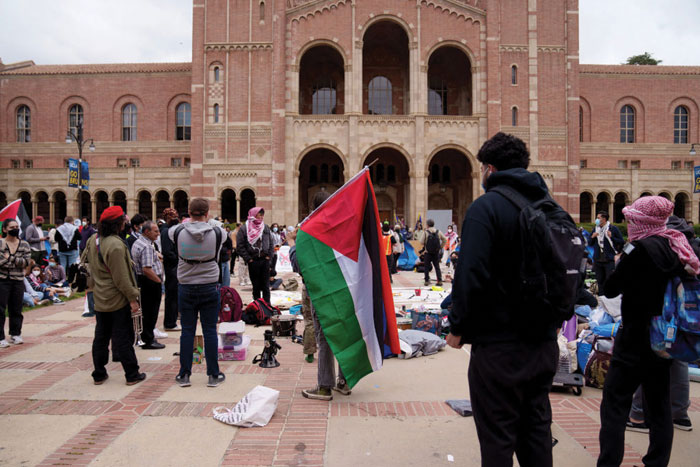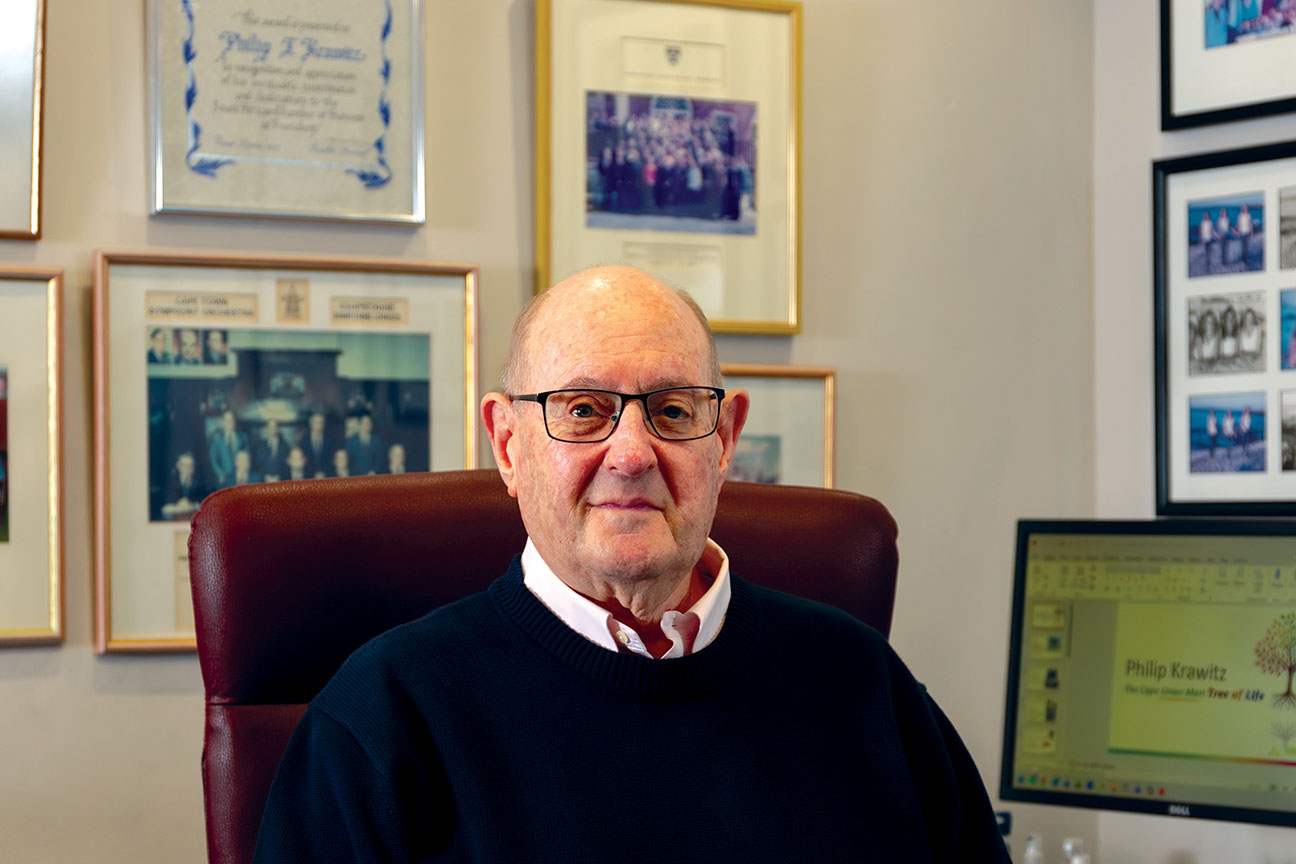
For 19 months, Philip Krawitz, executive chairperson of South Africa’s Cape Union Mart Group of Companies, was the target of weekly protests, boycott campaigns and accusations that he was funding genocide and the Israeli military. Protesters outside the company’s stores called him a “genocide funder” and held signs reading, “How many children have you killed?” and “Hey Philip, we charge you with genocide.”
Then, in July 2024, Krawitz was warned by South Africa’s elite crime-fighting unit, the Hawks, that there was a credible threat to his life and that a hit was being planned. He was advised to leave the country temporarily. He went on a six-week vacation and, upon his return, hired full-time bodyguards and began traveling in a bulletproof vehicle.
That would probably have been enough for most people to simply pack up and leave permanently. Many South African Jews have already left the country for the United States or made Aliyah to Israel, among them his daughter. But Krawitz had no plans to leave. He has lived in Cape Town his entire life and loves his life there.
His grandfather, Philip Krawitz, founded Cape Union Mart in 1933, initially selling surplus army coats. Today, the outdoor and adventure retailer has about 270 stores across South Africa and employs roughly 3,000 people.
Krawitz joined the family business in 1970 after his father, Arthur, suffered a heart attack. At the time, Cape Union Mart was a single-store operation.
His business success has allowed him to give generously to causes he believes in, supporting vulnerable communities in Cape Town through the community-based, women-led NGO Ikamva Labantu, an organization that works primarily with disadvantaged communities in Cape Town townships. They offer many services including early-childhood development, afterschool programs for children, community kitchens and food assistance. He has also supported Beit Issie Shapiro, which serves children with disabilities, and he has backed Youth Futures and other programs promoting coexistence between Jewish and Arab communities.
“I would be there with my wife and watch Jewish Israelis, Muslim Israelis and Christian Israelis sitting side by side, working together, enjoying life and being the best of friends,” he said. “It was truly beautiful to watch.” However, his involvement with one Israeli organization later became one of the reasons protesters accused him of supporting Israel’s military and began demonstrating outside Cape Union Mart stores.
Keren Hayesod, a global fundraising organization that supports humanitarian and social programs in Israel, has been part of Krawitz’s philanthropic work for many years, and he serves as its South African chairperson.
In 2014, he helped raise money for its Fund for Victims of Terror, which provides humanitarian assistance to civilians affected by terrorism in Israel. In recognition of his philanthropy and long-term leadership and devotion to Israel, the organization gave him the Yakir Award. He and the other recipients were invited to meet Prime Minister Benjamin Netanyahu at his office in Jerusalem, where a photograph was taken of Krawitz, his wife and Netanyahu. The photograph was later published in the Jewish press and used by critics to accuse Krawitz of being a major donor to the Israeli military.
“I have never given money to any army, including the Israeli army,” Krawitz said in a Zoom interview with The Journal. “That was absolutely untrue.”
Krawitz said that for much of his life, relations between Cape Town’s Jewish and Muslim communities were good, and he counted many Muslims among his friends. In 2018, he told the South African Jewish Report that he believed Jews and Muslims in South Africa could demonstrate to the world how the two communities could live peacefully together.
But he said that relationship has deteriorated dramatically over the past three years, as the war in Gaza intensified tensions.
“The Jewish community in Cape Town is approximately 12,500, but the Muslim community, in comparison, is very big and has hundreds of thousands of people,” Krawitz said. “Some people think that Black South Africans are antisemitic, but that’s completely false. I have many Black friends, and Black organizations are passionately pro-Israel.”
Krawitz also vividly remembers the day Nelson Mandela addressed Cape Town’s Jewish community at a synagogue shortly after his release from prison in 1990. Mandela spoke about his ties to the Jewish community and urged Jews to remain in South Africa, while acknowledging their connection to Israel.
“I stood there myself and heard the message firsthand. He said, ‘Please stay home and stay in South Africa, or go home’ — meaning go home to Israel. It was a very powerful message that I’ve never forgotten.”
Krawitz said that while he received support from the Christian community during the relentless attacks against him, he never heard from the Muslim community, including a Muslim leader he once regarded as a friend and hosted for Shabbat dinner.
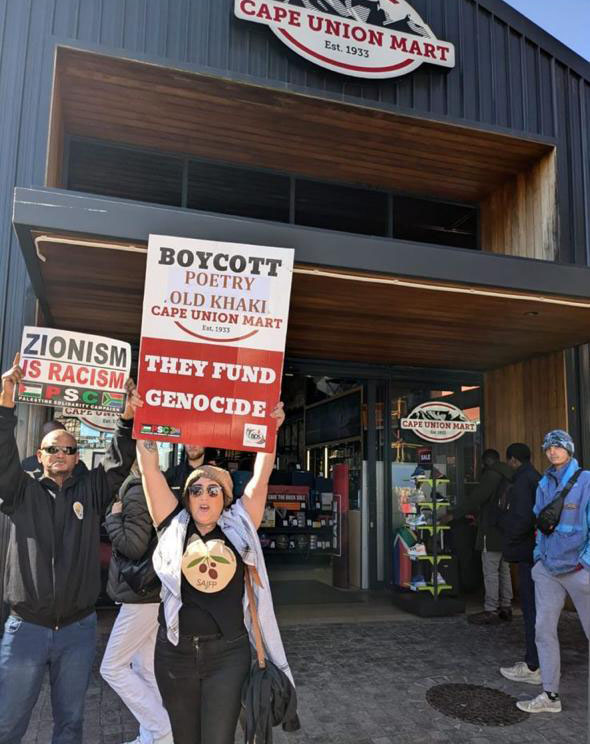
As the demonstrations continued outside Cape Union Mart stores and protesters urged people not to shop there, Krawitz decided that enough was enough and filed a lawsuit in June 2025 against the Palestine Solidarity Campaign and several individual activists, claiming they engaged in defamatory and unlawful conduct. “It cost me millions of rands in legal fees, but I had to stand for what I believe in,” he said. “We Jewish people have to stand up for our rights.”
The case was heard by a three-judge panel of the Western Cape High Court in June 2026, and on Sept. 4, the court ruled in his favor. Judge Judith Cloete, writing for the full bench, found that the evidence did not support the allegations that Krawitz was funding genocide, the Israeli army or the war in Gaza. The court also found that he was not responsible for the killing of children. The judge criticized the protesters’ reliance on material found online, saying they had conflated internet reports and their own perceptions with facts.
The court prohibited the Palestine Solidarity Campaign and the other respondents from claiming that Krawitz or Cape Union Mart were funding genocide, the Israeli army or the conflict in Gaza, or that they were killing children or complicit in the killing of children. Protesters were also barred from preventing customers from entering Cape Union Mart stores and were required to comply with South Africa’s Regulation of Gatherings Act when demonstrating.

“I think it was a very good judgment. I have no problem with freedom of speech, I endorse it, but don’t call me a baby killer,” Krawitz said. “The court endorsed the right to freedom of speech, but it also recognized that there are limits to what you can say about another person. I think it was a very important judgment, and I hope it will become a landmark ruling that can be used in future cases.”
Despite the personal and monetary cost of the past several years, Krawitz has no intention of walking away from the causes he believes in. He said he plans to continue supporting humanitarian projects in Israel, particularly those that help civilians in times of crisis, provide emergency shelters and medical equipment, and expand educational opportunities for Jews and Muslims alike.