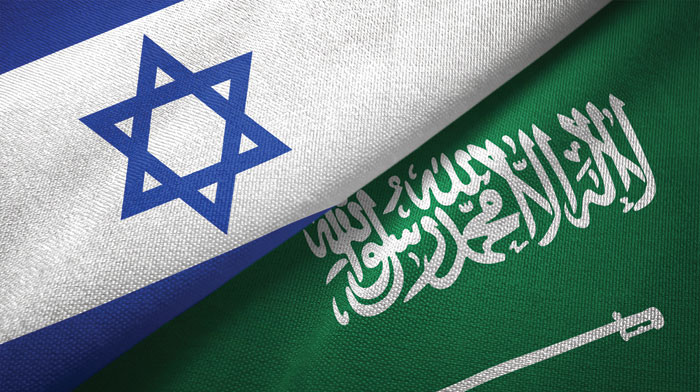
There are just over 10 million residents of the state of Israel, of whom approximately 6.8 million are registered voters. But 10,000 frontline Houthi militia could determine the outcome of this month’s election and indirectly select the Jewish state’s next leader.
The necessary decisions that will determine Israel’s future are deceptively simple to identify and maddeningly complicated to resolve. Let’s agree that security in a region that includes an increasingly belligerent Iran can best be accomplished through a formal alliance with Saudi Arabia. Second, the Saudis have maintained that they will only accept such a partnership if a Palestinian state is established. And overwhelming majorities of Israelis, understandably scarred by the Oct. 7 Hamas terrorist attacks, vehemently reject such a concept.
These three seemingly contradictory factors create a now-familiar challenge: how do Israel’s leaders secure Saudi Arabia’s support without agreeing to a two-state solution? Continue on the current path, recognizing that securing assistance from Saudi Arabia against Iran is insufficient to justify the security threat that would accompany Palestinian self-governance? Concede to Saudi pressure for a Palestinian state as the price for forming an anti-Iran partnership with them, but risking greater vulnerability to Palestinian violence (not to mention almost-certain domestic political rejection)? Or search for a murky middle ground that provides some type of nebulous Palestinian autonomy falling well short of formal statehood that could still satisfy Saudi Arabia’s leaders?
Before Oct. 7, most mainstream Israeli politicians opted for the third option and seemed to be making progress toward that outcome. But Hamas’ leadership recognized the growing likelihood of an Israeli-Saudi agreement and destroyed that possibility with their attacks, confident that such a massive display of terrorism would eliminate any potential that the Israeli public would tolerate any hint of an official Palestinian governing entity. (Undermining the possibility of a two-state solution and eliminating the prospect of an Israel-Saudi treaty was Hamas’ gruesome success of that day.)
Once the option of Palestinian statehood had vanished, Riyadh made it clear that an official relationship was off the table. But the recent attacks by the Houthis against Saudi civilian infrastructure has set off alarm bells and the kingdom’s leaders are now coming to terms with the most pronounced security threat they have faced in recent memory. Their dreams of being an international center of commerce and culture are worthless while their airports, hotels and refineries are under attack. They are realizing that finding allies to help them in this fight is more difficult than they might have imagined.
The other Gulf states are limited in the assistance they can provide and are wary of exposing themselves to additional missile fire on their own soil. The Trump administration has been hesitant to violate last year’s U.S.-Houthi ceasefire and expose American troops to greater risk, so far restricting involvement to providing intelligence. And Riyadh’s new treaty with Pakistan and Turkey has yielded underwhelming commitments for defensive support from those countries rather than the proactive strikes that would be much more beneficial to the Saudi military.
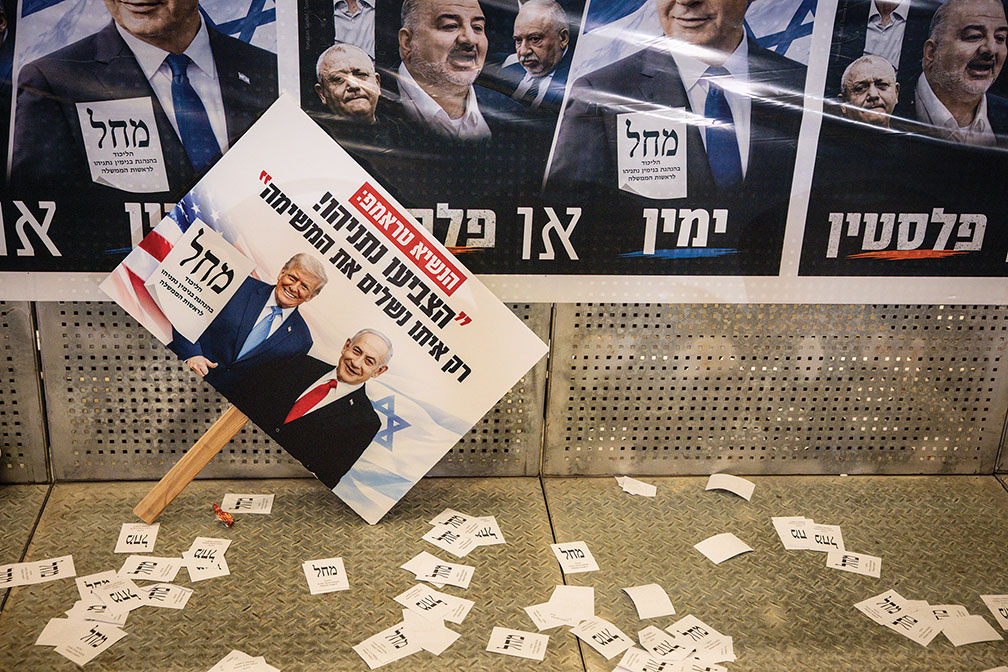
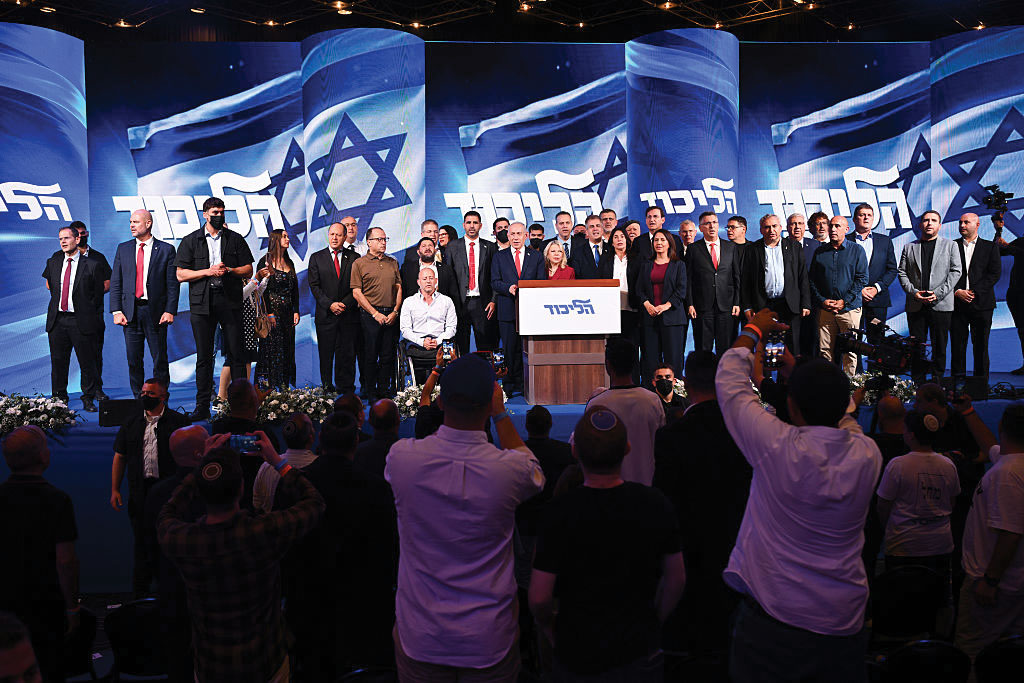
So it appears that Saudi Arabia is in dire need of friends to help them out of their current situation. Does that mean that Saudi leaders would be more amenable to an Israeli agreement that committed to something short of a Palestinian state? There’s no way to answer that question right now, but Benjamin Netanyahu would certainly be the least likely of the three leading candidates to offer a middle ground solution that could satisfy even a chastened and desperate Riyadh. Both Gadi Eisenkot and Naftali Bennett both emphatically oppose a two-state solution, but both have also talked about paths forward that could eventually allow some type of Palestinian administrative autonomy on non-security measures.
Leaving the door open toward partial Palestinian self-governance at some nebulous point in the future might be enough to mollify Saudi Arabia without enraging the Israeli people. The question that will be answered on Oct. 27 is whether Eisenkot or Bennett can tiptoe through that treacherous political minefield, or whether Netanyahu’s more uncompromising stand will be a simpler and safer option for exhausted Israeli voters.
Dan Schnur is the U.S. Politics Editor for the Jewish Journal. He teaches courses in politics, communications, and leadership at UC Berkeley, USC and Pepperdine. He hosts the monthly webinar “The Dan Schnur Political Report” for the Los Angeles World Affairs Council & Town Hall. Follow Dan’s work at www.danschnurpolitics.com