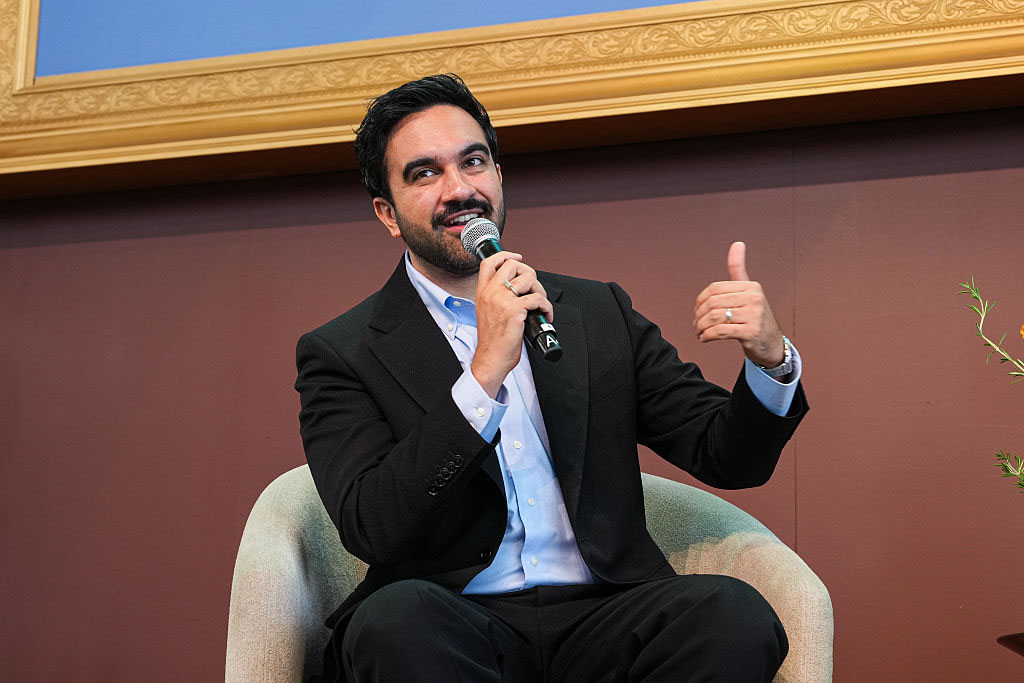
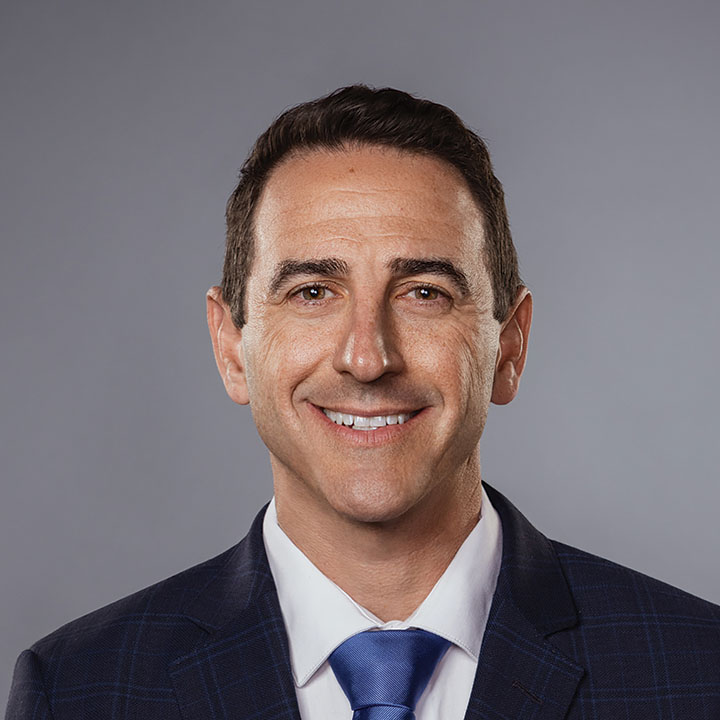
Everyone has events in their lives that become signposts — moments where one’s destiny or life’s work becomes clear. In the second part of his profile, Rabbi Joel Simonds, the founder of the Jewish Center for Justice and a member of Wilshire Boulevard Temple’s clergy, tells The Journal the moments that have impacted his life.
While he can’t pinpoint one moment, watching the news reports from the first Persian Gulf War in 1991 helped to focus his Zionism. He was 11 years old, and remembers “CNN being on in my house,” and being in synagogue when Iraqi SCUD missiles were hitting Tel Aviv and Jerusalem. “Just seeing images of Israelis with gas masks” made him realize that “this was something different. … Americans are glued to the TV because of this war. But Jews are glued to the TV because of this war and … my synagogue is glued to the TV because of this war.”
The second was going to Jewish summer camp and meeting Israelis. The third thing came when he was a little older, about 15 years old. He was attending Jewish summer camp and building his own Jewish identity. Then (Israeli Prime Minister) Yitzhak Rabin was assassinated. “After that, I remember going to synagogue for an evening of memorial prayer gathering.” The prime minister had been assassinated, and he “was going to synagogue. That for me was a moment of Zionism, connection to Israel, to Judaism – all one and the same.” These were moments he understood Zionism, his “connection to Israel and to Judaism.” To him, they’re “all one and the same.”
Asked why these moments made such a strong impression, he said “maybe it was just inherent. It might have been the community in which I was living, where the Jewish population was very small but very active.” Regardless, he said, “those moments were so powerful,” said Rabbi Simonds, “and maybe that is why I still remember them.” He doesn’t remember the words that were said from the pulpit; “I just remember the reaction. The prime minister was assassinated, we go to synagogue.” He can’t say if that moment “turned something inside me, but it definitely was a moment that my Jewish life here in California was not isolated to California. It wasn’t even isolated to America. It was something larger.”
There were other moments – including spending his junior year in Israel – but those things came later. If you are looking for the genesis of his Zionism, it is “going to synagogue and feeling connected to my Jewish community at the age of 11 when Israel was under attack. And going to my synagogue and feeling connection to the Jewish community when the Israeli prime minister was assassinated.”
He sees echoes of those times today. Jews “have been persecuted from generation to generation. In 2026 it’s OK to say bad Israeli policies should not bring about global condemnation to the point that it is. There has to be something more.”
Those experiences, he said, “taught me something.”
His dedication to social justice, he said, had always been there. “It was there in rabbinical school, always there at University Synagogue. I was a fulltime rabbi [at university] from 2009 to 2015.” He stepped back from his fulltime position from 2015 to 2017. “I was half the time here and working halftime for the Religious Action Center of Reform Judaism [which advocates for justice], setting up their West Coast office.”
It was during that time he realized that he had spent his entire life solely within the lens of the organized Reform Jewish community. “At that point,” he said, “I have to go beyond this.” It was then that he “decided to start the Jewish Center for Justice.” He wanted to “really leave the beauty and the safety and the confines of the organized Reform Jewish movement and go to a kind of larger Jewish community.” He was inspired by looking around and reading studies when he saw “there really is a larger Jewish community that is not involved, and I want to connect with them.”
He wasn’t going to leave the Reform movement. “This is an amazing movement, and I want to take everything I have learned in this movement and go out to the larger community that is not being served.”
His decision was easier because he and his wife “have a strong Jewish connection.” But it was more than family. “It was my observations, friends and connections. At that point, I left the Religious Action Center, took a further step back at University Synagogue, to about 15%, and I started the Jewish Center for Justice,” which is entering its 10th anniversary year.
“I had wonderful mentors and advisers along the way who always said, ‘Never fully leave pulpit life. Always keep the connection.’” There were multiple reasons, mainly “to remain connected to the community, to remain connected to a sense of pulpit.” When he was at University Synagogue, “I always was on for the High Holy Days and some lifecycles. Also during COVID, when University and Wilshire merged,” and he remained after the merger.
“Pulpit life,” he said, “is still the backbone of the American Jewish community.”