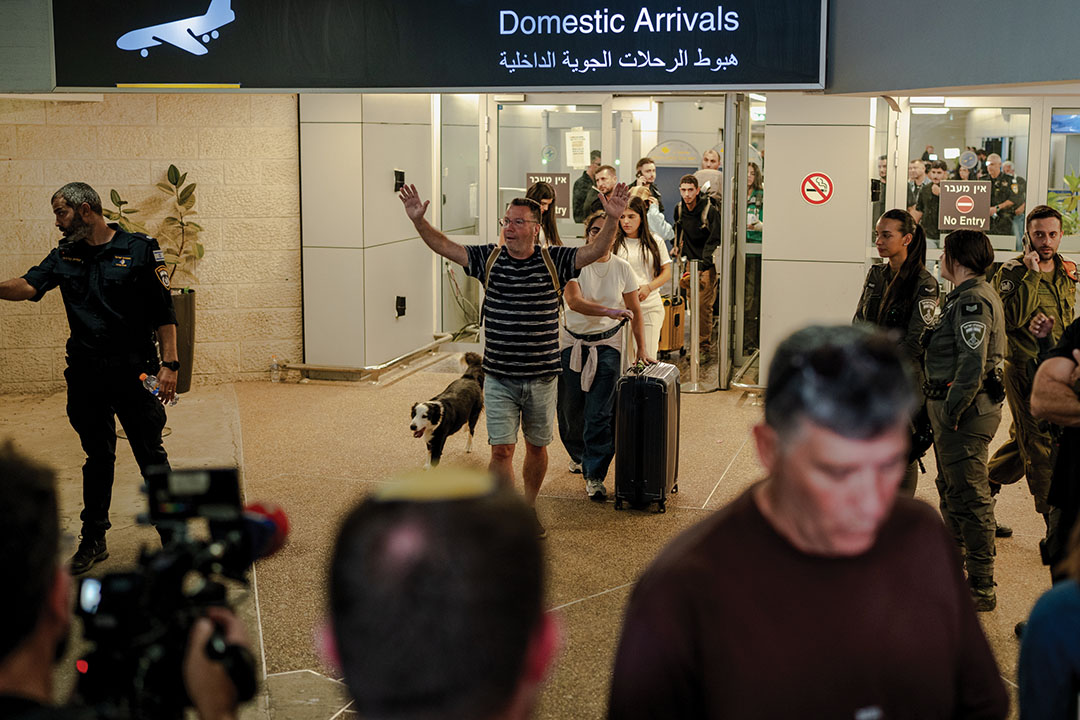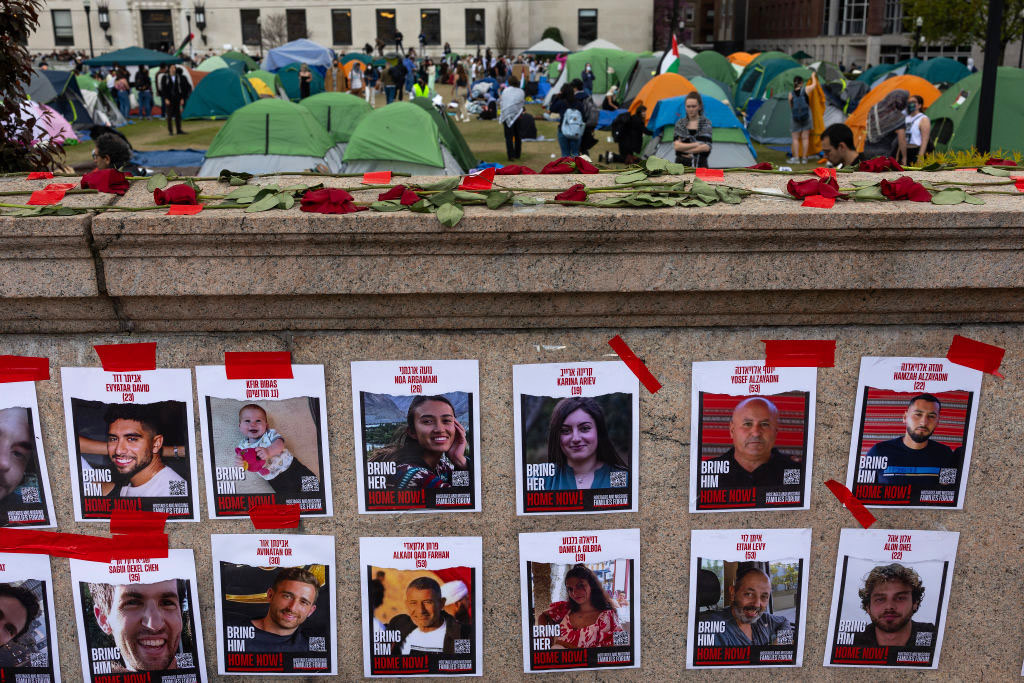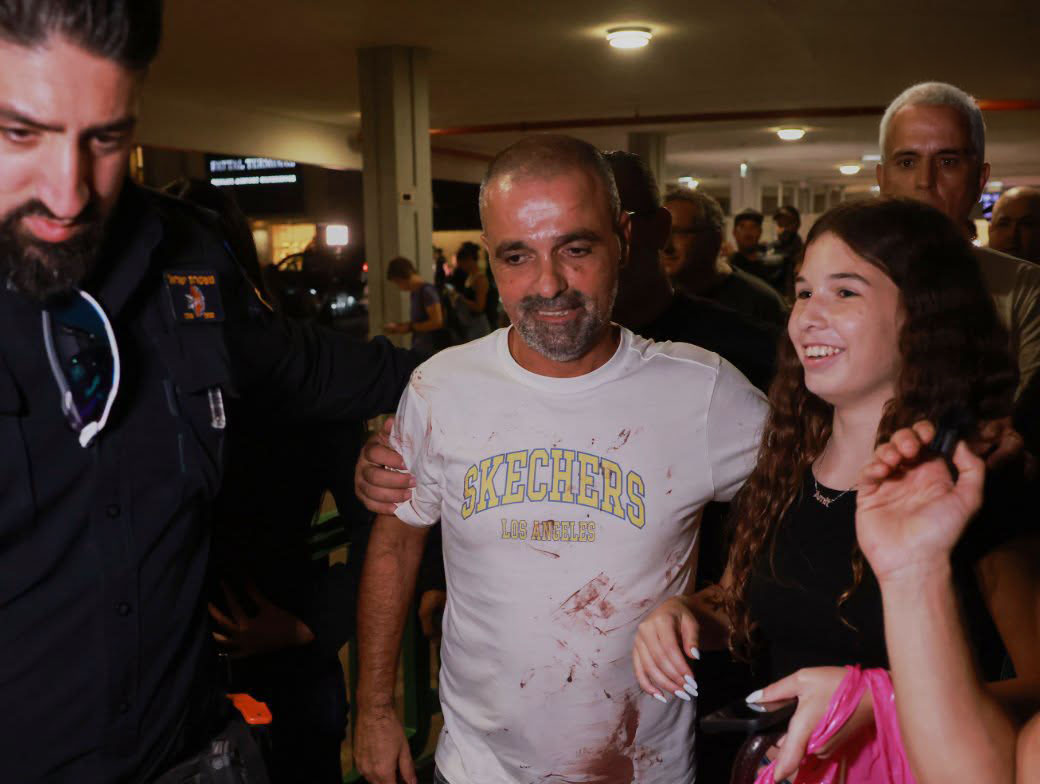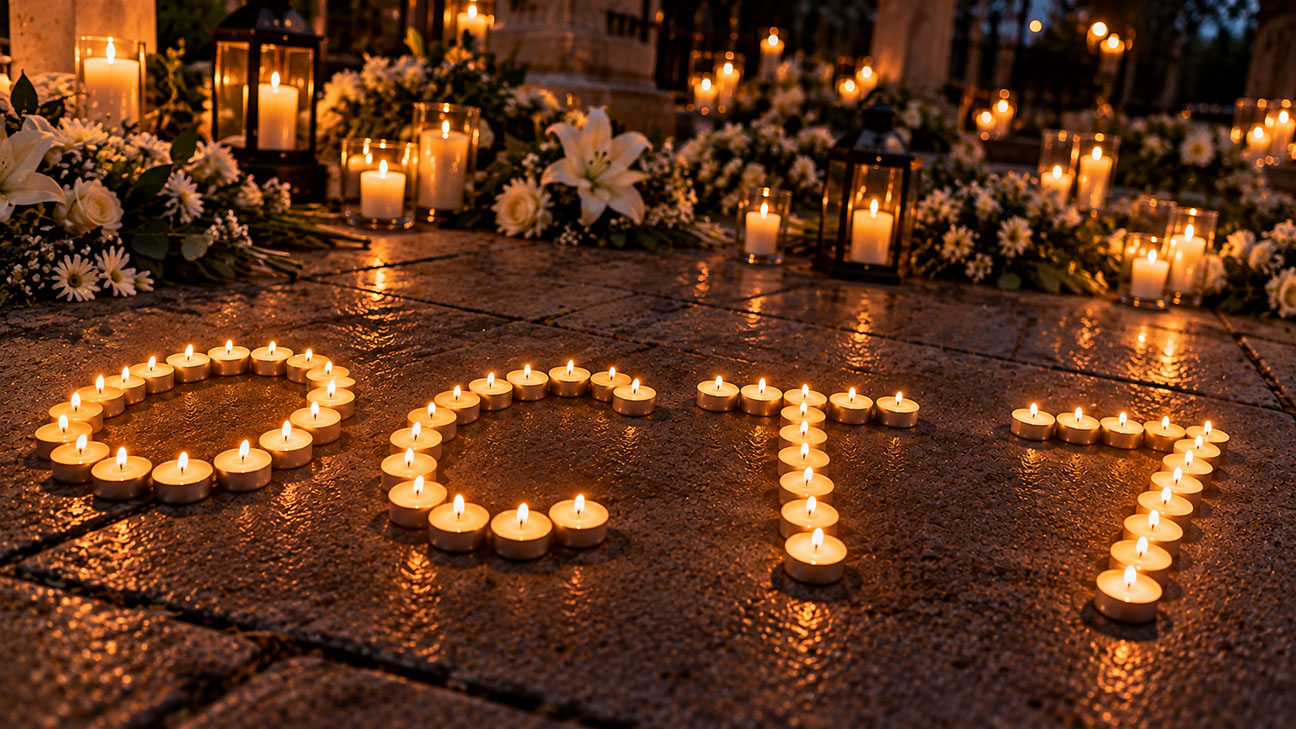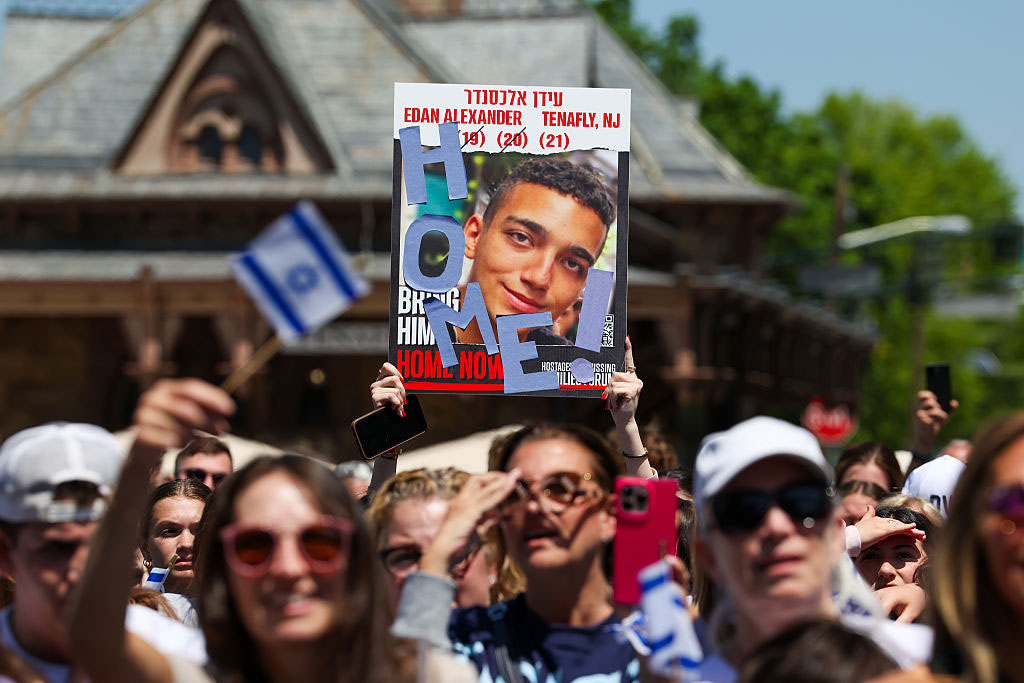
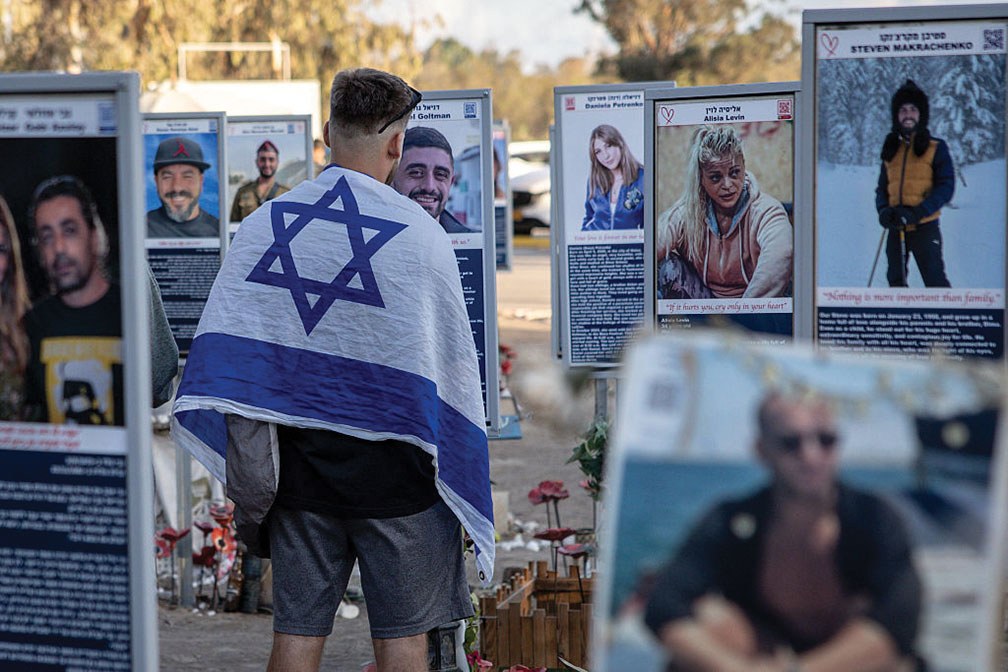
Personal memory is an emotional act. National memory is a political act. There is no avoiding the need to recall this in a week when the personal and the national, the emotional and the political, converge: three years since the Oct. 7 massacre, and a three-week countdown to Election Day.
One may wish to keep the two apart. One may ask that memory remain pure, exalted above the political day-to-day with its twists and intrigues. That is a reasonable request where personal memory is concerned. It is a request that empties national memory of its meaning.
The Jewish people prides itself on its long memory. It remembers God’s instruction to Abraham to go to the Land, whether or not it ever happened. It remembers the destruction of the Temple, which happened, and happened again. It remembers the Return to Zion, the Crusades, the Expulsion from Spain, the Emancipation, the Holocaust, the War of Independence. Each of these memories is political. Each is the key to answering questions about our culture, aspirations, the very nature of the collective. The choice of what to remember, and the choice of how to remember, is a choice that draws on the past in order to shape the future.
Oct. 7 is a day that already reverberates powerfully in the consciousness of every Jew. But the meaning of it has yet to be deciphered. Of course, there is the great sorrow for those murdered on the day of the invasion, and for those killed afterward in the days of war. There are the wounds of the body borne by many, and the wounds of the soul borne by no fewer. There is the personal acquaintance so many Israelis have with the victims themselves, their families, their friends, in circles near and far. That acquaintance pulls toward the emotional act: toward standing with head bowed, toward shedding a tear, toward empathy with human hardship, toward awe at human courage.
On Tisha b’Av, Jews read the legends of the Destruction. On Yom Kippur, Jews read the story of the Ten Martyrs, the sages put to death by Rome. If you have imagination, if you have national feeling, these too bring a tear to the corner of the eye. Rabbi Yehuda ben Bava was cut “limb by limb and thrown to the dogs, neither eulogized nor buried.” The tongue of Rabbi Hutzpit the Interpreter was cast onto the garbage. Rabbi Hanina ben Teradion was burned with the Torah scroll. It is not hard to imagine the lament recited over them shedding the form of Rome and donning the form of Hamas, shedding the form of the days of Destruction and donning the form of the days of Rebirth. Yet it is worth remembering the difference between those days and these. Emotionally, a horrifying murder is always horrifying. Politically, murder by the Roman sovereign is not the same as murder by the Hamas invader. Jews who must submissively accept the empire’s sentence, defying it only through the stubborn preservation of their culture, are not the same as Jews who can fight for their lives, go to war, and exact retribution from the murderers.
This obliges them – us – to be exact about the meaning of the national memory. To find a way to channel it at the proper, gradual pace, from emotional shock to political action.
Why was the Temple destroyed? In the various explanations offered by the Sages one can discern the political act. They took care to point the finger inward. They ruled that baseless hatred brought it about, or that the sins of the people of Israel brought it about. This is the necessary course when a nation is too weak to fight back: better that its people study Torah, preserve their culture and not try to provoke an enemy who cannot be beaten. And more: they pointed the accusing finger at those who were so intent on keeping the rules that they forgot the need to be wise. Rabbi Zechariah ben Avkulos, who refused to offer the Roman emperor’s sacrifice on the altar, is remembered as the one whose “scrupulousness … destroyed our Temple.” On its face, this is a contradiction. If sins brought about the destruction, one must keep the rules even more strictly. If excessive strictness about the rules brought about the destruction, one should loosen one’s hold on the rules. But only on its face, as Mesillat Yesharim teaches in drawing the lesson: “Thus you must not judge the piety of a deed by the deed alone, as it stands; you must turn this way and that, to every side the human mind can see, until you truly judge which is more fitting: to act or to refrain.”
“To act or to refrain.” This is a dilemma that haunts us today as well, in many contexts. It is a dilemma that must be faced from within the memory of what happened. A memory that carries political meaning, but not a memory with a single agreed-upon partisan conclusion. There will be those whom memory leads to reject the incumbent leadership; there will be those whom it leads to express renewed confidence in the incumbent leadership. There will be none – or at least there ought to be none – who drop a ballot in the box without thinking of the legacy left by the martyrs of this generation.
Something I wrote in Hebrew
Writing about the Electoral Threshold, here’s what I wrote:
In conclusion: This article is not meant to say “don’t vote for small parties” (because they stand no chance), or “vote for small parties” (because only if all supporters persist will they have a chance). This article is meant to say: know where the risk zone lies, and then make an informed decision. If your approach is “we are willing to take the risk” – for whatever reason – or “we are not willing to take the risk” – for whatever reason – act accordingly. And either way, do not blame the pollsters. When they tell you four or five seats, they are not saying “the party will pass the electoral threshold.” They are saying something much more modest and sobering: “The party passed in the poll we published today, but it is definitely in danger.” From here, it is up to you.
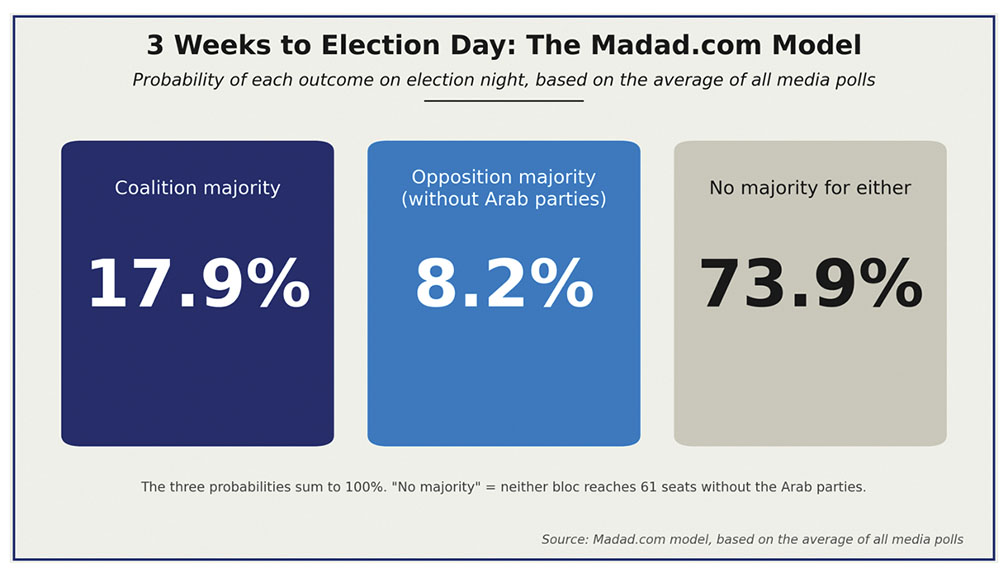
A week’s numbers
If most polls aren’t way off, our post-election season will be long and difficult.
A reader’s response
Joe Levy writes: “I can’t believe Israelis are going to reelect Netanyahu. Are you guys out of your mind?” My response: I know more than a handful of Israelis who’d use the exact same words before the 2024 U.S. election.
Shmuel Rosner is senior political editor. For more analysis of Israeli and international politics, visit Rosner’s Domain at jewishjournal.com/rosnersdomain.