In San Diego, pro-Palestinian protesters jumped on the hoods of cars as people arrived at a StandWithUs event, forcing drivers to run over baby dolls placed in their path. The crowd, holding signs condemning Israel, began chanting in unison, “Baby killers.”
At a local bookstore, antisemitic stickers were distributed to shoppers, and a few months ago, an AEPi house at the University of San Diego was vandalized with antisemitic graffiti.
Those are only a few of the antisemitic incidents that don’t make it into the news. In fact, if you live in the San Diego area, you might think that it is relatively safe to be Jewish there. But unfortunately, the reality is different, especially for those who encounter the ugly face of antisemitism.
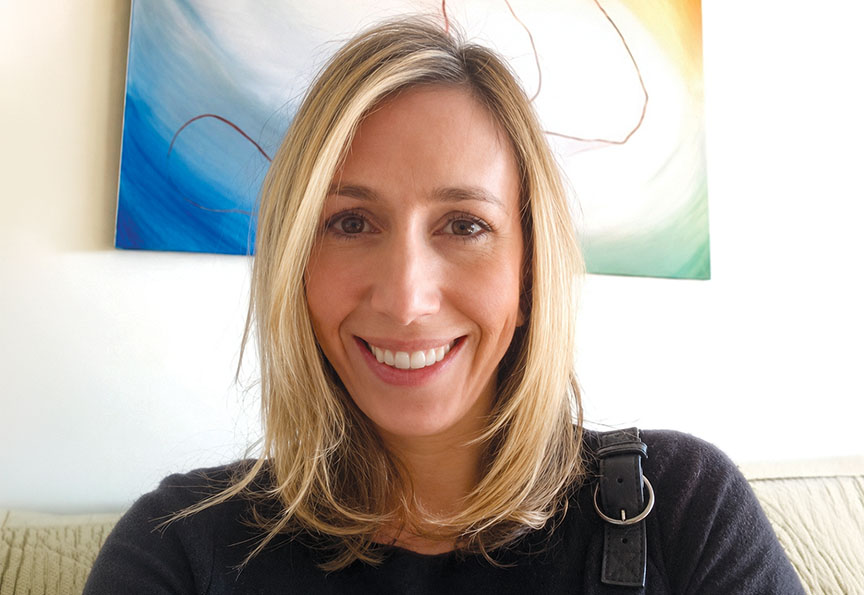
Liat Cohen-Reeis, director of the Antisemitism Task Force at StandWithUs San Diego, has tried to bring local news media’s attention to these incidents and others, but has encountered disinterest.
“I just don’t think they care. I think they want to go with other news stories,” she told The Journal. “We’ve been trying to pitch Jewish voices to the local newspaper, The San Diego Union-Tribune, and write op-eds by community members and things like that, and none of them have been picked up.” The task force has also tried to bring a Christian voice into the local conversation about antisemitism, including an op-ed written by a local pastor offering a Christian perspective. It wasn’t published.
Meanwhile, she said, local media has devoted considerable attention to a recent shooting at a San Diego mosque.
Cohen-Reeis said she was particularly frustrated when some of the coverage brought the International Holocaust Remembrance Alliance (IHRA) working definition of antisemitism into the discussion. Her task force had spearheaded the adoption of the IHRA definition by the City of San Diego, which she described as a recent victory.
Following the mosque shooting, she said, some reports suggested that San Diego City Council members had failed the Muslim community by not discussing the IHRA definition with them.
At one point, a reporter contacted Cohen-Reeis. “She wanted to know the Muslim community’s feeling about IHRA and I had to tell her flat out that the Jewish definition of antisemitism is only for the Jewish community to discuss.”
Another reason antisemitic incidents often fail to make the news is that people are sometimes hesitant to speak up or file police reports.
Cohen-Reeis recalled a disturbing video sent to her by a Jewish couple who were at a Starbucks when a pro-Palestinian protester known in town for confronting and harassing Jews happened to be there, wearing a keffiyeh. The man apparently overheard something the couple said and suddenly began confronting them, calling them “baby killers,” “Zionists” and other epithets.
The couple sent Cohen-Reeis the video, but she said they were reluctant to report the incident to police. She encouraged them to do so, explaining that police had told her that every incident, even one that might seem minor, could help authorities identify patterns and potentially connect separate incidents involving the same person.
Ultimately, the couple decided not to file a report because they did not want their names attached to the incident.
“People are scared, or sometimes people just don’t want to go through the steps,” said Cohen-Reeis. “But I do wish that they did report, because that information is very important. I think you have to be very courageous and brave. Sometimes you’re going to get backlash, but you do the right thing no matter what. You don’t just try to avoid the noise. You stand with conviction.”
On San Diego college campuses, some Jewish students are also frustrated by what happens after they speak up. While university administrators are accessible and willing to listen, Cohen-Reeis said, students often don’t see any follow-through. “They felt like the administration is accessible and that they’re listened to,” she said. “Then nothing is actually happening. Everything just ends there.”
Even when students try to bring a positive perspective to the conversation about the Jewish community, Cohen-Reeis said, they can face resistance. She gave the example of a young non-Jewish woman at one of San Diego’s universities who wrote an op-ed about how welcomed she had felt by the Jewish community and her desire to see an end to hatred.
Six months later, Cohen-Reeis said, the piece still had not been published by the student newspaper, despite repeated attempts to pitch it.
“We’re trying not to give up,” she said.
What worries Cohen-Reeis most goes beyond individual incidents of antisemitism. She is concerned about the elected officials and the decisions they will make — not only those affecting the Jewish community, but those affecting American democracy more broadly.
But despite those concerns, Cohen-Reeis said she continues to find reasons for hope.
Her work includes extensive interfaith outreach, particularly with churches and pastors, and she said the Jewish community has developed a strong network of Christian allies in San Diego.
This summer she organized an event inviting members of the Jewish community, elected officials, pastors and representatives from numerous churches. “We have thousands of strong allies here to support us, which is always very beautiful,” she said. “I really wanted them to feel that even though it feels so dark sometimes and so lonely, that we have such strong support in San Diego.”
“Every day something comes up that’s like, ‘Oh my God, another thing just happened,’ but I always say Hashem sends us a cookie. It seems like every time that something bad happens, there’s a blessing that comes out of it.”