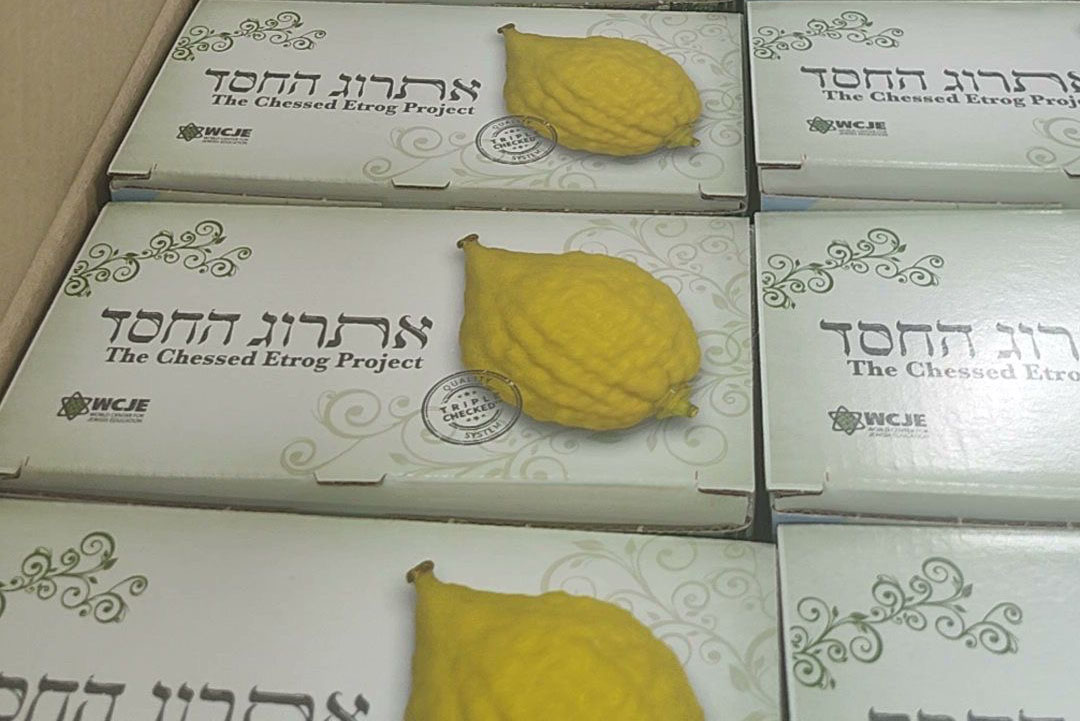
Show someone who isn’t Jewish a picture of an etrog and ask what kind of fruit it is, and chances are they will guess a lemon. The etrog, or citron, is one of the Four Species used by Jews during Sukkot, making it one of the few fruits whose most important purpose is religious.
Yet the citron also grows in Morocco, and Moroccan etrogim are shipped to Los Angeles and sold to the Jewish community before Sukkot.
Mickey Katzburg, founder of the World Center for Jewish Education, is trying to give Los Angeles Jews another option: an etrog grown in Israel, while at the same time helping support farmers in the country’s Gaza border region.
“There is nothing wrong with Morocco,” Katzburg said. “But when you are doing a mitzvah, it is worthwhile to strengthen the people in Israel who have gone through such a difficult time. The farmer I buy from, Alon Gottlieb, lost one of his employees on Oct. 7, 2023. So when we specifically purchase from the Gaza border region, we are supporting the people who live there.”
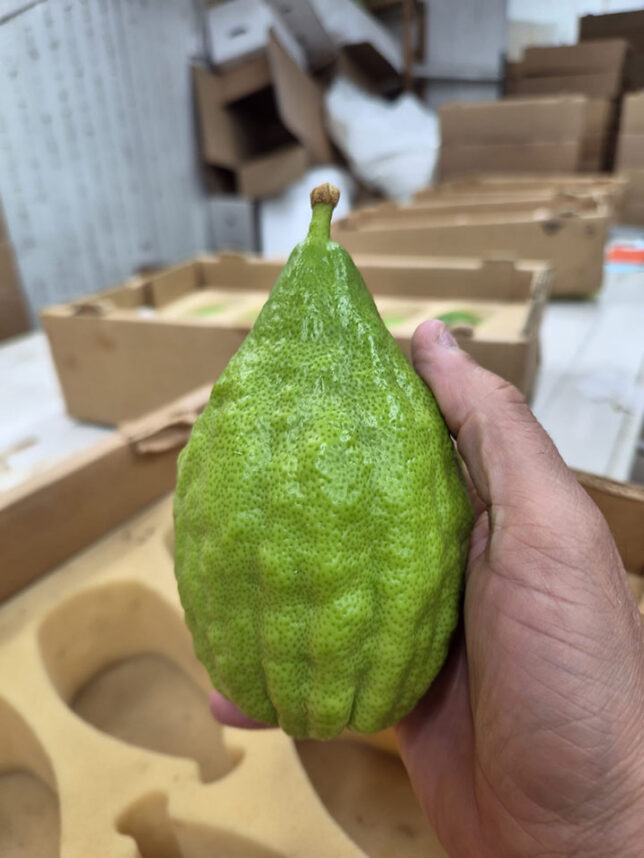
For the past five years, Katzburg has worked with farmers in Israel’s Gaza border communities to bring their etrogim to Los Angeles through a project he calls The Chessed Etrog. Katzburg personally selects and inspects the etrogim before they begin their journey to the United States. They are first shipped to New York before making their way to Los Angeles.
Last year, the project brought approximately 5,000 etrogim from the Gaza border region to Los Angeles, as part of roughly 15,000 etrogim sold through the project in the United States. Families can purchase an individual etrog or a complete set of the Four Species—the etrog, lulav, hadass and aravot — with prices generally ranging from $60 to $200, depending on the quality and level of selection.
The project has also created a direct connection between the annual Sukkot purchase and Kibbutz Nir Oz, which suffered devastating losses in the Oct. 7 attack. Last year, Milken Community School encouraged families to purchase etrogim through the project, with a portion of the proceeds going to Nir Oz. The Chessed Etrog Project ultimately transferred several thousand dollars to the community.
The project’s charitable mission began even before the focus turned to the Gaza border communities. In its first year, the project supported women in Jerusalem who collect surplus produce from the wholesale market, clean it and distribute it to families in need. Another year, the project helped displaced Israeli soldiers staying in hotels, and later supported efforts to help soldiers find employment. In recent years, the project has focused on farmers in the Gaza border region.
But Katzburg wants the Los Angeles experience to be about more than simply purchasing an etrog. The etrogim and Four Species are sold over four days at a large outdoor location at Pico and Robertson Boulevards, where Israeli music, families and a distinctly Israeli atmosphere turn the annual purchase into a community gathering.
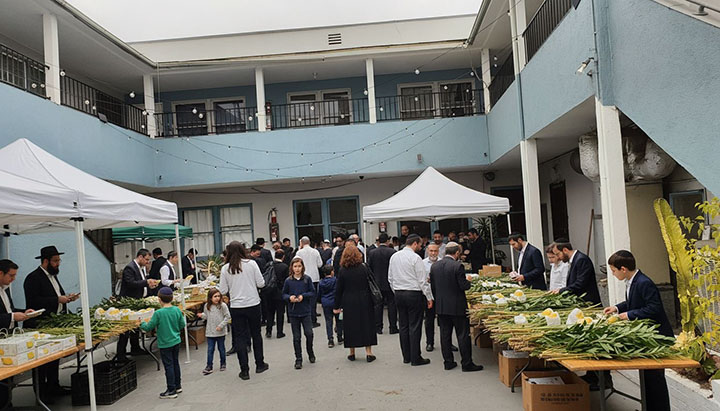
He wants families to bring their children not simply to purchase the Four Species, but to experience something reminiscent of Israel. “It feels like Little Israel,” Katzburg said. “People come every year to wish each other a good year. It’s really a lot of fun.”
The etrog itself goes on a long journey before reaching Los Angeles. The fruit is harvested while still green and naturally turns yellow as it makes its way across the sea. Traditionally, the process could take a month or more when the fruit was transported by ship. Today, Katzburg said, faster methods are used to accelerate the change in color.
While Israelis are accustomed to using green etrogim, Katzburg said American customers generally prefer yellow ones.
And what happens to the etrog after Sukkot? Some people turn it into jam or preserves. But for Katzburg, what matters more is what the purchase has already accomplished. “It’s a double mitzvah. Even after Sukkot, the mitzvah continues,” he said. “You supported a farmer in Israel, and you supported an educational and experiential activity.”
An etrog grown in the Gaza border region and purchased by a Jewish family in Los Angeles carries with it a story that goes far beyond Sukkot: a farmer rebuilding his life, a community showing its support, and a mitzvah that connects two places and two communities thousands of miles apart.