When clergy receive the call that a child has died, there is no script for what comes next.
A rabbi, priest, imam or pastor may know the prayers, the rituals and the logistics of planning a funeral. But accompanying parents through what many consider the most devastating loss imaginable requires something more: language, emotional fluency and an understanding that grief after the death of a child follows no timetable.
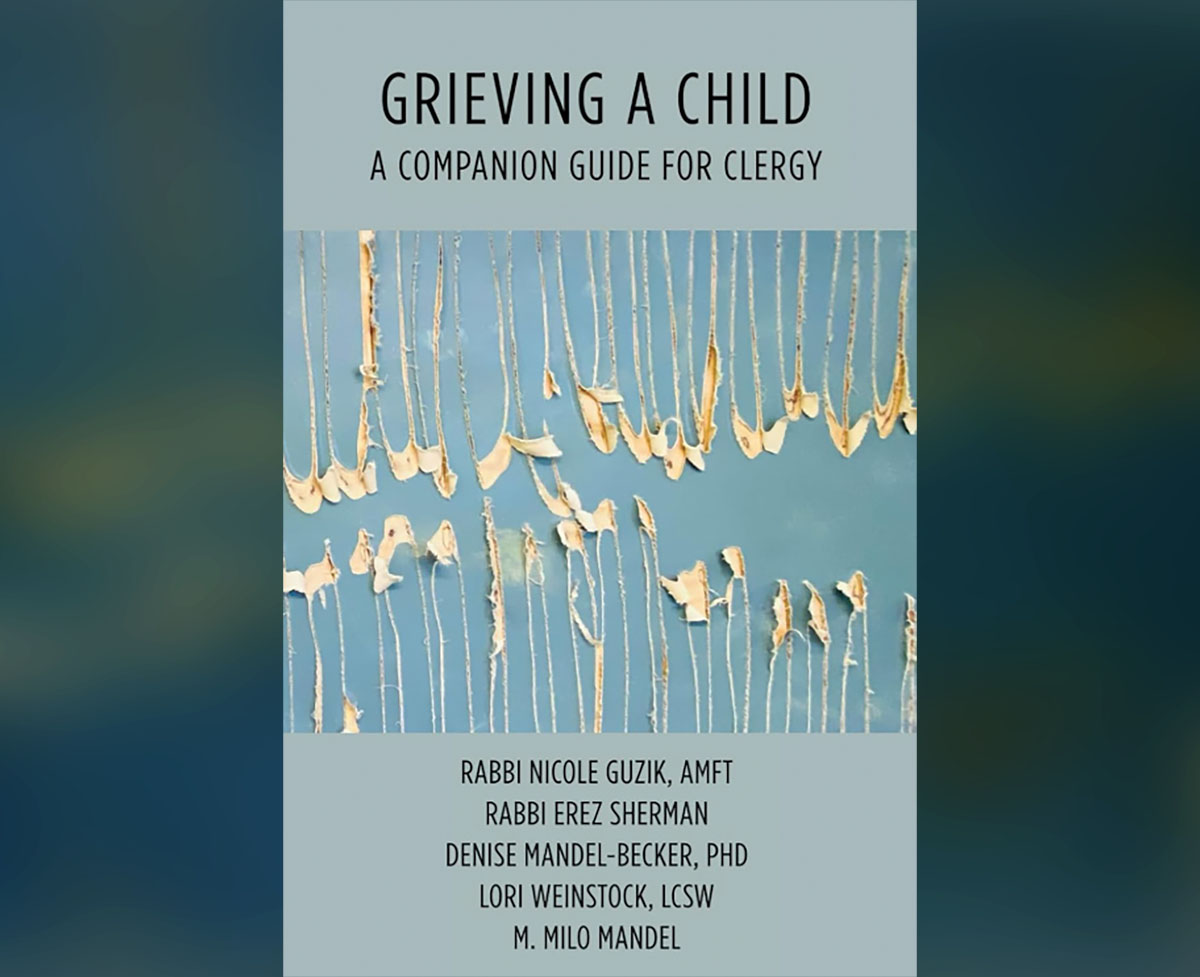
That need inspired the publication of “Grieving a Child: A Companion Guide for Clergy,” a new book co-authored by Sinai Temple Co-Senior Rabbis Nicole Guzik and Erez Sherman, along with clinical psychologist Denise Mandel-Becker, licensed clinical social worker Lori Weinstock and the late Milo Mandel. The guide, seven years in the making, combines pastoral wisdom, therapeutic insights, poetry and practical resources for clergy supporting bereaved families.
Available on Amazon, the volume may be the first comprehensive Jewish pastoral guide devoted specifically to helping clergy respond to the death of a child. Yet its authors say the lessons extend beyond rabbis to therapists, educators, community leaders and anyone struggling to support grieving parents.
“There is no greater responsibility than showing up for a family who has lost a child,” Guzik told The Journal. “This book brings a Jewish lens to grief, offering practical tools to anyone guiding a family through such a devastating moment.”
The origins of the project trace back more than two decades to a tragedy within one Los Angeles family.
In 2004, Denise Mandel-Becker’s son, Jared, died at a young age. The loss reverberated throughout the extended Mandel family and the broader Jewish community. Jared’s grandfather, Milo Mandel, observed that even experienced clergy — caring and deeply committed rabbis — often struggled to know how best to help parents facing such an unfathomable loss.
That realization stayed with him for years.
Eventually, Mandel approached Guzik and Sherman, who had developed a close relationship with the family through Sinai Temple, about creating a resource that could fill that gap. The result is a 213-page handbook that guides clergy through every stage of accompanying a grieving family: from the first phone call through funeral planning, shiva, anniversaries, birthdays and the long months and years that follow.
The book includes sample eulogies, prayers, ritual options, guidance for speaking with siblings, self-care tools for clergy and a section devoted to what to say — and what not to say — to grieving parents.
“We realized that clergy need not only words of comfort, but also clarity about what can unintentionally cause harm,” Guzik said. “People often say, ‘There are no words,’ but there are words that can help.”
For Sherman, the project grew out of a need he repeatedly witnessed among rabbis. Over the years, colleagues frequently turned to rabbinic listservs asking for guidance after a child in their congregation had died.
“We kept seeing rabbis say, ‘Does anyone have resources for this?’” Sherman said. “This is the resource we wish we had early in our rabbinates.”
The book intentionally bridges different Jewish traditions. While rooted in Jewish ritual and halachic practice, it offers multiple approaches so that clergy from Orthodox, Conservative, Reform and other backgrounds can adapt it to their communities.
Its format is also deliberate. Guzik noted that the book was designed to resemble the small manuals rabbis often carry for life-cycle events, allowing clergy to keep it close at hand before entering a hospital room, funeral chapel or shiva home.
The volume is distinguished not only by practical guidance but by its emotional depth. Interspersed throughout are poems written by Mandel-Becker, who said poetry became a way to express feelings that grieving parents often struggle to articulate.
In the book’s introduction, Guzik and Sherman write that no formal rabbinic training fully prepares clergy for “the raw, emotional pain a parent experiences when faced with the death of their child.” The guide, they write, is intended not as a rigid manual but as a companion — one that reminds clergy that they are not alone in the sacred task of supporting families during their darkest moments.
For Mandel-Becker, whose clinical practice focuses on grief and trauma, the project represents a larger philosophy: transforming pain into purpose.
“At the root of this project is my abiding love for and devotion to my beautiful and cherished Jared,” she writes. “May his light continue to shine and radiate out to all those this guide touches.”
There is another layer of meaning as well. Milo Mandel, whose vision launched the project, passed away shortly after the book’s publication. His family and co-authors describe him as the driving force behind bringing the guide into the world.
For the authors, that legacy embodies the book’s central message: that even in the face of unbearable loss, compassion, presence and community can help transform grief into an enduring act of care.
As clergy across faith traditions continue to accompany families through life’s most difficult moments, “Grieving a Child: A Companion Guide for Clergy” offers something many have long lacked — a map for walking alongside those whose worlds have been forever changed.