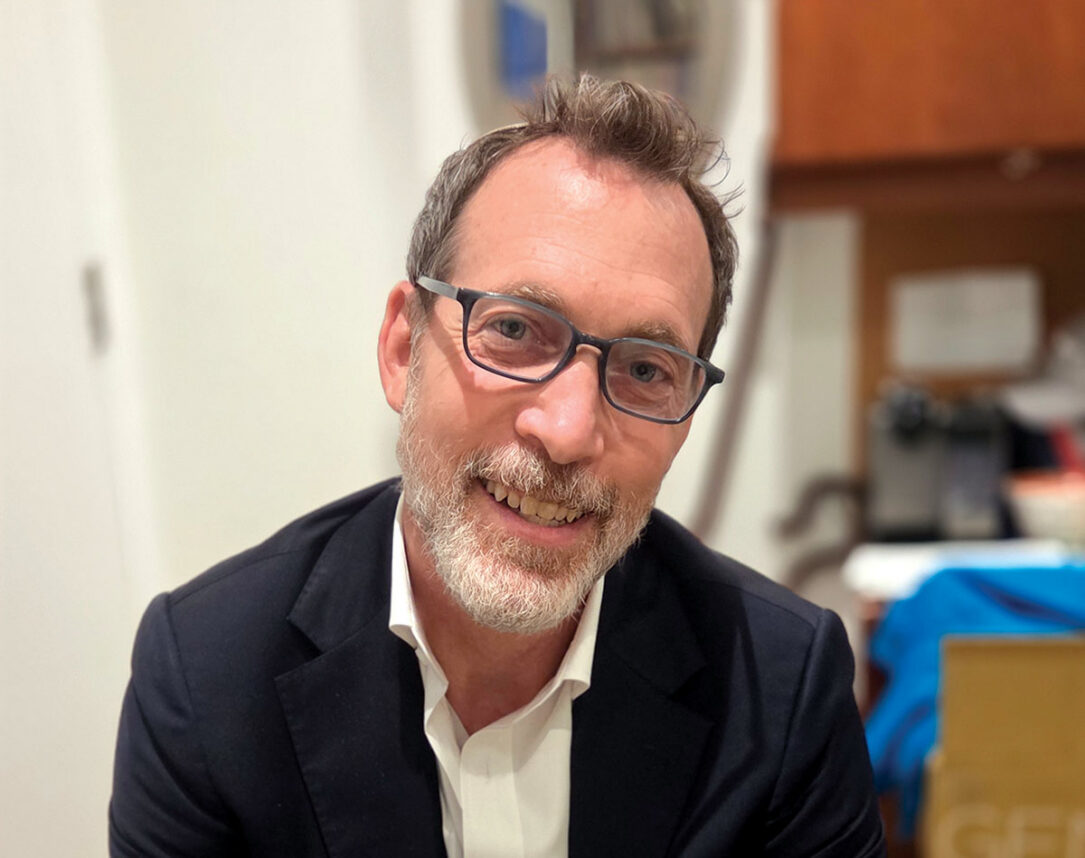
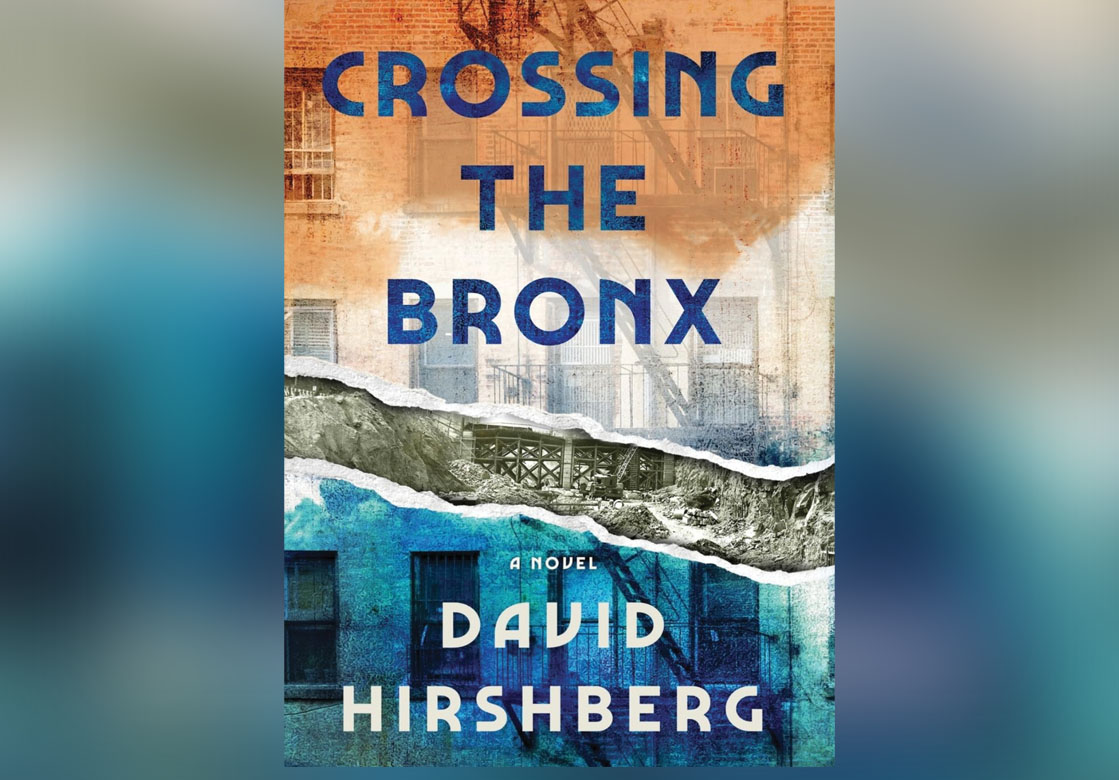
David Hirshberg never had a brother. His three sons do, and Hirshberg says all three are among each other’s best friends. For his latest novel, “Crossing the Bronx” (Fig Tree Books), Hirshberg went in the opposite direction: two brothers find themselves on opposing sides of a fight over the construction of the Cross Bronx Expressway.
“Crossing the Bronx” is Hirshberg’s third novel and the final book in his Mid-Century Trilogy, following “My Mother’s Son” (2018) and “Jacobo’s Rainbow” (2021).
The novel is set in 1952 and centers on Jay deVenezia, a 23-year-old, six-foot-five-inch Italian Jew from the Bronx, and his older brother, Eric “Bud” deVenezia. Eric is muscular, intimidating and at ease among the neighborhood toughs who surround their father, Ike. Jay works at a record store and is drawn more to books, music and Hebrew study.
Eric has followed Ike into the orbit of mob-connected businessmen in post-World War II New York. Jay finds himself fighting a proposed expressway route that threatens homes, stores and families along East 176th Street.
The book mixes fictional characters and a fictional corruption scheme with people from New York history, including Robert Moses and Mayor Robert Wagner. In the novel, Alberto “2-Cig” Giaquinto wants to acquire buildings along 176th Street before the expressway route becomes public, in a scheme to collect larger eminent-domain payments once the city takes the properties.
Jay falls in love with Francesca, whose family and neighbors face displacement. Jay, Francesca and Francesca’s brother Leo begin organizing opposition through the Fordham student newspaper and public protests.
Jay and Eric soon find themselves sparring over the development. One brother is moving closer to the people fighting the route. The other is moving through the world of people with something to gain from it.
Hirshberg, who attends Torah study, sees the brothers through the biblical account of Jacob and Esau. Before writing, he wondered whether the Jacob and Esau story had appeared in modern Jewish literature. Hirshberg said he could not find an example that fit what he had in mind. Despite being a New Yorker, neither of his first two books were set in his home town.
“I knew a lot about the construction of the Cross Bronx Expressway because it was, if you’re a New Yorker of a certain age, you know how it was one of the great tragedies in terms of destruction of a neighborhood,” David Hirshberg told The Journal. Hirshberg saw several pieces that could fit into the novel: Moses, Wagner, eminent domain, the Giants and Dodgers leaving New York and the power government could exercise over a neighborhood.
Readers in Los Angeles may recognize the broader debate over what happens when public projects collide with established communities. Look no further than the histories of Dodger Stadium and the 105 Freeway.
The brothers at the center of “Crossing the Bronx” brought the conversation back to Hirshberg’s own family. “So I don’t have a brother. So I always wanted a brother. As a little boy, that’s what you wanted. You want a brother to play with,” Hirshberg said. The parents in the book take their names from the biblical story—Ike (Isaac) and their mother Rebekah, the same name as the mother of Jacob and Esau. Rebekah in the book comes from a Mountain Jewish family from Azerbaijan.
Hirshberg grew up with an older sister. His three sons have the sibling relationship Hirshberg wanted as a child. He is now a grandfather of four—all grandsons.
“That’s one of the things about my boys because they had each other growing up and they still have each other now, which is really, really nice,” Hirshberg said. When asked whether he ever had considered what it would be like if his sons had a relationship like Jay and Eric, Hirshberg said the thought had not even occurred to him. He credits his wife, Anne, and the freedom they gave their children for helping their sons become close.
“My wife is an extraordinary mother. Just got to give her full credit. She’s an amazing mother and amazing parent, but she’s an amazing mother,” Hirshberg said, with Anne and their two dogs in the room during our interview.
He said his broad message to his sons was less about instructions and more about setting an example.
“A thing I would say to my kids is, ‘I’m not going to tell you what to do, but I want you to watch me,’” Hirshberg said. He said his sons saw how he approached work and parenting, and believes some of that rubbed off on them. He wants readers to see more than one story inside the novel. When it comes to the family story, Hirshberg said the word “Jewish” could be replaced with “immigrant.”
“I want people to understand that this book will be read on three different levels: the first is about American life through the Depression and World War II and the country that emerged after 1945,” Hirshberg said. The second concerns the fight between residents and people with political and business power. The third concerns how a Jewish family finds its way through dysfunction and conflict.
At one point in the book, Jay speaks with a rabbi who tells him, “In order for this to work out for both of you, there’s no going down memory lane to dredge up hurts, slights, and animosities to try to convince the other of his wrongs. As hard as it may seem, you need to divorce yourselves from your history.”
Jay then remembers the rabbi’s “most important teaching,” which may also be the broadest and most potent message of the book: “There can be no atonement without forgiveness, reparation, and repentance.”