fbpx

August 20, 2026

UroshPetrovic/Getty Images

When You Go Out To War — A poem for Parsha Ki Teitzei

Ki Teitzei — when you go out (Deuteronomy 21:10–25:19)

When you go out to war, be nice.
Be nice when you get to the war.
Be nice to the beautiful captives.
Be nice to the trees of your enemies.

When you go out to the war
dress warmly. It is cold at the war.
You don’t want your mother worrying
you’ll catch a cold at the war.

When you go out to the war
don’t forget to write your wives.
Even if you only love one of them.
They both want to hear from you.

When you go out to the war
food will be provided. Weaponry
will be provided. Human enemies
will be provided.

You will not be bored when
you go out to the war. It’s nonstop
war activities. All of this is in
the war brochure.

When you go out to the war
have your affairs in order.
As good as you are at doing war
the worst thing can happen.

When you go out to the war
try to make sense of it. But
not during it. That could affect
your success at the war.

Think about the sense of the war
later. Think about it at night between
the chapters of the war. Think about it
when you come home –

if you come home.


Rick Lupert, a poet, songleader and graphic designer, is the author of 30 books including “Begin the Beget” and “God Wrestler: A Poem for Every Torah Portion.” Visit him at www.JewishPoetry.net

When You Go Out To War — A poem for Parsha Ki Teitzei Read More »

“Jerusalemites”

I grew up in a house where all over the walls you’ll see close-up photos of people. Faces. Expressions. So the obvious question I would be asked, are these my relatives? The answer surprises people. No.

My father, a now retired doctor, and frequent published poet within the Jewish Journal, was a fearless photographer. He loved seeing interesting faces and going up to them to capture them on his Nikon (film) camera. The photos are each so full of life and history and yes, mystery.

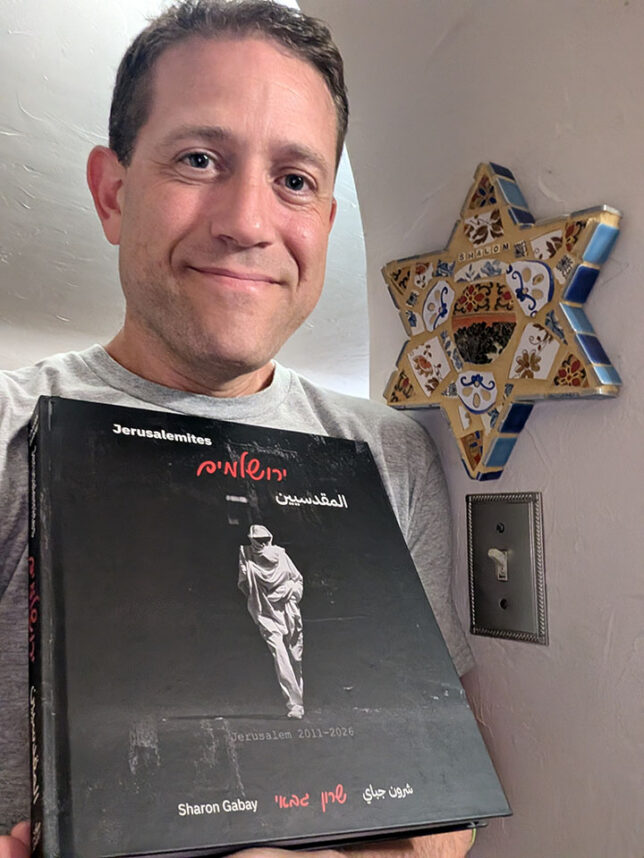
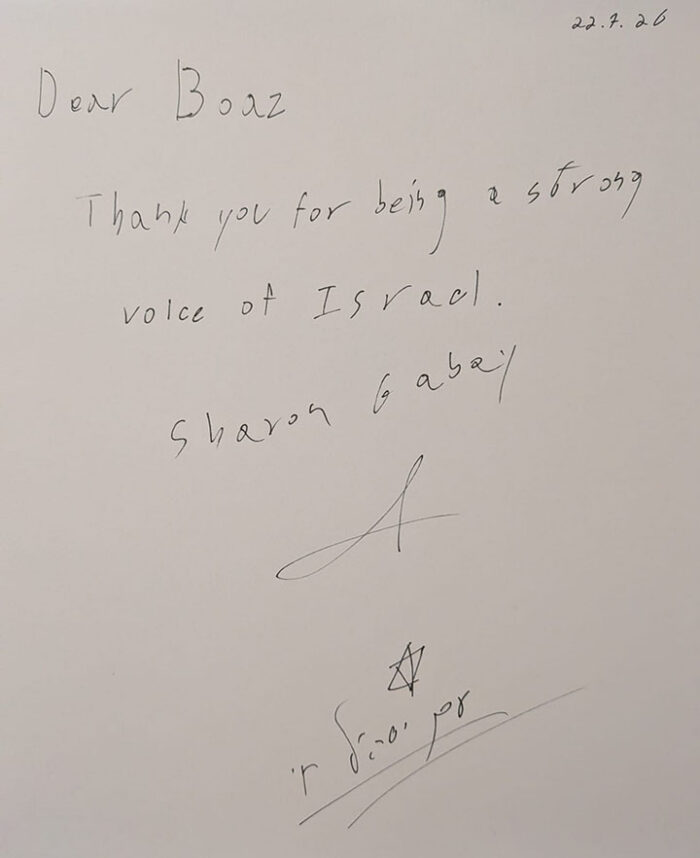
These feelings of nostalgia warmed my heart as I received this GORGEOUS present from acclaimed photographer Sharon Gabay. He recently published a beautiful coffee table book called “Jerusalemites.”

It’s an entirely TRILINGUAL book, demonstrating the 3 major immersive languages of Israel: Hebrew, Arabic and English.

As such you’ll notice something nifty in my closed captions of the video. And if you’re patient, you’ll see that none other than President Isaac Herzog met with Sharon and talked about the book! It’s a living history of all of the, yes, diverse lives of the land.

Beautiful. And important. Grateful appreciation to my friend Sharon. It’s an honor, and it feels like home. Buy it from his website: https://sharongabay.com/en/store

The Chosen Links by Boaz SPOTLIGHTS can be followed here:
https://www.instagram.com/chosenlinks.spotlight/


View this post on Instagram


A post shared by Boaz Hepner (@hepner.boaz)


Boaz Hepner works as a Registered Nurse in Saint John’s Health Center. He moonlights as a podcaster, leading a large, friendly, bipartisan gathering on Zoom, allowing everyone to speak freely, just as if they were at a Shabbat table. He is a Pico/Robertson native, where he has led an annual neighborhood cleanup since 2009. He enjoys spending time with his wife Adi and children Natalia and Liam, and pursuing his passions of movies, poker and traveling.

“Jerusalemites” Read More »

Did Josephus See Jesus as a Rebellious Son?

Texts by Pseudo-Josephus don’t prove
that Josephus was in any way aware of Jesus.

I do not argue with Josephan scholars who’ve
shredded the texts’ alleged authenticity to pieces,
but wish here to suggest that when Josephus mentions the prohibition
of hanging criminals posthumously, following their biblically authorized execution, this challenges doubt
on the authenticity of the so-called pseudo-Josephan texts regarding  Jesus, and make me wonder whether, by applying to Jesus rules that allegedly applied to Deuteronomy’s rebellious son, Josephus aimed to flout
halakhic permissibility of the Pilate-authorized crucifixion.


In
thetorah.com, Michael Avioz writes “The Law of the Disrespectful Son and Daughter.” 

He asks  whether Josephus identified Jesus as a rebellious son and discusses the law in Deut. 21:18-20:

Deut. 21:18: If a man has a wayward and defiant son, who does not heed his father or mother and does not obey them even after they discipline him, 21:19 his father and mother shall take hold of him and bring him out to the elders of his town at the public place of his community. 21:20 They shall say to the elders of his town, “This son of ours is disloyal and defiant; he does not heed us. He is a glutton and a drunkard.” 21:21 Thereupon the men of his town shall stone him to death. Thus you will sweep out evil from your midst: all Israel will hear and be afraid (NJPS).
Josephus adds this detail to his report of this law, emphasizing that the rebellious son should not be posthumously hanged, but should be buried:
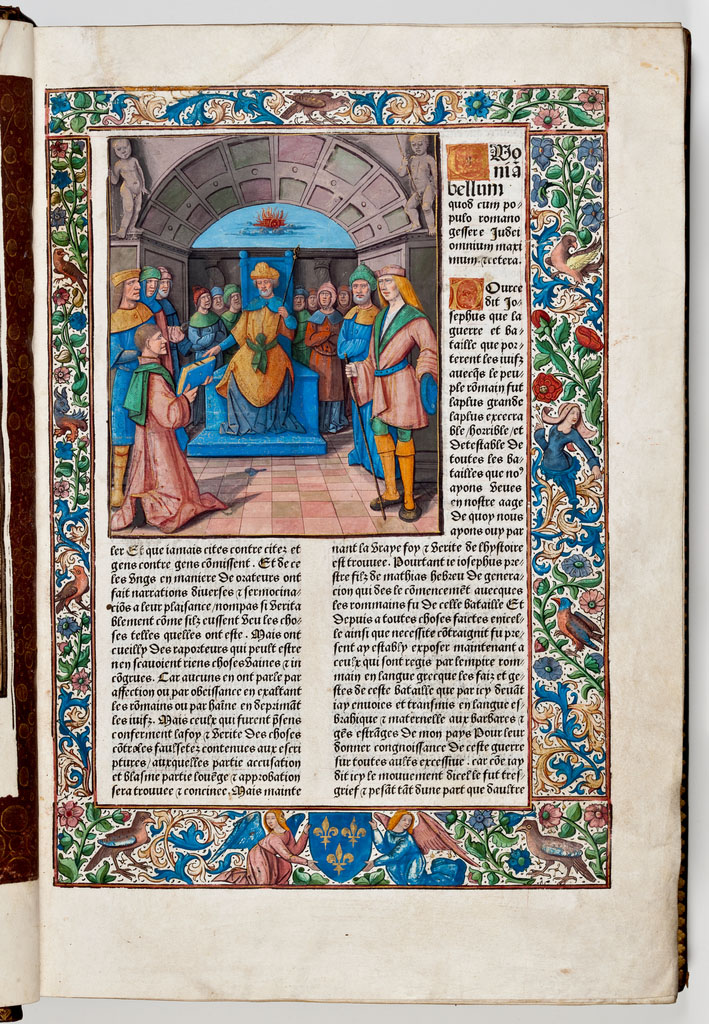
After remaining during the whole day in the sight of all, let him be buried at night. 265 Thus let those who in any way whatever have been condemned by the laws be put to death. But let even the enemy be buried, and let not even one corpse lie without a share in the earth, paying a penalty beyond what is just.

Avioz suggests that the reason Josephus adds his stipulation to the Deuteronomic law, is that the law of the rebellious son is followed by this one in Deut. 21:22-23:
דברים כא:כב וְכִֽי יִהְיֶ֣ה בְאִ֗ישׁ חֵ֛טְא מִשְׁפַּט מָ֖וֶת וְהוּמָ֑ת וְתָלִ֥יתָ אֹת֖וֹ עַלעֵֽץ: כא:כג לֹא תָלִ֨ין נִבְלָת֜וֹ עַל הָעֵ֗ץ כִּֽי קָב֤וֹר תִּקְבְּרֶ֙נּוּ֙ בַּיּ֣וֹם הַה֔וּא כִּֽיקִלְלַ֥ת אֱלֹהִ֖ים תָּל֑וּי וְלֹ֤א תְטַמֵּא֙ אֶת אַדְמָ֣תְךָ֔ אֲשֶׁר֙ יְהֹוָ֣ה אֱלֹהֶ֔יךָ נֹתֵ֥ןלְךָ֖ נַחֲלָֽה: Deut 21:22

 If a man is guilty of a capital offense and is put to death, and you impale him on a stake, 21:23 you must not let his corpse remain on the stake overnight, but must bury him the same day. For an impaled body is an affront to God: you shall not defile the land that Yhwh your God is giving you to possess.


Josephus links the law prohibiting the posthumous hanging of executed criminals to the hanging of any corpse, all the more so that of a rebellious son, stating that after all, even a convict should be buried immediately after his execution. Deuteronomy does not stipulate this detail in its account of the law of the rebellious son, only mentioning this after it has detailed the rest of the law.  In my poem I suggest that the reason for Josephus linking the two laws is that he identifies Jesus as an example ofDeuteronomy’s rebellious son, not necessarily expressing his objection to the condemnation of Jesus, but objecting to the hanging of his body during the crucifixion.


Gershon Hepner is a poet who has written over 25,000 poems on subjects ranging from music to literature, politics to Torah. He grew up in England and moved to Los Angeles in 1976. Using his varied interests and experiences, he has authored dozens of papers in medical and academic journals, and authored “Legal Friction: Law, Narrative, and Identity Politics in Biblical Israel.” He can be reached at gershonhepner@gmail.com.

Did Josephus See Jesus as a Rebellious Son? Read More »

A Moment in Time: Looking Back, Moving Forward

Dear all,

I so eagerly looked forward to my train journey across the United States. I imagined long stretches of time to read, write sermons for the Holy Days, and catch up on just about everything.

Instead, I found myself staring out the window, watching the wondrous, ever-changing landscape of our country.

My favorite place was the very back of the train, where I could see the tracks stretching behind me—the miles we had already traveled.

As we approach the final weeks of 5786, I found myself wondering: What if we looked at our year the same way?

Have I appreciated the journey?

Have I celebrated the stations along the way—the accomplishments, large and small?

Have I recognized where I have grown, and where I keep traveling the same stretch of track?

Have I nurtured the people who have shared this journey with me?

And at the junctions—those moments when I had to choose a direction—did I pause long enough to consider where I was headed?

The High Holy Days invite us to do something we rarely have the luxury to do:

Stop the train.

Look back.

And then, I walked to the front of the train and looked ahead at the tracks we had not yet traveled. The view was different. The window was a little blurrier. (Perhaps the path forward is never quite as clear.)

But the tracks were there.

And so were the possibilities.

As 5786 draws to a close, perhaps our task is not to know exactly where the tracks will take us, but to be more intentional about how we travel.

Because every year is a journey.

And every moment along the way is a potential moment in time.

With love and Shalom,

Rabbi Zachary R. Shapiro

A Moment in Time: Looking Back, Moving Forward Read More »

A Bisl Torah — Repairs Reopen

This summer, our son suffered an injury to his face. He is completely fine, thanks to his wonderful counselors, doctors, and especially due to his fantastic surgeon. Shout out to Dr. Applebaum.

We learned many lessons through the process, but one that stays with me—repairs might reopen.

We were warned that while he was heavily stitched to continue to exercise caution.

Because over a period of time, as the repair was fragile, reopening and dare I say, infection was more than possible.

But maybe stitches are easier to care for than relationships. Zach’s wound stayed closed, but think about the fragile relationships we encounter. We apologize, they apologize, and while we may think we’ve been given and gifted blank slates, history and hurt and memories of what they did and what you did try to infect the patches we have placed over our hearts.

Teshuvah means return but doesn’t necessarily mean a return to the very same place we started. Teshuvah might invite returning to different emotional beginnings with the same person over a long stretch of time. One day, things seem perfect. Another day, it feels like we’re walking on eggshells. The stitches aren’t always perfectly attached. This means, just like a surgeon, we must meticulously inspect the ties that hold us to our loved ones, over and over again.

Wounds reopen; repair is sometimes never really over.

This is why Rosh Hashana and Yom Kippur come back every year. To remind us—pour over your relationships. Reinforce the repairs. Check them again and then and check them once more; returning not to the very start of our relationships, but perhaps returning to a place of renewed respect, substantial growth, a deep sense of love.

Happy Elul and Shabbat Shalom


Rabbi Nicole Guzik is senior rabbi at Sinai Temple. She can be reached at her Facebook page at Rabbi Nicole Guzik or on Instagram @rabbiguzik. For more writings, visit Rabbi Guzik’s blog section from Sinai Temple’s website.

A Bisl Torah — Repairs Reopen Read More »

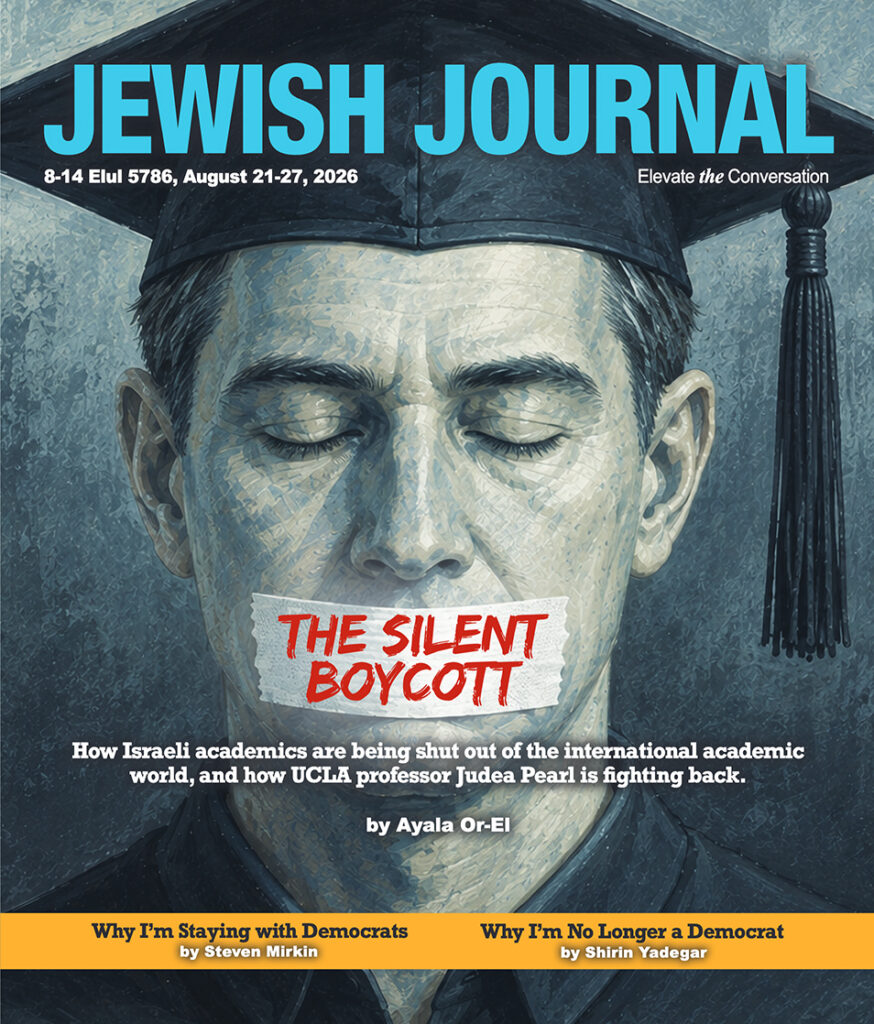
Print Issue: The Silent Boycott | August 21, 2026

CLICK HERE FOR FULLSCREEN VERSION

Print Issue: The Silent Boycott | August 21, 2026 Read More »

Jacob and Esau Clash on the Cross Bronx Expressway in New Book

David Hirshberg never had a brother. His three sons do, and Hirshberg says all three are among each other’s best friends. For his latest novel, “Crossing the Bronx” (Fig Tree Books), Hirshberg went in the opposite direction: two brothers find themselves on opposing sides of a fight over the construction of the Cross Bronx Expressway.

“Crossing the Bronx” is Hirshberg’s third novel and the final book in his Mid-Century Trilogy, following “My Mother’s Son” (2018) and “Jacobo’s Rainbow” (2021).

The novel is set in 1952 and centers on Jay deVenezia, a 23-year-old, six-foot-five-inch Italian Jew from the Bronx, and his older brother, Eric “Bud” deVenezia. Eric is muscular, intimidating and at ease among the neighborhood toughs who surround their father, Ike. Jay works at a record store and is drawn more to books, music and Hebrew study.

Eric has followed Ike into the orbit of mob-connected businessmen in post-World War II New York. Jay finds himself fighting a proposed expressway route that threatens homes, stores and families along East 176th Street.

The book mixes fictional characters and a fictional corruption scheme with people from New York history, including Robert Moses and Mayor Robert Wagner. In the novel, Alberto “2-Cig” Giaquinto wants to acquire buildings along 176th Street before the expressway route becomes public, in a scheme to collect larger eminent-domain payments once the city takes the properties.

Jay falls in love with Francesca, whose family and neighbors face displacement. Jay, Francesca and Francesca’s brother Leo begin organizing opposition through the Fordham student newspaper and public protests.

Jay and Eric soon find themselves sparring over the development. One brother is moving closer to the people fighting the route. The other is moving through the world of people with something to gain from it.

Hirshberg, who attends Torah study, sees the brothers through the biblical account of Jacob and Esau. Before writing, he wondered whether the Jacob and Esau story had appeared in modern Jewish literature. Hirshberg said he could not find an example that fit what he had in mind. Despite being a New Yorker, neither of his first two books were set in his home town. 

“I knew a lot about the construction of the Cross Bronx Expressway because it was, if you’re a New Yorker of a certain age, you know how it was one of the great tragedies in terms of destruction of a neighborhood,” David Hirshberg told The Journal. Hirshberg saw several pieces that could fit into the novel: Moses, Wagner, eminent domain, the Giants and Dodgers leaving New York and the power government could exercise over a neighborhood.

Readers in Los Angeles may recognize the broader debate over what happens when public projects collide with established communities. Look no further than the histories of Dodger Stadium and the 105 Freeway. 

The brothers at the center of “Crossing the Bronx” brought the conversation back to Hirshberg’s own family. “So I don’t have a brother. So I always wanted a brother. As a little boy, that’s what you wanted. You want a brother to play with,” Hirshberg said. The parents in the book take their names from the biblical story—Ike (Isaac) and their mother Rebekah, the same name as the mother of Jacob and Esau. Rebekah in the book comes from a Mountain Jewish family from Azerbaijan.

Hirshberg grew up with an older sister. His three sons have the sibling relationship Hirshberg wanted as a child. He is now a grandfather of four—all grandsons.

“That’s one of the things about my boys because they had each other growing up and they still have each other now, which is really, really nice,” Hirshberg said. When asked whether he ever had considered what it would be like if his sons had a relationship like Jay and Eric, Hirshberg said the thought had not even occurred to him. He credits his wife, Anne, and the freedom they gave their children for helping their sons become close.

“My wife is an extraordinary mother. Just got to give her full credit. She’s an amazing mother and amazing parent, but she’s an amazing mother,” Hirshberg said, with Anne and their two dogs in the room during our interview. 

He said his broad message to his sons was less about instructions and more about setting an example.

“A thing I would say to my kids is, ‘I’m not going to tell you what to do, but I want you to watch me,’” Hirshberg said. He said his sons saw how he approached work and parenting, and believes some of that rubbed off on them. He wants readers to see more than one story inside the novel. When it comes to the family story, Hirshberg said the word “Jewish” could be replaced with “immigrant.”

“I want people to understand that this book will be read on three different levels: the first is about American life through the Depression and World War II and the country that emerged after 1945,” Hirshberg said. The second concerns the fight between residents and people with political and business power. The third concerns how a Jewish family finds its way through dysfunction and conflict.

At one point in the book, Jay speaks with a rabbi who tells him, “In order for this to work out for both of you, there’s no going down memory lane to dredge up hurts, slights, and animosities to try to convince the other of his wrongs. As hard as it may seem, you need to divorce yourselves from your history.”

Jay then remembers the rabbi’s “most important teaching,” which may also be the broadest and most potent message of the book: “There can be no atonement without forgiveness, reparation, and repentance.”


Jacob and Esau Clash on the Cross Bronx Expressway in New Book Read More »

Israeli Rom-Com ‘Bloody Murray’ Balances Life and Art

While Hollywood has had a lull when it comes to rom-coms, Israel has a hit series about two women in their 30s looking for love in Tel Aviv. 

“Bloody Murray,” whose first season is available on ChaiFlicks, stars Naomi Levov as Mo, better known as Murray, and Rotem Sela as her best friend and roommate, Dana. They have to navigate a sticky situation: Murray gets into a traffic accident with Lior, a hot guy she’s attracted to, but he winds up sleeping with Dana.

“I had a good friend and first we were both single,” show creator Stav Idisis told The Journal. “Then I was dating someone and a man tried to start up with me, but I was dating someone. He began dating my friend and they got married. I got to know him and he was the perfect guy. So the idea of a love triangle was in my head. Eventually, I became single and I got to know the guy and he is perfect. So my biggest fear was to fall in love with my best friend’s husband.”

Of course, she says, the show is a comedy, so some events are exaggerated and not true to her life. But the emotions in the show ring true, because some are based on real life and reflect her struggles and feelings.

In the first season, Murray is dating a bartender, but pines for Lior. She thinks she would be a better match for him than Dana is. At one crucial point she uncovers a secret that could surely ruin Dana’s relationship and she has to make a crucial decision to be a snitch or a faithful friend.

“I would hope we could live in a good world,” Idisis said, knowing that many fans reacted to the character’s controversial decision. 

Idisis is a fan of “When Harry Met Sally,” and it influenced how she balanced comedy and heart in “Bloody Murray,” although it’s not always an easy recipe to perfect. “I can’t tell you how I did it, it came from my head,” she said. “I can’t write something cheesy without making it funny. If something is sad, I need to put a little joke at the end. I like that comedies also make us feel something in our hearts. It’s not only just for the laugh.”

She did not originally plan to have any big names in the show, but when she saw Sela, one of the most famous stars in Israel, she was worried. Sela did a great audition, she said, but she was afraid because “she is the biggest star in Israel and I thought maybe she was too pretty and I didn’t want it to be on a [TV] show. But I took the women who did the best auditions and Naomi and Rotem definitely had the best chemistry.”

Stav Idisis

The scene when Murray vomits into a fishtank, only for her boyfriend to care about the fish and not her, was made up. Writing is a lonely and difficult job and sometimes, the 20th idea is the right one. Things are changing in Israel, she said, and it’s less of a stigma for women to be single at a later age, though Idisis, a single mom, says that’s still not the most common thing. 

Idisis admits that while she knew the script was good and she was stoked when studios immediately agreed to take it, the success of the first season meant a second season was in order. “The audience loved it and there was pressure to do another season,” she said. “I was worried it wouldn’t be as good.”

That worry proved to be unfounded as the second season, which was seen in Israel last year, won numerous Television Academy Awards, including Best Comedy Drama Series, with Idisis taking the award as creator, while Levov and Sela won Best Actress in a Comedy Series and Best Supporting Actress in a Comedy Series.

Besides the great writing, the chemistry of the two leads is palpable, something Idisis said she immediately saw in the first audition.

So why did she name the show “Bloody Murray”? Murray is the name of a friend’s daughter. But more, Idisis is not impressed with how bartenders in Israel made a Bloody Mary. “In  Italy, they know what they are doing,” Idisis said. 

Like a good cocktail, “Bloody Murray” goes down with a kick that makes you want to have a second.

Israeli Rom-Com ‘Bloody Murray’ Balances Life and Art Read More »

Elon Gold’s ‘The Wedding Entertainer’ Up for Best Film at 2026 Ophir Awards

The Israeli film “The Wedding Entertainer (The Tale of Moishe Badhan),” starring Shuli Rand and Elon Gold, earned 12 nominations for the 2026 Ophir Awards, including Best Feature Film.

The Ophir Awards are Israel’s version of the Oscars. The nominations were announced Aug. 2.

In addition to Best Feature Film, “The Wedding Entertainer” received nominations for Best Actor for Rand, Best Supporting Actor for Tal Friedman, Best Supporting Actress for Malky Goldman, Best Screenplay for Rand and Best Cinematography for Giora Bejach.

The film also received six nominations in technical categories: Best Editing for Yosef Grinfeld and Amir Winkler, Best Sound Recording and Sound Design for Shahaf Wagshal and Ran Tzruya, Best Original Music for Assaf Talmudi, Best Art Direction for Shahar Bar-Adon, Best Costume Design for Carmel Meir and Best Makeup for Eti Ben-Nun.

Set in Jerusalem’s Hasidic wedding circuit, “The Wedding Entertainer” follows Moishe Striker, played by Rand. Moishe once received the top jobs as a badhan, a performer hired to entertain guests at Hasidic weddings. Years of alcoholism left him in serious financial trouble. He is now in desperate need of money to pay for the wedding of his daughter Surah Leah, played by Goldman.

Rand received nominations for Best Actor and Best Screenplay. In total, he has been nominated for seven Ophirs, including wins for Best Actor for “Life According to Agfa” in 1992 and “Ushpizin” in 2004.

Goldman received a Best Supporting Actress nomination for her role, her first Ophir nomination.

Gold received his first Ophir nomination as one of the film’s executive producers. Shlomo Boehm, Jonathan Gordon and Charles-Edouard Gros are also credited as executive producers. Chaya Amor, Aviv Ben Shlush, director Gidi Dar and Daniel Finkelman are the film’s producers.

Gold’s character, Meshulam, is a high-priced American-born badhan who has already secured the wedding booking Moishe hopes will help him pay for his daughter’s wedding and restore his career.

Tal Friedman plays Yisroel Bumchik, Moishe’s childhood friend. His Best Supporting Actor nomination is the third Ophir nomination of his career. His first two came in the Best Actor category for “Schwartz Dynasty” in 2004 and “Muchrachim Lehiyot Same’ach” in 2005.

Cinematographer Giora Bejach’s nomination for Best Cinematography is his 10th Ophir nomination. He has won the award four times: for “Lemarit Ain” in 2005, “Lebanon” in 2009, “Big Bad Wolves” in 2013 and “Foxtrot” in 2017. His other nominations came for “Giraffes” in 2001, “The Debt” in 2007, “Father’s Footsteps” in 2008, “This Is Sodom” in 2010 and “Flawless” in 2018.

“The Wedding Entertainer” reunites Dar and Rand, who worked together on “Ushpizin,” the 2004 drama set within Jerusalem’s ultra-Orthodox community. Dar did not receive a Best Director nomination for “The Wedding Entertainer.”

The film premiered at the Tribeca Festival in June. It screened at the San Francisco Jewish Film Festival in July, where it won the festival’s Narrative Audience Award.

The Ophir Awards ceremony will take place Sept. 9 at Cinema City Glilot, about five miles north of Tel Aviv.

Elon Gold’s ‘The Wedding Entertainer’ Up for Best Film at 2026 Ophir Awards Read More »

The Bad Data Behind the ‘Genocide’ Charge

If you’ve followed the international campaign to brand Israel as a criminal country over the past two years, you’ve likely encountered statistics. Some float through U.N. briefings, appear in medical journals and law reviews, and are cited by activists as proof that Israel has waged a systematic campaign against Palestinian hospitals and medical workers. Those numbers come from the World Health Organization’s database of “attacks on health care.” It is treated, almost universally, as recording verified facts. Not so.

We spent months examining that database and how it actually works. What we found should concern anyone who cares about integrity around these issues. The data underlying some of the most serious accusations Israel faces does not hold up to scrutiny. Almost no one knows this. Few have studied the WHO dataset before.

First, the WHO’s definition of “attack” bears little resemblance to what the term means under the actual laws of war. It includes verbal threats and what the WHO calls “psychological violence,” a category broad enough to include intimidation or embarrassment. It also includes arrests, detentions, and security searches. By the WHO’s own written methodology, a doctor delayed at an IDF checkpoint and arriving late to a shift can be logged as an “attack on health care.” An ambulance searched for smuggled weapons counts the same way, even though the Red Cross considers this practice lawful. And Israel has good reason to search ambulances, given Hamas’ documented history of using ambulances to move fighters and weapons.

This means that when government officials, U.N. rapporteurs, or news organizations cite “hundreds of WHO-verified attacks” in Gaza or the West Bank, they are citing a number that conflates real violence with routine security operations and administrative friction. Our analysis found that only about a quarter of logged events in Gaza, the West Bank, and East Jerusalem meet even a loose threshold for violence, and only 6% involve a fatality, among the lowest severity rates the WHO tracks in armed conflicts anywhere in the world. The aggregate figure, repeated without that context in nearly every WHO citation, tells a story the underlying data doesn’t support.

The second problem goes to the heart of how Israel’s military conduct in Gaza gets judged. International law is clear that a hospital forfeits its special protection the moment it’s used for military purposes, such as a command center, a weapons cache, or a tunnel network. This is settled law, not an Israeli talking point. When the IDF moved into Al-Shifa Hospital in November 2023, following extensive evidence that a command-and-control complex sat beneath it, it was acting on a legal basis international law has long recognized. Yet the WHO’s data appears to log the episode as more than a hundred separate “attacks,” with no methodology that accounts for, or even acknowledges, the loss of the hospital’s protected status. Every citation of that figure treats a military operation with a recognized legal basis as an atrocity statistic.

Then there is Al-Ahli Arab Hospital — the case that should trouble anyone who cares about how quickly false accusations take hold and how rarely they’re corrected. When the hospital was struck on October 17, 2023, reportedly killing and wounding hundreds, Israel was blamed instantly, everywhere. Days later, forensic evidence (including from Western intelligence services) traced the explosion to a Palestinian rocket that misfired on launch. The correction reached a fraction of the audience that the original accusation did. And the event remains logged today, permanently, as the single deadliest entry in the WHO’s entire global database — still cited by activists and U.N. officials as evidence of Israeli war crimes and even genocide, years after the evidence pointed elsewhere. The WHO’s system has no mechanism by which Israel, or any state, can formally contest a mistaken entry.

Who is actually filing these reports? In Gaza, the primary reporting channel is a health ministry that answers to Hamas, an organization with every incentive to document Israeli actions in granular detail and zero incentive to disclose its own use of hospitals and ambulances for military purposes. The database doesn’t account for that asymmetry, and neither do the international bodies that cite it. The result is a dataset structurally tilted before a single event is even logged, built on reporting from an organization that the United States, the European Union, and Israel all designate as a terrorist group.

These numbers are being fed into prosecution dossiers, U.N. Human Rights Council reports, and academic literature building the legal case against Israeli officials. Diaspora Jewish organizations fighting these accusations in op-eds, in Congress, and on campus are often arguing against a statistic their opponents treat as beyond dispute, with few people knowing how poorly it was assembled.

We are not arguing that no legitimate criticism of Israeli conduct exists, or that health care workers in conflict zones don’t deserve real protection — they do, and better data would serve that goal far better than what currently exists. But everyone has a direct stake in knowing that one of the most-cited evidentiary pillars in the international campaign against Israel is far shakier than its footnotes suggest. They should demand that the WHO fix its methodology by adopting clearer definitions, independent verification, and a right of reply for accused states. The WHO should act like the credible institution it claims to be, especially when the cost of its sloppiness falls so heavily, and undermines the entire credibility of its database on attacks on healthcare. 


Leslie Johns is a professor of political science and law at UCLA. Gregory Rose is a professor of law at the University of Wollongong. They are the authors of a report on the WHO’s health care attack data published by the Henry Jackson Society and The Hague Initiative for International Cooperation.

The Bad Data Behind the ‘Genocide’ Charge Read More »