In this, the season of our renewal, I am proposing a transformational agenda for our Los Angeles Jewish community. While not lacking in institutions, money, talent or ideas, our community is missing connective tissue: regional coordination, durable relationships across difference and mechanisms that could turn our individual concerns into collective action.
Greater Los Angeles shares some of these same challenges, therefore making our Jewish community a laboratory for rebuilding the City of Los Angeles!
The aim should not be restoring an earlier format of Jewish life. Much of the “traditional” Jewish communal order was exclusionary, environmentally unsustainable and institutionally fragmented. A more effective and necessary objective will be in restoring our community’s capacity for common action.
Beginning with resources: I am suggesting that we audit land and resources owned by synagogues, schools, social-service agencies, camps and communal organizations, identifying parking lots, excess buildings and underused parcels that could support affordable or workforce housing, childcare, safe parking, new initiatives or supportive services.
Are we able to turn Jewish facilities into year-round resilience hubs with solar power, emergency supplies, trained volunteers and multilingual neighborhood contact systems, serving both our communal needs and those of our city?
Jewish L.A. is enormous but decentralized as confirmed by the 2021 community study. Among the important conclusions involved low synagogue membership and organization affiliation patterns. This however does not imply Jewish indifference. Younger Jews, according to this study, frequently connect through conversation, culture, media, friendship, Shabbat and informal activity.Therefore, “connecting the infrastructure” suggests something far more inclusive. We must make the whole ecosystem navigable and give people multiple doors through which to belong and connect, especially at a moment when many in our community are feeling vulnerable, isolated, and in need of Jewish entry points.
I would create an independent coordinating organization provisionally called Jewish L.A. Commons. Federation could incubate this organizing effort, but no single institution should own or control it. It would have six integrated components:
Neighborhood Tables: Create “tables” involving approximately 10–12 geographic areas. Each would include congregations, schools, camps, service providers, cultural groups, young adults and residents who hold no membership. Each table would employ or share a trained community organizer. Its first assignment would be hundreds of one-to-one conversations — building interpersonal and institutional connections while promoting trust.
A Common Digital Platform: Such a structure would establish a shared calendar with geographic and accessibility filters; a service and referral directory; volunteer and mutual-aid matching; space and transportation sharing; a community skills registry; and an emergency communications network.
A Jewish Service Passport: A person could participate through any entry point — camp, preschool, film festival, food pantry, synagogue, volunteer project or cultural event — and, with consent, receive personally relevant invitations elsewhere. Instead of asking, “Are you a member?” ask, “What is your next meaningful Jewish connection?”
Shared Operations Program: Institutions could pool functions that do not define their mission but support their infrastructure. At a time of such spiraling costs, it would be expedient for creating a joint purchasing and insurance service, cybersecurity and safety training; substitute teachers and specialized educators; facilities and energy management; and grant writing and evaluation. These collaborations can save money, but more importantly they create habits of trust.
A Civic Assembly: Hold an annual representative assembly selected partly through institutions and through public engagement. Serving as a type of Jewish congress, this body could legislate communal priorities. Among the features of this new organizing body would involve the appointment of a professional staff, the introduction of lay leadership training initiative, the promotion of a community listening campaign, and the release of community studies.
A Microgrant and Experimentation Fund: Offer rapid grants of perhaps $2,500–$25,000 for collaborations involving at least two institutions or one institution and an informal resident group. Favor experiments that can be replicated across neighborhoods.
In building this new community platform, six organizing activities might enhance community connection and involvement:
• Civic Shabbat: hundreds of simultaneous home and institutional dinners focused on one L.A. question, followed by neighborhood action, creating the mantra: ONE JEWISH L.A.!
• Institutional Facilities Collaborative: technical and financial assistance enabling nonprofits and congregations to develop new uses for their property.
• One Communal Benefits Card: reciprocal access to selected JCC, cultural, camp, adult-learning and synagogue offerings.
• Jewish L.A. Year of Service: paid placements for young adults and retirees in Jewish and non-Jewish neighborhoods.
• Affordability Compact: coordinated scholarships, transparent aid applications and shared transportation for those who are financially insecure.
• Pluralism Covenant: An agreed set of practices for handling Israel, denominational, partisan and identity conflicts without demanding consensus.
There are other community ventures worthy of study, including ONE L.A., L.A. Voice and JOIN for Justice, as other Los Angeles-based organizing models. Within the broader Jewish world, Moise House, Limmud, Jewish Emergent Network and within Israel, BINA’s neighborhood operations. Ireland promotes “Citizens Assemblies” worthy of exploration.
Among the actionable outcomes, give individuals and families and communities of activists’ actual authority over a defined problem or provide a defined pool of communal funds to experiment with a possible new organizing project.
Evaluating Impact: Measures of success should include new relationships, leaders developed, cross-institutional participation, geographic reach, service referrals completed, collaborative dollars deployed and tangible civic wins.
Transformation of how we think about and participate in community will involve connection, belonging, leadership, collective power and public accomplishment
If Jewish L.A. can link its extraordinary institutional wealth to neighborhood relationships and disciplined civic action, it can offer the larger city something more valuable than another policy agenda: a working demonstration that fragmented Los Angeles can become governable through innovative organizing and planning.
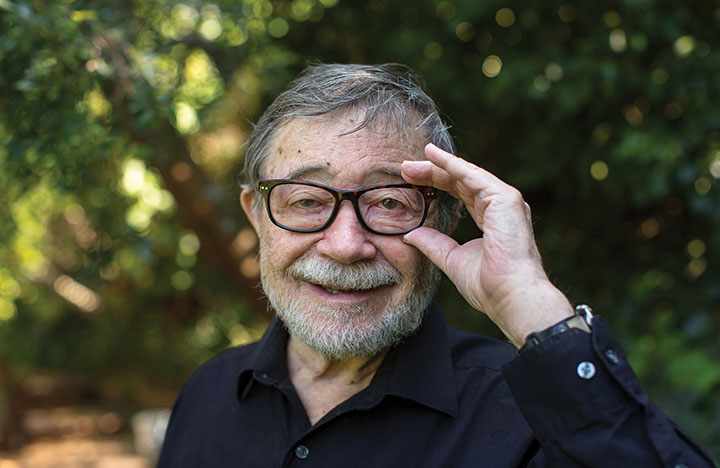
Steven Windmueller is an Emeritus Professor of Jewish Communal Studies at the Jack H. Skirball Campus of HUC in Los Angeles. His writings can be found on his website, www.thewindreport.com
As newlyweds, Neil and I decided to travel and just enjoy our first year of marriage. We put off starting a family, not realizing that it’s not really in our power to decide when we will be blessed with a baby.
After six months of trying to become pregnant, I felt that something wasn’t right. We needed professional help. While we were struggling to conceive, well-meaning friends and acquaintances would ask when we would be having a baby. A painful stab in my heart.
When a specialist put me on a treatment that made me gain weight, people began assuming that I was already pregnant. Another stab in my heart.
Even Neil was tested and prescribed medications. We were both doing everything humanly possible, but still no baby.
On December 30, Sharon gave birth to Ariel and the hospital released her the same day. That night, I went to visit her. After we cooed over the baby, she got straight to the point and told me that I needed to see her family’s trusted acupuncturist.
A week later, she gave me the honor of holding Ariel before his Brit Milah (ritual circumcision). A segulah (sign) for divine blessing.
I made an appointment with Trinh Le, a very petite Vietnamese lady with a huge attitude. A Buddhist monk, she had very strong ideas about what to do for health and pregnancy. She put me on a very strict regimen which included acupuncture treatments three times a week, drinking hot chicken broth three times a day and wearing socks at all times. I was forbidden from eating eggs, tomatoes, eggplant and potatoes.
Sure enough, I became pregnant and my tears were now happy tears. Our son Sammy was born a year after I held Ariel at his Brit milah.
For two years, I had cried and prayed. I felt the despair and loneliness. If only I had had an organization like Yesh Tikva to support me through my infertility journey.
(Ironically, Sharon suffered through secondary infertility before having her daughters.)
Part of the beauty of the Jewish religion is the emphasis on family and children, but that must make it even more stressful for those in the community who struggle with infertility.
That is why Sharon and I are so grateful to have the opportunity to support Yesh Tikva. We have helped lead their Rosh Hashana challah bakes for the last four years. It is so exciting to see the strength of the women who join together to create community and bracha (blessing) for others.
This year, we are so happy to be part of a Rosh Hashana cooking demonstration, where we cook some of our favorite recipes and share our family traditions.
—Rachel
The biggest blessing in life is the ability to share good fortune. I try to live life with an attitude of abundance and immense gratitude. (Thank you Hashem and thank you Alan!)
I’m also very grateful that Rachel, who has a full time job and is a very busy grandmother, indulges me in taking on cooking demos for causes dear to our hearts, like Yesh Tikva and Sharsheret.
For our Yesh Tikva event on September 1, we are very excited to share the beauty of the Sephardic Rosh Hashana Seder, with its unique blessings and special simanim.
We all know about the head of the fish, that we should be the head and not the tail. That we should be full of mitzvot as the pomegranate is full of mitzvot.
While the Ashkenazi custom is to eat apples dipped in honey for a sweet new year, Sephardim eat a jam made of quince or apples.
The siman, sign, that we share with you this week is leek, ca’rt. In a play on words, the sages of the Babylonian Talmud designated leek as the food to symbolize the blessing “yi’kartu”— may our enemies be cut off.
Interestingly, my Babylonian family tradition is to just take a piece of leek and shred it to pieces. For many Sephardic families, including Rachel’s, they make keftes de prasa (potato leek patties).
Inspired by these leek patties, we decided to bake mini potato leek burekas. Deliciously flaky and crispy with a satisfying creamy filling, these burekas are really easy to prepare. They’re perfect for making ahead and reheating and an elegant, meaningful appetizer for your Rosh Hashana table.
—Sharon
Join us on Tuesday, September 1, 7pm for an evening with the Sephardic Spice Girls, Sweet and Salty Simanim, A Pre- Rosh Hashanah Cooking Demo, Tickets: Yeshtikva.org
Leek and Potato Burekas
1 17oz package frozen puff pastry
1/4 cup extra virgin olive oil
4 leeks, pale green and white parts only, thinly sliced
4 large Yukon Gold potatoes, peeled and chopped in a large dice
1 large egg
1 tsp granulated garlic powder
1/2 tsp nutmeg
1/2 tsp finely ground black pepper
2 tsp kosher salt, divided
1 egg, beaten for egg wash
2 tbsp sesame seeds
Thaw the puff pastry in the refrigerator. Ensure the pastry is very cold in the refrigerator until ready to form the burekas.
In a skillet, warm the olive oil over medium heat and add the leeks and sauté for a few minutes. Lower heat and leave to caramelize, stirring occasionally, about 15 minutes.
Place the potatoes in a large pot with enough water to cover the potatoes. Bring to a boil and add 1 teaspoon of kosher salt to the pot. Lower heat and allow potatoes to simmer until they are very soft, about 15 minutes. Drain the potatoes, then transfer to a large bowl. Mash the potatoes using a masher. Add the leeks, egg and garlic and combine until the potatoes are creamy. Taste the mixture and add a pinch more salt, if necessary.
Preheat the oven to 400°F.
Lightly roll out the puff pastry onto a floured surface to create a slightly larger rectangle. Cut the pastry into 12 squares. Fill each square with a generous tablespoon of the mashed potato filling. Brush two of the four edges with the beaten egg. Fold the pastry in half, creating a triangle shaped pocket. Use a fork to crimp the edges closed. Brush the top of each bureka with egg, then sprinkle generously with sesame seeds.
Bake for 15 to 20 minutes, until golden brown.
Sharon Gomperts and Rachel Emquies Sheff have been friends since high school. Their cooking and storytelling project has grown into a devoted following on Instagram @sephardicspicegirls and on Facebook at Sephardic Spice SEC Food. Website sephardicspicegirls.com/full-recipes.
Register to join them at their Sweet & Salty Simanim cooking demo for @yesh_tikva.org, September 1, 2026 7pm-9pm
One verse, five voices. Edited by Nina Litvak and Salvador Litvak, the Accidental Talmudist
You shall not see your brother’s ox or sheep straying, and ignore them. Rather, you shall return them to your brother.
– Deuteronomy 22:1
Rabbi Nicole Guzik
Sinai Temple
While the Torah may be referring to any Israelite’s lost ox or sheep, opening up the conversation about returning lost objects, let’s linger over the word “achicha” — your brother. When a brother or sister loses something, the nature of our relationship may make us more or less inclined to help. Sibling resentment may inhibit the seemingly easy task of returning what is theirs. What if the Torah is demanding equal attention and care to each of our siblings, be it physically returning a lost object or emotionally offering compassion and love even when it’s really hard?
Chizkuni, a 13th-century commentator, teaches that we must not pretend we cannot see the other person’s struggle. In the verse itself, an ox or sheep is just too large to ignore. Likewise, we cannot claim we haven’t seen what hurts our siblings. No matter the complications within the relationship, we are not meant to ignore each other’s suffering, whether in personal or professional struggles, through heartbreak, sorrow and pain.
Childhood rivalries often transform into what feels like irreparable damage to the soul. But the Torah brings us closer, not allowing grudges to block access to return and to repair. By recognizing what may have been lost over time, brothers and sisters may begin to find their way back to one another.
Rabbi Shmuel Reichman
Bestselling Author and Business Coach
Rabbi Akiva famously stated, “V’ahavta l’reiacha kamocha, zeh klal gadol b’Torah” – “Love your friend as you love yourself, this is a foundational principle in the Torah.” And yet, shockingly, this seems to completely contradict another well-known statement made by Rabbi Akiva, found in the following case:
The Jewish Sages discuss the case of two men stranded in a desert with a single flask of water between them, belonging to one of the two men. If the owner of the flask drinks the water, he can survive long enough to make it safely back to civilization. If the men split the water, they will both die. Rabbi Akiva famously stated “chayecha kodmin” – “your life comes first”; therefore, the owner of the water must save his own life at the expense of his friend’s. If this represents Rabbi Akiva’s view, doesn’t it contradict the principle of loving your friend as yourself?
The answer, however, is quite profound. Putting your life first isn’t a contradiction to “v’ahavta l’rei’acha kamocha”; it’s a prerequisite for its ideal fulfilment. Only if you first invest in yourself can you then expand outwards and give to others. Only once you embrace your true “self” and discover your potential can you truly fall in love with yourself; and it is only after you love yourself that you can then expand outwards and love someone else. Thus, investing in yourself is the most selfless form of selfishness, as it becomes the very foundation and prerequisite for giving to others.
Rabbi Michael Barclay
Temple Ner Simcha; The Rabbi’s Table Radio & Podcast
Given that most of us don’t own oxen or sheep, it might seem as though this verse has no meaning in our modern lives. But the truth is the exact opposite, and this teaching is an important and a powerful statement about Jewish values.
The obvious teaching is that we should take care of others; the exact opposite of “I am not my brother’s keeper.” For in fact, this verse reminds us that we are commanded to take care of others. We must do what is required, but we are also to live in a way “lifnei m’shoret ha’din”; “before the line of the law.” We all know people who follow the law strictly, but are jerks. Going beyond what is legally required is an ethical foundation stone of Judaism.
My friend and teacher Rabbi Elijah Schochet of blessed memory used to tell a story from his childhood. He was walking with his grandfather (it might have been his father), when his grandfather suddenly slowed him down. When they got home, his grandfather asked him if he knew why they had slowed down? He explained to the young Elijah that in front of them, an old man was walking slowly; and they did not need to rush past the man and make him feel even older. It wasn’t required, but it was being a mensch. This is lifnei m’shoret ha’din. This is taking care of our brother’s oxen. And this is what can bring peace to the world one small action at a time.
Gavriel Sanders
Spokesman – Be A Mensch Foundation
The Torah commands us to return a lost animal to its owner. But tucked inside this practical mitzvah is a striking phrase: “You shall not…ignore them.” In Hebrew, “lo tuchal l’hitalem” carries an even sharper meaning: you may not hide yourself. You may not see something that requires your attention and then conveniently behave as though you never saw it.
That changes the mitzvah. A wandering sheep may not be my problem when I wake up in the morning. But once it crosses my path, the Torah says I cannot simply step around it. Someone else has suffered a loss. I am close enough to help. And now, whether I particularly wanted it or not, I have acquired a measure of responsibility.
Notice also whose sheep it is: “your brother’s.” The Torah transforms an anonymous inconvenience into a relationship. This doesn’t belong to some faceless stranger. Something belonging to another member of the human family has gone astray, and I have encountered it.
We live in an age when we see more human need than any generation before us. Our screens can show us a thousand problems before breakfast. Obviously, we can’t repair everything we see. But perhaps that makes this mitzvah more important. The question isn’t, “Can I fix the world?” The question is: What has crossed my path? What is close enough for me to actually do something about? Sometimes the great moral test isn’t what we see. It’s whether, after seeing it, we choose to look away.
Rabbi Hillary Chorny
Cantor/Temple Beth Am, Los Angeles
I don’t carry cash anymore; I don’t think most people do. That’s why I find it remarkable that we have a cash-only tzedakah box at our daily minyan. Dozens of congregants line up to deposit their contribution at the appointed time in the service. Those people were mindful to keep cash on their person so they could perform a charitable act, and many of them take the time to bring smaller bills so they don’t hold up the line while they make change. It’s a mitzvah that takes place in two stages: the planning, and the giving. In Parshat Ki Tetzei, we learn about an unplanned mitzvah: returning a lost object to its owner (Deut. 22:1). In BT Kiddushin 34a, this mitzvah is listed as a quintessential example of a mitzvah that is not time-bound. So much of life as a Torah-informed Jew takes painstaking planning: from registering now for next year’s summer camp to scheduling a meat meal around the next time you want to eat ice cream. But some of the most impactful mitzvot are surprises, like stumbling upon the opportunity to return a lost object. The very people who make sure they have cash for the tzedakah box are the ones who will have cash at the ready when they cross paths with someone on the corner in need of a meal. Being prepared for mitzvot means being prepared for the unprepared — the kind of mitzvot that don’t come around often and tend to come with a great story.
While the world has become increasingly familiar with the Boycott, Divestment, Sanctions (BDS) movement targeting Israel — from calls to stop buying Israeli products, pressure on companies to cut ties with Israel, or campaigns urging musicians and artists not to perform in the country — another form of boycott is taking place largely out of public view: the academic boycott of Israelis.
Much of the academic boycott happens quietly: an invitation is withdrawn, a name disappears from a conference program, a research collaboration is suspended, a lecture is canceled or an Israeli researcher is excluded from an international project.
There is no reliable way to know how many lectures Israeli academics were never invited to give, how many collaborations never materialized, how many papers or projects were lost, or how many young researchers missed opportunities because their Israeli affiliation became a liability.
But the numbers that can be measured are striking, according to a recent report by the Israeli Association of University Heads, or, Va’ad Rashei HaUniversita’ot, known by its Hebrew acronym, VERA, which monitors academic boycotts against Israel. Its latest report found that the campaign has continued, including a dramatic increase in efforts to exclude Israel from Horizon Europe, the European Union’s flagship research and innovation program.
The impact can also be seen in Israel’s participation in the program. Israeli researchers received 5.4% of Horizon Europe grants in 2022. By 2025, their share had fallen to 2.5%, a decline of more than half. At the same time, VERA reported a 150% increase in efforts to exclude Israel from Horizon Europe, with nearly a quarter of recent academic-boycott reports involving the program.
The numbers tell only part of the story. A grant lost can be counted. A canceled lecture can sometimes be documented. But there is no statistic for the Israeli scientist who stopped applying to a European conference because colleagues warned that Israelis were no longer welcome, or the researcher who never received an invitation in the first place. The most consequential part of the boycott may therefore be the part that never appears in a report.
For Israeli scientists, professors and researchers, the message can be delivered without an official declaration of boycott: their nationality can suddenly become relevant to whether they are invited, published, funded or welcomed into an international academic community. In some cases, the discrimination is explicit. In others, it is hidden behind concerns about protests, institutional policy or “security.” Either way, the result can be professional isolation — not because of the quality of their research, but because they are Israeli.
For Israeli scientists, professors and researchers, the message can be delivered without an official declaration of boycott: their nationality can suddenly become relevant to whether they are invited, published, funded or welcomed into an international academic community.
The academic boycott of Israel did not begin after Hamas’ attack on Israel. Its roots in Europe go back more than two decades. The first major coordinated effort emerged in 2002, when British academics Steven and Hilary Rose published an open letter in The Guardian calling for a moratorium on European cultural and research ties with Israel. They argued that Israel’s access to European Union research funding should be suspended until its government complied with U.N. resolutions and resumed serious peace negotiations. The campaign attracted several hundred signatures and was followed by controversial actions, including the removal of two Israeli academics from the editorial boards of journals at the University of Manchester Institute of Science and Technology, prompting an institutional inquiry.
Similar initiatives emerged in France that year, including a proposal at the Pierre and Marie Curie campus of Paris 6 (now part of Sorbonne University) opposing the renewal of the EU-Israel association agreement, though it was withdrawn following strong political and public opposition. Over the following years, boycott efforts were often less visible, with individual academics declining to collaborate with or review the work of Israeli researchers. The Palestinian Campaign for the Academic and Cultural Boycott of Israel (PACBI), established in 2004, subsequently developed guidelines calling for boycotts of Israeli academic institutions it viewed as complicit in violations of Palestinian rights. The events of Oct. 7, 2023, and the war that followed, marked a significant escalation, rather than the beginning, of the movement.
Professor Roni Stern, a computer scientist at Ben-Gurion University of the Negev, encountered this climate firsthand when he was invited to speak at an AI conference in Bologna, Italy. But after a post appeared on social media announcing plans to disrupt the Israeli speaker, the organizers contacted Stern and told him they would need to remove his name from the website to avoid interference.
Stern reluctantly agreed. But the organizers called him again.
“This time they said that after deliberating about the issue they decided not to invite me because they are afraid of disruptions,” Stern said in a phone interview with The Journal.
He contacted the head of the conference and asked whether it was a policy not to invite Israeli speakers. “He said no, but they don’t want the event to be ruined because of one lecturer and asked if I had a solution to the problem,” Stern recalled.
Stern, hurt by the decision, told several senior researchers what had happened. They, in turn, let the organizers know how upset they were about the decision. One of them, a senior Jewish researcher, decided to take a stand. “She said, ‘If you’re not going, I’m not going either,’” Stern recalled.
The pressure apparently worked. The organizers ultimately reversed their decision and agreed to let Stern attend and give his lecture, but with one condition: his participation would not be publicly advertised in advance. His name would not appear on the conference website or in the official program. They agreed to post his lecture online only after it had taken place.
The organizers also took security precautions, including police presence, undercover officers and security dogs.
Stern believes that what happened to him may reflect a broader phenomenon affecting Israeli academics. “I think quite a few Israeli lecturers probably have a story or two similar to mine,” he said, noting that he has already heard similar accounts from several colleagues.
Stern said he can understand, at least from the perspective of the institutions involved, why an Israeli academic might be perceived as a potential problem. If someone is organizing a conference, he said, they may think: Why invite an Israeli and risk protests, disruptions or controversy when there are plenty of qualified researchers from other countries who would not create the same concerns? In that calculation, choosing another scholar may seem like the easier and safer option.
It is precisely this kind of thinking, Stern believes, that could make the consequences of the academic boycott extend beyond individual conferences. Israeli academics routinely leave the country for two or three years of postdoctoral research, and later seek academic positions, visiting appointments and sabbaticals abroad. Stern suspects that these opportunities may already be becoming more difficult for Israelis to obtain.
The result is a form of exclusion that can be difficult to identify without an explicit declaration of a boycott. If institutions simply choose another researcher to avoid potential backlash, the outcome may be the same while leaving no clear evidence that the decision was motivated by the scholar’s Israeli identity.
The pressure on Israeli academics does not stop at invitations, positions or research opportunities. In some cases, even the work itself can come under scrutiny in ways that explicitly invoke the researcher’s Israeli identity. That was the experience of 37-year-old Israeli economist and researcher Rotem Zelingher.
Zelingher’s research on food insecurity and food prices in Gaza and the West Bank became the subject of an ethics complaint at the International Institute for Applied Systems Analysis (IIASA), one of Austria’s leading research institutions.
Zelingher examined food-price trends in Gaza and the West Bank, including the period before the war. Shortly after the policy brief was published, a group of IIASA researchers filed a complaint with the institute’s ethics committee, questioning Zelingher’s independence and suggesting that her Israeli nationality was relevant to assessing the credibility of her work. The complaint pointed specifically to statements in the paper about Hamas and the misuse of aid, arguing that claims made by an Israeli researcher needed to be scrutinized for possible political bias. It also raised concerns about her funding, the composition of the research team and the sources she cited.
The researchers also raised substantive questions about the methodology and conclusions, including whether the period studied was appropriate and whether some of the paper’s claims were sufficiently supported. But notably, the complaint did not allege that Zelingher’s underlying data or numbers were false.
Following the controversy, the policy brief was removed from IIASA’s website and an ethics investigation was launched. Six months later, the ethics committee concluded that it had found no violation of good scientific practice. It also concluded that Zelingher’s background had not influenced the study design and that treating her Israeli nationality as evidence that she was biased violated principles of academic fairness. The committee did identify a problem with one graphic and said the study had limitations in explaining the broader dimensions of food security in Gaza, but those were presented as scientific limitations, not evidence of ethical misconduct.
Yet the policy brief remains offline.
Zelingher was unable to comment on the case because proceedings related to the IIASA affair are still ongoing, with a federal commission expected to publish its report or decision in the coming weeks. She provided a statement from the International Association of Jewish Lawyers and Jurists (IJL), which said the case raises concerns about Israeli nationality being used as a basis for additional scrutiny. IJL stressed that it was not weighing in on the scientific merits of Zelingher’s work. But it said the record suggested that her Israeli identity had been invoked in questioning her independence and the credibility of her research, including a reference to her as an “Israeli Zionist” and suggestions that her conclusions required additional substantiation so they would not be perceived as Israeli government propaganda.
Zelingher’s case comes amid a broader campaign that has continued to intensify since the war began. VERA’s latest report, covering October 2025 through April 2026, recorded more than 1,100 boycott complaints during the period and found a particularly sharp increase in efforts to exclude Israel from Horizon Europe. VERA reported a 150% increase in such efforts.
The pressure is not limited to individual Israeli researchers. Some European academic institutions have moved to restrict or suspend institutional cooperation with Israeli universities. For example, the University of Amsterdam announced in October 2025 that it would not enter new institutional collaborations in education and research with Israeli partners and would explore the possibility of withdrawing from existing Horizon collaborations. The report says efforts to exclude Israeli researchers and professional associations from international academic organizations are continuing, as are moves to sever academic ties at both the individual and institutional levels.
The growing academic boycott campaign has prompted a response from prominent Israeli and Israeli-American scientists in the United States. One scientist who decided to take a stand was Professor Judea Pearl, a UCLA computer scientist and pioneer in artificial intelligence and probabilistic reasoning.
Judea Pearl PHOTOGRAPH BY MONICA ALMEIDA
Pearl said his initiative was partly motivated by a report in The Algemeiner about the damaging effect European boycotts have on the careers of young Israeli researchers. “This is what shook me,” he said. “I felt an obligation to do something.”
He then teamed with two colleagues, Professor David Harel, a computer scientist and president of the Israel Academy of Sciences and Humanities, and Professor Moshe Vardi, a computer science professor at Rice University for the past 33 years. Together, they issued the following statement, which quickly gathered over 65 signatures from members of the American National Academies, including 10 Nobel Laureates:
“In solidarity with our Israeli peers, we declare our unwavering professional and academic alignment with Israel’s scientific community and state our wish to be treated in the exact same manner as all our colleagues residing in Israel – subject to the very same restrictions, institutional barriers and consequences that such discriminatory practices entail.”
Pearl, like many other Academy members, receives dozens of invitations a year from universities and academic institutions in Europe and the United States. Instead of ignoring them or politely declining the invitation, he decided to take the opportunity to make his position clear. He now responds with what he calls a “conditional acceptance”: he is happy to consider the invitation, but only if assured that the institution does not participate in a boycott of Israeli scholars.
Pearl believes the message can be particularly effective. A conference organizer needs to attract prominent scientists to make an event a success. Receiving a response like his, he said, can prompt organizers to start asking questions within their own institutions: Are we involved in a boycott? Does our university have a policy excluding Israeli academics? Who made that decision, and who pushed for it? “Universities that participate in academic boycotts often do so behind the scenes,” he said, “without facing an immediate reputational cost.”
But if prominent academics begin making their participation conditional on the institution’s treatment of Israeli scholars, Pearl believes universities will become more aware that their policies are being watched and that they may lose prestigious speakers and damage their reputations as a result.
“The moment the questions start piling up, they have to ask themselves, ‘Are we involved in a boycott?’” he said. “They know that people are watching.”
Moshe Vardi
Vardi, who has lived in Houston, Texas, for more than 40 years, offered a revealing example of how universities sometimes struggle to deal with the tensions surrounding Israeli academics — with solutions that can at times become almost surreal. In the spring of 2024, during the height of the campus protests, he was awarded an honorary degree in Calabria, southern Italy. A week before his trip, he wrote to the head of the computer science department, warning him that it would take “30 seconds” to discover that he was Israeli and asking him to take that into account. The department head replied simply: “We’ll take care of it.”
When Vardi landed in Calabria, a driver was waiting for him with a sign bearing his name. The driver took his luggage, put it in the car and sped off at nearly 100 miles per hour. Looking behind him, Vardi noticed a flashing blue light.
“A police car is following you,” he warned the driver.
The driver smiled. “It’s not following me,” he replied. “It’s following you.”
Vardi soon discovered that the university had arranged for the Carabinieri, Italy’s national military police force, to accompany him. His hotel room was checked, and security personnel remained nearby while he slept. He said he felt like a rock star.
Vardi said the story illustrates an important distinction: sometimes the issue is not that a university opposes Israeli academics, but that it fears the consequences of inviting one. But in his view, that does not excuse universities from giving in to those pressures and allowing opponents of Israeli academics to determine who can participate in academic life.
Some people, Vardi said, had questioned whether their decision amounted to a “reverse boycott.” He strongly disagrees. He believes it is about taking a stand and showing solidarity with Israeli colleagues.
“If I go to a restaurant with a Black friend and they tell us, ‘We don’t accept Black people here,’ I would say, ‘Then I’m not dining here either,’” Vardi said. “We simply want to show our Israeli colleagues that we stand with them. We want universities to understand that if you boycott Israelis, then Israeli and Israeli-American academics will not collaborate with you either.”
The Change.org Petition ‘Against Academic Boycotts’
We, the undersigned, Israeli American and Israeli members of the U.S. National Academy of Sciences (NAS), National Academy of Engineering (NAE), and National Academy of Medicine (NAM), hereby express our profound concern regarding recent attempts by certain European institutions to boycott Israeli scientists. We view academic boycotts, in all their manifestations, as fundamentally antithetical to the essence of scientific exploration, carrying harmful consequences to the global scientific community, to the junior scholars whose careers are derailed, to the boycotting institutions themselves and to society at large. The boycott issue is quite separate from whatever views one has regarding Israel’s government and its actions.
In solidarity with our Israeli peers, we declare our unwavering professional and academic alignment with Israel’s scientific community, and state our wish to be treated in the exact same manner as all our colleagues residing in Israel – subject to the very same restrictions, institutional barriers, and consequences that such discriminatory practices entail.
Accordingly, while we remain committed to constructive engagement with the academic and scientific community worldwide, we will decline invitations from any institution that imposes restrictions, whether implicit or explicit, on Israel’s academic and scientific community.
We invite others to co-sign this statement to show their support.
Israeli American and Israeli members of the US National Academies:
Oded Abramsky, Lia Addadi, Dorit Aharonov, Yakir Aharonov , Michael Aizenman, Joshua Angrist, Robert Aumann, Regina Barzilay, Yoav Benjamini, Judith Berman. Joseph Bernstein, Dan Boneh, Andrei Broder, Howard Cedar, Aaron Ciechanover, Leemore Dafny, Amir Dembo, Hillel Furstenberg, Zvi Galil, Alon Gany, Shimon Glick, Daniel Gold, Shafi Goldwasser, David Harel, Sergiu Hart, Moti Heiblum, Elhanan Helpman, Avram Hershko, Ehud Isacoff, Joshua Jortner, Paul Kantyshev, Anna Karlin, David Kazhdan, Daphne Koller, Roger Kornberg, Joseph Kost, Raphael David Levine, Michael Levitt, Alexander Levitzki, Michal Lipson, David Milstein,Eviatar Nevo, Abraham Nitzan, Ruth Nussinov, Moshe Oren, Judea Pearl, Dan Peer, Mordechai Regev, Ronitt Rubinfeld, Nathan Seiberg, Amnon Shashua, Shlomo Shamai, Adi Shamir, Dan Shechtman, Moti Segev, Yosef Shiloh, Moshe Shoham, Barry Simon, Rotem Sorek, Moshe Vardi, Daniel Weihs, Benjamin Weiss, Avi Wigderson, Meir Wilchek, Arieh Warshell, Ada Yonath, Moti Yung, Dani Zamir, Ofer Zeitouni