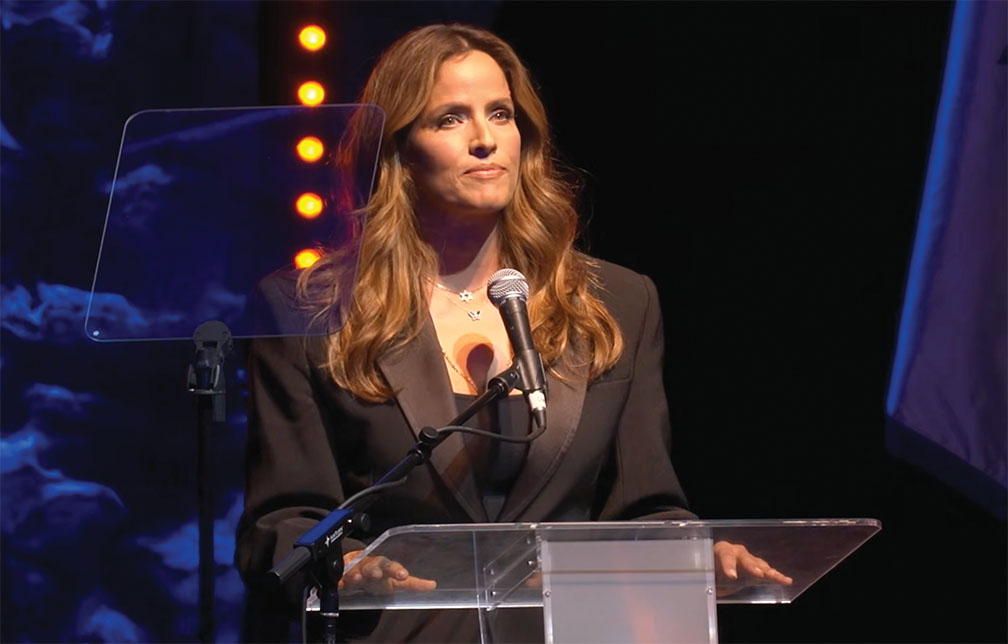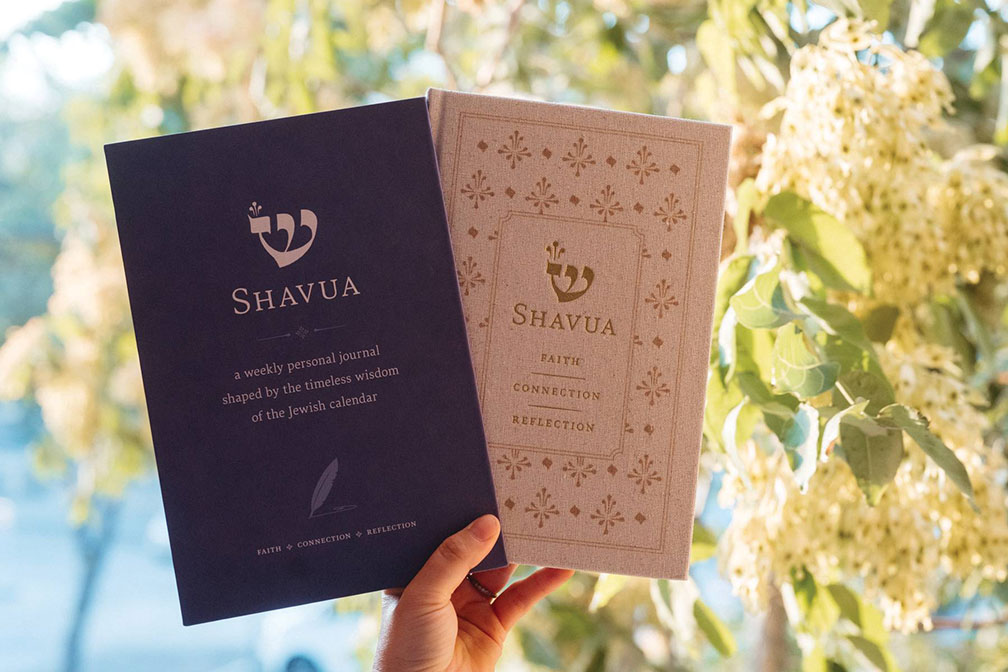
Five years ago, Dalia Rotter Youngerwood left Los Angeles with her family and made aliyah to Israel, beginning a new chapter in a country that had long been part of her Jewish identity. Now, she has embarked on another kind of journey—one that began with more than two years of conversations, writing and questioning and culminated in “Shavua” (Hebrew for “week”), a journal she created with her brother-in-law, Avi-Ad Maskowitz.
“Shavua” is an interactive journal woven with Jewish wisdom, inviting readers to pause, reflect and add their own thoughts to an ongoing Jewish conversation. Its pages deliberately leave room for the reader’s voice, making the journal, in Youngerwood’s words, “only half-written.” The reader needs to write the other half.
I spoke with Youngerwood about the inspiration behind “Shavua,” how her move from Los Angeles to Israel changed her relationship with the Jewish calendar, and why, in an age of constant noise and distraction, making space for reflection can be its own form of Jewish practice.
The origins of “Shavua” can be traced back to the aftermath of Oct. 7, when Youngerwood found herself processing not only the upheaval in her own life, but also what had happened to the world, and particularly to the Jewish world.
Journaling was something she had turned to in the past, so she went online looking for something that could help her reflect. What she found, however, felt either too sacred and inaccessible or too superficial.
“I wanted something that spoke to the depth and richness of Jewish thought,” she said in a phone interview from her home in Jerusalem. “If I was going to spend the time doing this, I wanted it to be substantive and grounded in something.”
Youngerwood made a personal commitment to engage with her Jewish identity each week and began writing. At the time, she had no intention of creating a book. It was simply a way to pause, reflect and reconnect.
Her move to Israel also gave her an unexpected framework for that process: the Jewish calendar.
“I grew up in a Modern Orthodox environment, and I was definitely in touch with the Jewish calendar and followed the holidays,” she said. “But moving to Israel takes it to a very different place, where it’s everywhere and all around you.”
As she searched for a way to connect personal questions with substantive Jewish ideas, she realized that the calendar was already providing the structure.
“I was living through the Jewish calendar in an environment that was living through it as well,” she said. “It didn’t take me long to realize that the calendar itself was giving me the structure I was looking for.”
About a year and a half into the project, her brother-in-law, Avi-Ad Maskowitz, a graphic designer, encouraged her to turn the idea into a book. What followed was a lengthy process of writing, editing and designing. Maskowitz also helped give the book a visual language that Youngerwood said she had not initially realized would be so important.
The typography, embellishments and design elements draw on Hebrew letters and Jewish textual traditions, creating a visual sense of familiarity and connection.
“He really made this piece a beautiful visual-language component,” she said.
Because Maskowitz was serving in the military for extended periods, they eventually brought in Jerusalem-based designer Yitz Woolf to help complete the project. Together, they shaped a book that Youngerwood believes fills a gap she had encountered herself: a space where personal reflection and Jewish wisdom can exist side by side.
Rather than being aimed at a particular denomination, age group or level of Jewish observance, “Shavua” is designed to meet readers wherever they are in their Jewish journey. Hebrew passages are translated and transliterated, and the book does not assume prior knowledge or familiarity with Jewish texts.
“We’re not trying to teach and we’re not trying to preach,” Youngerwood said. “It really is accessible to any level of Jewish knowledge. You don’t have to know anything to begin with.”
Each week follows the same three-part structure: “Space,” “Connection” and “Reflection.” The first offers a concise piece of Jewish wisdom, drawing on themes, texts and values associated with that point in the Jewish calendar. The second invites readers to engage with the material through questions, while the final section provides open space for further thoughts and personal journaling.
“Shavua” is an open invitation to become part of a Jewish conversation that’s been going on for a very long time,” Youngerwood said. “Your experiences, your thoughts and your questions become part of that conversation.”
Self-publishing brought its own challenges, from figuring out how to establish “Shavua” as its own publisher on Amazon to navigating the mechanics of producing and distributing a book independently.
“We’re doing it ourselves, and that’s been part of what makes it such a passion project,” she said. “We’re taking all the pieces and putting the puzzle together.”
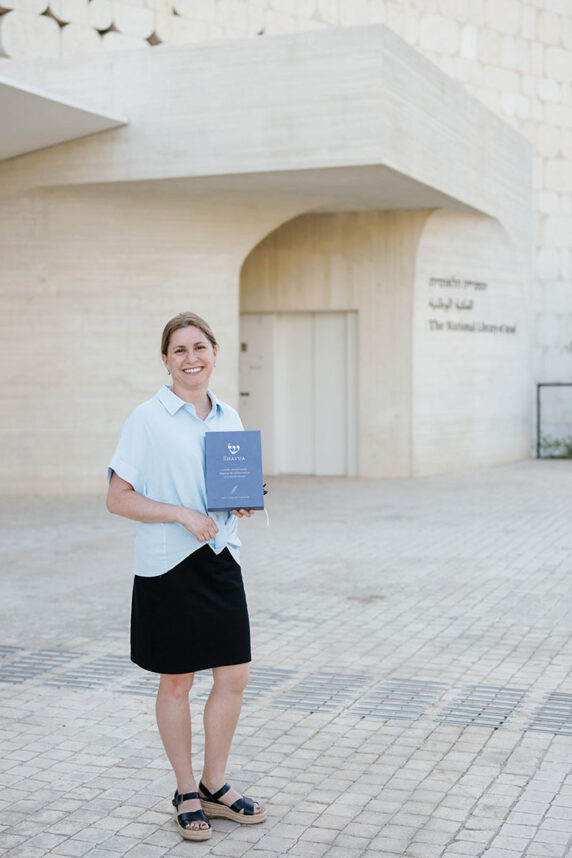
Along the way, Youngerwood has connected with rabbis and Jewish educators who have responded enthusiastically to the project, including Rabbi Angela Buchdahl and educators she has met in Israel. Rather than pointing to a single endorsement, she said she has been most inspired by the people behind them and by the breadth of Jewish thought and education she has encountered.
“It’s so inspiring to see how vast and how dedicated and thoughtful the Jewish world is right now,” she said. “We need everybody.”
That sense of an ongoing conversation is also reflected in what comes next. Youngerwood and Maskowitz have already written a second book, although the logistics of independently bringing it to the public mean that readers will have to wait a little longer.
“We definitely have other ideas that we would love to develop from this concept,” Youngerwood said. “It’s very unique, because every book is going to be different. One person is going to write one thing and another person is going to write something else. That’s what’s so inspiring to us.”
For Youngerwood, then, “Shavua” is not the conclusion of a journey that began a few years ago, but another step along the way—one she hopes will continue to evolve with every person who opens its pages.
For more information and to purchase Shavua Journal, visit www.shavuajournal.com.