fbpx

August 11, 2026

A Book That Writes Itself: Dalia Rotter Youngerwood’s Jewish Journal

Five years ago, Dalia Rotter Youngerwood left Los Angeles with her family and made aliyah to Israel, beginning a new chapter in a country that had long been part of her Jewish identity. Now, she has embarked on another kind of journey—one that began with more than two years of conversations, writing and questioning and culminated in “Shavua” (Hebrew for “week”), a journal she created with her brother-in-law, Avi-Ad Maskowitz.

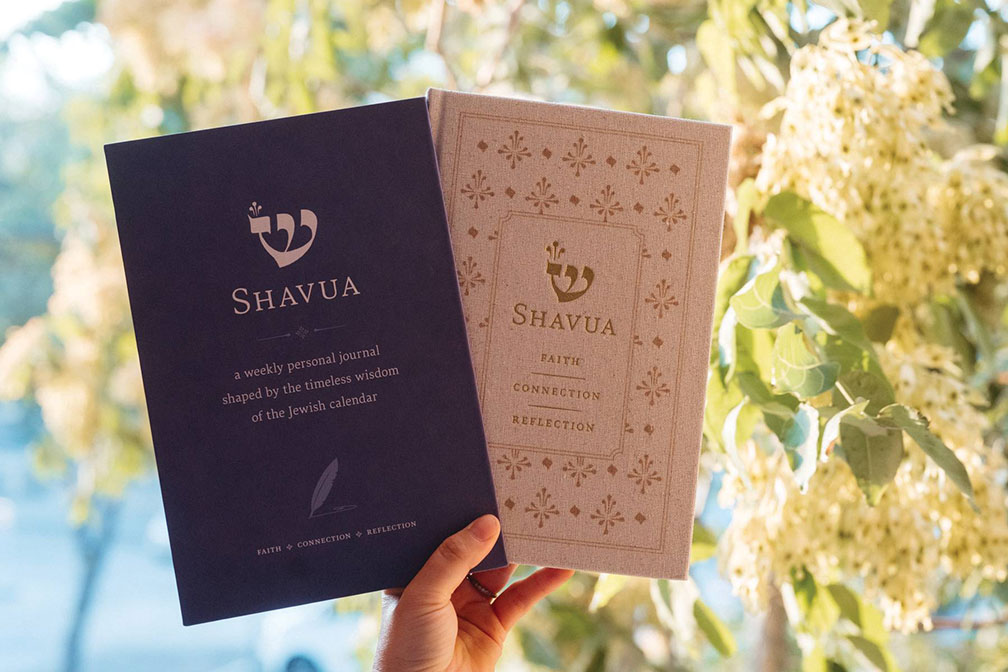
“Shavua” is an interactive journal woven with Jewish wisdom, inviting readers to pause, reflect and add their own thoughts to an ongoing Jewish conversation. Its pages deliberately leave room for the reader’s voice, making the journal, in Youngerwood’s words, “only half-written.” The reader needs to write the other half.

I spoke with Youngerwood about the inspiration behind “Shavua,” how her move from Los Angeles to Israel changed her relationship with the Jewish calendar, and why, in an age of constant noise and distraction, making space for reflection can be its own form of Jewish practice.

The origins of “Shavua” can be traced back to the aftermath of Oct. 7, when Youngerwood found herself processing not only the upheaval in her own life, but also what had happened to the world, and particularly to the Jewish world.

Journaling was something she had turned to in the past, so she went online looking for something that could help her reflect. What she found, however, felt either too sacred and inaccessible or too superficial.

“I wanted something that spoke to the depth and richness of Jewish thought,” she said in a phone interview from her home in Jerusalem. “If I was going to spend the time doing this, I wanted it to be substantive and grounded in something.”

Youngerwood made a personal commitment to engage with her Jewish identity each week and began writing. At the time, she had no intention of creating a book. It was simply a way to pause, reflect and reconnect.

Her move to Israel also gave her an unexpected framework for that process: the Jewish calendar.

“I grew up in a Modern Orthodox environment, and I was definitely in touch with the Jewish calendar and followed the holidays,” she said. “But moving to Israel takes it to a very different place, where it’s everywhere and all around you.”

As she searched for a way to connect personal questions with substantive Jewish ideas, she realized that the calendar was already providing the structure.

“I was living through the Jewish calendar in an environment that was living through it as well,” she said. “It didn’t take me long to realize that the calendar itself was giving me the structure I was looking for.”

About a year and a half into the project, her brother-in-law, Avi-Ad Maskowitz, a graphic designer, encouraged her to turn the idea into a book. What followed was a lengthy process of writing, editing and designing. Maskowitz also helped give the book  a visual language that Youngerwood said she had not initially realized would be so important.

The typography, embellishments and design elements draw on Hebrew letters and Jewish textual traditions, creating a visual sense of familiarity and connection.

“He really made this piece a beautiful visual-language component,” she said.

Because Maskowitz was serving in the military for extended periods, they eventually brought in Jerusalem-based designer Yitz Woolf to help complete the project. Together, they shaped a book that Youngerwood believes fills a gap she had encountered herself: a space where personal reflection and Jewish wisdom can exist side by side.

Rather than being aimed at a particular denomination, age group or level of Jewish observance, “Shavua” is designed to meet readers wherever they are in their Jewish journey. Hebrew passages are translated and transliterated, and the book does not assume prior knowledge or familiarity with Jewish texts.

“We’re not trying to teach and we’re not trying to preach,” Youngerwood said. “It really is accessible to any level of Jewish knowledge. You don’t have to know anything to begin with.”

Each week follows the same three-part structure: “Space,” “Connection” and “Reflection.” The first offers a concise piece of Jewish wisdom, drawing on themes, texts and values associated with that point in the Jewish calendar. The second invites readers to engage with the material through questions, while the final section provides open space for further thoughts and personal journaling.

“Shavua” is an open invitation to become part of a Jewish conversation that’s been going on for a very long time,” Youngerwood said. “Your experiences, your thoughts and your questions become part of that conversation.”

Self-publishing brought its own challenges, from figuring out how to establish “Shavua” as its own publisher on Amazon to navigating the mechanics of producing and distributing a book independently.

“We’re doing it ourselves, and that’s been part of what makes it such a passion project,” she said. “We’re taking all the pieces and putting the puzzle together.”
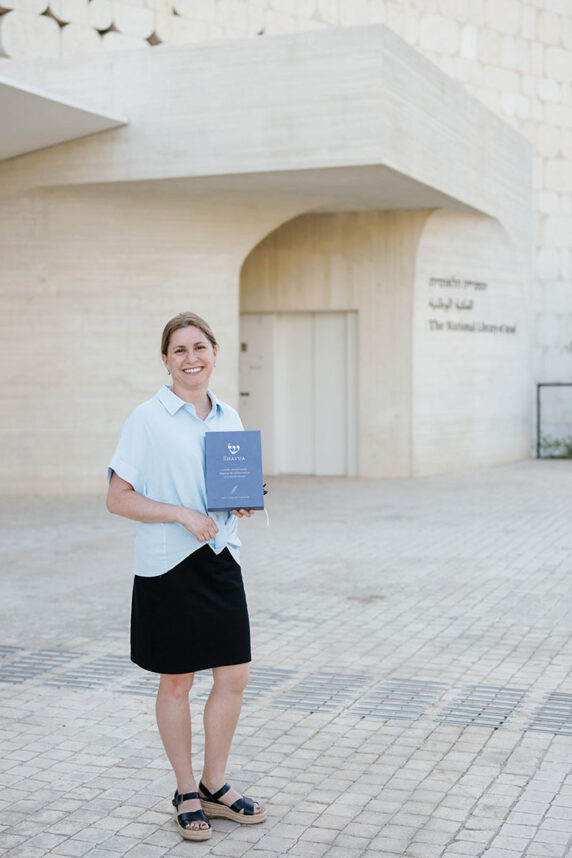
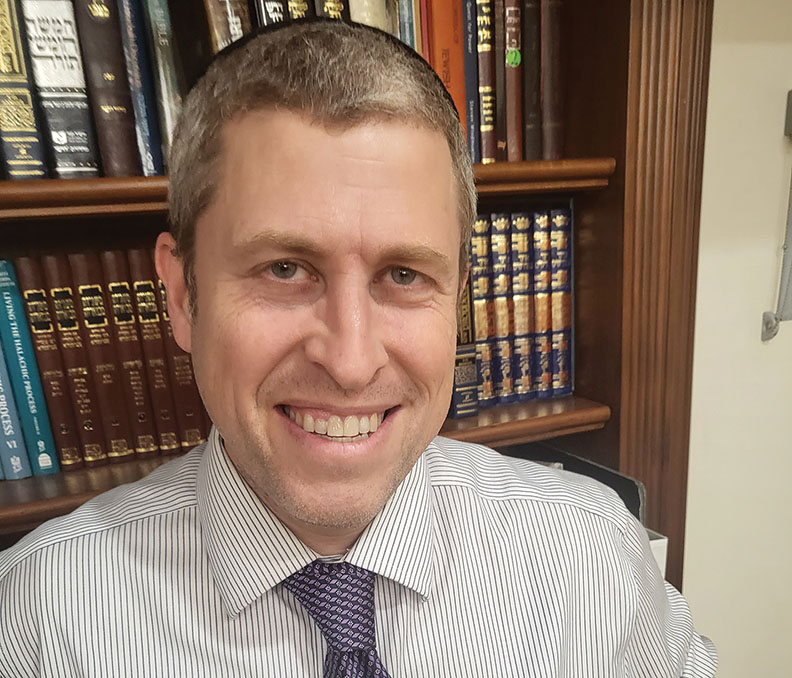
Dalia with SHAVUA

Along the way, Youngerwood has connected with rabbis and Jewish educators who have responded enthusiastically to the project, including Rabbi Angela Buchdahl and educators she has met in Israel. Rather than pointing to a single endorsement, she said she has been most inspired by the people behind them and by the breadth of Jewish thought and education she has encountered.

“It’s so inspiring to see how vast and how dedicated and thoughtful the Jewish world is right now,” she said. “We need everybody.”

That sense of an ongoing conversation is also reflected in what comes next. Youngerwood and Maskowitz have already written a second book, although the logistics of independently bringing it to the public mean that readers will have to wait a little longer.

“We definitely have other ideas that we would love to develop from this concept,” Youngerwood said. “It’s very unique, because every book is going to be different. One person is going to write one thing and another person is going to write something else. That’s what’s so inspiring to us.”

For Youngerwood, then, “Shavua” is not the conclusion of a journey that began a few years ago, but another step along the way—one she hopes will continue to evolve with every person who opens its pages.

For more information and to purchase Shavua Journal, visit www.shavuajournal.com.

A Book That Writes Itself: Dalia Rotter Youngerwood’s Jewish Journal Read More »

A Look Back at Israel’s Concert History — and When the Big Acts Might Return

For decades, the world’s biggest musical acts brought their concert tours through Israel: Michael Jackson (1993), Madonna (2009), U2 (1997), Paul McCartney (2008), Tom Petty and Bob Dylan (1987), Pearl Jam (1995), Alanis Morissette (2000), Rihanna (2010 and 2013), and Rage Against the Machine (1997 and 2000). Less than three years ago, Israel was still hosting some of the biggest names in music. The summer of 2023 featured concerts by Guns N’ Roses, Disturbed and Robbie Williams. Bruno Mars was set to perform two shows at HaYarkon Park in Tel Aviv that year. He only played one show though, because the second was scheduled for the evening of Oct. 7, 2023.

Since then, the lineup of non-Israeli acts has dried up. Sure, there have been some performances since that day, but it’s nothing like it had been before. In May 2025, Art Garfunkel made a guest appearance and played four songs with Aviv Geffen at a festival in HaYarkon Park in front of an estimated 50,000 fans. Jonny Greenwood of Radiohead performed with Israeli rock singer Dudu Tassa at the Barby Club in Tel Aviv in 2024 and 2025. Smash Mouth played a pair of shows at the Barby Club in February of this year.

It’s been sparse. Lifelong concertgoers in Israel wonder when the major concert tours will start returning. But for now, they can only look back.

When performers like Deep Purple (2008) and Linkin Park (2010) came to Israel, it wasn’t always the first leg of the tour, or even the second. Most of the time, major acts come to Israel several years and multiple albums after their breakout hits. For concertgoers in Israel, the excitement begins when merely learning that their favorite performers will be coming to their tiny home country.

When Depeche Mode announced that they’d be playing at Ramat Gan Stadium in 2009, Yaara Segal described the feeling as “immense excitement.”

“I was very much an MTV girl, and Depeche Mode was definitely in my top ten,” Segal, a Middle East affairs geopolitical consultant, told The Journal. “I grew up with the magic of waiting for the next single and music video from my favorite artists. They were a big part of the soundtrack to my teenage years. Hearing them perform songs that had been part of so many important moments in my life was incredibly meaningful.” She said she’s still upset about missing Bon Jovi’s first visit in 2015.

Some major acts go decades between concerts in Israel. Elton John’s first concert was in 1979, and he didn’t return until 2010. Aerosmith came in 1994 during the “Get A Grip” Tour. Over 50,000 fans turned out when Aerosmith returned in 2017. Rapper 50 Cent went 16 years between performances.

Israeli guitarist Aviv Hadari remembers 2010 as one of his favorite concert seasons in his homeland. In May of that year, he saw Metallica in Ramat Gan Stadium. Four months later, he saw Ozzy Osbourne performing in HaYarkon Park.

Hadari remembers the buzz around Israel in the days leading up to those shows.

“Oh yeah, 2010 was f—ing awesome!” Hadari told The Journal. He runs a popular guitar clinic called Shred Factory in Los Angeles. “Ozzy didn’t come much, but it was very noticeable. The whole country was talking about it. And when Metallica came, it was another big, big, big deal.”

Comedian Mike Kroll, who made aliyah by way of Texas, told The Journal about one of the last major concert nights in Israel. On July 10, 2023, rock music fans in Israel had to make a choice: see The Offspring at the Tel Aviv Fairgrounds, or see The Black Keys at the Live Park Amphitheater in Rishon LeZion. Kroll said it was “a tough decision” but went with The Offspring show.

YouTuber Matan Drori was also at The Offspring’s only Israel show, but told The Journal that he laments that his favorite band, Iron Maiden, has yet to return to Israel in more than 30 years. A 2020 Iron Maiden performance was canceled due to the COVID-19 pandemic. Still, he was grateful he could see The Offspring in a more intimate venue than most other major acts in Israel.

“Everybody was crowded in front of the stage — everybody wants to be in the front,” Drori, host of the GeekVerse Podcast, told The Journal. “It was a relatively small place — about 9,000 people. Most of the American bands that came to Israel were at big parks — and they’re great shows. But this one was small.”

Los Angeles-based rapper/producer Liat Freidberg has a massive list of concerts she went to in her native Israel; among them are Incubus (2007 and 2015), Maroon 5 (2022), and Justin Bieber (2011 and 2017). Though she was always grateful for the visits, she hopes that performers say something specific about being in Israel. Sure, it’s a common practice for bands to get an enthusiastic audience pop when they reference the minutia about the city they’re in. For Freidberg, she puts an extra premium on when it happens at a show in Israel — and that it’s not enough to just say, “Shalom, Israel!” When she saw Christina Aguilera in August 2023 at Live Park in Rishon LeZion, she left wishing Aguilera said more.

“She was great, it was a great show, but she didn’t say anything that showed and acknowledged really where she’s at,” Freidberg told The Journal. “It’s just about even knowing something about the culture, knowing something about Israel that is unique to Israel and pointing it out.”

So the question remains: what will it take to bring big name music performers back to Israel?

Segal, who worked at the Israel Consulate in Los Angeles from 2015-19, shared her analysis. “Israel has one of the most passionate audiences in the world, and when artists perform here, they’ll talk about the incredible energy of the crowd and the amazing food,” Segal said. “The challenge of bringing big international artists back to Israel is pretty unique right now. Since Oct. 7, the entire region has been unstable, and governments around the world have issued travel warnings for Israel and the Middle East. That naturally makes artists, their management, insurance companies and production teams think twice. On top of that, Israel faces boycott campaigns and organized pressure that no other country really deals with.

I think once a few big artists make that first move and have successful shows here, it’ll give others the confidence to do the same.”

Segal said that she hopes that more brave performers like Boy George will take a stand. In July, Boy George released a song, “We Will Dance Again” which calls out minimizers of the Oct. 7 attacks — particularly the brutality committed by Hamas terrorists on concert goers at the Nova Music Festival in Re’im.

“Releasing that song was a huge risk for him, and he’s already facing plenty of backlash because of it,” Segal said. “Acts like this give me hope that more artists will have the courage to speak up, return to the basics, and remember why music exists in the first place — to bring people together, to expand our humanity, not to limit it.”

Below is a list of notable concerts in Israel:

Performer Date City Venue
Louis Armstrong 4/14/1959 Tel Aviv Heichal HaTarbut
Louis Armstrong 4/17/1959 Petah Tikva Petah Tikva
Louis Armstrong 4/20/1959 Jerusalem Binyanei HaUma
Louis Armstrong 4/23/1959 Tel Aviv Heichal HaTarbut
Ella Fitzgerald 4/1/1961 Tel Aviv Heichal HaTarbut
Ella Fitzgerald 4/2/1961 Tel Aviv Cinema Tel Aviv
Frank Sinatra 5/3/1962 Tel Aviv Mann Auditorium
Frank Sinatra 5/6/1962 Jerusalem Binyanei HaUma Concert Hall
Frank Sinatra 5/8/1962 Rehovot Tel Nof Airbase
Ray Charles 12/12/1972 Jerusalem Binyanei HaUma
Frank Sinatra 11/27/1975 Jerusalem Binyanei HaUma
Elton John 5/1/1979 Jerusalem Philharmonic Hall
Elton John 5/2/1979 Jerusalem Philharmonic Hall
Elton John 5/3/1979 Jerusalem Philharmonic Hall
Elton John 5/5/1979 Tel Aviv Mann Auditorium
Elton John 5/6/1979 Tel Aviv Mann Auditorium
Ray Charles 7/12/1982 Jerusalem Sultan’s Pool
Simon and Garfunkel 9/26/1983 Tel Aviv Ramat Gan Stadium
Dire Straits 4/30/1985 Jerusalem Sultan’s Pool
Dire Straits 5/1/1985 Tel Aviv HaYarkon Park
Dire Straits 5/2/1985 Tel Aviv HaYarkon Park
Ray Charles 7/9/1987 Jerusalem Sultan’s Pool
Ray Charles 7/11/1987 Caesarea Old Roman Amphitheater
Ray Charles 7/12/1987 Tel Aviv Cinerama Theatre
Tom Petty and the Heartbreakers and Bob Dylan 9/5/1987 Tel Aviv HaYarkon Park
Tom Petty and the Heartbreakers and Bob Dylan 9/7/1987 Jerusalem Sultan’s Pool
Deep Purple 9/28/1991 Tel Aviv HaYarkon Park
Deep Purple 9/29/1991 Sea of Galilee Tzemach Beach
Radiohead 4/3/1993 Ramat HaHayal Roxanne
Michael Jackson 9/19/1993 Tel Aviv HaYarkon Park
Michael Jackson 9/21/1993 Tel Aviv HaYarkon Park
Madonna 10/4/1993 Tel Aviv HaYarkon Park
Ray Charles 6/28/1994 Haifa Haifa Port
Aerosmith 7/12/1994 Tel Aviv HaYarkon Park
Sting 9/20/1994 Rishon LeZion Live Park Amphitheater
Megadeth 4/27/1995 Tel Aviv Cinerama
Megadeth 4/28/1995 Tel Aviv Cinerama
Faith No More 7/1/1995 Tel Aviv Cinerama
Pearl Jam with Neil Young 8/22/1995 Jerusalem Sultan’s Pool
Pearl Jam with Neil Young 8/23/1995 Caesarea Old Roman Amphitheater
Rage Against the Machine 6/27/1997 Haifa Second City
Rage Against the Machine 6/29/1997 Tel Aviv Cinerama
Faith No More 8/19/1997 Haifa City Hall
Faith No More 8/20/1997 Tel Aviv Cinerama
U2 9/30/1997 Tel Aviv HaYarkon Park
Garbage 6/15/1999 Tel Aviv Bitan 11
Garbage 6/16/1999 Tel Aviv Bitan 11
Garbage 6/17/1999 Beersheba Ben-Gurion University of the Negev
Rage Against the Machine 6/13/2000 Tel Aviv Cinerama
Alanis Morissette 7/19/2000 Caesarea Caesarea Amphitheater
Alanis Morissette 7/20/2000 Rishon LeZion Amphi Park
Westlife 5/16/2001 Tel Aviv HaYarkon Park
Jethro Tull 8/30/2004 Caesarea Caesarea Amphitheater
Megadeth 6/22/2005 Palmahim Beach National Park Palmahim Beach
Dio 10/29/2005 Tel Aviv Exhibition Grounds
Phil Collins 11/7/2005 Tel Aviv Bloomfield Stadium
Ricky Martin 6/3/2006 Tel Aviv Nokia Arena
The Black Eyed Peas 6/3/2006 Tel Aviv Bloomfield Stadium
Sting 6/8/2006 Ramat Gan Ramat Gan Stadium
50 Cent 6/15/2006 Ramat Gan Ramat Gan Stadium
Roger Waters 7/22/2006 Latrun Neve Shalom
Incubus 3/7/2007 Tel Aviv Hangar 11
Regina Spektor 3/10/2007 Tel Aviv Barby Club
Regina Spektor 3/11/2007 Tel Aviv Barby Club
Evanescence 6/26/2007 Ra’anana Ra’anana Park Amphitheater
Sean Paul 6/28/2007 Ra’anana Ra’anana Park Amphitheater
Megadeth 7/2/2007 Tel Aviv Hangar 11
Tori Amos 7/21/2007 Ra’anana Ra’anana Park Amphitheater
Jethro Tull 8/23/2007 Jerusalem First Station
Jethro Tull 8/24/2007 Binyamina Mivtzar Shuni
Jethro Tull 8/25/2007 Caesarea Old Roman Amphitheater
Nine Inch Nails 9/5/2007 Tel Aviv Convention Center
NOFX 9/5/2007 Jerusalem Yellow Submarine
NOFX 9/6/2007 Tel Aviv Barby Club
NOFX 9/7/2007 Haifa City Hall
Nightwish 10/6/2007 Tel Aviv Hangar 11
Marky Ramone 1/10/2008 Tel Aviv Zappa Club
Tiësto 7/29/2008 Tel Aviv Haoman 17
Deep Purple 9/8/2008 Caesarea Caesarea Amphitheater
Deep Purple 9/9/2008 Tel Aviv Hangar 11
Deep Purple 9/17/2008 Caesarea Caesarea Amphitheater
Deep Purple 9/18/2008 Caesarea Caesarea Amphitheater
Paul McCartney 9/25/2008 Tel Aviv HaYarkon Park
Simple Plan 12/3/2008 Tel Aviv Hangar 11
Depeche Mode 5/10/2009 Tel Aviv Ramat Gan Stadium
Pet Shop Boys 7/21/2009 Tel Aviv Trade Fairs and Convention Center
Lady Gaga 8/19/2009 Tel Aviv Expo Tel Aviv
Faith No More 9/1/2009 Tel Aviv Expo Tel Aviv
Madonna 9/1/2009 Tel Aviv HaYarkon Park
Madonna 9/2/2009 Tel Aviv HaYarkon Park
Leonard Cohen 9/24/2009 Tel Aviv Ramat Gan Stadium
Metallica 5/22/2010 Tel Aviv Ramat Gan Stadium
Rihanna 5/30/2010 Tel Aviv Bloomfield Stadium
Elton John 6/17/2010 Tel Aviv Ramat Gan Stadium
Tiësto 7/2/2010 Eilat Hahava
Thirty Seconds to Mars 8/18/2010 Tel Aviv Trade Fairs and Convention Center
Ozzy Osbourne 9/28/2010 Tel Aviv HaYarkon Park
Linkin Park 11/15/2010 Tel Aviv HaYarkon Park
Megadeth 4/16/2011 Tel Aviv Convention Center
Deep Purple 5/14/2011 Caesarea Roman Amphitheater
Deep Purple 5/15/2011 Caesarea Roman Amphitheater
Enrique Iglesias 6/1/2011 Tel Aviv Nokia Arena
Paul Simon 7/21/2011 Ramat Gan Ramat Gan Stadium
Jane’s Addiction 9/1/2011 Tel Aviv Tel Aviv Fairgrounds
Roxette 10/22/2011 Tel Aviv Tel Aviv Convention Center
Simple Plan 5/5/2012 Tel Aviv Nokia Arena
Madonna 5/31/2012 Ramat Gan Ramat Gan Stadium
Rufus Wainwright 6/3/2012 Yakum Ronit Farm Amphitheater
Rufus Wainwright 6/4/2012 Tel Aviv Reading 3
Guns N’ Roses 7/3/2012 Tel Aviv HaYarkon Park
Chris Cornell 7/16/2012 Binyamina Zappa Amphi Shuni
Red Hot Chili Peppers 9/10/2012 Tel Aviv HaYarkon Park
Alanis Morissette 12/3/2012 Tel Aviv Nokia Arena
Depeche Mode 5/7/2013 Tel Aviv HaYarkon Park
Pet Shop Boys 6/23/2013 Tel Aviv Nokia Arena
Alicia Keys 7/4/2013 Tel Aviv Nokia Arena
Regina Spektor 8/24/2013 Caesarea Caesarea Amphitheater
Rihanna 10/22/2013 Tel Aviv HaYarkon Park
Justin Timberlake 5/28/2014 Tel Aviv HaYarkon Park
The Rolling Stones 6/4/2014 Tel Aviv HaYarkon Park
Soundgarden 6/18/2014 Tel Aviv Bloomfield Stadium
Lady Gaga 9/13/2014 Tel Aviv HaYarkon Park
Backstreet Boys 5/19/2015 Ra’anana Ra’anana Amphitheater
Backstreet Boys 5/20/2015 Ra’anana Ra’anana Amphitheater
Backstreet Boys 5/21/2015 Ra’anana Ra’anana Amphitheater
OneRepublic 5/28/2015 Tel Aviv HaYarkon Park
Incubus 6/9/2015 Ra’anana Ra’anana Amphitheater
Art Garfunkel 6/10/2015 Tel Aviv Bloomfield Stadium
Sebastian Bach 7/24/2015 Tel Aviv Reading 3
Mariah Carey 8/18/2015 Rishon LeZion Live Park
Kanye West 9/30/2015 Ramat Gan Ramat Gan Stadium
Bon Jovi 10/3/2015 Tel Aviv HaYarkon Park
Enrique Iglesias 12/16/2015 Tel Aviv Menora Mivtachim Arena
Enrique Iglesias 12/22/2015 Tel Aviv Menora Mivtachim Arena
Elton John 5/26/2016 Tel Aviv HaYarkon Park
Brian Wilson 6/8/2016 Ra’anana Ra’anana Amphitheater
Foreigner 6/14/2016 Caesarea Caesarea Amphitheater
Foreigner 6/15/2016 Caesarea Caesarea Amphitheater
Deep Purple 6/22/2016 Rishon LeZion Live Park Amphitheater
Megadeth 7/2/2016 Rishon LeZion Live Park Amphitheater
Scorpions 7/14/2016 Tel Aviv Menora Mivtachim Arena
Garbage 8/16/2016 Binyamina Amphi Shuni theater
Garbage 8/17/2016 Binyamina Amphi Shuni theater
Ricky Martin 9/14/2016 Tel Aviv Menora Mivtachim Arena
Justin Bieber 5/3/2017 Tel Aviv HaYarkon Park
Aerosmith 5/17/2017 Tel Aviv HaYarkon Park
Pet Shop Boys 6/10/2017 Tel Aviv HaYarkon Park
Britney Spears 7/3/2017 Tel Aviv HaYarkon Park
Guns N’ Roses 7/15/2017 Tel Aviv HaYarkon Park
Radiohead 7/19/2017 Tel Aviv HaYarkon Park
The Chainsmokers 8/3/2017 Rishon LeZion Live Park
Backstreet Boys 4/22/2018 Rishon LeZion Live Park
Ozzy Osbourne 7/8/2018 Rishon LeZion Live Park
Scorpions 7/19/2018 Tel Aviv Menora Mivtachim Arena
Alanis Morissette 7/30/2018 Rishon LeZion Live Park
Brian Wilson 8/7/2018 Tel Aviv Charles Bronfman Auditorium
Mike Shinoda 3/25/2019 Tel Aviv Hangar 11
Mike Shinoda 3/26/2019 Tel Aviv Hangar 11
Disturbed 7/2/2019 Rishon LeZion Live Park
Bon Jovi 7/25/2019 Tel Aviv HaYarkon Park
Jennifer Lopez 8/1/2019 Tel Aviv HaYarkon Park
Aurora 11/14/2019 Tel Aviv Barby Club
Aurora 11/15/2019 Tel Aviv Barby Club
Maroon 5 5/9/2022 Tel Aviv HaYarkon Park
Maroon 5 5/10/2022 Tel Aviv HaYarkon Park
Deep Purple 5/22/2022 Tel Aviv Menora Mivtachim Arena
Deep Purple 5/23/2022 Jerusalem Pais Arena
50 Cent 7/4/2022 Tel Aviv Menora Mivtachim Arena
50 Cent 7/5/2022 Tel Aviv Menora Mivtachim Arena
Scorpions 7/9/2022 Tel Aviv Menora Mivtachim Arena
Counting Crows 9/14/2022 Ra’anana Ra’anana Amphitheater
Guns N’ Roses 6/5/2023 Tel Aviv HaYarkon Park
Disturbed 6/20/2023 Tel Aviv Expo Tel Aviv
The Melvins 7/5/2023 Tel Aviv Barby Club
The Melvins 7/6/2023 Tel Aviv Barby Club
The Black Keys 7/10/2023 Tel Aviv Tel Aviv Fairgrounds
The Offspring 7/10/2023 Tel Aviv Expo Tel Aviv Pavilion 2
Christina Aguilera 8/10/2023 Rishon Lezion Live Park
Imagine Dragons 8/29/2023 Tel Aviv HaYarkon Park
Bruno Mars 10/4/2023 Tel Aviv HaYarkon Park
Aviv Geffen with Art Garfunkel 5/29/2025 Tel Aviv HaYarkon Park
Smash Mouth 2/23/2026 Tel Aviv Barby Club
Smash Mouth 2/25/2026 Tel Aviv Barby Club

A Look Back at Israel’s Concert History — and When the Big Acts Might Return Read More »

Why Diaspora Jews Should Care About a New Haredi Political Voice

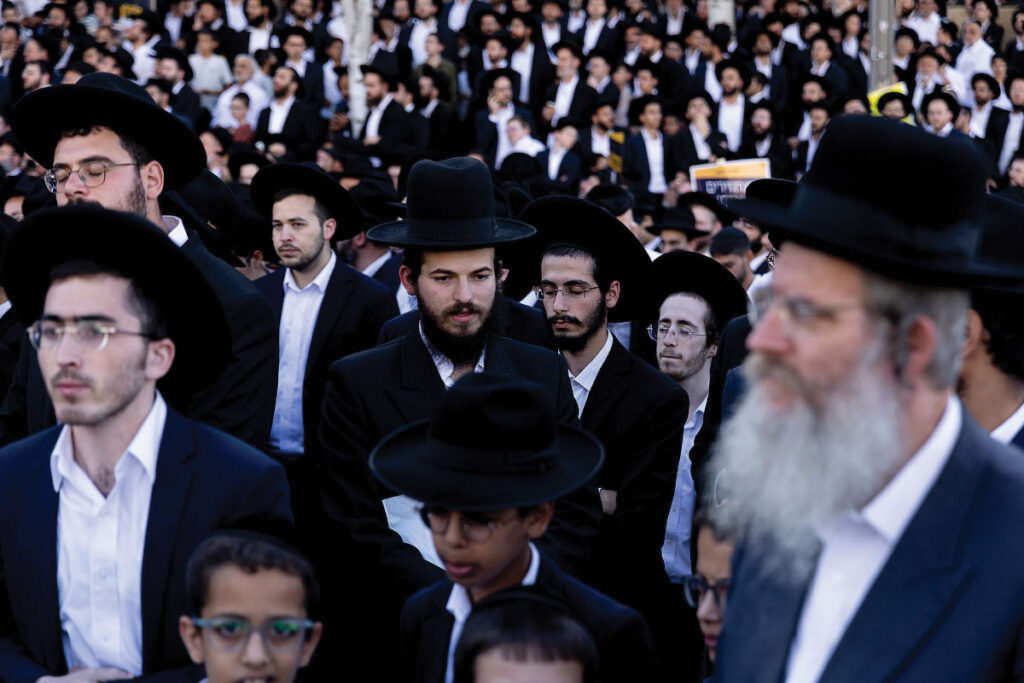
For Jews outside Israel, debates over Haredi education, military service, employment and political power can sometimes appear distant or uniquely Israeli. Yet the future of Israel’s Haredi community will profoundly influence the strength, security and Jewish character of the country with which Diaspora Jews share an enduring bond.

Over recent years, the Haredi community has moved to the center of Israel’s national debate. Questions about Torah study, military service, education, employment and the relationship between Haredim and the state have become particularly urgent since the Oct. 7, 2023 massacre.

Much of this debate presents a false choice. Either Haredim must be forced to change from the outside, or nothing will be resolved. Either Israel protects the world of Torah, or it demands greater participation in national life.

I am convinced that this choice is both false and dangerous. A brighter tomorrow is possible, and many within the Haredi community already want it. However, it will succeed only if it grows from within, supported by Israeli society and Jews around the world.

I recently visited towns and cities across the U.S. and witnessed firsthand how those exceedingly dedicated to Torah learning are also working, thriving and contributing. In most cities across the Diaspora, self-identifying Haredim take pride in their ability to combine dedication to Torah with civic and personal responsibility as they have done for many generations. In many cities across America, there is no contradiction between learning, being faithful to Judaism and working for a living.

In Israel, however, many Haredim feel trapped between two political camps. On one side are those who speak about Haredim primarily as a demographic, economic or security problem. Their frustration is understandable, especially after October 7, but solutions imposed without trust or an understanding of Haredi life are unlikely to bring durable solutions.

On the other side are the established Haredi parties. For four decades, they have claimed a monopoly on Haredi representation, yet they have become more effective at preserving their political power than confronting the mounting difficulties within Haredi homes and communities.

We want to protect the world of Torah, but we also understand that the current reality is unsustainable for both the Haredi community as well as the rest of Israeli society; refusing to confront reality places our shared future in danger.

It is precisely this challenge which led to the establishment of the Haredi Public Party. It is intended to provide a political home for those who believe that protecting Torah requires responsible leadership and practical solutions.

We seek to strengthen genuine Torah study while expanding educational and professional opportunities. We want to enable dignified employment, develop appropriate frameworks for military or meaningful national service, address the needs of young people who do not fit the existing system and help Haredi families achieve greater economic independence.

Why should Diaspora Jews care? Because the future of the Haredi community is inseparable from the future of Israel.

Jews around the world invest enormously in Israel, emotionally, politically, financially and spiritually. They defend it, support its institutions, send their children to study, learn and volunteer there, and stand beside it during war and crisis. They have a direct interest in whether Israel remains economically sustainable, militarily strong and socially cohesive.

The Haredi population is one of Israel’s youngest and fastest-growing communities. Its future participation in employment, education and national responsibility will help determine Israel’s economic capacity, the strength of its defense and the resilience of its society.

Continued poverty, alienation and political paralysis within such a large section of the population cannot remain an internal Haredi issue. Their consequences will affect Israel’s ability to provide social services, absorb aliyah, support Torah institutions and maintain a strong military.

Thankfully, the necessary transformation has begun in earnest. New IDF units have been created by and for Haredim who want to defend their country while retaining their lifestyle, and new educational programs and professional support courses for those who want to earn a living.

Diaspora Jews can help ensure that their support empowers initiatives advancing education, employment and integration, rather than merely sustaining failing structures. They can also lend legitimacy to courageous Haredi voices seeking solutions to these challenges while remaining faithful to Torah. However, initiatives alone are not enough. We need a political home dedicated to ensuring that these initiatives grow and receive funding, and a Haredi community that is more self-sustaining, working with all different sectors in partnership and good will.

A strong Haredi community and a strong Israel are not competing goals. They depend upon one another.

There is still a window in which to choose another path, but it will not remain open indefinitely.

The Haredi Public Party was created because the Haredi public deserves more than excuses, Israeli society deserves more than permanent confrontation, and the Jewish people deserve an Israel capable of reconciling Torah, responsibility and national unity.

The solutions must emerge from within the Haredi community, but they cannot succeed without the support of Israel and the Jewish world.

This initiative will go far beyond the Haredi community and is a vital necessity for the betterment of all of Israeli society, and for every Jew who cares about Israel’s future.


Moti Leitner is Chairman of HaTzibbur HaHaredi, the Haredi Public Party, a new political home for Haredim who believe that protecting the world of Torah requires responsible leadership and practical solutions.

Why Diaspora Jews Should Care About a New Haredi Political Voice Read More »

My Teacher Union Ejected Me from a Meeting for Being a Zionist

I have spent 25 years in Los Angeles classrooms. I retired from LAUSD last year and now teach English and History at a yeshiva high school, where my students are learning the same things I always taught, but in an environment where their identity is not treated as a problem to be managed.

On June 3, I logged onto a Zoom meeting of the United Teachers Los Angeles (UTLA) House of Representatives as a silent observer and retired union member. Camera off. Microphone muted. I was there to watch, not to speak. I couldn’t have spoken if I’d wanted to.

For more than 30 minutes, approximately 160 delegates took turns denouncing me by name for being a Zionist, and calling Zionism racism. More than a dozen voices claimed they felt threatened by me, specifically for my “racist Zionist ways.” When they were finished, they voted to remove me. The parliamentarian objected twice that there was no mechanism in UTLA’s governing documents to remove a nondisruptive visitor. They voted anyway.

No reason was given at the time.

I am a grandmother. I am a retired public school teacher. I run a small curriculum consulting business. I founded Jewish Teachers of Los Angeles. What I do, the activity that apparently inspires reasonable fear in 160 union delegates, is document antisemitism in Los Angeles schools and report it through proper legal channels.

They were not afraid of me. They were afraid of my notebook. Not enough to tilt the boat, but definitely enough to rock it.

That fear did not come from nowhere. It came from five years of slow, unglamorous work that UTLA’s leadership would have preferred to ignore, and can no longer.

For the past two years, every single UTLA House of Representatives meeting has included at least one anti-Israel or antisemitic motion on its agenda, usually more. The June 3 meeting was no exception. At  least two motions that evening concerned Israel and Palestine. Not one addressed the fact that the school board has not yet approved the teachers’ contract, or that more than 6,000 District layoffs are looming. But sure, let’s spend the meeting denouncing a retired teacher who logged on to watch.

This is the same union that spent more than 1 million dollars supporting Kahllid Al-Alim for the LAUSD school board. Two weeks before the primary, social media posts surfaced showing Al-Alim had called “The Secret Relationship Between Blacks and Jews, Volume 2,” a Nation of Islam publication subtitled “How Jews Gained Control of the Black American Economy” and thoroughly debunked by scholars, “mandatory reading” for LAUSD students. He apologized. UTLA pulled its endorsement on Feb. 23, after standing by him for weeks. He came in second and lost in the primary. Seven figures, spent on a candidate whose public record on Jews required a formal apology, and the union held on until holding on became embarrassing.

There is also the matter of UTLA’s $499 donation to a PARCEO antisemitism training that excluded Jewish participants and taught that antisemitism, while real, should be minimized to avoid overshadowing or calling out other groups. Four hundred and ninety-nine dollars. One dollar below the threshold requiring disclosure on the union’s IRS Form 990. Someone did that math on purpose.

And there is David Feldman, chair of UTLA’s Human Rights Committee, who sent text messages expressing his desire to prevent Zionists from attending his committee’s meetings. The chair of the Human Rights Committee, working to exclude Jewish educators. Those texts became public. He remains chair, and faced no consequences from the union.

I am not writing this to tell you UTLA is hostile to Jewish educators. Jewish educators in Los Angeles already know that. I am writing this because hostility is no longer a background condition, but a policy.

When a union spends seven figures on a candidate who wanted antisemitic propaganda in district classrooms, that is not a statement about foreign policy, it is a statement about what the union believes Los Angeles children should be taught about Jews.

When a union donates to a training that teaches its members to minimize antisemitism, carefully keeping the amount just under the reporting threshold and excluding Jews, that is not progressive solidarity. That is institutional cover, paid for with member dues.

When the chair of the Human Rights Committee moves to exclude the overwhelming majority of Jewish educators from his committee, that is not a political position, that is a purge.

And when 160 delegates spend 30 minutes denouncing a woman for being a Zionist, who is sitting at home, camera off, microphone muted, watching a Zoom meeting on her screen, while the parliamentarian says twice that the removal has no basis in the union’s own rules, and they do it anyway, that is a message. You don’t mobilize people against a woman like that unless her presence represents something you fear.

You don’t even have to be in the room. They’ll come for you anyway.

Here is what they apparently do not understand: We are not going anywhere.

Through JewTLA and a growing national network of Jewish and Israeli educators in other teacher unions, we have spent five years doing the slow, unsexy work. Filing Public Records Act requests. Analyzing thousands of pages of district documents. Training educators on Title VI, Title VII, the Uniform Complaint Process and what the law actually requires. We also coordinate with legal organizations, inform legislators and prepare documentation for legal filings.

None of this is dramatic. There are no demonstrations, flags or chants. Most of the work consists of conversations and paperwork.

But UTLA’s leadership knows what the paperwork adds up to. Which is why they have moved from ignoring us to targeting us. And which is why 160 delegates turned their rage toward the woman who said nothing and simply showed up.

The flak is real. Flak means we are over the target.

UTLA has made its position clear. The Jewish community of Los Angeles, and every Angeleno who thinks public school children deserve better, should make ours just as clear.

We are not going back to being quiet.


Amy Leserman is a 25-year veteran English and social studies teacher, union member, founder of Jewish Teachers Los Angeles (JewTLA).  She serves on the California Board of Israeli American Civic Action Network, and has been vice president of the Association of Jewish Educators, and of the NEA Jewish Affairs Caucus.

My Teacher Union Ejected Me from a Meeting for Being a Zionist Read More »

Beth Jacob Holds Farewell Shabbat for Longtime Rabbi Kalman Topp

A farewell Shabbat service for Beth Jacob Congregation Senior Rabbi Kalman Topp featured the beloved spiritual leader saying not goodbye but lehitraot (see you later) to the Pico-Robertson modern Orthodox community he’s overseen for the past 17 years.

Topp is departing Beth Jacob, where he has served as senior rabbi since 2009. He and his wife, Rebbetzin Jordana, are making aliyah. In Jerusalem, Topp plans to start a new congregation.

Beth Jacob Associate Rabbi Adir Posy told The Journal that the synagogue’s plans for a new senior rabbi will include the launch of a search committee.

Topp did not speak of those plans during the farewell service, held Aug. 8. Instead, addressing the hundreds seated in the main sanctuary’s pews, Topp spoke about what his nearly two decades of service to the congregation have meant to him.

His most gratifying moments, he said from the Beth Jacob bimah, were witnessing in real time the ways in which the synagogue fostered community — strangers becoming lifelong friends due to their shared involvement at the shul.

He recalled a Beth Jacob volunteer making a hospital visit at Cedars-Sinai to an elderly woman coping with illness, only to discover that they were both members of Beth Jacob. He also recalled two congregants who had previously only spoken by phone during the COVID pandemic as part of a campaign that encouraged members to call one another. Once in-person services resumed, the two met for the first time in the flesh.

These exchanges, Topp said, elevated his rabbinate from the ordinary to the sacred.

And they’re precisely what the synagogue’s leadership had envisioned when they sought out Topp for the role nearly two decades ago.

A community builder

Topp’s path to Beth Jacob wasn’t straightforward. He studied at the Sy Syms School of Business, the business program at Yeshiva University, where he earned his undergraduate degree in accounting. He was ordained at Rabbi Isaac Elchanan Theological Seminary, the rabbinical seminary of Yeshiva University, and later earned a master’s degree in secondary education from the Azrieli Graduate School of Jewish Education.

His first pulpit role was as associate rabbi at the Young Israel of Woodmere, New York. He also served as a rabbi at the Albert Einstein College of Medicine and taught Judaic studies at the Frisch School and Hebrew Academy of the Five Towns and Rockaway.

The pulpit role at Beth Jacob Congregation was one of two paths before him as he wrapped his time at Young Israel of Woodmere: He could either go to Israel to lead a community there or come to the West Coast.

He opted for the latter.

Those close to Topp say his strengths include his passion for teaching Torah. His nonjudgmental and unpretentious style has also allowed him to promote a warm and inclusive atmosphere. Additionally, his steadfast love of the Jewish people and an unflinching commitment to religious Zionism have helped shape the pro-Israel advocacy efforts at Beth Jacob.

He also has a deep love for sports. He often draws analogies between Torah and athletics that go over the heads of some of his congregants but are nonetheless appreciated.

These attributes have enabled him to build a tight-knit community at Beth Jacob, which is known as a thriving center of modern Orthodoxy. During Topp’s tenure, the congregation expanded its educational, social and Israel-focused programming while emphasizing the kind of personal connections that Topp highlighted in his farewell remarks.

Among his proudest achievements during his tenure was helping mobilize the Beth Jacob community around Israel and Jewish communal causes. The congregation has supported initiatives ranging from Jewish programming in Israel’s Golan Heights to emergency medical organizations. Topp has also been a visible advocate for Israel beyond Beth Jacob, serving in leadership roles with the Rabbinical Council of America and participating in national and local Israel advocacy efforts.

One particularly memorable example came in 2014, when Beth Jacob held a ceremony honoring the memories of the three Israeli teenagers — Naftali Fraenkel, Gilad Shaer and Eyal Yifrach — who were kidnapped and murdered that year. The congregation has also been involved in supporting emergency medical efforts in Israel, including Magen David Adom.

Topp’s wife, Rebbetzin Jordana, has also been key to the shul’s success. A scholar and communal leader in her own right, she has served as Beth Jacob’s yoetzet halacha, providing women with guidance on matters of Jewish law and family life.

She’s known affectionately by congregants as the “power behind the throne.” So it was especially appropriate that she joined her husband on the bimah at the end of the farewell service, as everyone rose to their feet and applauded.

Additional speakers at the farewell service included Beth Jacob Board President Mark Goldin and Board Chairman Jack Fenigstein.

Moving toward something new

For Topp, the move to Israel represents less an ending than a new chapter in the communal work that has defined his rabbinate.

“It’s not moving away. It’s really that we’re moving towards something,” Topp said in a phone interview. “But Beth Jacob is a wonderful community. I leave with tremendous gratitude and affection.”

He said the outpouring of support from Beth Jacob’s congregants has reinforced those feelings.

“We have felt tremendous love and support from the shul. Their heartfelt words over the last couple of months and over this past weekend have touched us,” he said. “I came to the decision this is the right time in my career to make a broader impact and take on new opportunities. Israel is a big piece of that.”

Topp and Jordana plan to settle in Jerusalem, where he will help establish a new Anglo congregation in Givat Hamatos, Jerusalem’s first new neighborhood in decades. The community is envisioned as a place where English-speaking immigrants and other residents can build a vibrant Jewish communal life.

But Israel isn’t the only place where Topp plans to build something new. He is also launching Areivim, a “Torah-grounded community” in Los Angeles that will invite Jews of all backgrounds and levels of observance to participate in Shabbat dinners, classes and social events.

The twin projects reflect the same community-building philosophy that has guided Topp throughout his tenure at Beth Jacob: bringing Jews together around Torah, Jewish life and meaningful relationships, regardless of where they are on the spectrum of observance.

For Beth Jacob, meanwhile, the task will be finding the rabbi who can carry the congregation into its next chapter while preserving what Topp spent nearly two decades building.

“I’m going to miss being the rabbi there,” Topp said, “but also there’s a real sense of gratitude for having this experience and excitement about what comes next.”

After the final applause on Aug. 8, Topp and Jordana made their way from the bimah, leaving behind a community that had become, in many ways, an extension of their own family.

A special kiddush followed in the synagogue’s outdoor courtyard, giving congregants one more opportunity to share memories and celebrate the rabbi who had spent 17 years teaching them that the essence of a synagogue is not simply the place where people pray — but the relationships they build when they come together.

Beth Jacob Holds Farewell Shabbat for Longtime Rabbi Kalman Topp Read More »

The Torah on One Foot: Disability Inclusion as the Core of Jewish Life

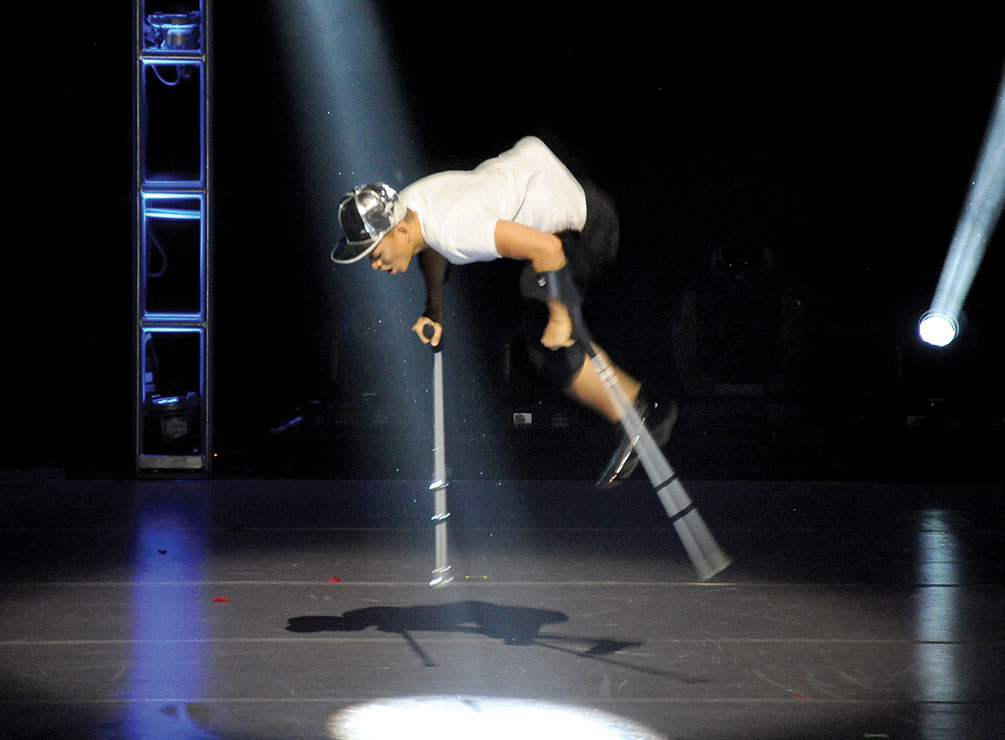
Of all the breathtaking acrobatics, the impossible contortions and the electrifying special effects that erupted across the stage at Cirque du Soleil’s “Michael Jackson ONE” in Las Vegas, none of them matched the force of what happened when a single dancer stepped forward on one leg. In a show built on spectacle, the moment that struck me hardest was quiet, human and profoundly moving. Jean Sok, an amputee who dances with crutches, didn’t just perform. He redefined the stage. His presence cut through the noise and shimmer of Cirque du Soleil and delivered something far more powerful: a living example of what true inclusion looks like when it is embraced wholeheartedly.

Sok’s movements were fierce, intentional and deeply expressive. He didn’t defy gravity; he defied expectation. The crutches were not props. They were extensions of his artistry as instruments of balance, rhythm and strength. Watching him, I felt a shift inside me, a kind of moral clarity. It wasn’t the typical awe that Cirque du Soleil is known for. It was recognition: this is what happens when a community understands that disability is not a limitation but a dimension of human experience that can expand creativity, deepen connection and elevate collective excellence.

That moment stayed with me long after the curtain fell and consequently caused me to reflect deeply on disability inclusion within the Jewish community – a community rooted in values that demand we see the divine in every person. Judaism teaches that each of us is created b’tzelem Elohim, in the image of God. This is not metaphor. It is a mandate. It means that every person, regardless of ability, carries inherent dignity and spiritual worth. It means that exclusion is not simply a logistical oversight; it is a moral failing.

Yet historically, Jewish institutions have not always lived up to this ideal. Many synagogues remain physically inaccessible. Programs are often designed around assumptions of ability. Neurodiverse and disabled Jews frequently encounter barriers not out of malice, but out of a lack of awareness, imagination or intentionality. And while the community speaks passionately about inclusion, the lived experience of many disabled Jews tells a different story.

Yet there are bright spots in our own backyard – examples of Jewish institutions that understood early on that inclusion must be woven into the fabric of communal life. Drawing on personal experience, when deToledo High School was established in 2002, its founding head of school, Dr. Bruce Powell, made a bold and visionary decision: he established American Sign Language as one of the school’s flagship programs alongside the most rigorous STEM and humanities classes. At that time, it was a bold decision. Today, it stands out for its uniqueness, excellence and its message — that communication, accessibility and human connection are central to Jewish education. ASL at deToledo is not a novelty. It is a statement of values, a commitment to ensuring that students understand the richness of deaf culture and the importance of inclusive communication. It is exactly the kind of leadership our community needs.

Jean Sok’s performance offers a model for what inclusion can be when it is done right. He was not placed on stage to inspire pity or to serve as a symbol. He was there because he is an extraordinary dancer whose disability is part of his artistic identity. His inclusion strengthened the entire production. It expanded the audience’s understanding of movement, beauty and human possibility. It demonstrated that diversity — authentic diversity — is not a burden. It is a source of power.

Jean Sok’s performance crystallized this truth. He didn’t ask the audience to overlook his disability; he showed us how it could become a source of power, beauty and artistic innovation. His presence on that stage was not symbolic — it was transformative. And it reminded me that inclusion, when done with intention and authenticity, elevates everyone. Now the responsibility is ours. To build synagogues, schools, camps and communal spaces where disabled Jews are not merely welcomed but expected. Not accommodated, but empowered. When we do this, we don’t just fulfill a moral obligation. We become the community we are meant to be — namely one that reflects the divine image in every person and celebrates the infinite ways that image can be expressed.


Lisa Ansell is the Assoc. Director of the USC Casden Institute and Lecturer of Hebrew Language at Hebrew Union College-Jewish Institute of Religion Los Angeles.

The Torah on One Foot: Disability Inclusion as the Core of Jewish Life Read More »

One Rabbi’s Crusade Against Qatar’s Global Influence

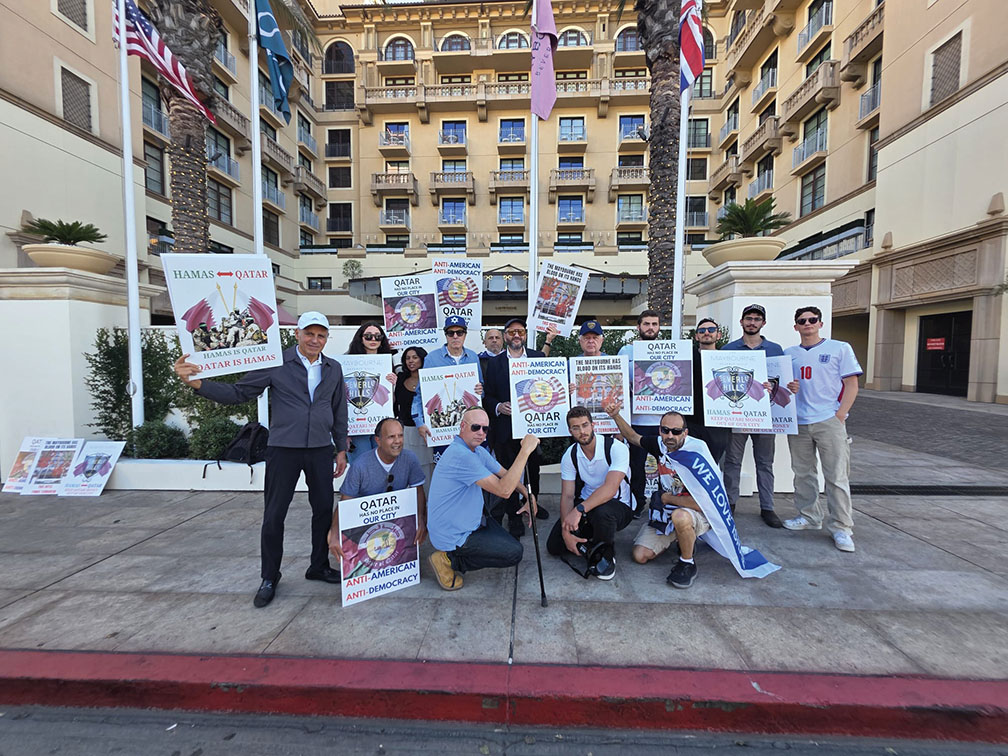
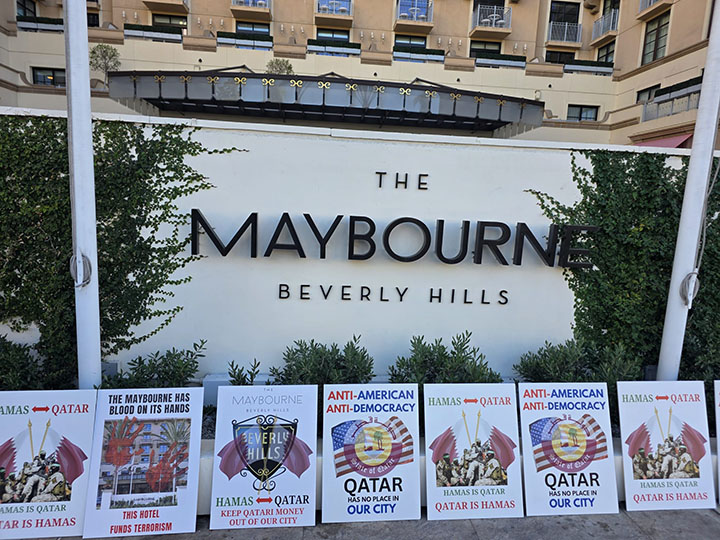
Outside The Maybourne Hotel in Beverly Hills on the evening of July 30, a small group of demonstrators gathered, holding signs that read, “Keep Qatari Money Out of Our City.” Led by Rabbi Pini Dunner, they stood quietly as the rush-hour traffic flowed along Canon Drive. Drivers glanced at the signs but kept moving. There were no honking horns, no one waved or called out in support. Nobody seemed to care. After all, it wasn’t about an issue people like to hate or love — let’s say Israel or Palestine, President Trump or ICE.  It was about Qatar – a country that rarely captures the attention of ordinary Angelenos.

“Qatar isn’t an attractive cause,” Dunner told The Journal after the protest. “There aren’t dying babies or a woke cause. It seems so marginal to the average person, whereas the PR campaign accusing Israel of genocide has been so powerful and has grabbed the attention of so many. We just don’t have that same compelling story.”

Dunner has been organizing these protests for years. Some may see him as a modern-day Don Quixote, tilting at windmills, going against a country that has huge resources, connections and power. Dunner, however, sees himself as sounding an alarm about what he describes as Qatar’s growing influence and ties to Hamas. The hotel, once known as the Montage Beverly Hills, was acquired in 2019 by Maybourne Hotel Group, which is owned by Constellation Hotels, an investment company that is controlled by members of Qatar’s ruling royal Al Thani family.

Last year, he led a similar protest outside the Bel Air mansion of former Qatari Prime Minister Hamad bin Jassim bin Jaber Al Thani, known as HBJ. “A man who funds terrorism lives here,” the protesters’ signs read.

The Bel Air estate is now on the market for a reported $400 million, making it the most expensive home currently listed for sale in the United States. “This is not a glamourous real estate transaction. It is a sale that will provide blood money to one of the most dangerous monsters in the Middle East who has a long track record of providing aid, shelter and financial support to America’s worst enemies,” Dunner said in a statement.

Dunner said he is increasingly concerned about Qatar’s expanding influence in the United States and the United Kingdom. He argues that the country’s vast wealth allows it to acquire high-profile properties and businesses, generating profits that he alleges are used to support Hamas and finance anti-Israel activity on American college campuses and elsewhere.

Among Qatar’s most prominent holdings in the United Kingdom are the Harrods department store, a significant stake in Heathrow Airport and a substantial stake in the London Stock Exchange. In the United States, Qatar has expanded its real estate portfolio with investments that include a 9.9% stake in Empire State Realty Trust, Manhattan West, the St. Regis hotels in New York and San Francisco and major American companies such as Compass and Gigamon. Through the Qatar Investment Authority (QIA), the country’s sovereign wealth fund, and related entities, Qatar has become one of the largest foreign investors in U.S. commercial real estate and businesses.

Qatar has also positioned itself as a diplomatic intermediary, including in negotiations between Israel and Hamas following the Oct. 7 attack, when it played a key role alongside Egypt and the United States in efforts to secure hostage releases and a ceasefire. “Qatar says, ‘Israel endorsed us to give money to Hamas,'” he said. “That may have been an excuse before Oct. 7, but after what happened, it is embarrassing to make such argument.”

He argued that Israel’s decision to allow Qatari funds into Gaza was based on the assumption that the money would help maintain stability, not strengthen Hamas’ military capabilities. “The purpose of that money was to prevent Hamas from attacking Israel – to pacify them so they would not want to escalate,” he added. “Instead, Hamas used those resources to build tunnels, purchase weapons and train fighters.”

Dunner is well aware that taking on a country with virtually unlimited financial resources is an uphill battle, but sees his actions making a change in how people perceive Qatar.  “Five years ago, nobody had heard of Qatar in Washington,” he said. “They knew where it was, but they weren’t thinking about it. It was completely off the radar.”

Dunner said he used to search Google News and X every day to see how often Qatar appeared in the news and would find only a handful of articles each month. He believes public awareness began to shift during the 2022 FIFA World Cup, when Qatar faced international scrutiny over allegations of corruption surrounding its successful bid to host the games, and criticism of the treatment of migrant workers. “They were using slave labor to prepare,” he said. “Today, most people don’t hear about  it in a positive light.”

Another indication, Dunner said, that his campaign was striking a nerve came when he was approached by Qataris who tried to persuade him to change his views and invited him to visit Doha. “Obviously the implication was that they would take good care of me financially,” he said. “I have been the subject of every possible tactic … to persuade me that my attacks on Qatar are not worth my while or that, should I stop, it would be worth my while.”

However, he said, not everyone can resist the appeal of Qatari money, pointing to universities that receive large donations, as well as politicians and businesses. “I’ve seen much evidence of it particularly in Washington where they have the largest number of paid lobbyists, many of them former members of Congress,” he said. “They pay for junkets to Doha … They put people up in the most luxurious five-star hotels and give them business-class tickets. Once you are on somebody’s payroll, you’re going to do everything you can to help them. It’s only natural, isn’t it? It’s the same with President Trump. They gave him a $400 million plane … so they know what they’re doing.”

Dunner said he has lobbied in Washington and London, held protests in both cities and held meetings with Israeli government officials and members of the country’s security establishment. “Slowly but surely, the shine has come off Qatar,” he said. “I would like to think – and I truly believe – that it’s because of the protests which I and others have led, not only here in Los Angeles but around the world, to bring attention to the nefarious activities of this ghastly country known as Qatar.”

Dunner believes public scrutiny of Qatar is growing, even if he thinks the issue has yet to receive the attention it deserves. Until those changes, he said, he intends to keep speaking out. Asked what success would look like, he said he believes Western governments need to take a much tougher stance toward Qatar’s ruling family. “I believe that any Qatari who is a member of the Al Thani family and has assets in the West should have those assets confiscated or frozen, and any connections to Hamas, Hezbollah and Iran should be investigated.

“We have to ask how it is possible that a country this small, with a tiny group of people, has such an influence that far outweighs its importance,” he said. “People need to understand what is happening and not allow it to be ignored.”  

One Rabbi’s Crusade Against Qatar’s Global Influence Read More »

Rosner’s Domain | No Suspension of Suspicion

Just what we needed. As if we didn’t know we were surrounded by cruel enemies. As if we didn’t remember – it is still painfully fresh – the surprise attack of Oct. 7, 2023. As if we hadn’t already slipped into an insular, suspicious mood in the face of an adversarial and volatile international reality. As if all this weren’t enough, along came “sources” whose identities cannot be revealed due to military censorship, exposing a conversation between “countries” whose names also cannot be revealed due to censorship. These countries plotted – or at least one of them plotted – to advance peace agreements with Israel simply to lull it to sleep ahead of a war at a more convenient time. Or so the “sources” say.

Just what we needed. Another reminder that the world is a cold, cruel place. Another reminder that Israel, even when it receives some sort of seal of approval from its neighbors through agreements, understandings, shared interests, shared enemies or shared friends, has never come close to a status of full, permanent legitimacy that needs no further questioning. Yes, it has signed some important peace agreements. No, it cannot close its eyes. Yes, it conducts complex relationships, some of them covert, with a great many countries in the region, including those that prefer to hide the connection. No, it cannot rely on these relationships unless they are backed by massive Israeli power. Yes, it can continue to talk about peace as an ideal, and it would be good to keep talking about it as an ideal. No, it cannot assume this ideal will materialize in the dreamy way fit for anthems, speeches or tearful ceremonies.

Just what we needed. Another reminder. As if we didn’t know.

Who here even trusts agreements anyway? Certainly not Jewish Israelis. On November 22, 1977, just one day after Egyptian President Anwar Sadat completed his historic, moving, earth-shattering visit to Israel, the IDF General Staff convened for a meeting. What could be found in that room? A fair amount of suspicion. The transcript was almost fully declassified a little less than a decade ago, so we can see exactly what was said. Here is the IDF Chief of Staff, Motta Gur: “At the end of the speeches yesterday, if I have to say what the operative directive was that the Chief of Staff received from the Defense Ministry, the Security Cabinet, and a very large portion of Knesset members, it was: ‘Prepare the emergency depots for war.'” Outside – joyous celebrations. Inside – the tension of uncertainty. When Sadat landed in Israel, he sought out Gur, who had voiced suspicious remarks even on the eve of the visit. “I’m not bluffing,” Sadat told him. Eventually, Gur was convinced, but it took him time.

Israeli trust in agreements of any kind was at a brief peak back then, and over time it deteriorated to the low point where it sits today. In June 2026, when the U.S. agreement with Iran was still taking shape, 34% of Israelis already estimated it would be “very bad for Israel.” In July, after the signing, that negative assessment jumped to 56% overall, and among Jews, to 68%. In November 2025, when the Trump plan to end Hamas rule was presented, 60% of Jewish Israelis assessed that Hamas would continue to rule Gaza. The percentage of Jews who support a “peace agreement with the Palestinians” – as opposed to the options of “separation” or “annexation” – stands at about 15%. In April 2026, 74% of Jews predicted Israel would have to fight again in Gaza, 58% in Lebanon, and 45% in Iran. In other words: at least for now, there is no great fear of us falling asleep at the wheel. Certainly not because someone, somewhere, signed an agreement.

You might say: But we did fall asleep – when it came to Hamas. True. And it was a deeply concerning slumber, albeit of a slightly different kind. No one fell asleep on Hamas because they thought Hamas was friendly with Israel, or had come to terms with its existence. Israel fell asleep because it thought it was stronger and possessed more deterrence than it actually did. It wasn’t the illusion of peace that lulled it to sleep, but the illusion of power. And that is a complacency Israel will not allow itself in the foreseeable future. If anything, the specific danger now is that Israel might veer a little too far in the other direction, adopting a worldview regarding its relationships with the rest of the world that relies on nothing but force.

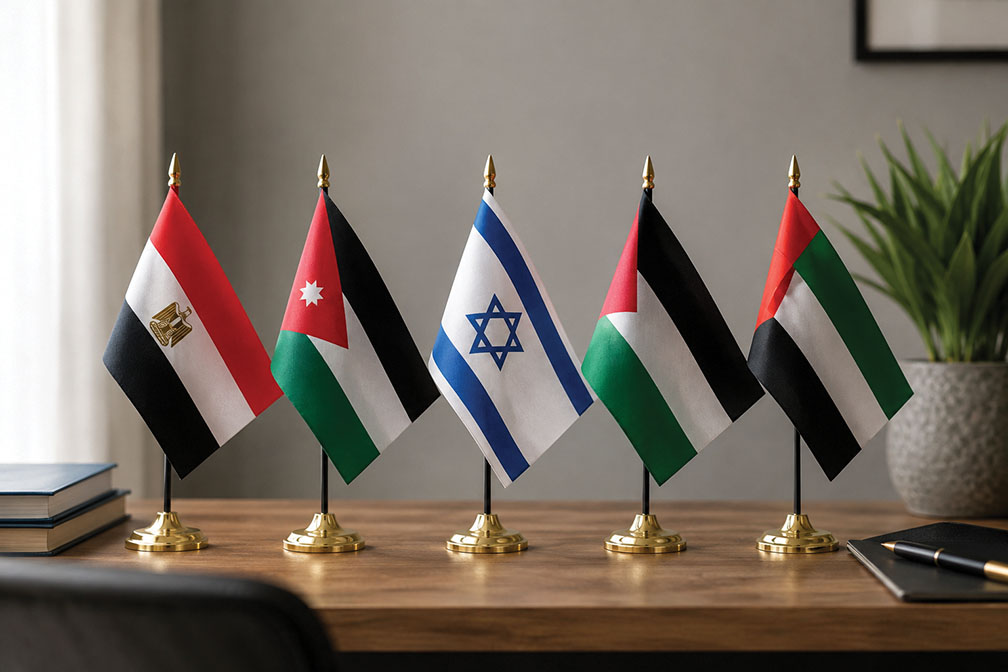
Still, the Hamas case serves as a warning sign. Against what? Against a false quiet concealing dark plots. It is not easy to operate knowing that any quiet might hide a plot. It is not easy to determine which quiet hides a plot. Israel has agreements with Egypt, with Jordan, with the Palestinian Authority and with the Abraham Accords countries. It has agreements with countries in Europe and Africa. It has agreements with countries in the Far East and in North America. Which of these can it actually rely on? Behind which of these is there an unspoken or hushed understanding that the outstretched hand will, in the future, turn into a clenched fist?

Something I wrote in Hebrew

I’m writing mostly about Israel’s politics these days. Here’s one nugget:

In 2,745 scenarios we examined, individual seats went up and down, but the overall size of the governing coalition bloc remained exactly as it was (50 seats) … In other words: after all the simulations, the stress tests and the rises and falls of individual parties due to minute shifts in polling responses, we are left with an overall stable picture. The coalition has 50 seats – give or take. If you tune out the noise and the minor fluctuations of this or that party, it turns out that this is – at least for now – a fairly solid baseline.

A week’s numbers

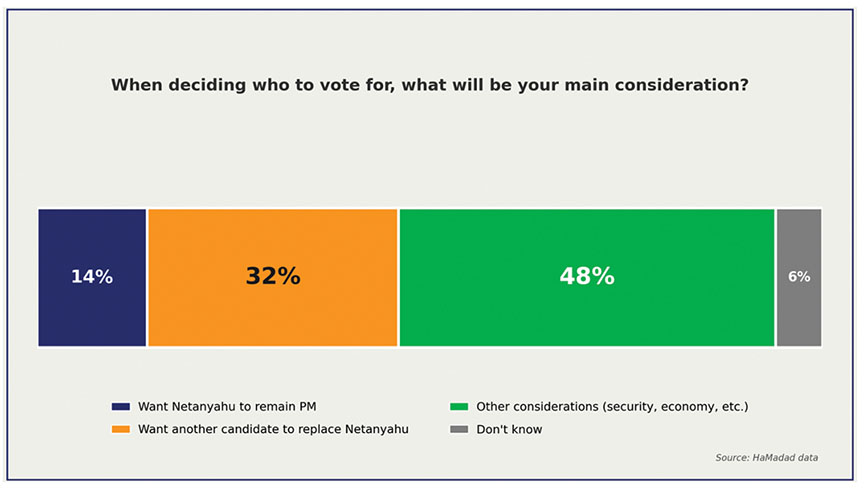
What motivates Israelis? The personal aspect (getting rid of Bibi) is much stronger among opposition voters.

A reader’s response

Dan Edens writes: “Some of my Jewish friends tell me they want nothing to do with Israel.” My response: Yes, I know some such people. With time they’d realize that they have no choice – their association with Israel is not something they can fully control.


Shmuel Rosner is senior political editor. For more analysis of Israeli and international politics, visit Rosner’s Domain at jewishjournal.com/rosnersdomain.

Rosner’s Domain | No Suspension of Suspicion Read More »

The Power of a Quilt

Many years ago, when I was working in a Hematology-Oncology Clinical Research Unit, I met a woman whose lymphoma had progressed.

It was late on a Friday, almost the end of the day, when I was called to meet her and discuss a clinical trial.

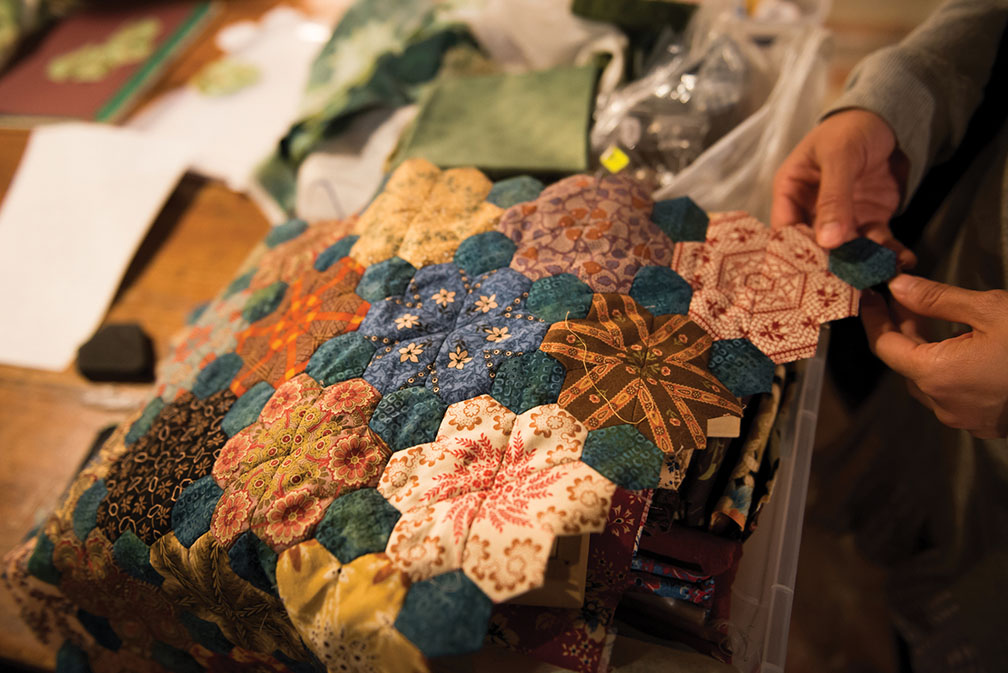
She was wrapped in a handmade quilt — soft, colorful, full of life.

I remember noticing it immediately. In a hospital room that often feels sterile and heavy, that quilt brought warmth. It felt personal. Alive.

I told her how beautiful it was, and she smiled and said, “I made it.”

Quilting had been her passion for years. That blanket had kept her warm through countless chemotherapy sessions, and she brought it with her again — hoping it would keep her company through another hospital stay.

When I looked closely, I could see that every stitch carried something deeper — love, patience and hope.

Hope for healing.  Hope for time.  Hope for one more tomorrow.

And as I stood there, something inside me felt strangely familiar.

Because for me, a blanket has never been just a blanket.

I remember myself as a little girl, around seven years old back in beautiful, Odesa, Ukraine, the city often called “pearl by the sea.” Every night, my grandmother would gently cover me with a blanket before I fell asleep.

It wasn’t just about staying warm. It was the feeling. The feeling of safety.

Of being protected.

Of being loved without needing to ask for it.

Even then, I remember having this quiet thought — what if something happens to her?

Because she was the one who made everything feel safe.

And somehow, more than 30 years later, that feeling is still with me.

That same warmth.

That same sense of comfort.

That same quiet reassurance.

My grandmother is no longer alive.

She is buried far away, in Ukraine — a place I cannot easily go back to. I cannot visit her cemetery, cannot stand there and feel close to her in the way many people can.

And yet … I still feel her.

In memories.

In small moments.

In the feeling she gave me that never really left.

Sometimes I wish I had something physical to hold onto — like that blanket. Something I could pass down, maybe even cover my own daughter with, to continue that warmth across generations.

But I’ve come to understand that it was never really about the blanket.

It was about what it carried.

The feeling of safety.

The feeling of love.

The feeling of being held.

And those are the things we carry within us.

We don’t always remember every word or every moment in life …

But we remember how people made us feel.

And those feelings stay with us — shaping us in ways we don’t always realize.

Standing there with that patient, looking at her quilt, I realized that what she was holding was more than something she made.

It was her version of comfort.

Her version of strength.

Her way of holding on.

And in a way, it connected everything — my grandmother, my childhood and this patient in front of me.

Different lives.

Different stories.

The same human need for warmth, for safety, for hope.

When I came back to work on Monday, her name was no longer there.

She was gone.

But her warmth, her courage, and her quilt have stayed with me ever since.

Even now, every time I see a quilt, I think of her — and I think of my grandmother.

I think of how something as simple as a blanket can carry a person’s spirit, their story, their love, their hope.

In clinical research, we often talk about data, timelines and outcomes.

But behind every study is a human being.

Someone who is not just fighting for survival — but for time.

Time to live.

Time to love.

Time to continue the things that make them who they are.

Her wish, when she signed the consent, was simple: more time.

Time to make more quilts.

And that’s what clinical research gives so many patients — not just treatment, but possibility.

Possibility for more moments.

More memories.  More life.

And sometimes, what stays with us the most …  is not what we can hold in our hands.

It’s the feeling that never leaves us.


Regina Portnoy is a clinical research professional and published author.

The Power of a Quilt Read More »

Jewish Democrats Take Note: It’s OK to Be Self-Protective

Whether or not Abdul El-Sayed wins a Senate seat, his Michigan primary win further distances the Democratic Party from Israel – and from American Jews. Here’s yet another rising Democratic star whose obsessive hostility to Israel is so central to his political identity it reeks of antisemitism. How many Jew-haters must become leading Democrats before Jews leave the Democratic Party?

Putting Jewish concerns aside, if Democrats want to avoid being cast by Republicans as the party of socialism, Jihadism and anti-Americanism, they should recognize that the long-term cost of having El-Sayed lose is worth the short-term cost of further empowering Donald Trump. Better to lose the Senate this year, than the presidency and the country for the next decade.

Still, because antizionists like El-Sayed interweave their antizionism with anti-Americanism and antisemitism, every self-respecting American Jew should work even harder to oppose him. Anyone who can, as El-Sayed did, rationalize an attack on a synagogue filled with young children by saying “hurt people hurt people,” hates humanity, let alone the Jews. Would he say that if a white victim of a black criminal attacked a black church? And the surge in Jew-bashing in Zohran Mamdani’s New York proves that when sweet-talking antizionists seize power, violent antisemites rush to beat the Jews.

Admittedly, America’s two-party system often saddles voters with unhappy choices and unappealing alliances. Most Jewish Democrats detest Donald Trump and the Republican Party, leaving them politically homeless. Since Franklin D. Roosevelt’s New Deal, most American Jews have worshiped the Democratic Party. Norman Podhoretz once called Reform Judaism “the Democratic party platform with holidays thrown in.”  And, while some pro-Israel Jews are one-issue donors, Jews are rarely one-issue voters. Polling over decades shows that most American Jews vote based on domestic considerations, not support for Israel.

Of course, until recently, American Jews felt welcome in both parties. Republicans and Democrats used to compete, insisting their candidate was the most pro-Israel, while both parties denounced antizionism as antisemitism.

In this age of sweet-talking antizionist obsessives like Mamdani and El-Sayed, antisemitism is surging. Israel-bashing is an increasingly popular pastime. Meanwhile, a new generation of Democrats keeps proving how much antizionism recycles traditional Jew-hating tropes while scapegoating American Jews.

Yet, feeling caught, too many Jewish Democrats are silent – putting their hatred of Trump first. By contrast, in 1984, when a reporter revealed that the Reverend Jesse Jackson mocked New York City as “Hymietown,” Jews and non-Jews objected. Walter F. Mondale, whose primary campaign was sputtering, nevertheless risked black backlash by saying Jackson’s “derisive” characterization “should not have been used.” Four years later, resenting Jackson’s harsh criticism of Israel too, New York’s Mayor Ed Koch said Jews “would have to be crazy to vote for Jackson.”  Koch compared it to blacks voting for “someone who was praising… the racist supporters of the South African administration.”

There’s a great American tradition of voters punishing candidates – and parties – for bigotry. In 1884, a Presbyterian minister, Samuel D. Burchard, publicly introduced the Republican nominee James Blaine, by denouncing the Democrats as the party of “rum, Romanism and rebellion.” Many Catholic voters in New York were planning on voting for Blaine, because his mother was Catholic. But when Blaine didn’t hear or chose not to react, Democratic operatives did. They publicized the gaffe, enraging Catholics. Blaine lost New York by 1,047 votes – and lost the presidency.

Similarly, in 1920, German-Americans and Irish-Americans punished their usual party, the Democratic Party. The outgoing president, Woodrow Wilson, had questioned their loyalty during the Great War, World War I.  In Milwaukee, the Republican Warren Harding won almost 70% of the German- American vote; in Irish-American precincts of New York, Boston, Chicago, many voters stayed home.

Most blacks voted Republican — the “Party of Lincoln” — long after the Civil War. But starting with the New Deal, more and more turned Democrat. In 1960, John F. Kennedy helped free Martin Luther King, Jr. after he was arrested in Georgia. The Republican nominee, Richard Nixon, stayed silent. King’s father, Martin Luther King, Sr., declared of Kennedy: “now he can be my President, Catholic or whatever he is . … I’ve got all my votes and I’ve got a suitcase and I’m going to take them up there and dump them in his lap.”

(“Imagine Martin Luther King having a bigot for a father,” JFK said. Then, thinking of his own bigoted dad, Joe Kennedy, he added: “Well, we all have our fathers, don’t we?”)

Eight years later, Dodger great Jackie Roosevelt Robinson, whose middle name honored the civil-rights-minded Republican Roosevelt, Theodore Roosevelt, abandoned Nixon and a Republican Party now resisting civil rights.  “I have my right to remember that I am Black and American before I am Republican,” the baseball legend proclaimed.

Other transformed alliances include Cuban Americans shifting Republican to support Ronald Reagan’s anti-Communism, and Muslim Americans shifting Democratic after 9/11.

Jewish Democrats take note: it’s OK to be self-protective. The philosopher Edmund Burke explained in 1790: “To be attached to the subdivision, to love the little platoon we belong to in society, is the first principle (the germ as it were) of public affections.” More bluntly, Archbishop John Hughes, prodding Catholics to demand public funding for parochial schools thundered in 1841: “if you desert the cause, what can you expect from strangers …?”

At their best, Americans have understood that while those targeted instinctively defend themselves, fighting discrimination consistently defends all Americans. “In a country like this it is the interest of all to protect the guaranteed rights of each,” Archbishop Hughes also preached. “Should the professors of some weak or unpopular religion be oppressed to-day, the experiment may be repeated tomorrow on some other.”

In the early Republic, Thomas Jefferson and James Madison opposed John Adams’ Alien and Sedition Acts to protect all Americans, not just immigrants. In 1845, a young Abraham Lincoln sighed: “As a nation, we began by declaring that ‘all men are created equal.’ We now practically read it ‘all men are created equal, except negroes.’ When the Know-Nothings get control, it will read ‘all men are created equal, except negroes, and foreigners and catholics.’ When it comes to this I should prefer emigrating to some country where they make no pretence of loving liberty — to Russia, for instance …”

While bigotry has obviously festered in America, there’s often been selfless voter backlash too. In 2006, Senator George Allen (R-Va.) saluted a dark-skinned staffer at a rally, saying “Let’s give a welcome to Macaca here.” Although most Virginians didn’t know that racial slur, they felt the hate, and repudiated Allen. Some believe that one word helped turn North Virginia’s suburbs Democratic for the next two decades.

In 2018, Maine’s governor, Paul LePage, warned that drug dealers named “D-Money, Smoothie, Shifty” kept invading Maine and impregnating “young white girl[s].” Maine’s population is 98% white. Still, Maine voters rejected their governor’s race-baiting.

“Injustice anywhere is a threat to justice everywhere,” Martin Luther King, Jr. taught.   “We are caught in an inescapable network of mutuality, tied in a single garment of destiny.” That all-American principle suggests the opening question needs editing. Rather than simply asking: “How many Jew-hating Democrats can Jewish Democrats tolerate,” we must ask: “How many Jew-hating Democrats can Democrats tolerate?” and “How many haters will Americans tolerate?”


Professor Gil Troy is a Distinguished Scholar of North American History at McGill University and a Senior Research Fellow at the JPPI, the Jewish People Policy Institute. He is the author of nine books on presidential history and, nine books on Zionism, including “To Resist the Academic Intifada: Letters to My Students on Defending the Zionist Dream”  as well as two recent e-books, “250 Reasons to Thank America” – with David Suissa, and “The Essential Guide to the U.S.-Israel Partnership: the 250th Anniversary Edition.”

Jewish Democrats Take Note: It’s OK to Be Self-Protective Read More »