
On the third anniversary of Oct. 7, Noa Tishby delivered a speech at the memorial event at the Saban Theatre. Here is her introduction, followed by the speech.
This speech is my honest look at where we are as a Jewish community. We’ve spent three years grappling with the aftermath of Oct. 7, and it has left a mark on us. I see Jews who are hurting, tired, and unsure of themselves, and I wanted to explain how we got here. That’s why it’s so important that we remember who we are. We are Am. And nobody else gets to tell us otherwise.
Good evening. Thank you, StandWithUs, thank you, Soroka Hospital, and thank you for the incredible doctors that are present here with us, Dr. Abd Abu Ganim and Dr. Zvi Perry. You were there on Oct. 7, at Soroka. You took care of the wounded and the dead, you embody for us what love and coexistence is and what the future of the Middle East looks like.
Three years. Three years since the worst day in the history of the State of Israel and the bloodiest day for the Jewish people since the Holocaust.
Tonight, we honor the memory of those slaughtered on Oct. 7 and those who have fallen since. We will never forget them, or the broken hearts of the families who mourn them.
We remember, even in a world where far too many seem determined to forget, or to twist the truth of that day and everything that followed upside down.
In addition to the evil and barbarism of Hamas, something else was unleashed that day. Terrorists were still slaughtering their way through southern Israel when Jews around the world were hit with a barrage of hatred so seething, so violent, it caught many by surprise.
And as the years went by since that horrific day the hatred and the danger got worse. I want to unpack it.
Within hours of the massacre, we saw organized demonstrations, student groups, NGOs and social media accounts blaming Israel for the attack, immediately accusing Israel of genocide, and calling kidnapping Holocaust survivors a matter of “context.” We heard chants to “Free Palestine,” “by all means necessary,” “from the river to the sea,” and even calls to “gas the Jews.”
This hate was preplanned. It was the product of a deliberate campaign, decades in the making, that brought together a bizarre range of social and political movements, aided and abetted by Islamist states and groups, over one cause: destroying the Jewish state.
After the Yom Kippur War in 1973, Israel’s enemies realized that they would not be able to take it down militarily. So they shifted their strategy to geopolitics and started playing a long game, creating a worldwide campaign to delegitimize Israel’s existence.
An entire infrastructure of anti-Israel, antisemitic, antizionist hate had been built over decades. A powerful propaganda ecosystem was primed and ready to be activated.
By the time Hamas invaded Israel on Oct. 7, many in academia, media and post-colonial studies all over the Western world already knew who to blame. For every evil.
It was simple for them. Israel is an apartheid state, the last bastion of colonialism. The Jews, or “Zionists,” are agents of evil, and the Palestinians are the perfect underdogs, without any agency of their own, and immune to any moral scrutiny.
On Oct. 8, 33 Harvard student groups signed a letter that they “hold the Israeli regime entirely responsible for all unfolding violence.” That’s not a normal response when terrorists have massacred and kidnapped young people at a music festival and murdered families in their homes. It’s a moral inversion.
At that point in time, many people could still see reality clearly: Hamas committed a despicable atrocity, Israel was attacked and, like any other country in its place, would have to fight back and fight back hard. But as the war in Gaza continued, many people got confused. The country attacked became portrayed as the aggressor.
And the same people who on Oct. 7 refused to call Hamas terrorists now demand that we call the war that followed a “genocide.”
So let me say this clearly: There is no genocide in Gaza. There has been a war in Gaza that Israel did not choose but was forced to fight. Is war ugly? Yes. Do innocent civilians who have suffered deserve our compassion? Yes. Have mistakes been made? Most likely, and they should be investigated. Does that constitute a genocide? Absolutely not, and saying it over and over again will not make it a reality.
This abuse of language is not rational or moral: it is becoming the latest in a long line of purity tests: call it a genocide or get harassed, attacked and canceled. Once again, like so many times in history, Jews are being pushed out of the public sphere.
We cannot become confused. Not about this lie and not about the other lies they tell about us.
We need to remember who we are. On Oct. 7, many Jews around the world were jolted into remembering. Even if they had never set foot in Israel, they felt the attack was happening to them. They knew it. But since that day, and as this war that was forced on us continued, many Jews got confused. They started believing the lies, the genocide lie, and again forgot who they are.
So here is a reminder. The Jews, we are not a religion. We have a religion.
Like the author Dara Horn says, “It’s not complicated, it’s just old. Jews are a joinable tribal group with a shared history, homeland and culture. That’s a whole sentence in English. But in Hebrew, it’s just two letters: Am. We are Am Yisrael.”
They will tell you that they love Jews, it’s just Zionism that they hate. They will tell you that if you call the war a genocide, call Israel evil and agree that it should be destroyed, only then, as a Jew, you will be accepted. They will tell you that they love Jews individually, they just don’t like us in a group. But we are a group. We are a people. We are Am.
Throughout history, Jews have been told that we will be accepted as individuals if only we renounce the reality of who we actually are, and throughout history, some Jews have gone along with it. Some are going along with it now.
This isn’t about whether Israel is perfect, no country is. It isn’t about whether you can criticize its government – you can, and we do.
But that is not what the antizionist hate movement is asking you to do. What they demand is that you separate yourself from your people, your history and your land. They are asking you to define your Jewish identity on THEIR terms and not your own. But who are they to tell us who we are? It is up to us to remember who we are.
Do not get confused. Do not internalize the hate. They want to shame you into saying what they want you to say and being who they want you to be, but that is not who you are. That is not who we are.
We are Jews. We are a people with an indigenous homeland in the Land of Israel. Always have been and always will be.
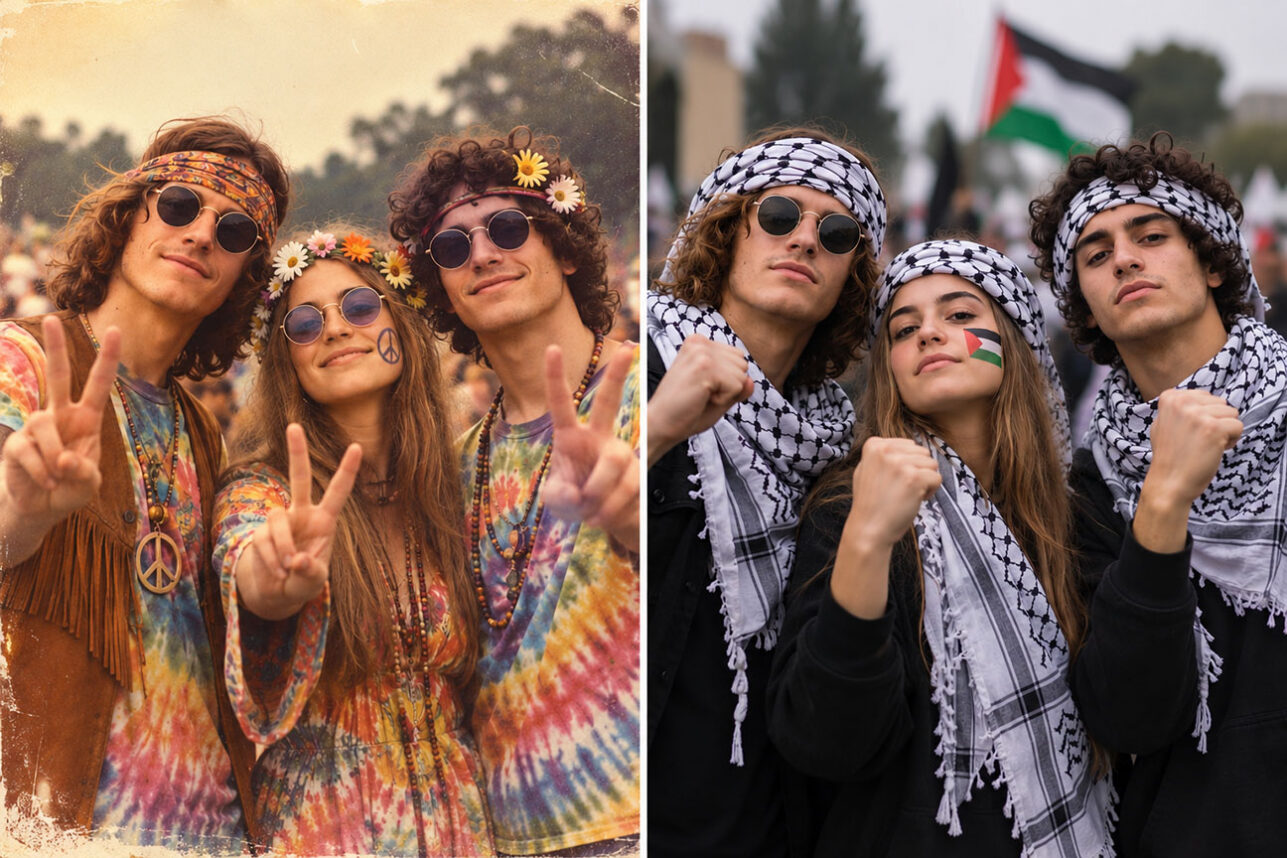
We have stood against tyrannies for millennia and outlived them all, and we will outlive the current tyranny as well, whether it’s Hamas terrorists, their keffiyeh-wearing fans on college campuses or their supporters running or holding office. As long as we remember who we are, they will never win.
Stay strong. Be proud. Be AM Israel.
And Am Yisrael Chai.
Noa Tishby is the former Special Envoy for Combating Antisemitism and Delegitimization of Israel.