
One verse, five voices. Edited by Nina Litvak and Salvador Litvak, the Accidental Talmudist
And you shall call out and say before the Lord, your God, “An Aramean [sought to] destroy my forefather, and he went down to Egypt and sojourned there with a small number of people, and there, he became great, mighty, and numerous nation.
– Deuteronomy 26:5
Miriam Mill Kreisman
President Tzaddik Foundation
When I read this verse, I always get stuck on one phrase: “with a small number of people.” It sounds almost insignificant. A few people going down to Egypt, just trying to survive. If you looked at them then, you probably wouldn’t have guessed that they would become a great and mighty nation.
But that is exactly the point.
The story of the Jewish people has never really been about having the biggest numbers, the easiest circumstances or the most power. It has been about what we do with what we have. We started small. We were strangers in a foreign land. We were vulnerable, and at times, people wanted to destroy us. Yet somehow, generation after generation, we kept going. I think there is something very relevant about that today. Sometimes we look at ourselves and think, “What difference can one person really make?” One voice, one good deed, one family, one small community — it can all feel insignificant.
But Jewish history tells us otherwise.
Great things can come from very small beginnings. A handful of people can become a nation. One person can inspire another. One small act can create a chain reaction that reaches people we may never even meet. Maybe that is why we are commanded to remember where we came from. Not just to remember that we survived, but to remember that we were once small — and we still became great.
So perhaps the message is simple: Never underestimate what can grow from something small.
Rabbi Eliot Malomet
Host of “Parasha Talk” on YouTube
My father was an enterprising Montrealer. He moved to Ottawa and built buildings. His father came to Montreal from Odesa. He opened a business, lost everything in the Depression and became a presser in a clothing factory. His father, I don’t know about. Nor any of the fathers before him. I imagine that one of them must have been a teacher, because Malomet derives from Melamed, a teacher.
I imagine sitting in a room with all my fathers. The Wandering Aramean would be sitting in the first chair. The earliest fathers, including a few generations of pilgrims who brought their first fruits to the Temple, would be seated in the first rows. At the end of the last row, would be my grandfather, the presser from Odesa, my father, the builder from Ottawa, me, a rabbi from New Jersey, and my son, a resident of Jerusalem, with his two Jerusalemite daughters on his lap. Each father would speak. We would hear their stories. This one crossed the Red Sea to freedom, and this one, post-Expulsion, crossed the Mediterranean Sea from Spain to Turkey. This one crossed the Atlantic to Montreal. I crossed the Canada-U.S. border to New Jersey. My son made Aliyah.
Our father was a wandering Aramean. He descended to Egypt and became a great nation. God redeemed the first descendants and we descended from them. Today, we may not have any first fruits to present. But what we do have is a great and unending story.
Aliza Lipkin
Writer and Educator, Ma’aleh Adumim, Israel
A farmer bringing his first fruits to the Temple recites “Arami oved avi” before a concise retelling of Jewish history. The declaration opens personally, then expands into the nation’s story, culminating with words of gratitude after the basket of fruits is placed before the altar.
Perhaps there’s a hidden message here for Elul. Commentaries link Arami to ramai, a deceiver, who, in the context of Elul, can be the yetzer hara, which rarely announces itself honestly but creeps in through self-deception. “Avi,” my father, is the self I once was, the version of me that let the deceiver in and became defined by that submission. I descend from him, but I am no longer him. In this way, the very struggle with sin fathered my growth. It enlightened me experientially, birthing my transformation.
That former self collapsed under meitzarim, the narrow straits sin itself creates. That is when one turns to Hashem, who helps us emerge, seemingly miraculously, into something new and greater. The fruit isn’t despite the deceit that once fooled me; it’s what grew once I persevered through it.
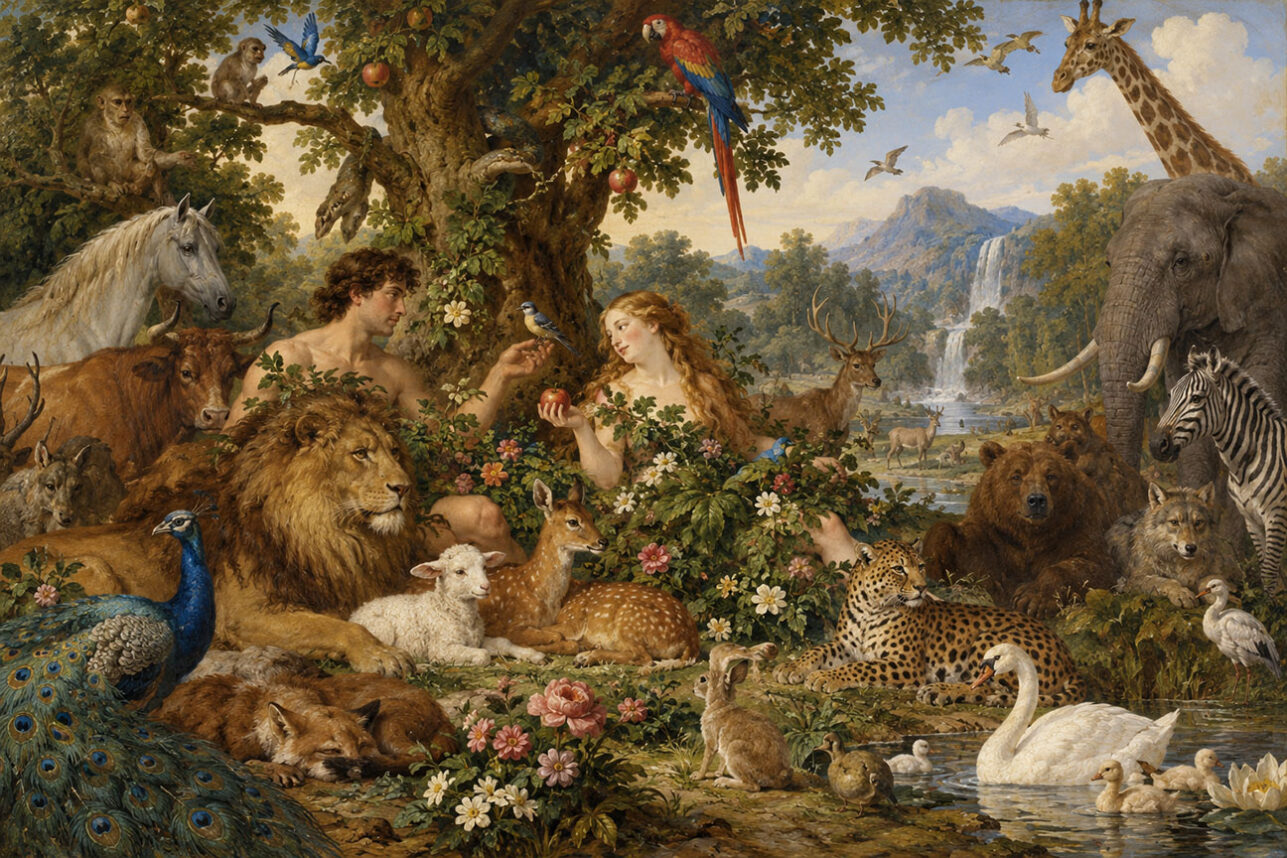
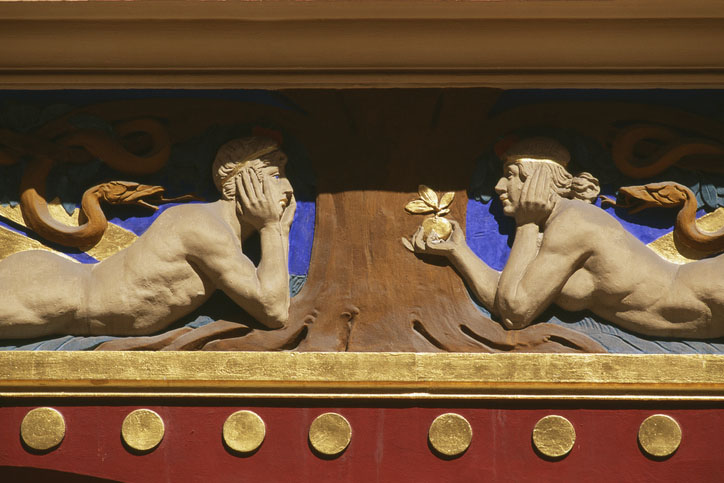
How meaningful it is to draw close to G-d, fruit by fruit, as we work our way back to restoring the connection that Adam lost when he ate the forbidden fruit. The joy of the “farmer” holding the basket with the fruit of his labor is unparalleled. It connects him to his essence, which connects him to G-d and to all mankind born of Adam HaRishon.
Kira Sirote
Author of “Haftorah Unrolled” – Ra’anana, Israel
When they ask you where you’re from, how far back do you go?
Sometimes I keep it simple: “I’m from Ra’anana.” That usually isn’t the answer they’re looking for, so I continue with, “I grew up in New York” – accurate but misleading. I am actually from Kiev, Ukraine, to be precise but still misleading, as back then it wasn’t Ukraine, it was a republic of the Soviet Union. That is still not precise, because I am still ultimately from here, the Land of Israel.
When my family came to America, American Jews would tell us that their grandparents also came “from Russia.” They were probably trying to find common ground with us (with limited success, as the Russia their grandparents left in 1879 was not the Russia that we left in 1979). But what they were really saying was: “My grandfather was a homeless Aramean, or an Aramean tried to destroy him, or maybe both, he had to go to another country, and now here we are, great, mighty, and numerous in New York.”
When our ancestors would bring the first of the season’s fruit before G-d, they were commanded to remember the steps along the way – the homelessness and the destruction, the greatness that did not last, and the Hand of G-d that took us from step to step. Back then there were so few steps in that story. So many more now. The Hand of G-d continues to lead us, all the way back to where we’re from.
Denise Berger
Freelance Writer
When I think of people who tried to destroy our forefathers, Lavan (the Aramean) isn’t the first person who comes to mind. Ishmael mocked and tormented Isaac so badly that Sarah had Abraham send him away. The rivalry between Jacob and Esau defined both of their lives. Centuries earlier Nimrod threw Abraham into a furnace, trying to destroy him in the most literal way. And all of these incidents were attempts at destruction, not actual success.
This passage is telling us Lavan succeeded. It says he destroyed. This very intentional language calls us to look more deeply at what took place. Lavan repeatedly deceived his nephew/son-in-law. There was a protracted experience of psychological abuse.
The pasuk jumps from Jacob’s experience with Lavan to the initial sojourn in Egypt, even though these events were decades apart. The thing about psychological abuse is that it’s insidious. It infects a person’s self-concept, making them vulnerable to further harmful situations in the future. The Torah is connecting the dots, between the deception inflicted on Jacob and what ultimately happened in Egypt. The taskmasters tricked us into slavery. When Hashem took us out of Egypt, He also removed us from what could be an endless spiral of victimhood and a low self-concept. There is no shortage of people who are caught in that sort of spiral. That’s why the pasuk appears in the Haggadah. Redemption is about how we see ourselves as much as it’s about our physical surroundings.